Author Archives: Robert Resta

A Review Of “Anybody’s Miracle,” A Novel By Laura Hercher, Genetic Counselor

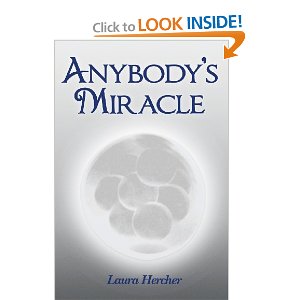
It’s not everyday that a genetic counselor publishes a novel. In fact, I think that has only happened on one day, with the recent publication of Anybody’s Miracle (Herring River Press) by our genetic counseling colleague Laura Hercher.
41wxG7-Kp-L._BO2,204,203,200_PIsitb-sticker-arrow-click,TopRight,35,-76_AA300_SH20_OU01_

Laura is my partner in blogging crime here at The DNA Exchange. One might rightly point my own finger at me and accuse me of a conflict of interest in reviewing a book written by a fellow DNA Ex’er. While this review may amount to a bit of free advertising for Laura, I will not receive a single ha’penny or any other form of compensation from Laura, her publisher, or anybody connected with Laura.

Anybody’s Miracle is about the tangled web we weave once we begin to conceive. The story centers on Robin Hogan, a bright, beautiful Catholic woman whose otherwise wonderful life lacks one thing – children. Unable to conceive naturally, she and her husband suffer through the trials and tribulations of infertility work-ups. After nearly losing her life from ovarian hyperstimulation, she conceives twin boys with the help of IVF, and here the story takes off after a slowish start.  She desperately wishes to conceive another child even though the risks to her health are great. Robin then becomes driven to learn the fate of her frozen embryos, who she thinks of as her children. Robin’s sleuthing  leads to the discovery that one of her embryos resulted in a successful pregnancy for an infertile couple and  she hatches an entirely unethical scheme to learn the couple’s identities. Robin’s becomes obsessed with the child – the daughter she never had! –  and takes to spying on the family and photographing  the girl from a distance.

Just when the going starts to get creepy, the plot twists like a helix when the little girl develops leukemia and requires a bone marrow transplant.  Of course the only compatible donor  turns out to be one of Robin’s twin boys, who is the girl’s genetic brother. Because of poor communication, misconceptions, and Robin’s Hitchcockian obsession with the girl, the two families clash when the girl’s parents not unreasonably believe that Robin will demand they give up their daughter to Robin in exchange for using her son as a bone marrow donor. Lawsuits, meetings with high-profile lawyers who have their own agendas, and media hoopla follow in grand style. The craziness is resolved only with the unwitting help and innocence of a hungry little boy.

Set during the 1990’s and early 2000’s, the story plays out against the major events and trends of that era – the dot.com bust, 9/11, cell phones, homosexuality taking its first tentative steps out of the social closet, and parents obsessed with raising their children as if they were organic vegetables. Perhaps the greatest miracle of all – the breaking of the Curse of the Bambino by the  2004 Boston Red Sox – plays a critical symbolic role. The novel explores  several themes near and dear to the hearts of genetic counselors – the conflicts that arise when parenthood is defined by genetic, social, and gestational criteria; the moral and social status of embryos; and how the often deep and profound childbearing urge will push some people to great personal and ethical extremes.

The book is an easy and enjoyable read, and the pacing, though occasionally uneven, will keep you wanting to know what happens next. I thought the ending wrapped things up a bit too neatly and happily. I was also hoping for a larger role for a genetic counselor character (genetic counseling is mentioned very briefly  when an “offstage” GC make what I would describe a bad professional judgment call), but that does not detract from the novel. Anybody’s Miracle arrives just in time for a good summer read for genetic counselors. Maybe if you bring it to the AEC in Anaheim in October, you can get Laura to autograph your copy.

The closest similar achievement by a genetic counselor that I know of was by Anna Phelan, a former genetic counselor who wrote the script for Mask, the 1985 Peter Bogdonavich movie that starred Cher and was based on the life of Rocky Dennis, a young man with craniodiaphyseal dypslasia. Anna went on to contribute to  Gorillas in the Mist,  Girl, Interrupted and other films. There are a number of creative talents in the genetic counseling community – Jon Weil’s intriguing pottery, the photography of  Jean Pfotenhauer and Liane Abrams, to name just a few . Use the Comments section below to tell us of the creative skills of other genetic counselors so we can celebrate the talents of all of our colleagues.
2 Comments

Filed under Robert Resta

Star Power

BRCA is a hot news item these days. The SCOTUS ruling on the Myriad patent. Angeline Jolie writing in the New York Times about her experience with BRCA testing. A movie about BRCA testing starring Helen Hunt as Mary-Claire King (Hey,when they make the movie about me, they will have to get Clooney or Depp for the lead). But BRCA testing has been around for about 15 years and I have met with  thousands of patients who have gone through the decision-making process about genetic testing. For some the choice was a snap; for others it was a difficult, soul-searching affair. I eventually realized  the obvious – nobody undergoes BRCA testing until they are emotionally ready.

Public lectures, brochures, ad campaigns, podcasts, TV commercials, advertisements, physician referrals, and word of mouth all increase awareness of BRCA testing but they do not necessarily drive people to actually meet with a genetic counselor or to undergo testing. When reviewing medical records prior to a patient’s appointment, I frequently see the notation “Recommended that the patient see Bob Resta for BRCA testing” repeated multiple times over the years by different providers – radiologists, family practitioners, gynecologists, etc. Patients often need a trigger to make the appointment phone call. A cancer diagnosis pushes some patients to testing to help guide their treatment decisions, which, from a preventative public health stand point, is a significant systems failure. Many patients, particularly those who have not yet been diagnosed with cancer, need an emotional trigger – a friend diagnosed with cancer, reaching the age when a parent was diagnosed with cancer, coming to grips with the responsibilities of parenthood, or an experience that causes them to acknowledge their mortality.

These triggers have resulted in a more or less steadily increasing flow of  referrals, with occasional rises and dips that follows a pattern that is no more transparent to me than the whimsical ups and downs of the stock market. But overall cancer genetic counseling and testing is still underutilized.

And then came Angelina Jolie.

I am guessing that most cancer genetics programs were swamped with a tsunami of referrals after May 14th.  Rumor has it that  some genetic counselors have taken to saying that the AJ Panel now stands for Angelina Jolie Panel, not Ashkenazi Jewish Panel (well, not really, I just made that up, but it could be true). At my institution, I roll my own; I am the only genetic counselor in our hereditary cancer program, so the leap in patient volume has been particularly acute for me.

Wave

Initially I thought I was just a cranky old counselor complaining about a couple of busy days. But then I  compared my patient load in the 4 weeks before Angelina Jolie’s New York Times piece on May 14th  to the 4 weeks after. I grant you this is not exactly a scientific methodology, and I can think of all kinds of faults in the study design. But it probably provides a reasonable approximation of reality.

In the 4 weeks before May 14th, I met with 54 patients, almost all of whom were new patients, a typical volume for me. Twenty of those 54 visits (37%) were by patients who had a family history of  cancer, rather than having been diagnosed with  cancer. 35 patients underwent BRCA testing.

In comparison, in the 4 weeks after May 14th, there have been 90 clinic visits, a 66% increase compared to the prior 4 weeks.  58 patients underwent BRCA testing, also a 66% increase. It was not due to mini-epidemic of breast cancer in my neck of the woods (although Seattle has the highest incidence of breast cancer in the country) – 52 of those 90 visits (58%) were by healthy patients who had a family history of cancer.

Perhaps this bump in my workload was  a seasonal thing as people clear off their to-do lists before summer vacation, but I did not find similar patterns in April/May/June of 2011 or 2012. In fact, in 30 years of practice, I do not believe that my patient volume has ever risen so rapidly so quickly. It is fair to say this increase is largely due to Ms. Jolie’s revelation. Presumably this will eventually taper off. But I already have 20 patients on my schedule for the coming week.

I usually ask patients what motivated them to come in for genetic counseling at this particular time in their lives. A few patients have admitted that Ms. Jolie was their impetus for seeking genetic counseling.  But most were quick to say – sometimes without prompt – “I am not here because of Angelina Jolie. I just decided it was the right time to come in.” That may be true for some, but I suspect that downplaying the Angelina Jolie angle may reflect a bit of embarrassed denial on the part of others. All of us are influenced by influential people, which is why we call them influential. Influence, however, can be so subtly pervasive that we cannot detect its fingerprints. Just ask Don Draper.

Movie

I am not critical of Angelina Jolie’s decision to share her story. No matter how famous you are, it has to be difficult to share such an intensely personal narrative with just about every human being on earth. And her actions may very well help save lives and reduce suffering, which is what we are trying to do in medical care. To many of us, though, it seems paradoxically odd but not surprising that a movie star can play such a critical role in people’s lives. She is not a health care expert; she doesn’t even play a doctor on TV.

But as I have argued before, genetic counselors have less influence on patients than we like to believe. Medical decisions and healthcare utilization are shaped by a complex web of emotional, social, cultural, and psychological factors, many of which people are not willing to acknowledge or are even cognizant of, and which are beyond the control of genetic counselors.

If we want to better integrate genetic counseling into standard medical care, we need to move beyond a model of Healthcare Provider Education and  Referral Pamphlets  Are The Best Way To Get People Into Our Offices. We need to take a page from DTC genetic companies’ playbooks and make it less of a hassle for patients to utilize genetic counseling and testing. We need to tap into social psychology and tease out the factors that lead patient’s from their front doors to our office doors. The future of the genetic counseling profession depends on it.

2 Comments

Filed under Robert Resta

And Bob’s Your Uncle: A Guide To Defining Great Aunts, Great-Great Grandparents, First Cousins Once-Removed, and Other Kinfolk

When genetic counselors attend family reunions, their unofficial job becomes Namer-of-Relationships. “Keith, you and I are first cousins once-removed. Viola is my great aunt. Margo, you are my mother’s second cousin’s second wife so you would be…..well, some kind of in-law or kissing cousin, I guess.”  It gets confusing, even for experts. It is even more difficult for patients or referring providers who try to relate a family history of a second cousin with a cleft palate and a heart defect but who is actually a first cousin once-removed.

Below I have created a generic pedigree that illustrates the most common familial relationships in the kinship system of the modern Western English-speaking world. The pedigree undoubtedly contains errors and omissions. So, in the spirit of crowd sourcing, I encourage my fellow pedigree wonks to scrutinize it and report mistakes, mislabelings, missing relatives, and thoughtful commentary in the Comments section below (this would also be a great discussion topic for a few hours of a genetic counseling student seminar).

Click to Enlarge

Click to Enlarge

The accompanying explanatory table supplies details, controversies and inconsistencies. I am cowardly avoiding the complicated relationships that stem from assisted reproductive technologies such as donor eggs, donor sperm, surrogate mothers, etc. Of course, the person you decide to call Mother, Father, Uncle, Cousin, etc. is based not on genetic relationship but on personal experience, family preferences, and social norms.

For those not familiar with pedigree arcana, each individual is identified with a numbering scheme such that relatives in the first generation (at the top of the pedigree) are identified with a Roman numeral  (e.g., I) and an Arabic numeral (e.g., 2). This indicates, reading from left to right, that I-2 is the second person on the first line of the pedigree. The next generation down is numbered II, and so on. Thus, IV-7 is the seventh person in the fourth generation and who is the the proband or propositus, the reference point for the relationships. IV-7’s father is III-3, IV-7’s paternal great grandfathers are I-2 and I-4, and so on.

There seems to be no widely accepted guidelines for when to include hyphens in a relationship name (e.g., great-grandfather vs. great grandfather). Since this is my blog post, I get to decide the grammatical rules. Thus, because I tend to be a minimalist, I hyphenate only when there is more than one “great” in a title. In the pedigree, I-1 is a great-great-uncle, but I-2 is a great grandfather. I also use hyphens in “removed” relationships (e.g., first cousin once-removed) because, well, it just looks right. Stepmother seems to be more common than either step mother or  step-mother. However,  “stepbrother” is infrequent. For consistency, I recommend the spaced-but-not-hyphenated style for “step” and “half” descriptors” (e.g., half brother, step mother).

An alternative graphic to describe family relationships is the Canon Law Relationship Chart.

Image from Wikipedia Commons, under the GNU Free Documentation License. http://en.m.wikipedia.org/wiki/File:Canon_law_relationship_chart.svg#section_2

Image from Wikipedia Commons, under the GNU Free Documentation License. http://en.m.wikipedia.org/wiki/File:Canon_law_relationship_chart.svg#section_2

The relationships illustrated in the pedigree are described as follows:

Self, You, (AKA Proband, Propositus): IV-7, the person who is the reference point for  all relationships in the pedigree.

Parents:

Genetic Father: III-3

Genetic Mother: III-4

Step Parent: III-5, the new or former spouse of your genetic mother or father.

Siblings

Full Brother: IV-8. Male siblings with whom you share both genetic parents.

Full Sister: IV-9. Female siblings with whom you share both genetic parents.

Half Sibling: IV-10. A sibling with whom you share only one genetic parent. Or, as one of my patients said to me the other day “She is my half of a sister.”

Step Sibling: IV-11. A sibling with whom you share no genetic parents, e.g., the son  your stepfather had with his previous wife.

Children

Son: V-2. A male child.

Daughter: V-3.  A female child.

Step Child: V-1. The son or daughter that your spouse had with a previous spouse.

Grandchildren

Grandson, Granddaughter: VI-1. Your child’s son and daughter, respectively.

Great Grandson, Great Granddaughter: VII-1. The son and daughter, respectively, of your grandson or your granddaughter.

Grandparents

Grandfather: II-3, II-5. The father of your mother or father. But note the inconsistent use of grand and great. The brother and sister of your grandfather is your great uncle and great aunt (vide infra, Great Uncle, Grand Nephew). Presumably the word stems from the French grand-père, which itself goes back to the 12th century. Prior to the French influence, a grandfather was referred to as a grandsire, and prior to that, in Old English, the Germanic-derived ealdefæder or eldfader.

Great Grandfather:  I-2, I-4, I-6, I-8. The father of your grandparent.

Grandmother: II-4, II-6. The mother of your mother or your father.

 Great Grandmother: I-3, I-5, I-7, I-9. The mother of your grandparent.

Uncles, Aunts

Uncle: III-2, III-8. A brother of one of your parents

Aunt: III-1, III-9. A sister of one of your parents

Great Uncle: II-2, II-7. A brother of one of your 4 grandparents.  I thought about recommending the  less commonly used title Grand Uncle (or Grand Aunt) because these individuals are in the same generation as your grandparents. When they are referred to as Great relatives, it seems to imply that they are in the generation prior to your grandparents’ generation. I suspect, though, that Great is so well established that it is unlikely to replaced by Grand. And you share more genetic information with your Grandparents than you do with your Great Uncles, so perhaps using Great rather than Grand is an acknowledgment of that genetic difference (vide supra, Grandfather; vide infra, Grand Nephew vs. Great Nephew).

Great Aunt: II-1, II-8. A sister of one of your 4 grandparents

Great-Great Uncle: I-1. A brother of one of your 8 great grandparents. Note the slightly confusing terminology – the siblings of your great grandparents have two “greats” in their relationship title, compared to only one “great” in their sibling, your great grandparent.

Great-Great Aunt: I-10. A sister of one of your 8 great grandparents.

Nephew, Nieces

Nephew, Niece: V-4, V-6, V-5, V-7. The son and daughter, respectively, of your sibling.

Great Nephew (Grand Nephew), Great Niece (Grand Niece): VI-2, VI-3.  The son and daughter, respectively, of your nephew or niece. In genealogy circles, it is more common to use Grand rather than Great, on the basis that this relative is as many generations removed from you as your grandparent is, only in the other direction. However, in my view, if the siblings of your grandparents are Great Uncles and Great Aunts, then it seems to me that there is greater symmetry in calling them Great Nephew rather than Grand Nephew. Besides, you share as much genetic information with your Great Nephew as you do with your Great Aunt, so from that standpoint it makes more sense to go with Great rather than Grand (vide supra, Great Uncle, Grandfather.

Cousins

First Cousin: IV-1, IV-2, IV-3, IV-4, IV-12, IV-13, IV-14, IV-15. The children of your aunts and uncles.

Second Cousin: IV-16.  The children of your parents’ first cousins.

First Cousin Once-Removed : V-8, III-10. The children of your first cousins OR the parents of your second cousin (who could also be properly called your second cousins once-removed). Once-removed refers to the fact that the relative is one generation removed from you, either one generation above or one generation below. The children of your second cousins could also be called your second cousins once-removed. This is one of the confusing areas where different relatives can have the same title and the same title could be applied to different relatives.

First Cousin TwiceRemoved: VI-4. The grandchildren of your first cousins.

Unnamed Relationships:

IV-5, III-6, III-7. As far as I am aware, in Western European kinship systems, there is no title for your spouse’s previous spouse IV-5), your step parent’s previous spouse (III-6), or the previous spouse of your step parent’s previous spouse (III-7).

85 Comments

Filed under Robert Resta

Customer Disservice?

“Words used carelessly, as if they did not matter in any serious way, often allowed otherwise well-guarded truths to seep through.”
― Douglas Adams, The Long Dark Tea-Time of the Soul

Vocabulary is never just a bunch of words. Consciously or unconsciously, word choices reflect underlying ethical, moral, and philosophical values. Which brings me to why I have a problem with the growing trend to embrace the Customer Service Model of Patient Care.

Genetic counselors wake up every morning and go to work because we are driven by a desire to help people. We strive to use our skills to alleviate the psychological and physical turmoil dealt by the cruel and impersonal hand of Genetic Fate. We encourage patients to pour out their sadness, anger, fear, and insecurity in the safe havens of our offices where we offer comfort, unquestioning support, and some hope in their darkest hours. We want their lives to be better for having met with us. I witness this same deeply ingrained desire to help patients in many of my health care colleagues  – physicians, nurses, imaging technicians, office staff.

Suffering

So what’s not to like about the Customer Service Model of Patient Care? It encourages health care providers to be supportive and respectful, and to put patients at the center of clinical encounters. Customer service skills in the clinic are important to our relationships with referring physicians, and for genetic counselors who work in lab positions where they interact primarily with health care providers.

My uneasiness with the Customer Service Model stems from the implications of referring to patients as customers. Think about it. Labeling people as customers subtly focuses the health care interaction on profit. Patients are stripped of their emotional and physical vulnerabilities and reduced to revenue sources. It is downright disrespectful. Why should I feel compassion for patients if I am trying to convince them to fork over their hard-earned money?

Cash Patients

The message communicated by the vocabulary is not “Let us try to alleviate your suffering and to care for you as human beings.” Rather the message is “I am being nice to you so you will keep coming back to my store.” And, inevitably,  models of customer service developed by highly successful corporations like Amazon, Nordstrom’s, and Starbucks are held up as paradigms for healthcare providers to emulate. Scripted patient interactions and Greeters at hospital entrances cannot be far behind. But corporately-mandated niceness can be as transparent to patients as a pair of Lululemon yoga pants.

Typically, the Customer Service Model is presented as a clever acronym, such as  MAGIC, ACES, FISH!, or HEAT. Does anyone sincerely believe that the complex interaction between health care provider and patient can be  simplified to a conveniently bulleted PowerPoint slide?

I am not a financial naif. I am acutely aware of the dire economic status of the American health care system, the razor-thin profit margins of hospitals, and the critical importance of a fiscally sound organization. But there is no reason to believe that the Customer Service Model generates any more income or additional business than empathic providers and highly competent medical care. Indeed, keeping the focus on the patient – rather than the customer – has the potential to increase hospital revenue because it implies that health care providers are emotionally invested in the care of their patients.

The possibility that patients might think that the medical encounter is financially driven is re-enforced when they walk into physicians’ offices where nutritional supplements, skin care products, eyeglasses, and other medical “accessories” are offered for sale. If patients are led to believe that we view them as customers, then it could reduce their trust in us and the care we provide. Why should patients trust our medical advice if they think we are trying to profit from their suffering? This makes it all the more critical to stay sensitive to the appearance of conflicts of interest and to our blind spots.

We cannot honestly say to ourselves “Well, I know I am calling them customers, but I don’t really think of them as customers.” As George Orwell pointed out, language can corrupt thought as readily as thought can corrupt language. We must choose our words carefully.

Word Choice

4 Comments

Filed under Robert Resta

Screening Everyone For Everything: A Changing Model of Screening For Carrier Status of Genetic Diseases?

The heterozygote carrier screening paradigm  is  starting to shift from ancestry based screening  for carriers of a single or a few genetic diseases to pan-ethnic screening for carriers of a wide range of genetic diseases. New techniques of DNA sequencing make it possible to test a single sample to determine carrier status for dozens of genetic conditions at prices that make carrier screening panels (CSPs) very tempting to healthcare providers and patients. Since carrier screening for one or another genetic disease – cystic fibrosis, Tay-Sachs, hemoglobinopathies – is already offered to essentially all women who are pregnant or planning a pregnancy, why not “screen everyone for everything” at no greater up front cost? And it doesn’t even require a blood sample; a less intimidating buccal sample works just fine.

Part of the understandable justification to move beyond targeted carrier screening programs is the futility of trying to classify people into distinct ancestry/racial/ethnic categories. Gene mutations and genetic diseases have a pesky habit of flowing fluidly between populations, and cultural heritages can be lost through assimilation (See Interesting Digression* below).

People

So why object to CSPs? After all, don’t people have a right to “know their DNA” and to understand what health and reproductive risks they face?

I am not suggesting that we should stand in the way of anyone’s wishes to “know their DNA.” If someone chooses to acquire that knowledge without the benefit of meeting with a genetic counselor, well, I may disagree with that decision but I respect it. But whether people decide to undergo carrier testing through a genetic counselor or through an online testing company, they need information that is forthright, complete, and transparent; they do not need subtly biased sales pitches. Private companies do not have a vested interest in talking people out of genetic testing.

Before we examine how some labs “objectively” describe carrier screening to patients, we must acknowledge an ethically uncomfortable truth. Carrier screening does not consistently lead to better treatments,  encourage greater tolerance of disabilities,  stimulate research into cures, or improve psychosocial adaptation to genetic disease. The only compelling reason to devote economic and medical resources to carrier screening is to reduce disease incidence. For better or worse, that is the measure of success of Tay-Sachs screening in Ashkenazi Jews and thalassemia screening on Cyprus.

Three strategies can reduce the incidence of genetic disease. One is mate selection based on carrier status, which is rare except in select populations such as Ultra-orthodox Jews (Hey Single Women out there, when was the last time you met potential Mr. Right and said “Er, you can buy me a drink but do you mind if I take a pedigree and a cheek swab from you before I give you my phone number?”). A second approach is preimplantation genetic diagnosis, but it is available to only a miniscule percentage of the population. The third and only realistic option for most patients is the elephant in the room – prenatal diagnosis with termination of affected fetuses.

Bar

Take a look at the  web sites of companies such as Counsyl or 23andMe and you get a different narrative. The word “abortion” does not appear. Instead, you read about sperm/ovum donation, preimplantation diagnosis, mental preparation, watchful waiting, and early treatment. No mention is made that early treatment requires testing the baby anyway and that some treatment is available for only a handful of the screened conditions. The websites do not bring up the point that there are no large-scale studies that have shown better familial adaptation to genetic disease when parents have prenatal awareness of their carrier status, so couples really cannot know if testing really will result in mental preparedness. And I am still not sure what watchful waiting is, and how it differs from mental preparedness.

waiting

A second concern is that screening for very rare conditions plays on the emotionally vulnerable state of many pregnant women and the difficulty almost anyone has in understanding very, very small numbers in a psychologically meaningful way. Take for example, a condition that has an incidence of 1/100,000 births with a 75% carrier detection rate. Before carrier testing, a couple would have an ~99.9999% of NOT having an affected child; after carrier testing that probability would increase to ~99.99999%. Really, who can tell the difference between those two statistics? It’s difficult just trying to count the number of nines in those numbers. But read about the condition’s severe intellectual disabilities and physical birth defects, and, damn the statistics, give me that test.

A third concern is the lack of complete information about test sensitivity on the information portion of the website. For example, a patient with normal carrier test results might understandably think they would not have to be concerned about having a child with Bardet Biedl syndrome. What the site does not indicate however is that BBS1 and BBS10, the two loci included in the  panel, account for less than half of patients with Bardet Biedl syndrome, and that the dozen or so other genes that can cause Bardet Biedl syndrome are not included in the test panel.

A fourth, and maybe the greatest, concern is the ethical difficulty of deciding which conditions to include on a CSP. Tay-Sachs screening among Ashkenazi Jews and thalassemia screening in Cyprus developed with significant input from families, medical professionals, and community and religious leaders. There was widespread agreement in those communities that these were serious diseases and that carrier screening, mate selection, or prenatal diagnosis were ethically acceptable ways of reducing disease incidence. Very little community dialogue has taken place over CSPs. Do we really believe that the world is a better place if we screen for carriers of a common form of hereditary deafness or, God help us, red hair color?

Redhead

And ruminate on this: a study of 3 million cystic fibrosis carrier tests performed at a single US lab found that 25,000 CF carrier screens needed to be performed to detect one affected fetus. And this is for a relatively common genetic condition with a frequency of about 1/4000 US newborns and  a screening program whose success remains debatable. How many carrier screens will need to be performed to detect a fetus or newborn with a rare disorder like isovaleric academia, with a frequency of 1/250,000 births?

It could be that I am just the last of the old wave of genetic counselors who are out of touch with new technologies and changing ethical values, the proverbial last leaf on the tree. Maybe I am a 20th century genetic counselor in a  21st century world in which private industry will become the primary mode for the delivery of medical genetic services. Perhaps when I retire in a decade or so the genetic counseling community will issue a collective sigh of relief. But sometimes Old School cranks have a point.

MR900400816

* – Interesting Digression: I recently learned about the Jews of Acadiana, Jewish merchants who settled among, and who were often culturally and reproductively assimilated into, Louisiana’s Cajuns (although the Cajun Tay-Sachs mutations stem from their French Canadian origins and predates the Ashkenazi admixture). Also, an exploration of why Tay-Sachs screening caught on among Ashkenazi Jews but not among Cajuns would make for  an interesting socio-medical-historical study. If a  large scale  Tay-Sachs screening program were to be introduced among Cajuns, perhaps its motto would be Laissez les bon genes roulez.

Accordion

15 Comments

Filed under Robert Resta

The Resta Paradox: On The Perception of The Likelihood of Rare Events

Genetic counselors – and their clients – tend to make a big to-do about numbers. We expend a disproportionate amount of energy  calculating, reciting, and explicating numbers such as the complication rate of amniocentesis, the likelihood of Down syndrome, bayesian probabilities, or empirical recurrence risks. Sometimes we even pull them out of thin air. Those statistics pass through patients’ psychological, cultural, social, and educational filters and out of the other side comes a figure that more often than not bears little resemblance to the number that went in.

Counseling strategies attempt to reduce anxiety by downplaying large numbers when it comes to undesirable outcomes (“A one in four recurrence risk means a 75% chance that it will not happen again”) and reframing small numbers for patients who perceive a low likelihood outcome, such as 1/500, to be a very “high” number (“One in five hundred means there is over a 99% chance this will not happen. If you were to score a 99+% on a difficult test in school, you would be very happy. That’s an A+!”).

But reframing can sometimes backfire. For many patients, rare events are paradoxically perceived to be more likely to occur than high likelihood events. The rarer the event, the more some patients are convinced that it will happen to them. This phenomenon, which I have immodestly labeled The Resta Paradox,* is a sort of corollary to Murphy’s Law.

Just about every genetic counselor has heard some variation of this statement “I know that one in 50,000 is pretty unlikely, but if it’s going to happen to someone, it’s going to happen to me.” To demonstrate how he or she is one of those people whom the Gods have chosen to be the object of their malefic whims, patients will then cite a litany of rare catastrophes that have previously befallen them:

  • “My surgeon said she never had a patient develop a complication after surgery, but I got an infection.”
  • “One time, a piece of an airplane broke off, fell put out of the sky and crushed my car.”
  • “I took lisinopril and developed a never before reported side effect and I was in the hospital for a week. They even wrote an article about me” (The patient will then look at you, hoping that you will say that you were familiar with the article).

The seemingly contradictory availability heuristic for these patients is “Rare events have happened to me before. Therefore, I am likely to experience rare events in the future.”

In my favorite example of how reframing can sometimes spectacularly go awry, a colleague once described to me a genetic counseling session in which she told the patient that the risk of recurrence of the particular disorder was as likely as getting struck by lightning. The patient replied “As a matter of fact, I have been struck by lightning.”

Such magical thinking is surprisingly common. It does not necessarily mean that a patient suffers from innumeracy. Most people are perfectly capable of balancing their checking accounts, completing income tax forms, and accurately summing long columns of numbers. Complications arise, though, when patients try to assign an emotional value to a number or a risk, especially when trying to make a complex medical decision.

I have also encountered The Resta Paradox among patients who make their living off of understanding numbers, such as statisticians, engineers, and epidemiologists. Even these professionals have a hard time comprehending rare events and very large/small numbers in psychologically and personally meaningful ways.  Life is complicated and highly unpredictable, and we all try to make sense of it however we can, sometimes in seemingly inconsistent ways.

And you can call me Mr. Guilty too. At my institution’s Tumor Boards, I am infamous for frequently stating that I worry most about my low risk patients who undergo BRCA testing, since they always seem to test positive for a mutation while my highest risk patients almost never carry a mutation. Interestingly, in support of my paradoxical thinking, BRCA risk carrier prediction models tend to under-predict carrier status in low risk patients and over-predict carrier status in high risk patients, so perhaps my thought process is not entirely magical. Or maybe computers engage in magical thinking too.MR900283911

On a deeper psychological level, believing oneself to be a statistical outlier may be part of the general impulse to view oneself as special, a way of saying “I have an unusual trait that makes me different from others in an interesting way.” It may also be a defense mechanism to psychologically prepare for a bad outcome so that, should it occur, the individual is better prepared to deal with the stress.

The Resta Paradox serves to remind us of a lesson we seem to need to be reminded of repeatedly: Numbers, though a critical component of many genetic counseling sessions, are not the endpoint by which to measure the effectiveness of genetic counseling, but rather are the point at which genetic counseling begins. It’s not the number that matters; what is important is how and why that number matters to the patient.

* – Hey, it’s a lot better having an insightful paradox named after me than a medical syndrome.

5 Comments

Filed under Robert Resta

Guest Post: Breaking the Glass Ceiling

By HEATHER HAMPEL and DAWN LANEY

MR900312416

Do you hear that sound?  It is the sound of hundreds of genetic counselors bumping their heads into the glass ceiling that our Master’s degrees can cause, particularly in academia.

For Heather, her first experience with this occurred within 2 years of graduating when she was working on a research study in colon cancer genetics.  Their collaborator did not believe she should be listed as a co-author simply because she did not have an MD or PhD.  Her boss fought for her and she got the authorship she had earned, but their collaborator’s genetic counselor was listed only in the Acknowledgements section despite her contributions to the study.

For Dawn, the thump against the glass ceiling occurred again recently when she received an email notification from a large, NIH funded, genetic disease network announcing that student trainee travel awards were being granted to their annual meeting.  Dawn wanted her genetic counseling fellow and first year genetic counseling student to attend this meeting, as they were working on relevant projects.  Sadly, a follow-up email arrived…only PhD, MD, PharmD, or other doctorate program students would qualify for travel awards.

We are genetic counselors.  That is all we ever wanted to be.  But over time, after many bumps against the ceiling, it has become clear that sometimes our Master’s degrees are holding us back.  We both considered PhD programs early on, however, we would have had to get one in a field other than genetic counseling in which we were not really interested.  Later, after having kids, buying homes, and working 40-60 hours/week, we simply could not cut down on hours or move our families in order to obtain a PhD in genetic counseling at one of the very few institutions that offer this degree.

So, it was a major transformational event when we attended an Educational Breakout Session on the Clinical Doctorate at the 2009 AEC.  Until then, we had not noticed the revolution quietly going on around us as other allied health professions were either converting to an entry-level Clinical Doctorate or adding an advanced degree Clinical Doctorate option.  This includes pharmacists (PharmD), physical therapists (DPT), audiologists (AudD), nursing (DNP), psychology (PsyD), and occupational therapists (OTD).  In fact, to our knowledge, the only allied medical profession that considered a Clinical Doctorate and decided against it are physician assistants, mainly since “both physicians and PAs practice in the domain of medicine; therefore, the entry-level doctorate for the practice of medicine is the MD or DO.”  Some of the potential pros for a Clinical Doctorate include:

  • Opportunities to advance career progression or career ladders – Of note, only 35% of genetic counselors reported being satisfied with their advancement opportunities in the 2012 National Society of Genetic Counselors Professional Status Survey,
  • Ability to obtain faculty appointments,
  • Ability to apply for grant funding
  • Ability to serve as the PI on an IRB-approved protocol
  • Increased status in the health care team
  • Address new developments – expanded knowledge base in rapidly progressing field
  • Gain ability to advance knowledge and skills in clinical practice and health care delivery

So, why not a Clinical Doctorate in Genetic Counseling – a DGC?  A specially designed, genetic counseling specific degree created for practicing genetic counselors to expand their medical and clinical research skills.  Imagine the possibility of obtaining a Clinical Doctorate through on-line, distance learning programs that can be taken in the evenings and on weekends from anywhere in the world.  Imagine getting credit toward the degree for the cases you have seen in your own practice.  Imagine courses directed at clinical-translational research.  To us, this option seems so much more accessible, affordable, and possible to do while working full-time.  We became convinced.

Originally, we thought that maybe genetic counselors should convert to an entry-level Clinical Doctorate so that we did not create a two-tiered system where some counselors had an MS and others had a DGC (To directly download a .pdf  that clarifies the distinction between entry level and advanced degree Clinical Doctorates published by the Association of Schools of Allied Health Professions, go to: http://www.asahp.org/docs/ASAHP%20re%20Clinical%20Doctorates.doc).  However, it has become clear that this would be problematic at present as some programs might have to close causing a reduction in the number of genetic counselors being trained.  In addition, it could potentially hinder licensure and reimbursement efforts.  We understand and appreciate this concern.  The last thing we want to see is a decrease in practicing genetic counselors, especially during a time when there is a great demand and need for our services.

However, this still leaves the open the possibility of the advanced degree Clinical Doctorate where those who wish to pursue the degree could do so. Just to be clear, we are not advocating for an advanced degree Clinical Doctorate instead of a PhD in genetic counseling – we are advocating for it, in addition to the PhD in genetic counseling.  We believe that there is need for both degrees as they serve different purposes and should be complementary as is the case in the nursing profession and psychology.  As to our prior concerns about a two-tiered system, we realize now that this already exists as some genetic counselors have PhDs and others do not.  In fact, this option seems to allow the most flexibility since counselors who do not want or need an advanced degree such as a Clinical Doctorate, would not need to obtain one.

So, what is the problem?  Well, it seems to us that the advanced degree Clinical Doctorate option is getting lumped in with the entry-level Clinical Doctorate and not being given due consideration.  In the survey from the Genetic Counseling Advanced Degree Task Force to the membership last month, it was difficult to respond if you support advanced degrees for genetic counselors.  The motion stated:

“A. Maintain the current standard – master’s as the sole entry-level degree/terminal degree; or

B. Move toward an entry-level clinical doctorate with elimination of the entry-level master’s degree.”

The use of the word “terminal” in option A seems to imply that there would be no opportunity for advanced degree options such as the Clinical Doctorate or PhD.  As a result, those supporting advanced degrees may have felt compelled to answer this item “B” even though they do support an entry-level Master’s degree, or to not answer at all.  In addition, the plenary session at the 2012 AEC was really focused on the entry-level CD and did not include much information about the option or impact of an advanced degree CD on the profession.

Afraid that the advanced degree Clinical Doctorate option was not being given enough consideration and that those of us who support it could not adequately convey our opinion to the Genetic Counseling Advanced Degree Task Force (GCADT) before they vote on this topic later this month, a small group of us designed a petition to offer those interested an opportunity to express their opinion:

https://www.change.org/petitions/support-an-advanced-degree-clinical-doctorate-for-genetic-counseling

Why a petition?  It seemed like the easiest way to obtain multiple signatures on a single document and much more considerate to the GCADT than an individual letter writing campaign which would have caused a barrage of e-mails or letters to members of the GCADT.  As of today, 129 individuals have signed the petition and the number continues to grow as the petition gets passed along informally from one genetic counselor to the next.  There have been many lovely responses but we’d like to share this one from a former genetic counselor in Australia:

After completing my masters at UCHSC I worked in Canada for 7 years then wanted to further my knowledge and skills. There were no advanced GC programs so instead I quit genetic counselling and returned to school to study medicine. Now a doctor, I miss genetics but will likely not return to it.

And so, as we close, we hope that the clinical doctorate, as an advanced degree, stays on the table in future discussions about advanced training for genetic counselors.  We also hope we begin to hear a new sound – the sound of us tap, tap, tapping away, trying our best to break that glass ceiling.

Heather Hampel, MS, CGC is the Associate Director of the Division of Human Genetics and Professor in the Department of Internal Medicine at The Ohio State University Comprehensive Cancer Center.  She is a former member of the Board of Directors of NSGC (Region IV Representative in 2003-4) and of ABGC (2007-2011) where she served as President in 2009 and 2010.  She received the Region IV Leadership Award from NSGC in 2006.  She works in cancer genetics and her research interests involve universal screening for Lynch syndrome.  She and Dawn Laney just met in 2012 due to their shared interest in an advanced degree Clinical Doctorate option for genetic counselors.

Dawn Laney, MS, CGC, CCRC is the Lysosomal Storage Disease Program Leader and an Instructor in the Emory University Department of Human Genetics.  She is an active member and past co-chair of the NSGC metabolic and lysosomal SIG.  Dawn has just joined the research SIG and thoroughly enjoyed attending the meeting at NSGC.  In her work life, Dawn specializes in clinical research and the lysosomal storage diseases.  She loves being a genetic counselor and finds that is entirely consistent with her long-term thirst for knowledge.  In the usual “one degree of separation” genetic counselor way, Dawn has enjoyed meeting and discussion advancement opportunities with Heather Hampel and all the other GCs pondering the topic.

Also, see a previous DNA Exchange posting about the clinical doctorate in genetic counseling.

19 Comments

Filed under Guest Blogger

Resistance Is Futile: A New Paradigm for Genetic Counseling?

For with this detection there arises new lines of approach in the field of preventive medicine, and the sociological consequences may be far-reaching.

– James V. Neel, from his 1948 plenary lecture, “The Detection of The Genetic Carriers of Hereditary Disease”, delivered at the first annual conference of the Human Genetics Society of America (which eventually changed its name to the American Society of Human Genetics)

The technical advances in genetic testing over the last 5 years have been stunning. Much of what I thought of as Not Going To Happen For A Long Time  has now happened yesterday. Along with these breakthroughs is the unstated but increasingly common suggestion that everyone should taste the fruit of testing in Gregor’s Genetic Garden of Eden.

In the old days (like a year or two ago) only a small portion of the patient population were thought to be candidates for genetic testing, those for whom it made medical sense and who were emotionally ready for the ramifications of the knowledge. Genetic counselors used their skills to help patients select the appropriate test and to guide them through the clinically, emotionally, and financially complicated decision-making process. Some chose to undergo testing while others delayed or declined it. We did not really care what patients chose to do; our role was to go through the wringer with them.

Now, though, this model of genetic testing only for the select few may be replaced in the near future by the idea that everyone – healthy, sick, high risk, low risk – should have genetic testing. Population scale genetic testing, with its promises of personally tailored medical care and better health outcomes, assumes that everyone – except for a handful of Luddites, people who do not own mobile phones or have Twitter accounts, Flower Children, and conspiracy theorists – will incorporate DNA into their routine medical care. Genetic testing becomes a foregone conclusion, not an ethically and emotionally weighty matter to be carefully explored and considered. If everyone has a genetic test and everyone carries gene mutations, doesn’t that make everyone a patient?

Think I am overstating my case? Perhaps. Then again, recall the many professional and popular articles you have read that are variations on this theme: The time is near when you will walk into your doctor’s office with an inexpensive DNA Chip that contains your entire genome and that will guide your doctor in choosing the best medications for you and select the most effective screening tests. You will live to be 100, enjoy a lusty sex life, and have healthy children. While the $1000 genome may not be a shining example of truth in advertising, affordable genetic testing is upon us.

A second case in point is the introduction of cheap carrier testing for a huge number of mostly obscure genetic conditions, what has come to be called Universal Carrier Screening. I will risk stating the obvious and point out that the word “universal” implies that the test is for everyone. At $99, it is hard to say no.

A third case in point is newborn screening, which is as close as it gets to universal genetic testing. The conditions screened for with those heel sticks continues to increase but the primary justification is not “treatment before symptoms develop.” Rather, testing is predicated on reducing the number of families caught in The Diagnostic Odyssey, that emotionally and financially draining parental journey to find out what medical disorder their child may have. Based on this premise, there is no logical stopping point for including disorders in a newborn panel. Every genetic disease is a potential source of a diagnostic odyssey. In fact, the rarer the syndrome, the better it is for inclusion in newborn screening since uncommon conditions are less likely to be diagnosed by most practitioners.

Another area of pervasive genetic testing is the recommendation for universal fetal aneuploidy screening during pregnancy, made even more tempting by high detection/low false positive non-invasive tests.

Genetic screening is offered to everyone prior to conception, during pregnancy, and at birth. Testing all adults allows the rest of the camel into the tent.

Genetic counselors are not the driving force behind universal genetic testing, although undoubtedly we have some complicated role. As I have discussed elsewhere, we probably have less influence on patients’ decisions than we  think. Larger social, economic, and ethical forces are at play, in much the same way that the introduction of amniocentesis, newborn and carrier screening, and the birth of the genetic counseling profession were all products of their times.

The role of genetic counseling when it comes to genetic testing, then, may no longer be primarily to help patients make decisions. Instead, genetic counselors may become Phenotype Counselors who interpret and integrate results of genetic tests that were run – and possibly chosen through online services – before patients walked into our offices.

Ilana Löwy’s book “Preventive Strikes: Women, Precancer, and Prophylactic Surgery”

If I am right, genetic counselors are likely to encounter controversies and dilemmas. Ethical values like nondirectiveness and autonomy become less forceful if individually tailored health strategies can help prevent or attenuate serious illness. Think of how many  oncologists consider their high risk cancer patients crazy for not having BRCA testing or believe that known BRCA mutation carriers are making poor choices for not undergoing risk-reducing surgeries.

Eugenic concerns, the voice and dignity of the disability community, the psychological sequelae of coping with test results, and worries about the other downsides of genetic testing may be pushed to the wayside by the power of the still unproven assumption that medical spending will become more cost-effective, clinical decisions will be wiser, and everyone will be healthier if their genomes are analyzed. In fact, people with disabilities themselves will likely see some treatment and diagnostic benefits from genomic testing. And because laboratories and lab-based counselors will likely play critical roles, defining and protecting against conflict of interest becomes even more critical and complex.

Both good and bad will come out of universal DNA testing, though it is difficult to predict what measure of each. But so much genetic information available on so many people must give one pause. The history of genetics demonstrates that every advance in genetics is fraught with social complexity and dangers. We may have a more sophisticated knowledge of genetics than our predecessors, but we are neither wiser nor more ethical.

I  close by reminding you that knowing our past helps us better understand why we are here and what may happen if we go there. To that end, let me bring to your attention two recently published books about the history of genetic counseling and the history of medical genetics: Telling Genes: The Story of Genetic Counseling in America by Alex Stern (The Johns Hopkins Univ. Press, 2012) and The Science of Human Perfection: How Genes Became the Heart of American Medicine by Nathaniel Comfort (Yale Univ. Press, 2012). The authors, my good friends and colleagues, provide an informed and critical historical understanding of  genetic counseling and genetic medicine. Everyone should read these books. It will do your souls – and your counseling philosophy – good.

4 Comments

Filed under Robert Resta

Choosing

She sits on the precipice of my office,

eyes shut tight

against the gravity of fate

that pulls incessantly at her

to focus on the abyss of uncertainty

at her feet

Resenting the dreadful choices of choosing

to surrender her breasts (her beautiful breasts!)

or perhaps

 baby dreams going awry  

 or perhaps

to learn of an embedded suicide cell that one fine day will lead her brain to commit a slow and unspeakable act of self-destruction

How can I help her see that there is more fear

on the ledge

than in the leap?

2 Comments

Filed under Robert Resta

What Did You Do This Summer (Genetics Edition)?

As the summer of 2012 starts to fade into cooler evenings, I have been wondering  – like so many summers before – just where it went and how come I did not accomplish any of the tasks I had so confidently laid out for myself back in early June. When I was a boy, on the last day of school summer would open up before me like a vast ocean of free time and then, in the blink of an eye, it was Labor Day and the seas of time had been transformed into a dripping spout of precious minutes. This got me me to thinking  about the history of genetics.  Are summer’s creative doldrums my peculiar affliction? What have other geneticists done during their summers? To satisfy my curiosity, I compiled a list of summer time achievements and events from the history of genetics, culled from my unorganized and arbitrary historical knowledge.

The most important doodle in the history of ideas in the Western world, here displayed on my iPhone cover (made by my talented daughter Emily Singh). The image is modified from the classic image in Darwin’s Notebook D, Transmutation of species (1837-1838) and is the first graphic expression of his branching species theory of evolution. Just above this doodle, Darwin wrote “I think.”

July 1, 1858: The theory of evolution was inconspicuously introduced to the world when the joint papers of Charles Darwin and Alfred Russell Wallace (On the tendency of species to form varieties; and on the perpetuation of varieties and species by natural means of selection) were read to about 30 members of the Linnean Society in

London. By all accounts, the papers generated virtually no discussion. Not even a Tweet. Neither Darwin nor Wallace were in attendance. Wallace, who may be the only Englishman unluckier than Pete Best (who was fired as the Beatles’ drummer in the summer of 1962) was off in New Guinea seeking birds of paradise. Darwin was grieving the death of his beloved tenth child, 19 month old Charles Waring Darwin, who very well may have had Down syndrome.

September 2, 1939: German U-boats torpedoed SS Athenia, the first British ship sunk during WWII. More than one thousand survivors were plucked from the icy North Atlantic waters, including Charles Cotterman, who 10 years later would become the founding editor of The American Journal of Human Genetics and the designer of the journal’s original cover (as told in The Science of Human Perfection, my friend Nathaniel Comfort‘s soon to be published book on the history of medical genetics). Ironically, on board the rescue ship City of Flint was one James V. Neel, the great geneticist and founder of the Heredity Clinic at the University of Michigan where Neel and Cotterman collaborated during the 1940s. The summer of 1939 also saw Cuba and the US deny entry to a thousand Jewish refugees aboard the the SS St. Louis, who had escaped the Nazi horrors only to be sent back to Europe. One of the passengers on board was a teenage Arno Motulsky, who would later found the medical genetics department at the University of Washington, and author a classic human genetics textbook and numerous research papers. The story of the SS St. Louis was later told in both film and book as The Voyage of the Damned.

August, 1947Sheldon Reed succeeded Clarence Oliver as the director of the Dight Institute of Human Genetics at the University of Minnesota. The rest is genetic counseling history.

July 15, 1949: James Neel published his classic paper The Inheritance of Sickle Cell Anemia in Science (actually, the inheritance of sickle cell anemia was first reported 26 years earlier by W. H. Tallifero and J.G. Huck).

July 6, 1957; August 3, 1957; August 30, 1958: R.A. Fisher, the great statistical geneticist and one of the leading architects of the modern theory of evolution published 3 papers (in The British Medical Journal and Nature) claiming that cigarette smoking and lung cancer were genetically linked (“… an error has been made of an old kind, in arguing from correlation to causation”). Fisher’s arguments formed a key component to the tobacco industry’s strategy to deny the health risks of cigarettes. Fisher was paid a small fee to serve as a scientific consultant for the Tobacco Manufacturers’ Standing Committee.  He wrote the papers in response to a paper authored by the British Medical Research Counsel in Lancet in June of 1957 that stated that the recent increases in lung cancer could be largely attributed to cigarette smoking. Fisher strongly denied that the money he was paid could possibly influence his views. Talk about blind spots.

August 20-27, 1958: Jérôme Lejeune first reported the underlying chromosomal basis of Down syndrome at the X [tenth] International Congress of Genetics at McGill University in Montreal. The finding was published 4 months later in January, 1959.

June 26, 2000: US President Bill Clinton and British Prime Minister Tony Blair jointly announced the completion of the first draft of the human genome.

Well, I guess I don’t have the excuse that geneticists never do anything important during their summers. Next year I will have to get more serious about pursuing my genetic exploits. But, hey, I have nine more months to ponder that.

3 Comments

Filed under Robert Resta