Author Archives: Robert Resta

The NSGC Financial Conflict of Interest Policy for The Development of Practice Guidelines: Good But Not Good Enough

Practice Guidelines are the collective clinical and ethical face that a healthcare profession presents to other care providers and to the public. The National Society of Genetic Counselors (NSGC) has authored a dozen guidelines on topics such as cystic fibrosis, pedigree nomenclature, and cancer risk assessment. I have been involved with developing some of these guidelines, and have found them to be thoughtful, insightful, and clinically helpful.

Where NSGC’s Practice Guidelines fall short, however, is in the underlying conflict of interest policy. The most recent conflict of interest policy I could find, dated August of 2011, indicates that  NSGC members who wish to be part of a  practice guideline committee  must sign a conflict of interest disclosure and, if a potential conflict of interest is identified, outlines how the conflict will be managed or resolved.  The conflict of interest guidelines further state that members with conflicts of interest should comprise a minority of the committee.  NSGC’s Conflict of Interest Advisory Group is responsible for ensuring that conflict of interest guidelines are properly carried out.

These are  important checks and balances, but in my view, they do not go far enough in assuring that clinical practice guidelines are free of undue influences or of the appearance of financial conflicts of interest. In matters of clinical policy, even the appearance of a conflict of interest can be critical to the ethical integrity of the guidelines and how they are perceived.

Steps For Improvement

So how can the NSGC financial conflict of interest policy be improved?  The first step is modify the policy to be fully in line with the recommendations of the Institute of Medicine (US) Committee on Conflict of Interest in Medical Research, Education, and Practice. The IOM’s recommendations would not be that difficult to implement, and subscribing to them would assure the public that NSGC strives hard to follow high national ethical standards. And, as I have noted previously about other NSGC conflict of interest policies, the policy should be prominently displayed on the publicly available portion of the NSGC website.

Second, NSGC must restrict the role of genetic counselors who work for or have a financial stake in (such as owning individual stock in a laboratory, being paid consulting fees, or receiving speaking honoraria) private laboratories when the practice guidelines relate to a service or test provided by that laboratory.

Think about it for a moment. If NSGC were to issue guidelines that recommend, say, a panel of genetic tests for autism on all newborns, would it not look questionable if the chair of the practice guideline committee and one or two of the committee members were employed by or had stock in a lab that ran a large number of autism panels? Judges recuse themselves from legal cases where there is even a remote possibility of conflict of interest; genetic counselors should have the same good sense to do so as well.

In my view, genetic counselors with a potential conflict of interest should not chair the committee, should not have a voting role on the acceptance of the guidelines, and they should not be listed as an author of published guidelines. Of course, lab-based genetic counselors have unique expertise and insight that could be valuable in developing practice guidelines, and it is reasonable to include such counselors as expert advisors to the committee.

I have one more controversial recommendation: NSGC should make its sources of corporate income publicly available. If NSGC supports a policy that could directly benefit private corporations, the public has a right to know about the financial relationships between NSGC and those corporations.

Keeping Our Moral Compass Pointed To True North

One might counter that NSGC is a small organization and excluding lab-based counselors from certain practice guidelines committees would be impractical. But I do not buy that argument. Lab-based counselors could still have an advisory role, and there are plenty of non lab-based counselors with expertise in all areas of genetic counseling. After all, those labs serve genetic counselors who use the tests to provide clinical care and thus presumably are also experts on the topic. And in those rare instances where there might truly be an inadequate number of clinically based  counselors with adequate expertise, NSGC should consider partnering with other genetics organizations to develop the guidelines.
I can already hear hooting and hollering, and calls from my good colleagues in the Industry SIG and NSGC leadership to have me boiled with my own pudding. Please do not get me wrong.  I am not criticizing lab-based counselors or NSGC leadership, nor am I suggesting that any genetic counselor is less than ethical. Indeed, I think lab-based counselors play a critical role for their fellow genetic counselors, for other clinicians, and for patients.  NSGC leadership typically works very hard to be an ethically sound organization, and NSGC is not alone in having a conflict of interest policy that could be enhanced.  This is an opportunity for NSGC to be a leader and set a model for all professional medical organizations.

Surveying the landscape of genetic counseling practice and guideline development, I am not aware of major problems that have resulted from financial conflicts of interest (of course, that could be the result of my own blind spots). But we are in the midst of a rapid expansion of genomic medicine, and we must not appear to be ethically compromised as we branch out into new professional services. The blind spots that we all possess, as well as the public perception of our motivations, make it critical for us take great pains to stay as ethically transparent as possible. Reputations take a long time to be earned, are stunningly easy to lose, and painfully difficult to re-establish. To borrow a line from the late Ray Bradbury, I am not writing about conflict of interest to predict its future – I am writing to prevent it.
3 Comments

Filed under Robert Resta

The Age-Old Question

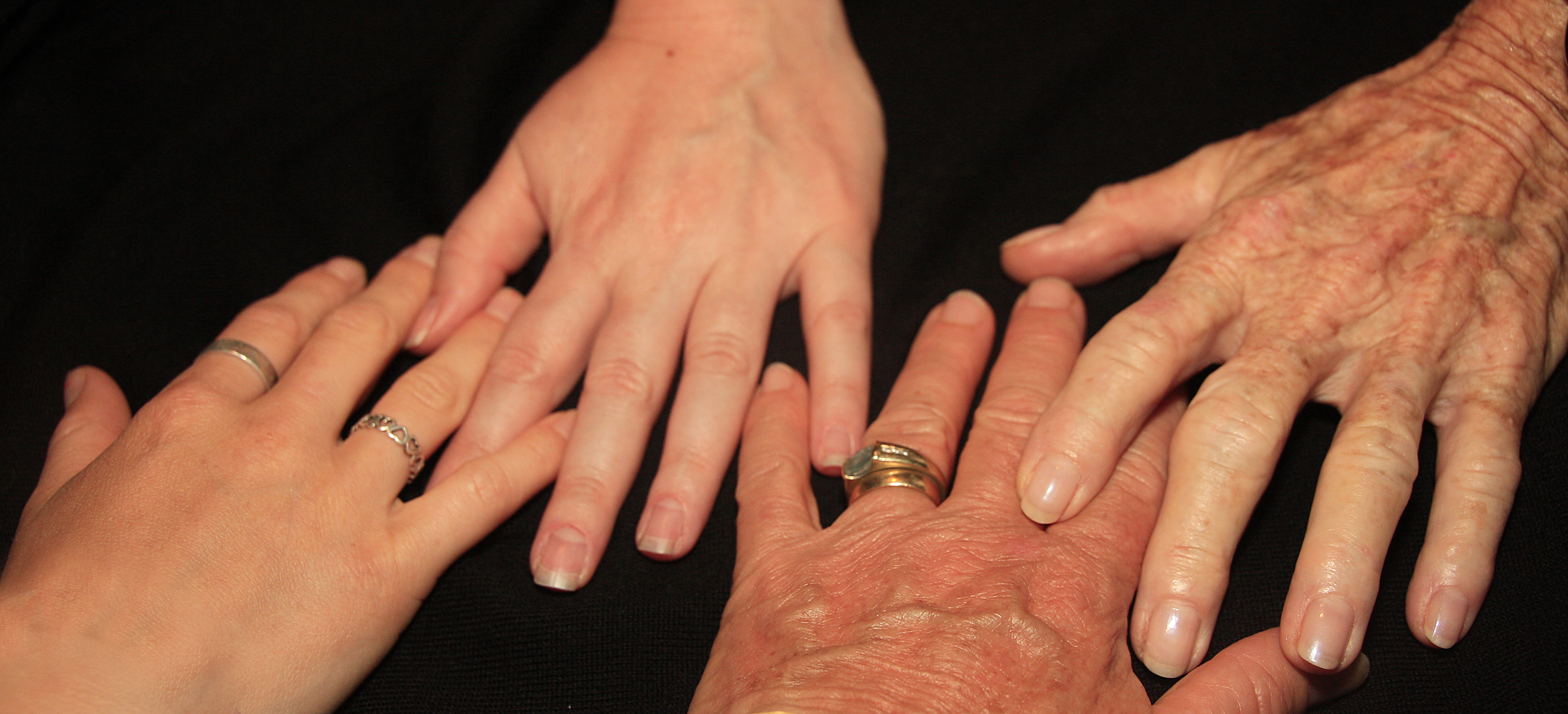
Tree Of Lives. Photo courtesy of genetic counselor Liane Abrams. For permissions and information, contact Lia Photography (925) 768-0006

“How old was your maternal grandmother when she died?” It seems a simple question, one we ask our patients every time we construct a pedigree. Many people know the answer to within a few years, an accuracy that is  perfectly fine for genetic counseling purposes. However, for a significant minority this seems to be a particularly challenging query, and they look at me as if I had asked them to use differential calculus to predict the orbital position of Ganymede on April 12, 2019.

Over the last few months I have informally collected responses to the Grandma’s Age Question. Here are some of the responses:

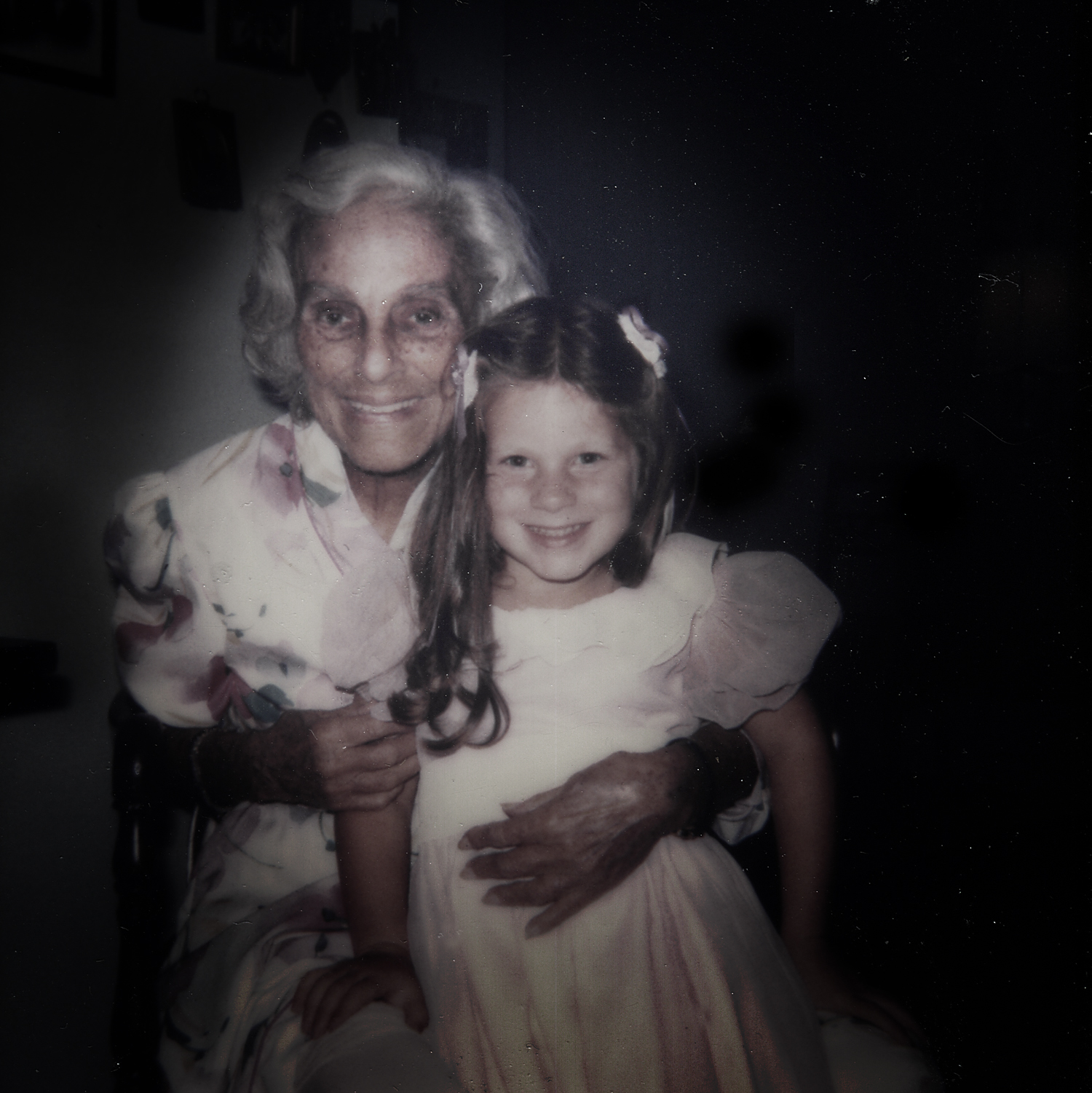
Grandmother and Grandchild. Photo courtesy of genetic counselor Liane Abrams. For permissions and information, contact Lia Photography (925) 768-0006.

1)    She died in 2006. Do the math.

2)    Do you mean Maw-Maw or Baba?

3)    Oh, that was the year we moved to North Carolina.

4)    Well, she died when my mother was 35. How old would that have made her?

5)    She died a long time after my grandfather died.

6)    She was born in 1898, and she died on her wedding anniversary.

7)    Do you mean my biological grandmother or my grandfather’s second wife who raised my mother?

8)    I never really liked her very much.

9)    She died of a heart attack. What is the average age of people dying from a heart attack?

10)  She died of the diabetes when she was 83. No wait, that was my Aunt Hannah, who married into the family but she was like a grandmother to me. Grandma J died of the pleurisy at 90. Or was that Nona? Nona was my Italian grandmother. She was a good cook but she didn’t like my father very much. Oh, I don’t know. One of my grandmothers died at 62 and the other one died when she was 90-something. I think. One of them had Congenital Heart Failure I know.

11)  She was old.

12)  She was young.

13)  Her sister lived to be 104 but Grandma didn’t live as long as her sister.

14)  She died a few years ago when she was 88. I mean, no, wait, she’s still alive.

15)  I know I put 73 on that form you sent me in the mail but I just made up an age because I felt like I had to put down some number. I really don’t know how old she was.

16) She was pretty old, oh, maybe….(thinks for a few moments)… 63. Huh, that’s my age now. But she looked so old to me!

17) She was so vain that she always lied about her age. She even destroyed her birth certificate so no one would ever know her true age.

18) Patient: She was 85. Husband, head turning towards patient: No, she was 86. Patient, head turning towards spouse: No, she died a month after we got married. She came to our wedding and told everybody she was 85. Husband, eyes rolling: No, she announced she was 86 at the wedding. You were too drunk to remember. Patient, head straight, eyes closed: Don’t roll your eyes at me. She was my grandmother, not your’s. And I know for a fact she was 85. Husband, looking out the window and exhaling: 86. Patient, looking directly at me: 85. He’s wrong. Husband, looking directly at me: Her grandmother was 86. She’s wrong. Silence.

So what counseling sense can I make of these responses? Well, like everything else about genetic counseling, there is no simple underlying pattern. Sometimes, the response is an opening to discuss complicated family dynamics or it provides a context that helps me better understand patients’ psychological dimensions. In other situations, divorces and strained family relations account for lack of familiarity with a relative. For some, the inability to recall the information stems from having recently been diagnosed with cancer or having a child identified with a serious syndrome,

Generations. Photo courtesy of genetic counselor Liane Abrams.
For permissions and information, contact Lia Photography (925) 768-0006

and their minds are focused on bigger issues than recalling obscure family facts.

Then there are organic explanations, like Chemo Brain and Pregnancy Raging Hormone Brain. And this can be a particularly challenging question for older patients, who have failing memory skills and whose grandparents may have died a half century ago.

Perhaps too grandma’s age is a bit of information that is less important to some people, knowledge lost with the disappearance of The Family Bible and the geographic dispersal of families in modern times.

I am interested to hear other counselors’ experiences and thoughts about the Grandma’s Age Question.

4 Comments

Filed under Robert Resta

Corporate Sponsorship and Genetic Counseling: Questions and Suggestions

In two previous postings (Blind Spot and Are We There Yet?), I discussed my concerns regarding the potential for conflict of interest in genetic counseling. In this posting I address the complicated relationship between corporate sponsorship and the genetic counseling profession.

Let me be clear about a few matters up front. I believe that the National Society of Genetic Counselors (NSGC) is an excellent professional organization that strives to be ethical and to do the right thing for its members. I have no reason to believe that any corporation has placed undue pressure on NSGC or its members. I am not suggesting that private companies are inherently corrupt or evil.  I recognize the critical role of genetic counselors who are employed by laboratories and the importance of good laboratory medicine. I am not singling out NSGC as unique among professional medical organizations in seeking corporate sponsorship. My concerns are the potential implications of the financial relationship between genetic counselors and corporate sponsors.

To get an idea of the scope of the relationship between the genetic counseling profession and corporations, go to the publicly available section of the NSGC website and view the Sponsor and Exhibitor Prospectus, titled Partnership,  Sponsorship, and Exhibit Opportunities in 2012 (http://www.nsgc.org/Education/2012AEC/ExhibitorSponsorInformation/tabid/451/Default.aspx). This document outlines opportunities for corporate sponsorship, such as becoming an annual sponsor of NSGC, an issue of the NSGC newsletter Perspectives in Genetic Counseling, welcome receptions at the Annual Education Conference (AEC), AEC dinner seminars, and AEC Plenary and Educational Breakout Sessions, among other things.

Of course, corporate sponsorship benefits all NSGC members by reducing annual membership dues and conference registration fees, and helping NSGC carry out its duty to “promote the professional interests of genetic counselors.” I could not find information on the NSGC website about how much of the organization’s income is derived from corporate sponsors; I am guessing it is not a trivial amount.

I have two concerns about corporate sponsorship. One is the potential for intended or unintended suppression of scholarly research and presentations. For example, suppose Lab A provides $3,000 to sponsor an AEC Plenary Session, $10,000 to sponsor the AEC Exhibitor Suite Welcome Reception, and $20,000 to be an  annual NSGC Platinum Sponsor. What if a presentation proposed for that sponsored plenary session suggests that Lab A’s test is inferior to Lab B’s version of the same test? What if a speaker were critical of Lab A’s practices and policies? Would NSGC be reluctant to permit such a paper to be presented and risk losing $33,000 of support? I like to believe NSGC  and the sponsor would not suppress such presentations, but what assurances are in place to prevent this? Or, more subtly, might a researcher not even propose such a presentation for consideration to begin with, for fear of putting NSGC in an awkward position with the sponsor?

My second concern is the public perception of NSGC, an organization whose vision is “Integrating genetics and genomics to improve health for all.” Will the public believe that patients’ best interests are primary to NSGC if the organization is significantly beholden to corporations? Would public trust be further eroded if the NSGC president were employed by a company that was a significant sponsor?

So what are we to do about it? I am not wise enough to know the right answer, but options to consider are:

1)    Place no restrictions on corporate donations, with no clear-cut sponsorship guidelines or limits on the types of companies the NSGC will accept as sponsors. I think this would be a worrisome road to travel.

2)    Eliminate all corporate funding sources. I think this is unlikely to happen.

3)    Limit the amount of NSGC’s annual corporate sponsorship income such that the loss of corporate income would not threaten NSGC’s survival, and cap the amount of money that any one corporation can provide to NSGC.

4)    Limit AEC sponsorships to the Exhibitor Hall and a few other areas that do not have a direct connection to symposia, plenary sessions, and other venues for scholarly discussion.

5)    NSGC should articulate a clear and detailed policy about its relationship with corporate sponsors, something along the lines of the Council of Medical Specialty Societies Code for Interactions with Companies.  This policy should be prominently displayed on NSGC’s website and in the sponsor and exhibitor prospectus. NSGC may already have such a policy but I could not find it on the  website. The NSGC Code of Ethics addresses these issues in only the broadest terms.

6)    NSGC’s annual budget, including details of the funds derived from corporate sponsorship, should be available on the Member’s Only section of the website (it may be there now but I could not find it).

7)    Establish a standing review board, with no direct connection to NSGC or genetic counselors, to scrutinize NSGC funding sources and assure that the economic relationship between NSGC and private corporations follows widely accepted ethical principles.

8)    Take the time-honored organizational response of forming a task force to investigate the matter  and produce a formal report on the merits of the issues that I raised. The task force should include outside consultants who have no direct connection to NSGC.

9)    Ignore my concerns as the ranting of a scold who is unhappy unless he is criticizing something and hand out Bob Resta dartboards at the next AEC.

Perhaps some of these suggestions are already in place; it would be helpful to hear about them. And I would like to hear from all sides of the discussion – critics, supporters, and the confused.

Some additional thoughtful reading:

Steinman MA, Landefeld CS, Baron RB. Industry support for CME – Are we at the tipping point? NEJM 2012 366;12:1069-1071

Brody H. Clarifying conflict of interest. Amer J Bioethics 2011;11:23-8.

4 Comments

Filed under Robert Resta

Are We There Yet?

Everybody Needs Genetic Testing!

The Annual Education Conference

of the

National Society of Genome Service Specialists (NSGSS)

Proud Sponsors:  UneedaTest, Inc.; TestAll!, Inc; Twist-of-Fate, Inc; RLKVirchow Pathogenomics, Inc.; BraveNew Analytics, Inc.; AfterLife Genetics, Inc.

Faculty: Speakers will be chosen by our Corporate Sponsors from their secret list of paid consultants, and from their fashionably dressed, attractive, professional sales staff.

Conference Speaker$/Sale$$taff/Clinician$

Reminder: Continuing Education Credits require attendance at each session and ordering a minimum number of genetic tests from each Corporate Sponsor.

Wednesday, October 24

10:00AM – 11:00AM Opening Address by the UneedaTest-Sponsored NSGSS President:  UneedaTest – The Genetics Laboratory For All Of Your DNA Testing Needs. An objective, scientific discussion of why UneedaTest is the right choice for your patients’ genetic testing needs. Free iPads to the first 100 attendees who promise to send us 50 specimens next month!!

11:00AM – Noon Plenary Session: Corporate Driven Eugenics: Is It Really That Bad?

Noon – 2:00PM  Luncheon, sponsored by RLKVirchow Pathogenomics, where our motto is “Omnis venditiones e venditiones/All sales arise from other sales.” Free lunch requires proof of having ordered genetic tests from RLKVirchow Pathogenomics.

2:00PM – 3:00PM Plenary Session: Clinical Trials – A Barrier To Patient Uptake Of New Genetic Tests.

3:00PM- 4:00PM Plenary Panel Discussion: Fear of Genetic Disease – Your Best Marketing Tool.

4:00PM – 4:30 PM  Soma and Dark Chocolate Break, sponsored by BraveNew Analytics. Free give-away of stylized Malthusian Belts with BraveNew Analytics logo!

4:3oPM – 5:30PM Corpses Have DNA Too: The Dead – The Next Market For Genetic Testing. Sponsored by AfterLife Genetics – the home of true ancestry testing.

6:00PM –  Until You Drink The Bar Dry  Uneeda Party, Sponsored by Uneeda Test. An evening of food, drink, fun, and clever sales pitches  by Uneeda Test Sales Associates. Important Disclaimer: This event is not intended to influence your choice of genetic testing laboratory.

Thursday, October 25

3:00AM – 4:00AM Community Outreach – Special Educational Event for local elementary, middle school and high school students

4:00AM – 4:05AM NSGSS Business Meeting

4:05AM – 4:10AM Open Mike

4:10AM – 4:20AM Ethical Dilemmas in Genetic Counseling

4:20AM – 4:25AM Advanced Counseling Skills for Patients In Crisis

4:25AM – 4:30AM Presented Papers.

4:30 AM – 8:00AM Free Time to explore the Exhibitor Booths

8:00 AM – 10:00AM TestAll! Sponsored NSGSS Leadership Award Ceremonies & Breakfast

–       Huntington Award For Most TestAll! Tests Ordered For Adult Onset Conditions in a Pediatric Setting

–       Gattaca Award For Strongest Advocate of the TestAll! Really, Really Expanded Newborn Screening Panel

–       Podsnap Trophy, awarded to the Genome Service Specialist who ordered the greatest number of TestAll! prenatal tests on a fetus

10:00 AM – Noon TestAll! Sponsored Break-Out Sessions (Choose One)

–       Counseling Skills: How To Appear To Promote Autonomy, Empower Patients, And Seem Non-Directive – But Still Increase Hospital Revenue.

–       Legal And Social Issues: How Everyone Benefits From Exclusive Use Gene Patents. Really. No Kidding.

–       Professional Issues: The Relationship Between Laboratories and Genomic Service Specialists:  Clinical Partnerships, Not Conflicts of Interest

Noon – 1:30 PM Twist-of-Fate Sponsored Luncheon. Special Student Session: Basic Counseling Skills: How To Convince Reluctant Patients to Undergo Genetic Testing.

1:30PM – 3:00 PM  Nap Time. Free TestAll! pillows and blankets for you to keep and proudly display in your offices. TestAll! – the lab that lets you sleep easy, knowing that your patients are getting the greatest possible number of genetic tests. Limited to attendees who have ordered genetic testing through TestAll!, so order testing now to secure your pillow and blanket.

3:00PM – 4:30 PM Twist-of-Fate Sponsored Lecture Series

–     The Disability Community – Who Cares If They Don’t Like Us?

–      The Nuremberg Code: No Longer Relevant To Your Practice.

–      Newborn Screening: Not Just For Treatable Conditions Anymore.

–      Ethics, Shmethics: Ignore The Critics.

4:30PM  – 5:00PM Twist-of-Fate Sponsored  “Twist-of-Lemon Martini Break”

5:00PM – 5:30PM Professional Education Panel Discussion: The Clinical  Doctorate in Sales: The Newest Advanced Degree in Genetic Counseling.

5:30PM – 6:00PM Closing Conference Lecture: Understanding How Your Relationship With Corporate Sponsors Does Not Influence Your Choice of Genetic Tests or Laboratories.


11 Comments

Filed under Robert Resta

Three Counseling Tip-lets To Make Your Job Easier

I am ashamed to admit that despite 29 years as a genetic counselor I have shockingly little in the way of great insights to pass on to colleagues. I have not developed cohesive counseling theories to guide the practice of genetic counseling, and patients remain enigmatic to me (and never seem to behave the way they do in textbooks or journal articles). Perhaps that is why I have shied away from  involvement with genetic counseling students and training programs. After about 30 minutes, I fear I would run out of helpful things to say. Often the best advice I can offer to a counselor who asks about how to handle a difficult session is  I don’t know. Just go in there and talk to them and see what happens.

But I  have managed to pick up a few small practical counseling tricks along the way. They will not cause you to re-think the underlying philosophy and ethics of your practice, but they can make your workday slightly more efficient and less stressful.  They may be frightfully obvious to many genetic counselors, but hopefully at least one of them will induce an Aha! moment.

Helpful Tip-let #1: The Awkward Death Slash – With every pedigree, you must repeatedly ask the sensitive question “Is your (name that relative) alive?”  If the patient answers No, in full view of the patient you mark that relative’s icon with a backslash to indicate that the family member is deceased. The act of slashing the icon can symbolically evoke sadness and other emotions surrounding the death of a parent, grandparent, or – oh so painful –  child. It is an awkward moment at best. While a patients’ reactions can provide an opportunity to explore their emotional landscapes, you do not  want to unintentionally cause sorrow with a thoughtless gesture. There is already enough sorrow in genetic counseling; we do not need to compound it.

Distracted Gaze.
Photo courtesy of Liane Abrams.
For permissions and information, contact Lia Photography (925) 768-0006

A simple way around this sensitive situation is to ask the age at which the relative died. Patients often have to think for a moment about the answer, and almost inevitably briefly look away from you and stare off into the distance as they try to recall the age of their relative. In the moment that their eyes shift focus, you can discreetly mark the icon with a slash (have your pen poised just above the icon so you do not even have to look down to draw the mark). If the patient recalls the age  without shifting her gaze away from  you then ask the year of the relative’s death or birth. This will usually re-direct the focal point of the patient’s gaze.

I am amazed at how often this technique works.

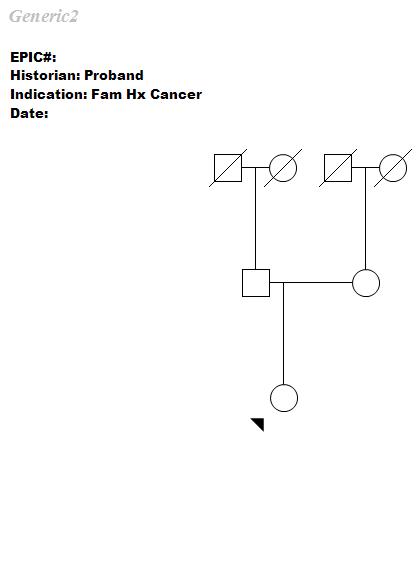
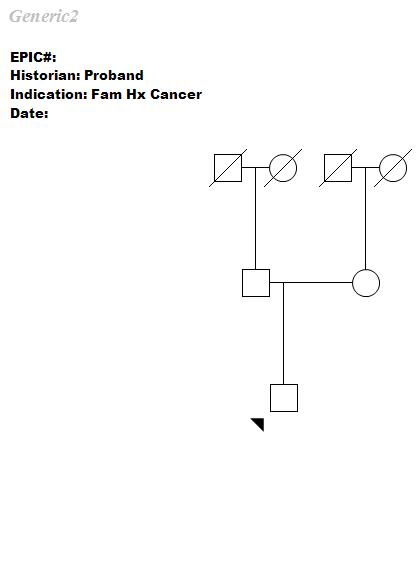
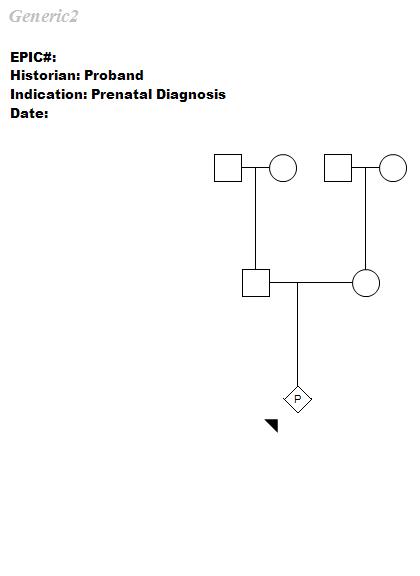
Helpful Tip-let #2: The Pedigree Template – I don’t know how many family histories I had taken before I realized that virtually every pedigree has three invariant components: a proband, the proband’s parents, and the proband’s grandparents. Therefore, there are essentially 3 near-universal pedigree templates (except maybe if you are working in ART):

1) A female proband

2)  A male proband

3) A pregnant patient

Print one of these templates on the form you use for drawing pedigrees, and voilá, you have at least 7 fewer symbols (4 grandparents, 2 parents, the proband) and 6 fewer lines (3 mating lines, 3 lines of descent) to draw with every pedigree. I  prepare the templates by hand and then make a  bunch of photocopies of each template. If you use a pedigree drawing app, simply create and save the 3 templates, and then use the appropriate template for the patient at hand.

It can save you a few moments per patient, and over the course of a week that can add up to a nice little chunk of time. And somehow, from a workflow standpoint, it is psychologically easier to draw a pedigree if some of the routine work is done before you start.

Helpful Tip-let #3: A (Non)Capital Idea – This tip-let is for genetic counselors who order BRCA testing. Myriad transmits test results using a secure web portal called ResultsNow. To view the results, the user logs-in at the familiar screen:

Entering your email address (Hmm… is that my work email or my private email?), your password (which changes every few months), and then the CAPTCHA code unique to each login can lead to frustrating typos (random letter/number combinations are more difficult to type than patterned combinations). The log-in is made none the easier when the letters and numbers of the CAPTCHA code are obscured by the background coloring, leading to the potential for even more mistaken keystrokes.

Although I cannot eliminate all of the typo potential, it helps to know that you do not have to type the CAPTCHA letters in CAPS!  Having one less detail to attend to will increase your keystroke accuracy. A small thing, to be sure, but it does make the process that much less frustrating.

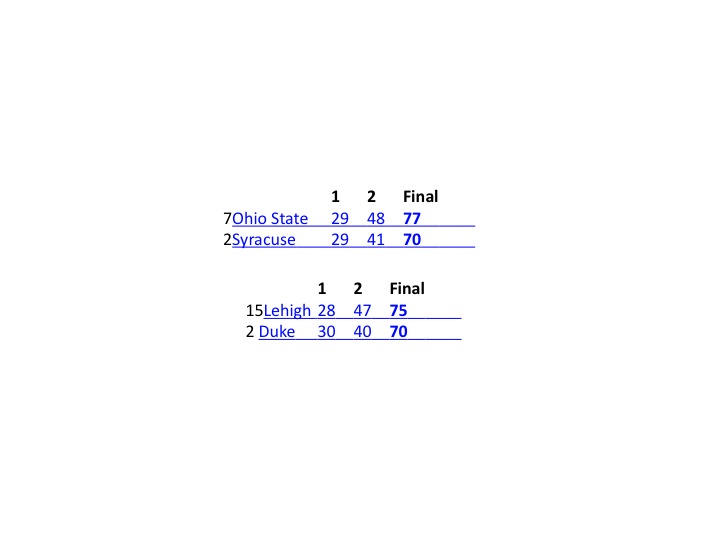
By the way, I am convinced that CAPTCHA codes contain hidden messages that reveal Secrets From The Great Beyond. In fact, the two ResultsNow messages that I received at the end of the day on March 12 included DVLS and MEN in the CAPTCHA codes, which I interpreted as an omen that the Duke Blue Devils and the Syracuse Orange would be the final two teams left playing in the NCAA Men’s Hoops Tournament.

Apparently the Great Beyond has a hard time with bracket picks too. Lehigh!? LEHIGH?!? ResultsNot is more like it.

Tip-lets do not seem to have enough gravitas to warrant a publication or AEC presentation. Nonetheless, they are an important part of our workday duties. It is rare that we get an opportunity to share this kind of information with each other. In the Comments below, tell us about your tip-lets (about genetic counseling, not about your system for picking winners of NCAA tournaments).

Gambling Chips.
Photo Courtesy of Liane Abrams.
For permissions and information, contact Lia Photography (925) 768-0006

6 Comments

Filed under Robert Resta

Why We Love Genetics: A Group Post by The Staff of The DNA Exchange

We suspect that many genetic counselors out there got hooked on genetics by an intriguing bit of information, something that grabbed your attention and made you say “Hey, that’s pretty cool. I want to learn more about this field.” Sure we all want to help people and be good counselors, but the intellectual stimulation of the complex field of genetics also plays a critical role in keeping the spark in your career relationship.

So, in a slightly belated Valentine’s Day posting, we wonks and nerds here at the DNA Exchange (well, there is no “here” here, just 5 of us who email back and forth on an irregular basis) decided to provide some Genetic Factoids that caught our fancy. They include the profound, the moving, the questionable, the near sensationalist, and some gee whiz stuff. Be stimulated by them, have fun with them, and in the Comments section, share your fave facts about genetics with our readers.

 During the course of mammalian evolution, the RNA of  retro- and other viruses have become integrated into host genomes, thanks to that clever devil of an enzyme, reverse transcriptase. Currently about 8% of the human genome is derived from these viruses. And these are not just inconsequential inert bits of DNA. Some viruses play a critical role in mammalian biology. For example,  the HERV-W retrovirus plays an important role in placental physiology, and, by one estimate, 0.4% of human genetic diseases are the result of insertions of Alu elements of retroviral origin. On top of that, about 90% of the cells in the human body are not actually human, as we are inhabited by a large populations of bacteria and other microbes (biology makes for strange bedfellows). Among other things, this calls into question just how much we are defined by “our” DNA, as well as  how we delineate the borders between species. It also makes me smile about our growing obsession with germophobic practices. (Horie M, et al. Endogenous non-retroviral RNA virus elements in mammalian genomes. Nature , 2010, 463:84-7Ryan F.  Human endogenous retroviruses in health and disease: a symbiotic perspective. J R Soc Med, 2010, 97:560-5.Katzourakis A, Gifford RJ. Endogenous viral elements in animal genomes. PLoS Genetics, 2010, 6(11):e1001191)

♥ The largest mammalian gene family has nothing to do with placentas, fur, intelligence, or  behavior. Instead,  the award for body system with the most DNA devoted to it goes to the olfactory system. Three percent of the human genome codes for olfactory receptors, more than the combined total of genes devoted to immunoglobulin and T-cell receptors. The smell of love is in the air, we have the genes to help us detect it, and Chanel takes advantage of that. (Shepherd GM  Neurogastronomy: How the brain creates flavor and why it matters. 2011.  Columbia Univ. Press)

 During the early 1990s, two out of three of deaths among men with hemophilia were the result of AIDS related complications, the majority of which were young men who had acquired the virus during transfusion treatments. In 2009, about half of all people diagnosed with hemophilia in the United States were infected with the Hepatitis C virus. One disease’s cure is another disease’s cause (vide infra, PKU) (Committee Reports, 111th Congress (2009-2010), House Report 111-220, Departments of Labor, Health and Human Services, and Education and Related Agencies Appropriation Bill, 2010.;  Soucie JM et al. Mortality among males with hemophilia: relations with source of medical care. Blood. 2011. 96:437-42.)

♥ In the United States in 2009, there were as many babies exposed to maternal PKU as there were babies born with PKU. Given the inadequate funding for follow-up of patients who have genetic diseases detected by newborn screening and the potentially harmful effects of maternal PKU, the benefits of PKU newborn screening in preventing developmental disabilities hang in a delicate balance. It also makes one wonder what surprises the law of unintended consequences holds for expanded newborn screening (vide supra, hemophilia). (Resta R (2012) Generation n + 1: Projected Numbers of Babies Born to Women with PKU Compared to Babies with PKU in the United States in 2009. Am J Med Genet (in press).)
 

 A study of 194 DNA exonerations of criminal convictions found that witness/victim misidentification was a factor in 75% of wrongful convictions. False confessions were obtained in 30% of the cases, and jailhouse/government informants played a role in 22% of false convictions. Invalid forensic science testimony played a significant role in wrongful convictions, including serology (38% of cases, mostly blood, saliva, semen, and vaginal fluids), hair comparisons (22%), fingerprinting (2%), and bite mark analysis (3%) (And CSI make it look so easy and objective). Of exonerees, 58% were African American, and 43% of crimes were classified as cross-race (i.e., a perpetrator of one race committing a crime against a victim of a different race). DNA  plays a critical role in the legal system. Still, I am shocked by proposed state laws that require collecting DNA at the time of arrest (not at the time of conviction). (Hampikian G, et al.  The genetics of innocence: Analysis of 194 US DNA exonerations. Ann Rev Genomics Hum Genet. 2011. 12:97-120.)

 About 8-9% of dizygotic twins are the result of more than one coition and 1/400 dizygotic twins born to married white women in the US are bipaternal. Some people are very romantic. ( James WH. The incidence of superfecundation and of double paternity in the general population. Acta Genet Med Gemellol (Roma).1993. 42(3-4):257-62.)

 Elizabeth Taylor’s thick eyelashes were the result of a mutation in FOXC2, which can cause lymphedema-distichiasis syndrome (though she did not appear to have “photo”-phobia). (Elizabeth by J. Randy Taraborrelli, Grand Central Publishing, 2006).

♥ Because of a mutation and in-breeding, the town of Sao Pedro, Brazil has a 10% rate of twinning. Most of the twins have blue eyes and blond hair, which had raised suspicions that the unusual number of twins was the legacy of some peculiar science experiment by German ex-pat in hiding Josef Mengele (Nazi ‘Angel of Death’ Not Responsible for Town of Twins,  New Scientist, January 27, 2009).

 Levels of gene expression for genes involved in fighting infection are lower in people who are lonely, according to researcher Stephen Cole (Ah, yes, but the lonely suffer less from heartache).(Cole S. et al., Social regulation of gene expression in human leukocytes. Genome Biology, 2007, 8:R189).

 In a study by Muscarella and Cunningham, males and females viewed 6 male models with different levels of facial hair (beard and mustache or none) and cranial hair (full head of hair, receding and bald). Participants rated each combination on 32 adjectives related to social perceptions. Males with facial hair and those with bald or receding hair were rated as being older than those who were clean-shaven or had a full head of hair. Beards and a full head of hair were seen as being more aggressive and less socially mature, and baldness was associated with more social maturity.Of course, social maturity is very difficult to measure in men. (From: http://en.wikipedia.org/wiki/Baldness; Muscarella, F. & Cunningham, MR. The evolutionary significance and social perception of male pattern baldness and facial hair. Ethology and Sociobiology, 1996, 17 (2): 99–117. doi:10.1016/0162-3095(95)00130-1).

 If you were to recite the ATCG sequence in your own DNA (which is 3 billion bases pairs long) and uttered 100 ATCG sequences per minute without taking a break for sleeping, eating, or drinking, you would speak for 57 long years. Not so helpful for maintaining close relationships.

 1000 cell nuclei could be squeezed into a period mark at the end of a sentence. (http://www.geneplanet.com/the_abcs_of_genetic_analysis/interesting_genetic_facts)

 A report in Scientific American in late 2011 looked at the websites that were most commonly linked to by science-lovers on Twitter. There are several flaws inherent in the “study design,” but regardless it is interesting to note that Genetics and Astronomy were very closely linked: meaning people who linked to Astronomy articles & content were more likely to also link to Genetics content and visa versa (Hey there Genetic Counselor, you with the stars in your eyes). Other interesting correlations included Physics and Fashion as well as the fact that Chemistry appeared to be an outlier, not being linked to any other science.
In terms of heritability versus shared environmental effects, genetic factors account for 50-64% of an individual’s right-wing authoritarian attitudes with 0-16% due to shared environmental effects, while genetic factors account for approximately 54% of an individual’s extraversion, 49% of their conscientiousness and 57% of their openness with no appreciable shared environmental effects. (Bouchard TJ. Genetic Influence on Human Psychological Traits. Curr Dir Psychol Sci. 2004;13(4):148-51.)

 And, of course, let us never forget The Jumping Frenchmen of Maine.

3 Comments

Filed under Allie Janson Hazell, Jessica Giordano, Laura Hercher, Michelle Strecker, Robert Resta

Blind Spot: Genetic Counselors and Financial Conflict of Interest

Many people don’t know that the human eye has a blind spot in its field of vision. There is a part of the world that we are literally blind to. The problem is, sometimes our blind spots shield us from things that really shouldn’t be ignored. Sometimes our blind spots keep our lives bright and shiny.
– Meredith Grey, character from ABC TV Series Grey’s Anatomy

It’s safe to say that genetic counselors are not in it for the money. I prefer to believe that our practice is guided by what we perceive to be our patients’ best clinical and psychosocial interests, with no concern for fiscal gain for ourselves. But however bright and shiny we may be, we are only human and subject to the same economic pressures, character flaws, and temptations as everybody else. I am not claiming that there is wide scale greed and corruption in the profession. What worries me more is that our blind spot can prevent us from detecting or admitting the possibility of a conflict of interest.

This topic has not been openly discussed among genetic counselors, so it’s about time the subject was broached. I suspect this discussion will evoke discomfort, defensiveness, and not a little denial.  Financial conflicts of interest might arise in many areas of genetic counseling but I will explore just three: when genetic counselors work for laboratories as expert advisors on genetic testing, when we need to justify our clinical positions to hospital administrators, and at our  annual education conference.

 Medical laboratories and their employees are driven by a genuine desire to help referring physicians and their patients. I have been uniformly impressed by the help I receive from lab counselors who have walked me through the testing maze in complicated clinical situations. But let’s face it – labs are profit-driven corporate entities. If an insufficient number of tests are ordered, the laboratory and its investors lose money. Hopefully laboratory directors do not set monthly test quotas (“Resta, I better see 150 TRFs for our new autism screen next month or you are out of a job.”). But if the number of tests drops below a certain threshold, some manager somewhere is going to notice. Labs may choose to discontinue that particular test, but more likely they will try to boost test uptake.
The need to make a profit, with the attendant job security for us, is a powerful motivator that can subconsciously influence conversations between lab counselors and healthcare providers. Think of those gray situations where multiple tests can be ordered but it is unclear just how likely they are to be positive or clinically useful (“Well, this doctor does not want to leave any stone unturned  in working up this family so maybe I should suggest Test X that she hadn’t thought of, even if is very unlikely to be positive and will not change clinical management.”).
Or consider labs that offer SNP testing for risk assessment for common disorders like diabetes or cardiovascular disease, tests that do not yet have proven clinical value. One might justify such testing under the rubric of “Patients Have A Right To Know.” But patients also assume that because a test is available and yields a precise sounding risk estimate, it must have some clinical value, and therefore patients think they have a right to know. Is offering such tests motivated by an altruistic desire to ensure that patients’ rights are not denied, by profit-seeking, or by misguided clinical judgment? The answer is murky.

Genetic counselors who work in medical centers are just as liable to conflicts of interest as their laboratory counterparts. In these tough economic times, we are being called upon to justify our jobs to administrators who face dwindling budgets and might have less of an appreciation for clinical and psychosocial issues. In response, we might look to increase our patient volumes, and one way to do that is to expand the indications for referral to genetic counseling beyond what might be considered “medically necessary.” You might then tell your boss that broadened guidelines will increase downstream revenue through more extensive screening and increased rates of prophylactic surgery. Surely we are not talking our patients into salpingo-oophorectomies or breast MRIs to enrich the hospital’s coffers or to secure our jobs, but that is the  message we are communicating to hospital administration (for the moment, ignoring the fact that we have little data to prove that assertion).

Or think about fetal diagnostic testing through maternal serum, which will presumably reduce the need for amniocentesis and CVS. Even if maternal serum testing proves to be not quite  diagnostic and still require invasive testing for verification, First Positive rates will be much lower than with traditional serum/ultrasound screening. This in turn might lower departmental revenue by reducing the number of counseling referrals,  invasive procedures, and karyotypes. Just how will those economic considerations affect our job security, how we evaluate these new tests, how we present them to our patients, and how we integrate them into our clinics?

The National Society of Genetic Counselors (NSGC), our collective face that we present to the public, has expanded its financial relationship with private laboratories. For example, in 2011, about 25% of the revenue from the Annual Education Conference came from corporate exhibitors and sponsors (contributing ~$216,000 of the total conference revenue of ~$820,000). Our professional relationships with labs are critical on many levels. But  accepting money  from them tacitly – if not officially – condones their services. NSGC would probably not accept certain labs as exhibitors or sponsors if those labs offered questionable  services, like using genetic testing to find the perfect mate or to improve your sex life through nutrigenomics. Excluding some labs lends a certain amount of legitimacy to those labs  from whom we do accept funds.

And let’s not forget those breakfasts and evening debaucheries that some private labs sponsor at every Annual Education Conference, or those  exhibitor booths where we fill our corporate-logo imprinted conference tote bags with giveaway geegaws and doodads (“Oh, I’m just bringing these home for my kids. I am certainly not going to use this lab just because they gave me a glow in the dark double helix pen and a piece of chocolate. Even if it is a Dove dark chocolate.”).

You are deluding yourself if you think these drinks and trifles do not subtly affect your selection of  a lab to run your tests. Just about every research study on this topic has concluded that those not-so-freebies do influence healthcare providers. Besides, if those giveaways didn’t help a business’s bottom line, do you think they would waste money giving them away? And when we go home and take those tote bags to the grocery like responsible Green Citizens, we become walking billboards that announce to the world that NSGC and Lab X are awfully cozy with each other.

I am not saying that genetic counselors should be unconcerned about their institutions’ bottom lines, or that the NSGC should abandon relationships with corporate sponsors. I have no idea of the magnitude of the problem because it has not been systematically studied. It is almost impossible to study it ourselves; those of us in the middle of are likely to have a hard time seeing it. Somebody outside of our profession needs to study this.

What the profession can do for itself is to clearly define financial conflicts of interest and develop guidelines to help genetic counselors navigate the treacherous waters of the Great Sea of Conflicts of Interest.

Am I being overly worried? Are there other aspects of genetic counseling that are vulnerable to these concerns? Share your thoughts and comments and air out this dusty old closet that we have avoided opening.

18 Comments

Filed under Robert Resta

The Implicit Judeo-Christian Ethic of Pedigree Nomenclature

I am  unabashedly the pedigree’s biggest fan.* Although those new-fangled              “-omics” testing technologies may soon surpass the analytic power of the pedigree, I suspect that pedigrees will be a critical part of genetic counseling for as long as it is practiced in its current form.

I have resisted using family history questionnaires because for most patients those questionnaires probably just feel like homework assignments. Besides, I am not convinced that questionnaires really save much clinic time. More critically, the process of constructing a pedigree provides great insight into a patient’s understanding of genetics, disease, and family dynamics.  And, truth be told, a questionnaire lacks a pedigree’s minimalist elegance and concise pictorial encapsulation of complex information. Ludwig Mies van der Rohe would have embraced the simple rhythmic modularity of a multi-generation pedigree.

But pedigrees are not measures of scientific realities like the speed of light in a vacuum or the Avogadro constant. Pedigree nomenclature is a product of  the sociocultural background of the geneticists who devised it. Pedigree symbols were formalized a century ago by scientists (eugenicists, if we are to be honest about it) raised in the Western Judeo-Christian tradition, a tradition that reflects

An Australian Aborigine kinship system

the background of many current genetic counselors.

The sociocultural biases of pedigree nomenclature are most apparent in its limits. So, what are some of those limitations and what do they have to tell us?

Simply put, pedigree nomenclature functions best for people who have one mating partner for life as well as for kindreds with few or no consanguineous matings, and further assumes that people can be neatly placed into one of two discrete gender categories.

Let me expand on these points. Pedigrees are best suited for a simple family structure that broadly reflects the Christian ideal of a single spouse for life. Sure, pedigrees are capable of including a second partner, but they quickly grow into a mess of confusingly angled lines and icons when someone has more than two mating relationships. This problem is compounded when the proband’s relatives also have multiple mates.

In some non-Western societies, people are expected to marry their cousins whereas Westernized societies generally stigmatize consanguineous matings. Christianity grudgingly allows for the occasional cousin marriage but marrying a first cousin can require special dispensation from the Vatican. Frequent cousin marriages within a family are discouraged. The pedigree of a patient whose family includes multiple generations of consanguineous matings is a complex web of double mating lines and hooked or crisscrossed lines of descent. Such families are better described by inbreeding coefficients than by ideograms.

Pedigree nomenclature also assumes that people are either male or female, just like God created Adam and Eve. This is a peculiar assumption, considering that intersex individuals are not uncommonly encountered in the genetics clinic. It is probably more accurate to say that gender and sexuality represent a spectrum, with male heterosexual at one end and female heterosexual at the other. Yes, I know that the nomenclature allows for the depiction of people who may not phenotypically, socially, or genetically fit neatly into either male or female. But the technique is awkward, and was developed almost a century after pedigrees had become part of the genetics toolkit. They are literally square pegs in round holes.

There are other subtle psychological aspects of pedigree nomenclature. For example, it reinforces mendelian and reductionist views of complex biological phenomena. Those neat arrangements of squares, circles, and lines can  

Pedigree nomenclature of the Eugenics Record Office, Cold Spring Harbor.

subconsciously seduce the clinician to think “Oh it must be a dominant condition with variable penetrance or reduced expressivity” or “With all those inbreeding loops it surely must be a recessive trait.” When you construct a figure intended to illustrate mendelism, everything starts to look mendelian. And, as eugenicists knew all too well, the ability of those dark and light geometric shapes to reify cultural constructs like feeble-mindedness or pauperism can make the pedigree a magnificently effective propaganda device.

Don’t get me wrong. I do not advocate eliminating pedigrees from the clinic or changing the nomenclature. Far from it. Hey, I was part of the group that established standards for modern pedigree nomenclature. But we must be willing to make the difficult acknowledgment that pedigrees are not objective scientific tools that take honest and accurate measure of biological traits. All kinship systems  reflect the culture that developed them. Pedigrees are the product of geneticists, with all of their faults, prejudices, strengths, and humanity.

____________________________________________

* – Okay, maybe I am second to Robin Bennett.

5 Comments

Filed under Robert Resta

Sense, Missense, and Nonsense: A Word Nerd’s Freewheeling Take On The Vocabulary of Genetics

I proudly admit to being a Word Nerd, a hound who sniffs a trail on a random dictionary page for the sheer pleasure of flushing out obscure words. Today’s finds were haček, hachure, and hackbut. So let me combine two of my passions – words and genetic counseling – and share a few irreverently serious thoughts on some selections from the genetics lexicon.

Genetic Counselor –This professional title is just plain wrong. We should more properly be called genetics counselors, i.e., those who counsel about genetics.  The s-less form gives the impression that being a counselor is the result of a hereditary predisposition towards counseling (“I’m sorry,” she said to the patient after an overly long counseling session, “Sometimes I can’t stop myself from counseling. It must be genetic.”). A health professional who counsels about diabetes is called a diabetes counselor, not a diabetic counselor. Unless of course you were describing a counselor who happens to have diabetes.  Hey NSGC – time for you to take the lead on this one and change the name of our profession, though I shudder to think of the impact on the fine print of those state licensure laws.

Chimaera vs. Chimera. I prefer the  “ae” spelling because “ae” words are uncommon in American English and its occurrence in the middle of the word makes it look like a hybrid word, just as a chimaera is a rare and unusual genetic hybrid. The word comes from the mythological fire-breathing female creature said to be the product of an incestuous union and is an anatomic pastiche of a lion, a goat, and a serpent. It is derived from the Greek khimaira, a year old she-goat. Its earliest use in English, in the 16th century, meant “wild fantasy.” The chimaera fish is a member of the Chimaeridae, a class of cartilaginous fishes. Given these connotations, the term is insensitive and evokes a sideshow spectacle. If I were someone who were chimaeric, I would lobby for a new designation for this phenomenon when it occurs in humans.

Meiosis/Mitosis. It is blatantly unfair and inconsiderate that two words that describe processes broadly similar in outline but critically different in detail and outcome should have easily confused names. When I learned about cellular division, I resorted to the mnemonic “Meiosis has an ‘e’, and ‘e’ is the first letter in egg; thus, eggs undergo meiosis, not mitosis.”  It also helps to know that meiosis comes from the Greek word for “lessening,” reflecting its characteristic reduction division (though during mitosis the amount of DNA doubles from 2N to 4N and then reduces to 2N…Oh, never mind). The great 19th century German biologist Walther Flemming coined mitosis after his observations of the dividing gill and fin cells of a salamander. Mitosis derives from the Greek word for “thread,” presumably referring to the dividing cell’s threadlike chromatin.  The Online Etymology Dictionary translates the Greek a bit differently as “warped threads.” Warped Threads would be a good name for a Seattle alt band that sings quirky songs about salamanders (“Newt Is A Real Salamander”), Greek letters (“I Was Just Your Beta-Test Boyfriend”), and 19th century German biologists (“Virchow’s Virtues”).

Oocyte. I admit I like this one strictly because it’s fun to say, and to play with different pronunciations – “ooo-cytes” “oh-oh-cytes” “oh-uh-cytes” or, perhaps if an egg cell develops abnormally, “uh-oh-cytes.” As an added bonus, the o-shape that the mouth makes when saying the word evokes the shape of an egg cell. I am not a fan of oogonia or oogonium (or their even more awkward cousins, spermatogonia and spermatogonium). Oogonia sounds like an ancient continent, as in  “During the Jurassic Period, tectonic forces broke up Gondwana into several smaller continents, including Oogonia, where only female dinosaurs thrived.” Oogonium could be a rare mineral as in “Oogonium mining resulted in contaminated ground water that was responsible for mutations in the oocytes of exposed field mice.”

Kindred, Kinship. While there is nothing wrong with pedigree – that old crane’s foot of a word – kindred and kinship are snazzier, a syllable shorter, and permit the Teutonic pleasure of the “k” sound. It also evokes a spirit of unity (the whole family is on this ship together and united by a special bond, as in kindred spirits). Besides, everybody thinks of dogs and horses when they hear pedigree, whereas kinship and kindred are usually only applied to humans. The related term sibship rolls off the tongue nicely too.

Products of Conception. This wins the Silver Medal for the coldest and most insensitive pregnancy-related term; the Gold goes to habitual aborter (both sound suspiciously like terms created by men for women). I recognize that it tries to communicate the idea that pregnancy includes a fetus as well as membranes and a placenta. But the term robs pregnancy of its emotional richness and sounds like a Marxist critique of a capitalist pregnancy factory where the female proletariat manufacture babies to generate profits for the owners.

Primitive Streak. I am fond of this one because it communicates the ancientness of this vertebrate biological structure. I am not the only one intrigued by this name. The Subdudes 1996 CD bears this title. It is also the name of a coolly outrageous clothing line developed by fashion designer Helen Storey and her sister Kate Storey, a developmental biologist. Their creations realize the early stages of embryonic development in fabric, and include such items as a dress featuring two sperm-shaped breast plates and a stunning white fake fur neurulation dress.

Genetic Drift. This term, attributed to the great geneticist Sewall Wright, clearly and non-technically evokes the word’s meaning without resorting to pedantic combinations of Greek words. You hear “genetic drift” and you immediately grasp what it refers to – random fluctuations in gene frequencies over time and populations, the evolutionary equivalent of Brownian motion. Genetic Drift was also the name of a wonderful series of genetics essays written by Larry Karp in the American Journal of Medical Genetics in the early 1980s and which were one of the inspirations for me to blog about genetics.

11 Comments

Filed under Robert Resta

The Unusual Suspects: Wedgwood Pottery, The Canals of England, And The Death of God

God is dead…..And we have killed him.

– Friedrich Nietzsche

Nietzsche’s madman infamously proclaimed the demise of God in his 1882 work The Gay Science. Nietzsche was presumably dramatizing the idea that belief in God and the pervasive influence of Christianity in Europeans’ daily lives had ebbed throughout the 19th century.

Grant me permission to sidestep the heated debates among deists, theists, scientists, atheists, and all the other “-ists”  about the existence of God and let me indulge in a bit of fanciful post-mortem speculation about the real culprits responsible for the Supreme Deity’s untimely death – the canals of England and Wedgwood pottery.

I want to be clear up front – part of my theory is unabashedly lifted directly from Simon Winchester’s excellent book The Map That Changed The World. The  speculation about the role of Wedgwood pottery is my unique contribution.

Throughout the Middle Ages and up until the 18th century, much of the Christian world believed in the literal interpretation of The Bible. In this view, the Earth was created at 9 AM on a fine Sunday morning on October 23rd, 4004 BC, as calculated in 1650 by James Ussher, the Anglican bishop of Armagh in Northern Ireland.  By the start of the 18th century, the annotated pages of the King James Bible included Ussher’s dating for every biblical event. For example, a good Christian could open the Bible to the story of Noah and in the margins read that the Great Flood began on the 17th day of the second month in the 600th year after the creation of the Earth.

But the supremacy of the Bible soon came under scientific scrutiny. The late 18th century saw the rise of England’s Industrial Revolution, the shift from cottage based industries and farming to large factories that manufactured textiles and other goods on a previously unimagined scale. England suddenly needed huge quantities of coal to be transported quickly and cheaply, which led to the construction of a complex network of canals for carrying coal on horse-drawn barges from the mines to the factories.

Canal construction required the land to be surveyed to determine the best route for the waterways. William Smith, a key figure in the history of geology, surveyed the canals in the Somerset coalfields. As Smith studied the layers of earth in the coal pits, he realized that these strata could be identified in the same order in widely separated parts of England and that each stratum contained a unique set of fossils arranged in a predictable and orderly fashion from oldest to youngest. Smith eventually produced the first stratigraphic map of England, which provided  graphic evidence that the Earth must be considerably older than Ussher’s 6,000 year estimate. The first cracks started to appear in the rock solid Biblical view of the world.

The crippling blow to the literal interpretation of the Bible had its seed planted in 1769 when Josiah Wedgwood opened Etruria, his great pottery factory near Stoke-on-Trent in Staffordshire. Wedgwood realized that canals were a more cost-effective means of transporting clay to his factory and a far safer means of transporting his fragile products to their sales outlets. Wedgwood convinced Erasmus Darwin, his good friend and the eventual grandfather of Charles Darwin, to join him in investing in the construction of a  system of canals running from the countryside to major cities.

These shrewd investments led to the Wedgwood and Darwin families becoming among the wealthiest in England. Charles Darwin’s father, Robert, united the families’ fortunes when he married Susannah Wedgwood, daughter of Josiah Wedgwood. Charles himself further entwined the wealth of the two families by marrying his cousin Emma Wedgwood.

This vast wealth directly paid for Darwin’s Beagle explorations, and also allowed him to avoid the shackles of employment and to lead the leisurely life of a wealthy country gentleman as he spent decades meticulously developing his theory of evolution. As Darwin acutely understood, the 1859 publication of  The Origin of Species shocked the world, and still generates intense debate today. Whatever side one takes on these arguments, Darwin’s work shook many peoples’ beliefs in the literal interpretation of the Bible and the role of the Christian church in their perception of the world around them.

As Gil Grissom and the CSI crew know, solving a crime can be complicated and require making some not-so-obvious connections.

Leave a comment

Filed under Robert Resta