Guest Post: NIPS: A Call to Embrace and Educate!

By Lisa Demers

Lisa Demers is a certified genetic counselor working in a prenatal diagnosis program at Dartmouth-Hitchcock in Nashua, NH.  She graduated from the Arcadia Genetic Counseling Program in 2003.  Lisa has been president of the New England Regional Genetics Group, is a member of the New Hampshire Perinatal Loss Taskforce, and is the proud mother of two little boys who teach her more and more about Star Wars every day. 

I feel like it’s time to show some appreciation for the amazing screening test that has truly enhanced the prenatal screening world.  Non-invasive prenatal screening (NIPS) has taken our prenatal world by storm and is rapidly infiltrating university hospitals and private practices alike.  This is a change (who really likes change?) and it’s fast.   Testing has jumped out of the controlled hands of research laboratory scientists and into the lucrative playing field of investor-backed industry.  But is this a bad thing?

NIPS has taken traditional screening and made it better.  There is no denying that NIPS is a superior screening test.  The benefit of NIPS over traditional screening is acknowledged by the rapid approval of coverage by major insurance plans. I applaud Katie Stoll in her eloquent summary of the discrepant positive predictive value (PPV), but I do not think this area of ambiguity should overshadow the benefits of testing.  The PPV for a “high risk” (or whatever language the report contains) sample, even if it is 11% (using the data in Katie’s initial post), is about the same as a 1 in 9 risk for trisomy 18 using traditional methods.   So is the counseling really very different?   “This screening test suggests a very high risk for trisomy 18, diagnostic testing will tell us for sure”.

Our knowledge about how to best utilize this test and interpret the results is an ongoing process.  This is completely on par with other technologies. At one point, supernumary rings were identified on karyotype with little way to identify the origin.  The argument that we shouldn’t use a technology until we completely understand it is unreasonable.  We need large testing numbers to give us these uncertain results so that we can learn from them.  Ambiguity with test results is hardly a new concept for us.  Genetic counselors deal with this all the time!  Our counseling isn’t really changing; it’s just the same uncertainty coming from a different test.

I argue that this test provides much LESS ambiguity since most women are getting reassuring results.  The number of women who are screen positive is dramatically decreased.   Fewer women being anxious, fewer amnios being considered and performed, and fewer losses of otherwise normal babies.    And why wouldn’t an informed patient want the BEST screening test?   And why wouldn’t providers want to offer it?

I absolutely acknowledge that not all patients are fully informed about NIPS prior to testing, and I hate to think about the ignorance that providers may pass along to patients.  But what genetic counselor hasn’t had a patient arrive at their office with an abnormal screening result thinking that their baby is, in fact, affected?  We hear this endlessly.  And how long has traditional screening been around?  And those results even have a risk estimate listed!  Sometimes I like being the hero in these situations “You mean my pregnancy is at a one percent risk for Down syndrome?  What a relief!”  The misinterpretation of testing results is inevitable.  We should not back away from better testing simply because some people do not understand.

While I agree that I would prefer that the commercial labs present their results with some more obvious notation of the limitations of the testing, no report can eliminate ignorance.  So perhaps our focus can be a shift to better education.  After all, isn’t that we do?  We need to talk with providers in our area and help them understand the test more clearly.  Review with the nursing staff when a referral is sent to us that the results are screening and not diagnostic.  I can tell you that in my own experience, education isn’t always successful because I still have providers who offer universal SMA and Fragile X testing without being able to interpret the results. *Sigh*  But these patients are ultimately referred for counseling, and I consider that a success.

Education at the patient level is important too.  Group counseling sessions can be an effective way to inform the pregnant population, especially about universal topics like screening.  The overwhelming task of education is not unique to prenatal genetic counselors, but to the profession as a whole.  Rather than hold back on a test that is truly superior because providers misunderstand it, why don’t we try to tackle the larger issue of provider education?

What I hope is that the consumers of NIPS can work closely with the industry providers to further study the performance of this technology to better understand cell free fetal DNA and its utility in pregnancy screening.  Let’s work together in educating providers about the testing and the importance of pre-test counseling.  Patients deserve it.  Without the cooperation and participation from genetic counselors we risk delaying universal acceptance of NIPS.  Let’s all jump aboard and steer this train.

4 Comments

Filed under Guest Blogger

TMI?

Genetic testing for single disorders is rapidly going the way of yogh (Ȝ), eth (ð), and thorn *(Þ), those Old English fossil letters of the alphabet. With the advent of massively parallel sequencing and other new testing technologies, multi-gene panels are the wave of the immediate future. Some labs offer testing for 1700 genetic diseases on a single saliva sample. Single gene tests will soon seem as quaintly ancient as The Canterbury Tales.

The eye-blink rapidity of the evolution of genetic testing has made this an exciting time to be a genetic counselor. There is much to be said about multi-gene panels and the technological, scientific, clinical, ethical, and social issues that they raise. Here I want to share a recent experience with a hereditary cancer risk gene panel that made me think about some less discussed issues stemming from gene panels – Will patients  be able to understand this Midas-like wealth of genetic information, integrate it into their health care, and share it with their families? How adequate are current counseling strategies to deal with this complexity? 

My bright and educated patient had been diagnosed with young onset breast cancer, as had several of her first degree relatives.** One of these relatives previously had normal BRCA analysis. No other relatives had been diagnosed with cancer. A multi-gene panel indicated that my patient carried two pathogenic mutations, one in BRCA1 and the other in MUTYH. On the surface, this is not too complicated – a dominant mutation (BRCA) and a recessive condition (MUTYH polyposis) within one sibship, something that a first year genetic counseling student would be able to think through without much difficulty.

Simple. Or so it seemed until the discussion quickly became complex when I started switching back and forth between dominant and recessive inheritance and the different risks to siblings, nieces, and nephews; the need to test the patient’s spouse and potentially her siblings’ spouses for MUTYH mutations; and what further hereditary breast cancer genetic testing might be worth considering for the affected sibling who previously had normal BRCA analysis. It was like trying to focus on two different radio stations that were playing different songs simultaneously.

When a test result indicates a pathogenic mutation, I provide a detailed letter to the patient that serves as a guide to clinical management and to review the implications for the patient’s family. My first go-round with writing the letter for this double mutation patient was a 7 page affair that left my head aching. I eventually settled for two 3+ pages letters, one for each condition, but it still felt unsatisfactory to me. The follow-up took several sessions, a large chunk of administrative time, and multiple phone calls. Because some relatives do not live in the immediate area, it will be difficult to know how well this information will be communicated to the rest of the family.

Think of those female family members who may wind up testing positive for the BRCA1 mutation and carrying two MUTYH mutations. Will they have the drive to undergo annual colonoscopy, annual mammography, annual MRI, monthly self-breast exams, semi-annual physical breast exams, and whatever other screening we might suggest? Or elect to have risk-reducing salpingo-oophorectomy, prophylactic mastectomy, and, if they have a high polyp burden, prophylactic colectomy? That is asking a lot of someone, to say the least. Many patients will follow screening recommendations initially but after five or so years may begin to fall off in their compliance if the demands are too great.

And that is just for a small gene panel. No doubt we will encounter multiplex mutation patients who carry more than just two high risk genetic markers as routine whole genome/exome sequencing comes closer to reality. We cannot expect patients to regularly consult their genomes on a daily or weekly basis, like a genetic I Ching, to guide their life choices.  I suspect what may happen is that patients will focus on a few aspects of one or two diseases depending on their particular circumstances and experiences, and let the rest fall by the wayside. I not uncommonly encounter BRCA positive patients who say “Well I don’t have to worry about ovarian cancer because there is only breast cancer in my family, so there is no need for me to have my ovaries removed.” Even for the most medically sophisticated, highly motivated, and well-educated patients, there is a limit to how much information they can process and act on.

Then there are the possible psychosocial implications and narcissistic threats engendered by carrying not just one but multiple gene mutations, and the familial issues as increasingly complicated information is transmitted across the kinship network. With no family history of colon cancer, the MUTYH results came out of the blue and added another level of psychological complexity by raising concerns about a cancer that had not been part of the family’s prior medical landscape.

Some labs provide excellent educational materials, far better than what most counselors can put together with their limited time and resources. However, these pamphlets and online materials are geared toward explaining a single disorder within a family, not with providing a comprehensive narrative that interweaves the implications of multiple hereditary conditions. We need to develop  better counseling and education techniques to allow patients to effectively utilize complex genetic information and to help patients adhere to a screening strategy with as few financial, practical, scheduling, and emotional barriers as possible. Genetic testing may become relatively inexpensive and widely available, but the social and ancillary medical costs may be where the real expense lies . And that is not even considering the massive problem of maintaining properly curated databases to track, study, and communicate information about variants of uncertain significance.

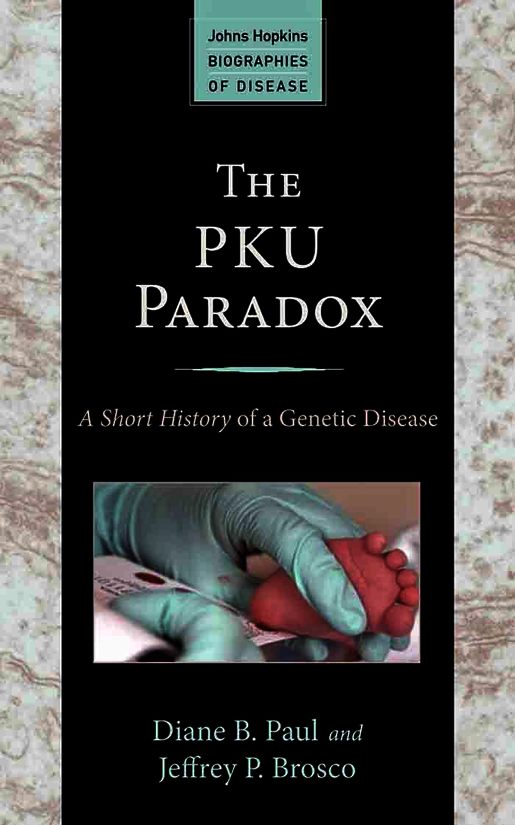
To some extent, the situation may be analogous to PKU. As thoughtfully discussed in The PKU Paradox by Diane Paul and Jeffrey Brosco, PKU is typically described as a straight-forward mendelian recessive disease that has a remarkably effective simple intervention. PKU has had its share of astonishing success that has provided moral capital for justifying all kinds of genetic testing. Hundreds of millions of babies have been screened for PKU.  However the clinical, ethical, resource utilization, and social issues engendered by PKU screening are anything but simple, far from being resolved, and we are still uncomfortable acknowledging them. And that is for just one relatively uncommon genetic disease. Those problems will be magnified as we test for many conditions, some of which are not so rare.

PKU Cover

Am I sounding an alarm over a non-issue? What are the thoughts  and ideas of our DNA Ex readers?

* – A little bit of language trivia for the curious reader: The letter thorn (Þ), which represents the phoneme “th” (/θ/) as in “there,” survives in modern English in a peculiar role in the names of certain businesses like Ye Olde Clothing Shoppe or Ye Dragon’s Den. The Y in “Ye” is derived from the Early Modern English version of thorn, which was indistinguishable from the letter Y. “Ye” in these names is a modern cutesy way of spelling “The” and “Ye” should be properly pronounced “the” rather than “yee.”

**- Clinical details have been changed to maintain confidentiality.

2 Comments

Filed under Robert Resta

Metaphorically Speaking

With more than 30 years of experience, my tenure as a genetic counselor is roughly equal to the age of  the average practicing genetic counselor. It is no exaggeration to say that I entered the field when many of today’s genetic counselors were still zygotes. A few years ago I ran into a patient whom I had counseled during her pregnancy 27 years ago who proudly informed me that the daughter she was pregnant with back then is now a genetic counselor.

Truth be told, I have reached  a point in my career where I question my relevance to the genetic counseling profession. I worry that the issues that concern and stimulate me are irrelevant to the current and future practice of genetic counseling, that I am stuck in a professional time warp where I am fighting yesterday’s battles and fretting about irrelevant ethical and clinical dilemmas. Maybe my work here is done.

Even more concerning is the possibility that younger patients may think that I cannot possibly understand their problems. They are at vastly different points in their life cycles than I. There is little overlap between our cultural reference points and we likely have distinctly different comfort levels with the technological advances of the last 3 decades. Who wants to be counseled by their father?

Photo courtesy of Lizzie Resta

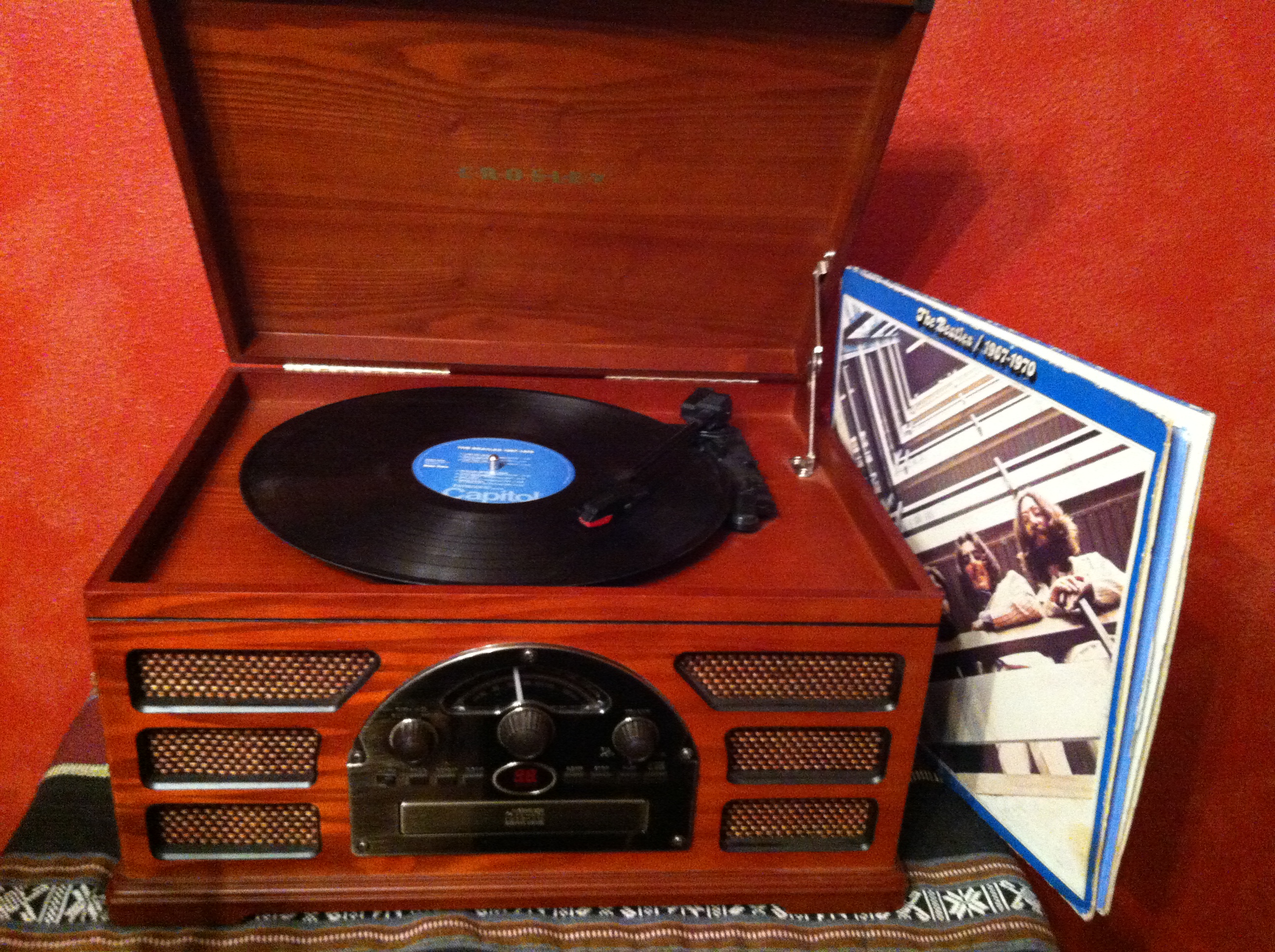
Phone

VHS Tapes For VCR

When I first started out as a counselor, I fretted that I was so much younger than my patients that they would not take me seriously. Now I struggle with how to relate to a 30-year-old female BRCA mutation carrier trying to decide whether she should tell her fiancé about her carrier status, and if should she have a prophylactic mastectomy, which in her mind might render her an “unfit” mother because she would not be able to breast feed. My insecurity has come full circle. Sure, good counseling skills should make those differences irrelevant, but still…..

The potential generation gap between me and my younger patients surfaced recently when I met with a woman whom I had initially met with in the 1990s when she was pregnant and amniocentesis had revealed an apparently balanced de novo translocation.* Because of our past experience together she requested to meet with me again because of her subsequent personal and family history of cancer.

Before we started addressing her current situation she told me that she wanted to let me know how much she had appreciated the counseling I had provided during her pregnancy nearly two decades ago. What she had found particularly helpful was a metaphor I had used to help her grasp the concept of translocations. “Bob, you described chromosomes as essentially being a set of encyclopedias, genes were the words in the encyclopedias, and DNA was the alphabet used to spell the words. A balanced translocation was like a few chapters from Volume 10 had broken off and joined Volume 4, and vice versa. You couldn’t say for sure if a few words or letters were lost as a result of the translocation, but as far as the lab could tell, the encyclopedia had all of the necessary information, just rearranged. The light bulb went on in my head, and I was able to make a decision to continue that pregnancy.” I am not claiming that I broke new counseling ground with this explanation; I suspect that many genetic counselors use some version of it.

She continued “My husband and I liked that imagery so much that we used it when we finally decided to tell our teenage son about his translocation.” After they broke the news to their son about his genomic constitution, the patient said that her son silently contemplated what he had just been told. The parents held their collective breath, anticipating a complicated genetics question or a deep emotional response. Finally, he looked up and asked “An encyclopedia – is that anything like Wikipedia?”

Well, I thought, I wasn’t just being paranoid about my relevance to genetic counseling. Even my Genetics-To-English Dictionary is obsolete. I really do need to think about packing it in as a counselor and taking an administrative position with no patient contact.

Rare First Edition of the Genetics To English Dictionary

After I recovered from that shock, I got to thinking more clearly about their son’s statement. Hey, I thought, maybe I could update my Genetics-To-English Dictionary and appropriate the Wikipedia metaphor to my current work in hereditary cancer. Wikipedia is essentially the genome. It contains a lot of information, but some of that information is inaccurate and needs to be corrected and updated, much as DNA can acquire mutations and needs to be repaired. Mismatch repair proteins, the culprits in Lynch syndrome, are like the anonymous editors who vigilantly proofread Wikipedia, reporting and correcting typos to restore the integrity of the information. When the mismatch repair protein genes are mutated, the proofreaders are less accurate, DNA damage accumulates in the cell and eventually leads to cancer. In Lynch syndrome, the proofreader has a hereditary dyslexia.

Perhaps there still is some hope for me as a genetic counselor. But first I have to figure out how to stop my stupidphone from making that awful chirping sound. At precisely 3:12. AM. Every morning.

* – Some clinical details of this scenario have been changed to maintain confidentiality.

7 Comments

Filed under Robert Resta

The Bumpy Road From Bench to Bedside: Top 10 Genetics Stories of 2013

10. 23andMe and the Thanksgiving Week Massacre
Image

You can get anything you want…except personal genome screening.

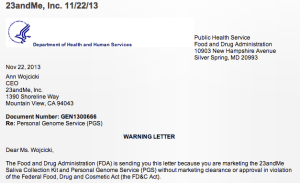
The Monday before Thanksgiving 2013 the FDA issued a letter to 23andMe directing them to cease and desist sales of their personal genome service (PGS) within 15 working days.  In shutting down 23andMe, the government agency was in effect shutting down an industry, since 23andMe was the last player standing of any significance in the fledging direct-to-consumer genetic health information services field.  This added some drama to the situation and some volume to the howls of outrage from libertarian-minded science geeks who not only liked but believed in 23andMe.  To be entirely fair, its hard to blame the FDA for taking down the last lonely cowboy, since 23andMe has helped a number of competitors out the door, dipping into their deep pockets and selling their test at a loss.

Of course this is 2013, and information never really goes away.  The FDA ban covers the PGS – the advice, not the SNP data.  There are no rules that prohibit giving back sequence data sans annotation.  Those willing to do their own digging can use promethease, a free online tool for SNP analysis.  And the FDA cannot regulate promethease because it is not for sale – impersonating a doctor for money is against the rules, but giving out crap advice for free is the god-given right of cranks and yoga enthusiasts and pretty much every neighbor I have ever had.

Destroyed or not (and we shall see; I’m expecting a resurrection, minus a few of the more controversial tests like BRCA 1 and 2), the entire personal genomics industry isn’t much more than a blip (the company claimed to have scanned 500,000 people since 2006, but did not say how many were paying customers).  For a more thorough discussion of the issues involved in this case see here, but for the purposes of this column, I would make two general points about why this story was significant.  First, it indicates that the FDA is willing to play a more active role than the heretofore have in the regulation of genetic testing as a medical device.  Second, and with all deference to point one and the need for some regulatory power, the story demonstrates the essential futility of trying to control the flow of information in the internet age.

9. The Supreme Court delivers a verdict in the MYRIAD Lawsuit, bringing clarity and … myriad lawsuits.

Three years after District Court Judge Robert Sweet shocked the genetics world by declaring gene patents a “lawyers trick,” the Supreme Court weighed in, ruling unanimously that naturally occurring DNA sequences are laws of nature, and thereby striking down a number of the patents held by Myriad Genetics on BRCA 1 and 2.  In their opinion, the Court distinguishes between genes as they appear on the chromosome and cDNA, the edited form obtained by working backwards from a gene product – a transcript of the performance rather than a copy of the script, so all the notes and stage directions are missing.  The Court’s reasoning – that cDNA is not found in nature – is not entirely true, and future cases may challenge that notion, but for the moment the message is clear: DNA patents are out, and cDNA patents are in.  This splitting-the-baby approach may have been a judge’s version of a lawyer’s trick, because it invalidated gene patents, which the justices clearly felt were problematic, but did not in a single swipe eliminate all claims relating to DNA, thus wreaking havoc in biotech.

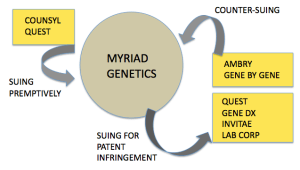
Did I say things were clear?  Well….  This was a result that satisfied the genetics community, which was never comfortable with the restrictions and costs imposed by Myriad’s decision not to license its BRCA patents.  There was celebration in the air as rival labs announced the availability of BRCA testing, or maybe that was gunfire, since Myriad immediately declared its intention to defend its remaining patents.  Here is what clarity looks like in December 2013:
Screen Shot 2013-12-20 at 11.53.24 AM

Okay.  So perhaps not entirely clear.  But the decision does resolve some theoretical issues going forward, as we put to rest whatever anxieties there might have been about negotiating a genome littered with patents in the age of next-generation sequencing.  And if not the final word, it is still an important moment in the BRCA saga, a story that has kept us entertained for years, a story that has had everything: Mary Claire King, dueling labs, Mormons, the ACLU, Clarence Thomas, even a cameo by Angelina Jolie.  It is the story of a test that single-handedly brought into being the field of clinical cancer genetics.  It is a story that defines its time, and somehow to me, this decision, this imperfect and welcome decision, feels like the end of an era.

8. North Dakota passes an anti-abortion law that is the first of it’s kind (but may not be the last).

Remember the law restricting abortion that North Dakota passed last March — no abortions after the fetal heartbeat can be detected, about the 6th week of gestation?

No, not that one.

It’s the other North Dakota law, the one that makes it illegal for a physician to provide abortion:

“with the knowledge that the pregnant woman is seeking the abortion solely: a) On account of the sex of the unborn child; or b) Because the unborn child has been diagnosed with either a genetic abnormality or a potential for a genetic abnormality.”

Sure, there are loopholes here you could drive a Mack truck through.  It requires doctors to know the woman’s state of mind.  Isn’t ambivalence the natural state of all mankind?  In practice, the law is of so little significance that North Dakota’s only abortion clinic dropped their legal challenge to ND 14-02.1-02.  The clinic, like the media, has chosen to focus on the fetal heartbeat law, which a judge has blocked pending a ruling.  But google the story, and you will see that groups like LifeNews and American United for Life are paying close attention.  “Dismissal of the portion of the lawsuit challenging the ban on sex-selection or genetic abnormality abortions should be seen as a victory, for now,” said the New American.

Take home: prenatal diagnosis is on the radar of the anti-abortion movement.  This law is not a burst of craziness or the brainchild of some random legislator in North Dakota.  It is a response to the increasing capabilities of genetic and prenatal testing, an informed, calculated, ideological response, not just to abortion but to the idea of selecting against certain fetuses.  The eugenic capabilities of prenatal screening concern large swaths of the population: push those buttons, and they will push back.

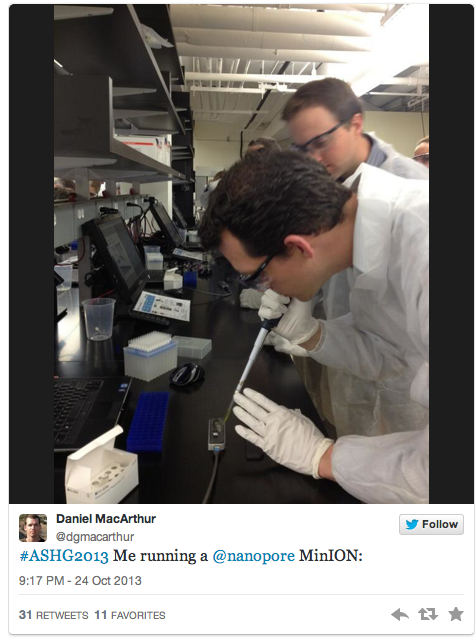
7. Sequencing, The Next Generation: Oxford Nanopore offers researchers a chance to beta test the adorable MinION.

After many years of development and a couple of false starts, Oxford Nanopore seems poised to usher in 3rd generation sequencing.  It’s nanopore technology offers longer read lengths (and thus fewer alignment and assembly issues), relatively low costs and real-time capabilities, with the potential to bringing sequencing of DNA, RNA and protein expression to the bedside.  The company did a much buzzed show-and-tell at ASHG in October, and has issued an invitation to researchers to apply for up to 50 free MinION sequencers, in a tone that veers from infomercial (“additional shipping charges” will apply) to vague (“at least two days notice will be given of closure of the registration period. This will be noted on our website and on Twitter”) to zen (“We are requesting little information about your intentions for MAP and no supplementary information is necessary”) to hard-nosed (“Competitors of Oxford Nanopore and their affiliates need not apply”).

Image

The MinION is the smaller of two Oxford Nanopore products in development, and it’s so cute if they put a brushed aluminum bezel around it they could sell it at Apple (I hear the iphone 7 is going to have gene sequencing anyway).  For data reads, it plugs in to a computer via a USB port.  A larger-capacity product, GridION, is essentially lots of little minions in a bigger box (maybe they should have called it PlantatION).  To get a sense of how the technology works, check out the video on the Oxford Nanopore website.  “Oxford Nanopore designs and manufactures bespoke nanopore structures,” says the narrator in a lovely Downton Abbey accent strikingly at odds with a technology that has been called, in that most 2013 of phrases, “disruptive.”

6. “Anonymous” gets outed.

In January, Whitehead Institute fellow Yaniv Erlich and fellow MIT hacktivists announced that they had successfully identified participants in the 1000 Genomes Project whose DNA was published “anonymously” online, using only publicly accessible databases like genealogy websites, where DNA markers are linked to surnames.  Designed to test the limits of de-identification, the project was a wake-up call for any researcher, institution or biobank who offers donors hard and fast promises of anonymity.

With proof-in-principle established by the Cambridge crew, MTV tested clinical applications with its November premiere of Generation Cryo, a reality show following a young woman conceived by donor sperm who enlists a crew of half-sibs to find their collective donor dad.  “Perhaps he doesn’t want to be found,” suggests one adult to 18-year-old Breeanna Speicher, who pauses to think about that momentarily before ignoring it entirely and rededicating herself to her quest.

Will she find him?  Chances are she’ll be knocking on his door any day now.  Why?  Because DNA is THE BEST IDENTIFIER IN THE WORLD.  Anonymous DNA is an oxymoron.  And anonymous DNA donors are an endangered species.

5. Two-year-old girl gets a trachea manufactured from her own stem cells.

Image

Fabricated organs were everywhere in 2013.  In April, a team of Japanese scientists led by Takanori Takebe announced in Nature that they had succeeded in creating tiny but functioning livers from human stem cells, able to perform basic liver functions when transplanted into mice.  In April, researchers in San Diego produced what Gizmodo called “itty-bitty livers” using a 3-D printer; later versions lasted as long as 40 days.  In August, Nature profiled researchers in Kyoto who had managed to turn murine induced pluripotent stem cells into sperm and eggs – and to prove that they were real by using them, creating viable and fertile mouse pups.

But the organogenesis story of the year concerns a real treatment for a real girl: 2-year-old Hannah Warren, born without a windpipe.  A trachea is not as complicated as a liver or as sexy as sperm and eggs, but you can’t survive without one.  So the little Korean-Canadian girl who had never lived a day outside the ICU flew to the United States to be operated on by Dr. Paolo Macchiarini, the Italian director of a Swedish Institute.  They used a windpipe grown with her own stem cells on a matrix of plastic shaped to resemble a trachea.  The parents could not afford the operation, so Children’s Hospital of Illinois donated its services. There’s a lot of messages in this story: the incredible potential of the technology, of course, and the global nature of it all.  The fact that it was possible but unaffordable says something important about the future as well.  And finally, unhappily, it must be reported that little Hannah Warren died of lung complications in July, three months after her surgery.

And that’s the final message: it may sound like magic, but this ain’t no fairy tale.

4. The Archon Prize is cancelled for lack of interest.

In 2003, proponent of gladiatorial science Craig Venter announced a contest: $500,000 for the development of technology that would bring down the cost of genome sequencing to $1000.  Subsequently re-branded as the Archon X Prize for genome sequencing, the challenge helped make ‘the $1000 genome’ a meme that represented the future of the field.  The Archon prize, after serving for a decade as goal and talking point for rival sequencing companies, was scheduled to be held as a month-long competition in September 2013, until it was abruptly cancelled in August for lack of interest.

An event that did not happen is an odd candidate for a top ten story of the year, but think about what this cancellation suggests.  First, it suggests our technological horizons have changed so rapidly that we became bored with the goal even before we reached it.  Peter Diamandis, X-Prize chief executive, acknowledged in the Huffington Post that the $1000 genome remains elusive – costs still linger closer to $5000 — but suggested that the field has moved on.  “Genome sequencing technology is plummeting in cost and increasing in speed independent of our competition.”  Second, it suggests that in 2013 our ability to produce sequence data has so outpaced our ability to process and understand sequence data that a competition to produce more of it, more cheaply, seemed suddenly like not such a good idea after all.

3. First gene silencing drug approved by the FDA.

Gene therapy and gene silencing are mirror images – turning genes on, turning genes off – and for years they have shared the burden of great potential with not much to show.  But this may be starting to change.  And although the trickle remains a trickle, gene therapy continues to show progress in clinical trials, and in January a gene silencing drug was approved for the first time by the FDA.  Called Kynamro, the drug is intended for familial hypercholesterolemia homozygotes.  In preliminary tests, it reduced LDL levels by 25%.

Raising the stakes on gene silencing, Jeanne Lawrence of UMASS published an article in Nature in July, detailing how her team was able to use the XIST gene to silence a single copy of chromosome 21 in trisomic cell lines.  The authors expressed a hope that the technique will eventually lead to treatments for features of Down Syndrome.

2. The best thing since sliced bread?  Maybe better!  CRISPR slices genomes to order.

On December 12th, researchers operating out of an assortment of low-rent facilities in Cambridge, MA published a report in Science identifying genes involved in acquired resistance to chemotherapy, the first discoveries made by systematically testing human cell lines using the miraculous new technology, CRISPR.

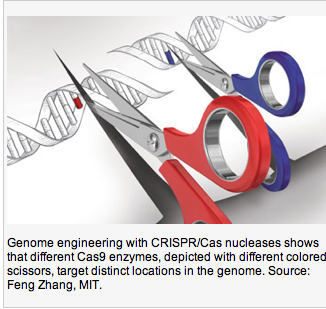
This powerful gene editing technique hijacks a component of the bacterial immune system – a sort of programmable warrior armed with enzymatic, DNA-snipping scissors and a list of targets written in a DNA code — snippets from viruses that attack bacteria.  The system, elucidated by Jennifer Doudna of Berkeley and Emmanuelle Charpentier of Umea University in Sweden, was re-jiggered to use as a guide an RNA molecule that could be made to order.  The result: a mechanism for cutting DNA at will throughout the genome, effectively repressing or even altering genes in a very specific and targeted fashion.

The new technique has drawn raves for its versatility and ease of use (“A total novice in my lab got it to work,” marveled Nobel Laureate Craig Mello) and has been used successfully in all five food groups of the genetics lab: yeast, bacteria, fruit flies, zebrafish and mice.  In February, George Church announced that he had used CRISPR to alter human induced pluripotent stem cells, adding: “results establish an RNA-guided editing tool for facile, robust, and multiplexable human genome engineering.”

Potential uses for CRISPR beyond interrogation of cell lines include: development of model organisms, modeling the effects of specific genes and gene changes, somatic cell gene therapy, and new treatments for acquired diseases with genetic components such as cancer and AIDS.  And of course, as George Church points out – with an enthusiasm that may not be shared by all – as a platform for germline gene therapy and genetic enhancement of embryos.  But, I mean, besides that, it is hardly interesting at all.

Image

1. ACMG produces guidelines for reporting of incidental findings in whole genome and whole exome sequencing.

The ACMG guidelines are the genetics story of the year because both their existence and the controversy surrounding them illustrate exactly where we are today:

1. Desperately in need of guidelines, because exome and genome sequencing are a clinical reality today,

AND

2. So unready to deal with all the information that comes along with sequencing that we can’t even agree on what to call it: incidental findings; secondary findings; opportunistic findings; unanticipated news.

Here are some crib notes, without recapitulating the argument in its entirety (covered here and here, for starters).  Many people believe that access to genetic information is a right, and argue vehemently that doctors and other genetics professionals should not function as intermediaries, deciding what information is significant, what information is superfluous, and what information patients may be unable to handle or comprehend.  This is a sort of a power-to-the-people argument, wherein ‘power’ is defined as genomic information (which may be a bit of a stretch.  Jus’ saying).  The other side is concerned about the logistical and ethical complexities of giving out information which is not well enough understood – ‘well enough understood’ being one of those ill-defined metrics that, like Justice Potter Stewart’s description of obscenity, seems to come down in the end to “I know it when I see it.”

The ACMG came out somewhere in the middle, and has been soundly criticized by all sides, which I think means they must have done something right.

FOLLOW ME ON TWITTER!    here

1 Comment

Filed under Laura Hercher

Guest Post: Adrienne Asch – Reflections from a Genetic Counselor

by Katie Stoll

Katie Stoll is a genetic counselor in Washington State. She graduated from the Brandeis University training program in 2003 and since that time has held positions in the areas of prenatal, pediatric and cancer genetic counseling.

We recently said good-bye to Adrienne Asch, a thoughtful and powerful voice in bioethics, disability, and reproductive rights. Adrienne passed away at her home in New York on November 19, 2013, surrounded by the love of many friends and family.

Adrienne touched my life deeply in the brief time I knew her and I am grateful to have had a connection with her. Her perspective has significantly shaped the way I view the genetic counseling profession and my role within it.

Adrienne was an accomplished scholar and an incredible person. Several beautiful tributes speak of character and her accomplishments, and these only give us a glimpse of her impressive body of work. See the The New York Times, as well as blogs related to philosophy, feminism, and bioethics for more about Adrienne.

Many genetic counselors are aware of Adrienne’s focus on the intersection of disability rights with reproductive technologies.   She was supportive of abortion rights, but questioned the implications of prenatal diagnosis and selection for disability rights, for individual parent expectations, and for humanity. She asked the question, if individuals with disabilities are not welcomed into family life, how can we expect inclusion in schools, in the work place, in society?

In her scholarly work, Adrienne spoke frequently about the parent-child relationship, and I had often wondered about her personal experiences as a child in this relationship. I came across the transcript of a fantastic interview with Adrienne conducted by Anna Kirkland at the University of Michigan, in 2006. I was delighted to find these insights into Adrienne’s own family life and it is heartening to realize that Adrienne’s views on this topic were in part shaped by her own childhood experiences of being supported to be true to herself:

“My parents taught me to think for myself and to be comfortable with who I was, even if people around me weren’t entirely comfortable with who I was either as a leftwing type or somebody who loved classical music, or someone who was Jewish, or someone who was blind. So they just taught me to be myself.” 

At one point the interviewer asking Adrienne if she had ever had the opportunity to address genetic counseling students. Adrienne has been an outspoken critic of prenatal diagnosis and this has made her quite a controversial figure among genetic counselors.

Anna: I’d be interested to know, have you ever had the opportunity to address a group of genetic counseling students or…or… 

Adrienne:  Yes. I have. 

Anna: Yeah. How did that go? 

Adrienne:  Not well. 

Anna: [laughs] What [laughs]…what did you say to them? 

Adrienne:  The same kind of thing I’m saying to you. But it challenges…I mean, maybe that I haven’t said it gently and kindly enough and I’m trying to do that. I have sympathy for how difficult it is to do this work. But I have no sympathy for people telling me that parents aren’t interested in this information or it’s not appropriate to give them the kinds of information that I’m describing. I think in fact that’s what genuine information is.

Recently, I had a chance to work closely with Adrienne when she helped to conceptualize a symposium for the National Society of Genetic Counselors Annual Education Conference, Reaching for Common Ground: Prenatal Genetic Counseling and Disability Equality. Although  Adrienne’s health prevented her from traveling to Los Angeles for the meeting, she was determined to hear all of the presentations live and to participate in the conversation. We achieved this through the technological miracles of cell phones, speakers and microphones for the entire 6 hour conference and this allowed her to both listen and contribute to the conversation.

In early October, she recorded a video for this conference and the National Society of Genetic Counselors has kindly allowed me to share it here. I encourage you all to take the time to listen to Adrienne’s final address to genetic counselors. I think she finds the balance she was striving for in being sympathetic to the difficulties inherent in the work of genetic counseling and remaining strong in her challenge to our profession to be more than genetic educators.

In genetic counseling, you have an enormously important role to play in helping prospective parents’ to think about the meaning for themselves of the genetic impairments or prenatally diagnosable impairments that they might discover in a fetus or an embryo.   And the role that you have to play is not genetics education alone.  It is genuine counseling.  It is counseling with a genetic component.  But it is dialogic counseling.  It is not merely reciting facts about laws and services and family support for people with Down syndrome.  It’s not reciting how wonderful it is and how loving the children are…It’s not reciting how terrible it is and how bad group homes might be.  It’s asking parents to think about the goals they have for their family life and how a child with characteristics that they can know in advanced will affect the achievement of those goals… The other reason you have a big job is that you are not given much time in which to do it. And all of the institutional forces work against that kind of conversation.  But I am urging that genetic counselors take their respective places as counselors to really help prospective parents think through what they want for their family life.  How a particular characteristic or impairment will affect that…

…Just as life is made up of many experiences that are shareable, you don’t need to have particular characteristics in common to share a life and to share experiences.  And you as a genetic counselor have an opportunity to communicate that to prospective parents. And ask prospective parents to think about what they want in their family’s lives.  And whether a child with a particular characteristic you can name in advanced will make the achievement of those goals any harder or any less possible. 

That’s a job of real counseling.  It’s not a job of imposing your values.  It can be as nondirective as you like but it is a job of asking questions maybe questions parents don’t want to be asked but that’s often true of any counseling.  No therapist worth his or her salt merely smiles and nods and says, “Ahah!”, and says, “I see what you mean”.  Therapy and counseling are about asking people to reflect and think twice or three times about the views and the values they are bringing to their lives.  You don’t have three years or 3 months or sometimes even 3 weeks to do that with the people in front of you.  But in the 45 minutes to an hour that you have, or if you’re lucky, more than that, you have a chance to communicate the joys of parenthood, the problems of parenthood, and the ways in which a child with any set of characteristics may or may not fulfill the goals that a parent has.”

Part of our fundamental core professional values as genetic counselors is to be non-directive in our counseling – not to decide the morally ‘right’ path for pour patients. We strive to support individuals to choose the path that they decide is right for them. Our responsibility as genetic counselors is to do our best to make certain that the decisions people make are as informed as possible.

What Adrienne helped to crystallize for me is that part of ensuring informed decisions requires inquiry into of the prospective parent’s expectations, hopes and dreams. It may also call for us to challenge misconceptions about how life with a disability is imagined and this may need to begin first with examining our own misconceptions and biases.

Adrienne certainly dismantled my preconceptions about life and limitations for someone who has been blind since shortly after birth. Although too short, her life was undeniably rich and full and her contributions were many. I imagine there are many DNA Exchange readers who have some interesting reflections about Adrienne of their own. I hope you will share them here.

2 Comments

Filed under Guest Blogger

THE FDA CALLS A PENALTY ON 23andMe

IS THIS THE GAME WE WANT TO PLAY?

On Monday, the FDA celebrated the start of the holiday season by sending a letter to 23andMe, informing the direct-to-consumer personal genomics service that they must cease and desist offering their signature test.  The proximal cause of this action, as described by the FDA and not disputed by the company, was that 23andMe had ceased to participate in a process of establishing their PGx test as “validated for its intended uses.”  They had, the FDA suggested, dropped the ball – well, not just dropped the ball, but kicked it out of bounds, an old soccer trick for delay of game, which Mya Thomae and Dylan Reinhardt suggest might have been exactly what the company had in mind, playing for time while they attempted to accumulate better data than what-all they have right now.

The FDA move prompted a vast twitterlanche of commentary, ranging from indignant outrage to smug satisfaction (Dietrich Stephan, founder of the erstwhile DTC competitor Navigenics, said, “Engaging the FDA as a partner to bring the most robust and safe new type of test to market is diagnostics 101”).  Genetic counselors might be suspected of indulging in a bit of schadenfreude, since the relationship between 23andMe and the GC community has inclined in the direction of mutually suspicious, if not downright frosty.   The company, which advocates for access to one’s DNA information with almost a religious fervor, sees GC’s as gatekeepers, as a self-anointed coterie of priestesses guarding the oracle at Delphi.  Genetic counselors, for their part, tend to perceive the very existence of 23andMe as an affront, as though the possibility that a subset of people might benefit from genetic testing without access to counseling was insult and injury — an existential threat.

To be fair, nobody reacts well to the suggestion that their chosen profession is a cabal that threatens the freedom and well-being of fellow citizens – not even investment bankers, and at least they get to soothe their wounded souls with lots of material goods.  But pettiness is unbecoming and unproductive, and we would all do well to remember that a groundbreaking organization like 23andme is a part of the energy and excitement of the field – an expression of an explorer’s mentality that draws people to the potential of genetics in 2013.  That’s not only fun and sort of cool but also incredibly powerful because it attracts the kind of intelligence and curiosity that makes big new ideas possible (David Dobbs does a thoughtful and balanced job making the case for 23andMe in this piece for the New Yorker).

So minus any animus toward 23andMe, was this a reasonable move by the FDA?  There are two main questions that have been raised: 1. can they regulate? and 2. should they regulate? (a third question, HOW DARE THEY?, has also gotten a lot of play but I am going to ignore that one because, c’mon guys get over yourselves this isn’t ONE STEP FROM TOTALITARIANISM).  The first one takes up the issue of whether or not a personal genomics test falls under the FDA jurisdiction.  I am going to say yes, but will not rehash those arguments here, since they have been more ably covered elsewhere – I particularly recommend this piece by Hank Greely at the Stanford Law School Center for Law and the Biosciences blog.

So, should they regulate?  The rationale for regulatory action in the letter to 23andMe is a risk of harm to customers, including the possibility that a customer might alter his medication without medical advice or misunderstand her risk for breast cancer and have an unnecessary prophylactic mastectomy.  While theoretically true, it seems wildly unlikely that very many people would insist on a mastectomy without getting more information than mail-order genetic results – and those cases might be more indicative of out-of-control anxiety issues and irresponsible medical practice than the power of a PGx report.  More commonly, misunderstanding the limits of the test in terms of risk reduction might empower a customer to skip out on appropriate preventative measures. Either way, this is nothing new — a rehash of concerns genetic counselors have had about DTC testing since its inception.  In practice, perhaps the best summary of the clinical impact to date comes from Anders Nordgren, who called it “Neither as harmful as feared by critics nor as empowering as promised by providers.”  Having spent hours poking through the generally well-written and thorough 23andMe reports, and spoken to some of their customers, I would suggest that misunderstanding the results that come from 23andMe could pose some risk — real risk, to be sure, but limited risk.

However, it is possible to envision a scenario where a genetic testing sold DTC did pose a significant danger to consumers, with inaccurate results, irresponsible advice, tests used to market scam treatments or preventatives.  None of this is farfetched, and some of it has already been documented.  For this reason alone, the possibility of FDA action is an important deterrent.  A company like 23andMe, which makes real efforts to be thoughtful and responsible, will ultimately benefit from the restraint on less scrupulous entities.  And of course, it is possible that 23andMe would have been less thoughtful and less responsible if they had not been motivated by the threat of FDA action.  So arguments against regulation in general based on the fact that 23andMe is well-intentioned are misguided.

But despite a bias in favor of showing some muscle, I have questions about how much time and energy the FDA should spend cracking down on the likes of 23andMe.  Is it, I wonder, the best use of resources?  For one thing, attempts to stop the free flow of information in 2013 are fingers in the dike. Razib Khan at Slate expands on this argument, suggesting that companies pushed by the FDA could simply move offshore, away from any regulation.

And more importantly from my point of view, the emphasis on negative action diverts us from the possibility of doing something positive.  Rather than keeping consumers away from tests we think are insufficiently documented, how about providing a resource to the general public that endorses tests that are ready for prime time?  After all, a few bold individuals may be excited at the prospect of downloading Promethease to query their own exome data but most people would rather not, thank you very much.  Most people would be happy to have some guidance.  They can get that guidance from the company, but even the classy companies have a vested interest in hyping the significance of their results – that’s what they’re selling, right?  There is an opportunity here for the government and the genetics community to create a trusted source of information that is neutral, unbiased and supports a best-case scenario use of genetic testing by those eager to take the plunge.  Hell, you could imagine tying in such a resource to something like ClinVar or GenVar, so that early adapters could contribute to publically accessible databases rather than giving it to 23andMe to sell.

After years of running up and down the pitch, the FDA has demonstrated that it knows how to blow the whistle – that’s good.  I’m pretty sure 23andMe will be back – and that’s good too.  But if we really want something great to come out of this discussion, let’s stop doing color commentary on the FDA action, and imagine what it could be like if we changed the game.

Follow me on twitter!

10 Comments

Filed under Laura Hercher

FDA Letter to 23andMe: A Genetic Counselor’s Breakdown

FDA letter Nov 22

On Friday, November 22 Food and Drug Administration issued a warning letter to direct-to-consumer genetic testing company 23andMe. Many in the genetics community are experiencing a little déjà-vu this week, with the ensuing discussions in mainstream media and within online communities reminiscent of 2010 when FDA issued warning letters to 5 direct-to-consumer companies that were operating at that time. (Check out this post from Genomics Law Report for a good overview of the issue at that point in time.)

Regulation of direct-to-consumer genetic testing companies is complex and often confounded by thoughts and opinions regarding DTC advertising, DTC genetic testing, the validity and clinical utility of SNP-based panels, consumer rights and privacy, to name a few. I have personally fallen into a rabbit hole of articles, blog posts and twitter discussions in the past few days (see “Recommended Reading” section below). All of these outlets are debating the same issue, but this particular issue has an infinite number of very subtle angles.

The term “direct-to-consumer” conjures up strong emotions for genetic counselors. No doubt you will see some of this played out on The DNA Exchange in the next few days. However, in discussing the most recent FDA letter with a number of people (both colleagues and non-GCs) I’ve realized some basic review and clarification might be helpful. Hopefully this will serve as a nice starting point to frame our discussions on this issue in the days to come.

The full letter can be found on the FDA website here.

The 23andMe response has been posted here.

There are two basic aspects to the FDA  letter:

1. Marketing 

In the FDA’s words “…Your company’s website markets [your test] for providing “health reports on 254 diseases and conditions,” including categories such as “carrier status,” “health risks,” and “drug response,” and specifically as a “first step in prevention” that enables users to “take steps toward mitigating serious diseases” such as diabetes, coronary heart disease, and breast cancer….To date, 23andMe has failed to provide adequate information to support a determination that [your test] is substantially equivalent to a legally marketed predicate for any of the uses for which you are marketing it…”

My takeaway:  23andMe’s marketing materials claim their test can prevent serious diseases. The company does not have FDA clearance nor has it provided the appropriate evidence to make this blanket claim. This speaks most strongly to the clinical validity and utility of SNP-based testing—an issue that hits close to home for a lot of us. I think it is important that the FDA is highlighting the lack of evidence around prevention and predisposition testing for common disease.  However, we need to recognize that 23andMe is also testing for additional variants beyond SNPs.

Anecdotally, I’ve noticed that genetic counselors continue to use the terms “direct-to-consumer genetic testing” and “SNP-based testing” interchangeably, which is both incorrect and adds to overall confusion. Genetic testing for common complex disease (primarily based on SNP information) is still controversial in our profession. However, as noted in the letter, 23andMe is a direct-to-consumer company that is also providing carrier testing for Mendelian diseases as well as the 3 common Ashkenazi Jewish BRCA mutations. To dismiss the 23andMe service by saying “this test doesn’t tell you anything!” undermines some of the routine testing that we do within a clinical setting. One cannot argue that 23andMe’s service “doesn’t tell you anything” and “has the potential for serious harm” in the same breath.

2. Direct-to-consumer health information

In the FDA’s words: “Some of the uses for which [personal genome service] is intended are particularly concerning… For instance, if the BRCA-related risk assessment for breast or ovarian cancer reports a false positive, it could lead a patient to undergo prophylactic surgery, chemoprevention, intensive screening, or other morbidity-inducing actions, while a false negative could result in a failure to recognize an actual risk that may exist.”

 My takeaway: 23andMe is providing health information and test results directly to consumers without the involvement of a physician. This could lead to medical mismanagement, “serious injury or death.” I believe the DTC aspect of the testing (in comparison with the SNP-based aspect) is still the biggest challenge to the 23andMe model. Genetic testing for disease causing mutations without appropriate clinical context, family history review and individualized interpretation is where real potential for harm lies.

Suggested Reading (Or, some of the more interesting articles I have come across so far)

Also, if you’re interested in learning more about FDA regulation of medical devices, I found this video on their website.

2 Comments

Filed under Allie Janson Hazell

Caught In The Act

I keep a bowl of chocolates on a table situated between the two chairs that accommodate patients in my office. It is a simple gesture, a small attempt at creating a friendlier environment for conducting the sometimes scary business of genetic counseling. I spread enough bad jujus as part and parcel of my work; I can try to do a little something to offset the negative karma. And it is decent chocolate, not Halloween rejects or forgotten treats that have been lurking in the back of the snack cupboard since the Clinton administration.

Although my chocolate stash has not provided great insight into the psychological complexity of genetic counseling, it has been a surprising and at times amusing source of insight into human behavior on a micro-scale. As they used to say on the old Candid Camera television show, I catch people in the act of being themselves.

Guys, for the most part, walk in, see the chocolate, and say “Hey, great, chocolate!” and then unabashedly help themselves to a few pieces. Many women, however, tend to have a more complicated relationship with chocolate. Here I share a few examples that illustrate this tangled web.

Maybe He Won’t See Me: This is the most common scenario. They want chocolate but do not want to be “caught” eating in front of me, as if somehow it violated social norms or might shape my opinion of them. As we engage in the counseling process, their eyes involuntarily sneak sideways glances at the bowl, the siren call of the miraculously transformed pods of Theobroma cacao too alluring to resist (One patient actually begged a là Odysseus “Please, before I eat it all, tie my hands to the arms of this chair.”). They can get wily too, waiting for an opportunity that distracts my attention, such as when I turn my back to them to complete a test request form or leave the room to photocopy some paperwork, and then sneak a piece or three. Either they quickly unwrap and eat it, hoping that I did not detect the maneuver, or sequester their pilfered pleasure into their purses. If I happen to notice their covert actions, they voluntarily offer an explanation along the lines of “Oh, I just wanted to bring home a piece for my son. He really likes chocolate.” What, like your kid expects a treat every time his mother has a doctor’s appointment?

Get It Away From Me:  Here will power is a serious problem. They sit down and unthinkingly pluck pieces out of the bowl without ever taking their eyes off of me, their uncannily accurate radar guiding them to their personal dark or milk chocolate preference. After a few minutes they realize that they have worked their way through four or five pieces and plead “Please, take this away and hide it in a drawer.” It reminds me of the slyly clever Cookies episode from Arnold Lobel’s delightful Frog and Toad children’s books.

Oh Heck, Why Not?: Like good Christians shunning Satan’s temptations, these patients nobly avoid the chocolate for the duration of the session. But as they prepare to leave, they steal a longing glance at the bowl, torn between desire and decorum. I usually suggest that they take a piece to reward themselves after an emotionally exhausting counseling session or to recover from the physical trauma of their upcoming blood draw. “Oh, I shouldn’t ….. well, alright. I guess I can have one piece since I didn’t get chocolate syrup drizzled on the whip cream on my morning mocha. I will save it for after lunch.” Perhaps in the complicated calculus of calories and diets chocolate has fewer calories after lunch or the mocha counts as Morning Calories and the chocolate as Afternoon Calories.

Calories and Insulin: These patients first pass the chocolate under their noses before popping it into their mouths, like an oenophile sniffing a Premier cru Bordeaux. They savor the pleasure of the silky sweet sensation on their tongues and palates, torn between swallowing and lingering on the moment and sometimes emit a quietly restrained orgasmic “Mmmm.” Then I think back to my review of their medical records and recall multiple appointments at the Diabetes Wellness Program or the Weight Control Clinic, and I feel like a bad clinician who should have planned more carefully for the needs of my patients.

The No Holds Barred Chocolate Addict: Social etiquette is quickly abandoned as these patients unselfconsciously dig into the bowl like Hansel and Gretel in the witch’s cottage. They think nothing of emptying the bowl and leaving only the crumpled wrappings, making it look as if a swarm of locusts had descended on my office. A patient once asked “Do you have any more dark chocolate? My sister just ate the last piece, and I really don’t care for milk chocolate.”

Should Seymour Kessler or Jon Weil reads this piece, no doubt he will roll his eyes and think “For crissakes, Bob, didn’t you learn anything from my teachings? You need to be attending to the profound psychosocial aspects of genetic counseling and the alleviation of human suffering.” Well, Jon and Seymour, I do strive to be a serious and insightful counselor. But sometimes patients – and I – need a piece of chocolate too.

3 Comments

Filed under Robert Resta

Guest Post: NIPS And The Threat To Informed Decision Making

by Katie Stoll

Katie Stoll is a genetic counselor in Washington State. She graduated from the Brandeis University training program in 2003 and since that time has held positions in the areas of prenatal, pediatric and cancer genetic counseling.

A few months ago, I reached out to the DNA Exchange readership and called for more truth in advertising by the Noninvasive Prenatal Screening companies regarding the accuracy of test results. I recently returned from the National Society of Genetic Counselors meeting where I had the opportunity to survey the marketing and patient materials from labs offering NIPS and to learn about the experiences of my fellow genetic counselors with these new tests.

Not surprisingly, in this dynamic and rapidly evolving field, all of the companies have updated their materials. Some brochures proudly acknowledge how quickly this testing is being integrated into clinical use. It feels like we are being patted on the back for adopting this new test quickly and without question.

I remain very concerned about the misleading claims in the marketing materials aimed at providers and in the patient directed brochures. It is easy to see how the language of the brochures could lead healthcare providers and patients to conclude that these tests are diagnostic or near-diagnostic. These quotes from the materials illustrate my point:

v  “Definite, informative results.”

v  “Positive or negative results.  Never maybe.”

v  “No confusion.  Just simple, clear results.”

To my knowledge, there are no new large studies to dispel my concerns about the positive predictive value of NIPS. Depending on the prior probability, a significant portion of positive results may be false positives– especially with rarer conditions such as Trisomy 18 and Trisomy 13. And because these technologies have been rapidly integrated into clinical practice based on limited research, we do not have robust outcome data to see how false positive and false negative data are playing out in clinical practice.

Since most NIPS testing is done outside of a clinical research protocol, the labs that choose to put resources into follow-up are at the mercy of the providers to share that outcomes information.  Even in the best scenarios, voluntarily reported outcome data are not likely to tell the whole story. I spoke with a testing company representative regarding a poster presented at ACMG last year which based its false positive and false negative results on ad hoc feedback. When I inquired about the meaning of ad hoc feedback, it was explained to me that the company didn’t have the resources to track outcomes so were relying on providers to let them know if the testing results were incorrect. Of course, if a patient terminates her pregnancy based on a false positive test result, nobody will know that the NIPS result was incorrect.

Don’t think a patient would terminate based on NIPS alone? We all hope that women who receive adequate counseling about the limitations of the testing would confirm results with a diagnostic test, but this is not always the case. At a presentation during the recent NSGC Annual Education Conference, one lab referenced preliminary data showing some patients are terminating pregnancies without first getting diagnostic testing, and in the absence of ultrasound findings. While this tracking has some limitations, this lab should be applauded for investing resources in tracking outcomes data and for sharing these data with genetic counselors. Hopefully we will see it published soon and other labs will follow suit.

This situation of patients making reproductive decisions based only on NIPS results may be particularly problematic in communities that don’t have ready access to genetic counseling and/or maternal fetal medicine services.

Imagine this scenario:  a 35-year-old woman living in small town, USA who has limited access to abortion services beyond the first trimester, receives a positive result for Trisomy 13. Based on positive predictive values calculations, there is an 8% chance that her “positive” result is a true positive. But, the patient – and her doctor – may think the probability is much higher, maybe even close to 100%, based on the reporting practices of the labs, which may say “Aneuploidy detected” or “Positive” for Trisomy 13. This does not support informed reproductive decisions.

This patient has 3 options:

  1.  Wait for an appointment at a high risk referral center, at some distance from her home to undergo diagnostic testing. This may limit her reproductive options by delaying time to diagnosis (the later a pregnancy termination occurs, the more expensive it is, and pregnancy termination outside of the first trimester is often not available in many smaller communities).
  2. Seek out pregnancy termination options in her local community based on the NIPS results alone – knowing that she is up against a gestational age ticking clock.
  3. Decline further testing and continue the pregnancy.

If the patient feels that she would not want to continue a pregnancy given a Trisomy 13 diagnosis, and she understands the limitations of the testing, I would imagine that she likely would feel it was worth the wait and the travel for diagnostic testing. However, given the emphasis on the accuracy of NIPS based on the lab reports, and the misconception by OB providers that this testing is “nearly diagnostic”, it is easy to imagine a scenario where she may elect to have a termination based on NIPS alone.

Based on an aggregate of data from the NIPS companies from the first quarter of 2013, one health economist estimates that NIPS is utilized by 40% of the high-risk population in the US, and this number is growing rapidly. So while the patients you see in your genetic counseling practice may be very informed about the limitations of the testing given your expert counsel, this statistic suggests that most NIPS is probably taking place outside of our offices.

We must continue the conversation about how NIPS is marketed and used in prenatal care. While the advantages to a more sensitive screening test are obvious (e.g. fewer women needing to undergo diagnostic testing), we must recognize the largely undisclosed limitations and dangers. Without adequate counseling, patients are being harmed by the misleading claims about the accuracy

3 Comments

Filed under Guest Blogger

A SCIENCE WRITER USES HER CHILD’S 23ANDME TESTING EXPERIENCE AS A HOOK, AND CATCHES MORE THAN SHE BARGAINED FOR

Once, when out fishing for flounder, my mother caught a shark.

That story arose in my mind yesterday, as I was reading an article published in FastCompany by a science writer working under a pseudonym.  The writer (who calls herself Elizabeth, so let’s go with that) has a five-year-old daughter adopted from Ethiopia.  Her editor suggests that she do a piece 23andMe from the point of view of a mother considering testing her own little girl.  As for the decision about whether or not to test – that was up to her.

But it’s a better story if you do the test, right?  An even better story if you find out something interesting.  Which is not so likely, since the experts you contact are telling you that most of what 23andMe has to offer is not clinically significant.  A few things that are meaningful, a few things you might not want to know… but Anne Wojcicki, founder of 23andMe, says it is a parent’s duty to arm herself with her child’s genetic blueprint.  Ultimately, Elizabeth says, she finds the ‘knowledge is power’ argument persuasive.

So, anyway the kid turns out to be a ApoE 4 homozygote.  23andMe quotes a 55% chance of ApoE 4 homozygotes being diagnosed with Alzheimers between the ages of 65 and 79.

I spoke with Elizabeth while she was writing the article, but before the test results came back.  “Do you judge me for having my daughter tested,” she asked?  I said no at the time – and for the record, I stick with that.  We were talking then about privacy and confidentiality issues, and in that context I have concerns about the DTC industry in general and 23andMe in particular, but I can completely understand the desire of a mother raising her child without access to any medical or family history to get whatever information she can.  We talked about the limitations of SNP data on common disease.  This wasn’t a genetic counseling session, but I am a genetic counselor, and I am extremely regretful that I didn’t think to discuss ApoE, and perhaps urge her not to unlock that box.

Elizabeth spends the last third of the article grappling with the downstream issues that follow from that significant result.  She acknowledges difficult decisions they will face around when and if to tell the child.  “Never!” suggests a psychologist friend of mine with whom I share this story.  But in my experience information finds it’s way out, no matter how deeply buried, as if knowledge were a seed searching for the sun.  And in this case it is only shallowly interred – after all, she has shared her story in print.  The pseudonym makes it more private, but won’t the ruse – and the reason — be an open secret among her close friends and family?

Interesting to me that 23andMe publicized this story, tweeting about it yesterday morning:

Image

I would have thought this particular personal journey represented something of a worst-case scenario for them.  Judging by reactions among my friends (not very scientific, I know) it was not a great advertisement for their product.  But then, I do them a disservice to suggest that they are simply marketers.  No question, the folks at 23andMe are true believers.  Emily Drabant, a neuroscientist at 23andMe, tells Elizabeth that their database will help pharma locate people with her daughter’s geneotype who don’t get sick, so they can uncover the reasons why some people stay healthy despite their genetic predisposition.

Wherever you stand on DTC, it is easy to see Elizabeth’s story as a parable.  For enthusiasts like Wojcicki, it is a tale about embracing the power of information as a call to action and an opportunity for intervention.  For haters, it is a harbinger of exactly the type of harm they picture when they think about DTC: inappropriate testing of minors, lack of pre-test counseling (that one makes my stomach hurt), post-test distress.   For me, having planted my standard awkwardly in the muddy soil of ambivalence, I see it as further evidence that DTC is a decent option only for a select few, and should not be mistaken for a new world order.

Here is the model set forth in this article: mother tests child, discovers disturbing information, goes on a mission to find out what it means and – hopefully – how to use what she has learned to her kid’s advantage.  This makes for a lovely read (it’s actually a very good article: balanced, well-written, funny at times).  But it’s important to note that to the extent something good comes out of this, it is because Elizabeth has access to resources and information beyond the factually accurate but necessarily limited and impersonal explanation on the 23andMe website.  “Our daughter is going to get Alzheimers,” she wails to her husband, after ‘blundering past the notes of caution’ to unlock her results.  Next steps for a science writer doing a feature on 23andMe?  First, a personal conversation with Anne Wojcicki, who cancels her next appointment when she hears about the ApoE finding.  Discussions with Drabant, the neuroscientist.  Discussions with geneticist Ricki Lewis, and with Bob Green up at Harvard, who spearheaded the REVEAL study that investigated the impact of receiving ApoE results on individuals and family members.  A conversation with Jennifer Wagner, a lawyer specializing in issues related to genetics and genetic discrimination.  We cannot hypothesize that this is the experience of the average consumer.  Wojcicki and the legion of science bloggers who can’t understand why everyone doesn’t want to test their children should consider the likely experience of a parent receiving this result with no more resources than Google and a distant memory of high school biology.

Ultimately, we are informed, Elizabeth comes to terms with the good and bad of genetic testing for her child.  “I choose to think of this as a potentially beautiful new world opening up for her–but one that requires an extraordinarily thoughtful bravery from all of us.”  Even so, she notes that the “best advice” she got was to “burn that damn report and never think of it again.”  Despite the positive rhetoric, her enthusiasm for that advice suggests she learned something she would in retrospect choose not to know.  Elizabeth went fishing for flounder, and caught a shark.  At least my mother could throw her fish back.

ENJOY THIS? FOLLOW ME ON TWITTER

8 Comments

Filed under Laura Hercher