Category Archives: Laura Hercher

There’s a Gene for Everything, Right?

Ten years after the completion of the Human Genome Project, our field is still debating genotype-phenotype correlations in single gene diseases, while the media is still searching for – and finding! – Gattacca.

This week, the Washington Post ran an article that asked “Is There a Gene For Liberals?”  Actually, only the headline and the first sentence asked that question.  The article itself dismissed the idea in line two: “Is there a gene for liberals?  Well, not quite, but scientists say they have found the first evidence that a gene can play a role in shaping an individual’s political leanings.” The piece goes on to detail a joint UC San Diego and Harvard longitudinal study showing that a single gene variant in combination with an active social life in high school (not junior high, not college, only high school) is associated with a modest increase in liberal political beliefs.  No relationship is seen except when the two are taken in tandem.

As Cher says in Clueless, the wounds of adolescence can take years to heal.

The writer calls this finding provocative, which I assume is a reference to the idea that this could be seen as genes dictating behavior, which hints at the scary thought shadowing all suggestions of biological determinism – the idea that we don’t have free will.  Perhaps liberal university professors and right wing radio Svengalis only channel us into the deeper ideological slavery into which we all are born.  Or not.

The rest of the article reports faithfully on the authors insistence that this “doesn’t mean a gene was found for anything,” and the relationship between the gene and the behavior cannot be seen as causal, but merely a window into how genes and experience interact to influence behavior.  This is explained in four careful paragraphs, at the end of which the writer says, of the authors’ call for further research, “Who knows, that could eventually lead to the discovery of a gene that plays a role in creating conservatives.”  So, lesson learned.

Here are two things the article does not define or question:

  1. What constitutes being “liberal.”
  2. What constitutes having “an active social life.”

In fact, going to the article Friendships Moderate an Association between a Dopamine Gene Variant and Political  Ideology in the Journal of Politics, the answers are as follows:

  • A person is liberal if they describe themselves as liberal, having been given a choice of liberal, moderate or conservative.  (This seems straightforward enough, although almost all my friends would, given this choice, describe themselves as liberal but there is enough difference of opinion between them to set a barn on fire.)
  • Having an active social life is defined by the number of people the respondents describe as friends, when allowed to pick any number between none and ten.  (I always thought that in high school the phrase “active social life” was code for who did and who did not get drunk on weekends.  I am discouraged to discover this new standard, which seems to suggest that I did not have as much fun in high school as I thought I did.)

Based on this irrefutable data (by which I mean bullsh*t), the results are calculated using a nifty looking formula of which I will reproduce only the first line:

gij = b0 + bbbi + bwwij + bEEij + bwEEijwij

I haven’t defined the parameters for you or completed the equation but perhaps this gives you the idea that while the data may be soft, the math is very very hard, especially for those of us who spent most of high school calculus sleeping off an active social life.

And of course, as always, the real educational effect of the article is to be found in the comments section, the essence of which is summarized in these two pithy remarks:

So now we can truthfully say that liberals are mutants? I suspected as much.

and

I think we already know the gene that makes conservatives…the poop gene.

Sigh.  I grow weary.  Everything we have learned in the past ten years suggests that genetics are far less deterministic than we had anticipated, and that both physiologically and psychologically we reflect a wondrously complex mix of genetics, epigenetics, environment, dumb luck and who knows whatever other factors – I myself am waiting to find out that astrology has a grain of truth after all, and that all these years I should have been reading my horoscope regularly, and not just when I got stuck on the tarmac with a two hour delay and nothing to read but an abandoned copy of Star magazine.

In the meantime, I beg you, journalists of the world, stop writing headlines that say, “Did Scientists Discover a Gene For X?” if the answer is NO.  You don’t write headlines that say, “Did Police Discover a Plot to Put Rat Poison in School Lunches?” if the answer is NO, just to get more people to read your article on improving the quality of meat.  I know you are busy and underpaid and everyone keeps threatening to take your job away and replace you with a blogger, but try to remember this: people only read the headline.  And this: genetics is complicated.

2 Comments

Filed under Laura Hercher

The Abortion Provider Gets a Makeover

It’s Great For the Cause But How Will It Affect Our Patients?


This weekend, The New York Times Sunday Magazine will feature a story on “The New Abortion Providers,” suggesting a major step forward in abortion rights – new training opportunities that are increasing the number of abortion providers, and moving the practice of abortion out of stand-alone clinics and into traditional medical settings like doctors’ offices and hospitals. While clinics provide low cost services and doctors with experience, they are also targets for demonstrations and violence, and the parallel world of clinics has helped push abortion out of the medical mainstream, increasing stigma, and decreasing access for women in rural and conservative areas.

So this is a win for pro-choice advocates. A very good story – but a good story that encapsulates a cautionary tale. One thing that leaped out at me reading the article was the emphasis on early abortion not just as a public health benefit (which it is, of course) but as a counterbalance to the success of the ongoing way on abortion rights. The author puts it this way:

“It has long been an abortion-rights selling point that almost 90 percent of the abortions in the U.S. are performed before 12 weeks; in addition, four years ago, the proportion of procedures performed before 9 weeks reached 62 percent. The statistic points to a paradox: Anti-abortion advocates succeeded in focusing the country’s attention on graphic descriptions and bans of late-term abortion even as more and more women were ending their pregnancies earlier and earlier.”

In the article, one of the two doctors profiled at length will not perform abortions after nine weeks gestation in consideration of the feelings of her staff. She mentions elsewhere that her own comfort level is 14 weeks – beyond that she would not feel medically or personally prepared to proceed. Training programs are described as taking similar measures to restrict the gestational age in order to make abortions more acceptable to their students.

Abortions aren’t a happy topic. Early is better than late – and not just for PR reasons. Medically, psychologically and (I am going to go ahead and say the word) morally, every day of gestation that passes makes abortion more of a challenge. Pro-choice activists who deny the essential logic of this argument by relying on the Roe framework of viability or the simple logic of it-isn’t-a-person-before-birth risk making themselves irrelevant to the discussion, because anyone looking with their eyes and their heart open can see the difference between an eight-week fetus and an eighteen-week fetus – those on both sides who deny this are willfully ignoring what a child would know.

However, early abortion won’t cover women who terminate for cause as we all know. The catch-22 of late abortion is that while it is the least defensible, it affects disproportionately more of those we would like to defend – not just our patients, but other vulnerable individuals such as the newly diagnosed cancer patient, the very young, the developmentally delayed and the mentally ill. If it weren’t for them would it be so hard to draw a line in the sand earlier on?

So as a genetic counselor, I was slightly concerned to find that these complexities were nowhere reflected in this generally well-written and positive article. I almost felt like the author was offering this as the new face of abortion: younger, less ideological, mainstream literally and figuratively, sanitized. It’s a very attractive proposition, but I wonder if it will then fall to people like us to champion the difficult cases, and the grizzled or fervent individuals willing to take them on.

2 Comments

Filed under Laura Hercher

In Baseball as in Life, You Never Know

Sometimes the experts get it wrong. Just ask R. A. Dickey.

In 1996, Dickey was a first round pick of the Texas Rangers, with a signing bonus of $810,000 on the table. At 21, he was on the cover of Baseball America along with four other pitchers for the U.S. Olympic baseball team. It was a dream come true for an All-American boy from Tennessee.

Be careful what you wish for, kids!

R.A. Dickey, second from the left

The cover photo was seen by an orthopedist, who noticed something strange about the elbow of the young right hander. Alerted by the doctor, the Texas Rangers insisted on a medical exam. What they found stunned everyone: Dickey had no right ulnar collateral ligament. None. The main stabilizing force in the young man’s elbow simply didn’t exist. “The doctors said I shouldn’t have been able to turn a doorknob without feeling pain,” said Dickey. His ability to throw a pitch was a medical mystery.

Faster than you can say MRI, the $810,000 dollar offer was gone. The Rangers, convinced that he would never survive in the major leagues, reduced their offer to a consolation prize of $75,000. Dickey took the money, and proceeded on to the minor leagues where he pitched without pain, eventually switching to a knuckleball, which is to say that he is an enigma who tosses an enigma. On Wednesday May 19th, fourteen years after that magazine cover changed his life, Dickey took the mound for the N.Y. Mets (6 innings; 5 hits; 2 runs; no decision in a NY loss – not his fault. The Mets are a work in progress.).

Here’s my point: everything about Dickey’s career has confounded the experts. The baseball gurus said he would be a star; instead, he has been a journeyman pitcher, moving from club to club to find a job. The medical experts said he couldn’t possibly pitch; last year he played in 35 games for the Minnesota Twins. His first game with the Mets featured an inside the park homerun and a triple play, and still the strangest thing about the evening was R.A. Dickey, pitching in the major leagues at age 35.

As a genetic counselor, I thought a lot about his elbow watching that game (and as a Mets fan, believe me, it was a welcome distraction). How could all the medical experts be so wrong? At least in part, it’s because of that ascertainment issue: their experience was based on people who came to medical attention because they had pain. As a rule, we don’t test people without pain for missing elbow ligaments. Perhaps there are more R.A. Dickeys out there with no ulnar collateral ligaments, living their lives in ligament-less obscurity. We would never know.

But what if we did know? What if we knew when R.A. was 18, or 8, or 8 months old? What if we knew before he was born? That is the thing about making predictions; the only sure thing is that some of the time you will be wrong. “I’m sorry, Mr. and Mrs. Dickey,” we would say. “I understand that you love baseball, but the hard truth is that your son will never throw a ball or swing a bat. I know you may not be ready to hear this quite yet, but many of our parents report that their children very much enjoy soccer.”

OK, so it wouldn’t have been the end of the world. R.A. Dickey and I both know that baseball breaks your heart anyway, more often than not (shut up, Yankee fans). But it is a good story to remember, for those of us in the prediction-making racket. How many of you have seen patients that confound medical expectations? Perhaps you will share some of those stories here. It all goes to show you: sometimes you’re right, sometimes you’re wrong, and every once in a while, life throws you a knuckleball.

Lets Go Mets!

4 Comments

Filed under Laura Hercher

Sweet!! The Judge Rules on the Myriad Patent Case

On Monday, Judge Robert Sweet of the Federal District Court in Southern New York shocked the world by ruling against Myriad Genetics, invalidating claims with regard to patents on BRCA 1 and 2.  This morning, the genetic counselors, oncologists, patients and their families as well as other interested parties like patent lawyers and venture capitalists are wondering: what does it mean, really?

 The ACLU and other parties sued Myriad in 2009, claiming their patents interfered with medical care for families concerned about hereditary breast and ovarian cancer by stifling innovation that might lead to better tests and denying them access to an alternate lab to double check or compare results.  In addition, the lawsuit challenged the idea of gene patenting, suggesting that DNA sequences were a part of nature and that they were discovered rather than invented, and therefore were not in their essence eligible for patenting.  For their part, Myriad maintained that the patent covered not DNA as it appeared in nature, but the isolated gene product that was tested in the laboratory.  This is concept – that purified or isolated DNA is effectively a chemical made by man — underlies many, many patents granted over the past 20 years or so, and Myriad was widely expected to win the case easily.

 But they did not.  Not to get too carried away – the case will be appealed and all the same experts who predicted that it would be dismissed are now predicting that it will be overturned.  But were it to stand, would it change the facts on the ground for consumers of BRCA 1 and 2 testing?  The short answer is, probably not.  The ruling struck down parts of 7 patents relating to BRCA testing; Myriad holds an additional 16 patents on BRCA testing (this might shed some light on the bewildering fact that there are over 40,000 patents on human genes, meaning that gene patents outnumber genes by a factor of nearly two to one).

 Still, the ruling is likely to have a profound effect long term, as it puts industry and investors on notice that the law surrounding patent protection of genes and gene tests is far from settled.  One question that has been debated since the beginning of this lawsuit is whether or not patents on gene sequence (or their moral equivalent, patents on cDNA sequence, which the judge correctly identified as being different only in a petty and legalistic sense) promote or interfere with development of diagnostics, treatments, or cures for genetic disease.

 This is really the million dollar question.  Promoting innovation is the point of patents; it is the sine qua non of the whole patent deal.  It is tempting, but fatally wrong, to think of patenting as a system of social justice, ensuring that the deserving individuals receive the benefits of their labor and/or inspiration.  This is lovely, but false. A patent is not a right, like free speech or pursuit of happiness.  An individual or a corporation has no right to demand that the government throw its weight behind protecting their intellectual property.  Without a patent, they can protect their intellectual property simply by keeping it secret, like the formula for Coke.  In fact, one part of the deal when you get a patent is that you agree to make the information public.  This, in addition to making new ideas lucrative, is how patents are designed to promote innovation.  In this way, it is reasoned, we are spared the wasted energy of reinventing the wheel, and can go on to the society-enhancing process of improving our brakes, or our steering, or our floor mats.  (Are you listening, Toyota?)

 This ruling (maybe temporarily) invalidates sequence as the point at which a patent can be applied, a standard that might then be considered in other patent cases (or it might not.  Judge Sweet’s decision sets a precedent, but it doesn’t change any laws).  It leaves the door open for patents to be acquired for subsequent steps, such as testing methods or diagnostic algorithms (think Mammoprint).  The hope of many who argue against patents on sequence is that by eliminating the obstacle of a patent at this early stage, it will allow for more open and vigorous research to continue after the gene discovery phase, leading to more success in the development of diagnostics and treatments.  Which is, after all, what the whole thing is supposed to be about.

 For many years, the research system was divided, roughly, into basic science, which was generally funded by government or philanthropic sources and generally took place in academic settings, and commercial applications, which were generally funded by industry with a profit motive.  In 1980, Congress passed the Bayh-Dole Act, which actively encouraged universities to pursue patents and academic-industry partnerships, so that more of the government investment in science might be translated into advancements available to consumers.  As hoped, the number of patents resulting from NIH-backed science soared.  Bayh-Dole was very successful in promoting commercial use of scientific research; at the same time, it broke down the imaginary wall between academia and commercial interests, with consequences for everything from collegial information sharing to the dynamics of peer review that we are still sorting out today.  For example, it used to be a given that patents were not enforced in research settings.  Today, however, academics are routinely vested in companies, while companies often fund joint ventures with universities.  Companies are less inclined to wink at patent infringement in research when they see Washington University or UCSF as proxies for Monsanto or Genentech.

 But theoretically, a changing patent landscape could shift genetic research back in the direction of earlier models, with basic gene identification done mainly in academic settings using NIH or other public funding.  Detractors say that academic curiosity alone cannot drive discovery at the same pace as the dangling of dollar signs; others point to examples where research has been robust even without the financial inducement of an exclusive, patent-protected, market edge.  I am inclined to believe that intellectual curiosity and the desire to discover can do great things among the science-minded, but then, hell, I have always been a crazy optimist.  I mean, against all the odds in the world, I thought we could pass health care reform just because it was the right thing to do.

 Crazy, right?

1 Comment

Filed under Laura Hercher

Glenn Beck Hates Babies: Death Panels, Newborn Screening, Fox News and Me

 “You are from the Glenn Beck Show?” I asked. My voice betrayed what for lack of a nicer word might be called skepticism.

 “The Glenn Beck Show,” she answered, her tone sliding past defensive into a smug I-know-what-you-are-thinking defiance that reminded me wordlessly of Fox News’ Nielsen dominance.  “We were wondering if you would like to come on the air tonight, to discuss newborn screening.  We are interviewing a woman who is suing the state of Minnesota for taking her child’s DNA without parental consent.  We were told you might provide some expertise on the issue.”

A quick succession of questions went through my head.  What was something as routine as newborn screening doing on the Glenn Beck Show?  What expertise were they looking for from me?  I reviewed what I knew on the subject.  Our system — a hodgepodge of opt-in and opt-out, implied consent and presumed consent – state-by-state regulations put in place in a simpler era, when newborn screening meant looking for PKU and a handful of other conditions.  It was not a system designed to handle today’s complex screening panels, and certainly not the use of newborn screening samples for research on genetic disease, birth defects, environmental exposures, chromosome studies and the like.  The topic interested me.  Being on television interested me.  Could I say yes?  Absolutely not, I told myself sternly.  This was Glenn Beck.  Who knew what crazy angle they would take?  There might be shouting.  What if he cried?  What on earth would I do if he cried?

 “Yes,” I said.  “I would be happy to.”

I was in New York, she noted, so I could come in and sit with Glenn in the studio.  With Glenn.  We were on a first name basis now, me and Glen.  Oh dear, I thought – or perhaps it was some other four letter word starting with ”sh”.  I poked around on the internet, searching for a few salient facts.  Minnesota tested for 53 conditions, 24 more than the 29 “core conditions” the ACMG designated top candidates for newborn screening.  The state permitted the use of newborn screening blood spots for research, usually de-identifying the samples first.  If you had a child in Minnesota, his or her DNA might be used to check the incidence of CMV infection, or the feasibility of newborn screening for Wilson’s Disease.  There was a study of mercury exposure.

I barely had time to break into a cold sweat in my closet when the producer from the Glenn Beck Show called back.  “Change of plans,” she said.  “We’re going in a different direction.”  A different direction — I was no longer needed.  They liked some other expert better.  I felt that peculiar pang you feel when people you despise and disdain don’t love you.  It was like junior high school all over again.

 And then I watched the show, which is to say there’s a first time for everything.  They hadn’t booked another expert in place of me (my heart gave a small, involuntary leap).  They had booked instead a state senator from Texas who was so completely insane that he made Glenn look reasonable by comparison.  The government was using newborn screening as an excuse to take DNA from children, the senator said.  That’s right, Glenn agreed.  It was like Nazi Germany, the senator insisted.  It could be, Glenn agreed.  Soon there would be concentration camps for people whose DNA the government found inferior.  Glenn tilted his head, like he couldn’t quite get his brain around that.  Probably not, he said, after a significant pause.

 Now I understood why I had been dis-invited for this crazifest.  They didn’t reject my expertise – they rejected all expertise.  Expertise was problematic in that facts could not be relied upon to support the narrative.  This wasn’t a story about newborn screening; it was a story about  government power encroaching on individual liberties.  The woman from Minnesota, a petulant but mild-mannered soul who had some good points to make about the actual risks of amassing a DNA database without proper consent – a practice confined to newborn babies and convicted felons – but she was left in the dust, unable to take the necessary next step of contextualizing newborn screening in the socialization of the American healthcare system.

 Complex issues are always at risk of being misused by in the service of a simple story that feeds into existing fears and beliefs.  The more complex the issue, the easier it is to cherry-pick facts to provide ersatz credibility.  In recent attacks on newborn screening, the underlying narrative is fear of big government, as illustrated by a CNN story last week titled: “The Government Has Your Baby’s DNA.”  Against all odds, this is actually a decent, balanced article – but if that headline doesn’t make you crazy, try reading the comments, several of which suggest that newborn screening is an invention of the Obama administration or a 21st century incarnation of Big Brother.  Death panels for the Headstart crowd.

 I applaud the spirit of the many genetic counselors who immediately looked to respond to the CNN article (No one said boo about the Glen Beck Show; was I the only one watching?).  Still, I think it is important to look at two key points before formulating any response:

1. Keep in mind the narrative.  Most people cannot be expected to care that much about newborn screening except as it fits into a larger context.  The fact that you are anxious to educate them does not mean that they wish to be educated.  Therefore, if the narrative is about a government power grab (and it is), then it probably won’t help to tell people that HIPPA and GINA will keep their babies safe.  I’m guessing that they will not take comfort in knowing that Washington has created two new acronyms to safeguard their children’s DNA. 

Ignoring the narrative is one big reason why the well-intentioned and well-informed have spent years dumbfounded by the intransigence of parents who continue to believe that vaccines do not cause autism.  I know it is hard to accept, but it just doesn’t help to offer someone the gold standard of peer-reviewed science when their meta-narrative is about how the medical establishment has been corrupted by for-profit entities.

 You can’t tell people whose fundamental issue is that they don’t trust the government that they don’t have to worry because the government will take care of anything.  What other options do we have?  Let’s try to remember that this is not about government rights; it is about baby’s rights.  The message has to be that every baby has a RIGHT to newborn screening.  We can’t get sidetracked into defending the will of the government to defend privacy and autonomy.

2. The narrative doesn’t just obscure the facts from those who believe it; it obscures the facts from those who despise it.  Let’s not lose track of all the valid concerns that have been raised by parents who object to a lack of education and consent in the use of newborn screening samples.  As much as we would like to insure parents that a database of blood samples would never be misused, it’s a fool’s business making promises.  The only sure thing about predictions is that some of them will be wrong.  No one anticipated the development of an algorithim that could match DNA samples to individuals within pooled DNA in GWAS, which sent government agencies scrambling to rewrite the rules for use of supposedly anonymous DNA registries.  No one anticipated that a teenage British boy conceived by sperm donation would be able to use ancestry testing designed for genealogy buffs combined with a few rudimentary facts like date of birth to find his donor dad.

 All other innovations in genetic services require vigilance and thoughtfulness.  But it is worth the effort, because every baby has a right to newborn screening.  We can’t sacrifice the possible to the paranoid, because that would be shortchanging America’s children.  That’s what I would have told Glenn Beck.  I might even have cried.

8 Comments

Filed under Laura Hercher

“Just Say No” Doesn’t Work in Genetics Either

As Bob Resta’s post here on the DNA Exchange ably illustrates, genetic counselors have lots of reasons to take an interest in the Counsyl Universal Genetic Test.  Is it being oversold?  Probably – here are a couple of reasons why Universal is not universal:

  1. The company cites a high accuracy rate for detection of mutations – but of course they only mean the detection of mutations on the panel, which means it gets many but not all – this distinction would likely be lost on the average consumer.  And in the same vein, accuracy does not measure how many of these very rare mutations may be non-penetrant or benign.  It is hard to tell how often we will be suggesting unnecessary intervention, including extreme measures like PGD.
  2. People might understandably assume that “universal” means ALL diseases, rather than  a subset of rare diseases with a recessive etiology.  The specifics are there in the fine print but I’m just saying…

I imagine many counselors are leery of the Counsyl test because they suspect the people for whom expectations exceed performance will land in their laps, angry and frustrated.  This must be something akin to how the sanitation department feels about tickertape parades.

Then again, the Counsyl test has a lot to like:

  1. Great value.  The test offers information on 100 diseases for the same cost as we often see for information on one or two diseases.
  2. Accessibility.  A DTC test enables people who live far from any purveyors of genetic services.  Sometimes the question is not is this the best way? but is this better than nothing?
  3. Focus on rare diseases.  These are the orphan diseases – the ones that can’t get any attention unless Susan Sarandon or Harrison Ford make a movie.  This test may expand our ability to reduce the number of families who have tragic outcomes.  The Times cites critics as saying this is a step toward designer babies but if this is some exercise in vanity than so is EVERYTHING WE DO.  Seriously.

Saving babies, cost, accuracy, uncertainty – these are issues we have seen before, balances to be struck.  In fact, we make these decisions all the time.  What is really new about the Counsyl test is not the questions we must answer but the fact that no one is asking – it is not up to us!  Although genetic counselors have always prided themselves on allowing patients to make decisions, they have always been in control of the flow of information – of how much information was necessary to make a responsible decision.  Of what information was extraneous, and what information potentially dangerous.

Naturally our response to innovations like the Counsyl test is to debate whether or not the information in it is more likely to help or to harm our patients – just what I was doing when I made my list above.  It’s not a bad thing do, and I welcome comments on my Reader’s Digest version of the pros and cons, because counselors out there have a lot to add on that debate.

But we can’t universally confine our response to trying to weigh in on whether or not it is a good idea to allow the information to get out there unimpeded.  Why?  For one thing, it is a waste of time.  Trying to impede the flow of information in the 21st Century is a pastime for Luddites.  Harping on it will make us about as relevant as Amish fashion critics.  Sure – everyone does look good in black, but people are going to be wearing fuschia and even mauve.  It’s a fact of life.  I like clothes with zippers.  There are those moments when button-fly jeans are just too slow.  You know what I’m talking about.

Plus, reflexively, we should be for and not against the free flow of information.  This is America – land of the free, not land of the carefully vetted.  The nature of information is that it is confusing as well as enabling, and an excess of it does not diminish the importance of expertise – it creates an opportunity for expertise.  Let people get information and they will come looking for clarity.  Liz Kearney, the new president of the NSGC, has written persuasively about the need to establish an NSGC “brand.” She’s right.  We need a brand, and we need our brand to stand for credibility, clarity and unbiased scientific accuracy – something that will stand apart from all the information, accurate and otherwise, that comes from people who have something to sell, like the Counsyl Universal Genetic Test.

2 Comments

Filed under Laura Hercher

Intellectual Climate Change: Can we Survive the Rising Sea of Data in the 21st Century?

Happy New Year!  It’s a whole new decade – time for some summing up, and some looking forward.

If I had to pick a defining image of the last ten years, it would be a tidal wave – a wave as big as the wall of water that drowned New Orleans, as big as the Christmas Day tsunami of 2004 – a flood not of water but of information that has broken over our collective shores.  Google search “information overload” and Wikipedia (result number 1 of 3,060,000) defines it as a condition resulting from the near instantaneous access to too much information, “without knowing the validity of the content or the risk of misinformation.”

The fact that our ability to produce and disseminate information has entirely outstripped our ability to analyze or fact-check is a reality of modern life.  To be sure, genetics is no exception – what with aCGH and the HGP and GWAS and other technology-driven acronyms spewing out data on the one hand, and the Internet on the other, where PLoS shares server time with the Discovery Institute, generator of creationism repackaged to resemble scientific research.

We might be forgiven for thinking, some days, that genetics is the ground zero of information overload.  But it’s not.  It’s happening everywhere.  Genetic counselors are often appalled at the giving out of genetic information willy-nilly – witness the response on the genetics community to such unwelcome friends in the sandbox as 23andme or DeCodeme – and the knee-jerk reaction is to say that genetic information is special, uniquely powerful, and must be given out by those with specific education and counseling skills (Hey!  That would be us!).

This type of thinking runs along the lines of genetic exceptionalism – the notion that genetics is fundamentally different than other sort of information and must be treated differently as a result – and while in some ways it may be right, it is also increasingly unrealistic. Yesterday’s PhD thesis work is tomorrow’s home-brew chemistry experiment, and microarrays are changing the economics of testing so that panels that once checked for 8 or 9 conditions now check for 300, while full-genome sequencing lurks around the corner, the paperback version of the HGP, available soon on Amazon.com.

What can we do, not to be the ones with our finger in the dike as the information tsunami rises around us like ocean water lapping at the Maldives?  We can’t cut off the flow of information.  We often call for commercial companies to give out information through genetic counselors, but is that really a solution?  The idea of commercial entities that do it “right” rather than “wrong” is comforting, but self-regulation poses inevitable conflicts of interest.

We may have jobs, perhaps good jobs, from companies that need genetic counselors to explain their products to consumers, but that doesn’t mean that, for genetic counselors as a whole, jobs within industry are a solution to the information overload dilemma.  Drug companies hire doctors to promote their pharmaceuticals, and while there is nothing wrong with working for a drug company, employing physicians is not the functional equivalent of a regulatory framework.

Across all fields from journalism to philanthropy, people are discovering ways to act as the mediator between the flood of information and the end users. The next-generation winners in information management are those who will be able to sift through and shape the available data flow into a manageable and trusted form – information brands.  We need to be consumer reports; we need to be wikipedia; we need to be CNN – we need to be a trusted filter that distinguishes true and false as well as necessary and unnecessary for the consumer of genetic information.  Jobs within industry will flow from that branding – what else do we bring, that a pamphlet or a webpage could not just as effectively communicate? – but they will not create the brand.  What will?  That is the million dollar question.

2 Comments

Filed under Laura Hercher

It Was Bound To Happen Amway or Another

amwayglobalearthquakes

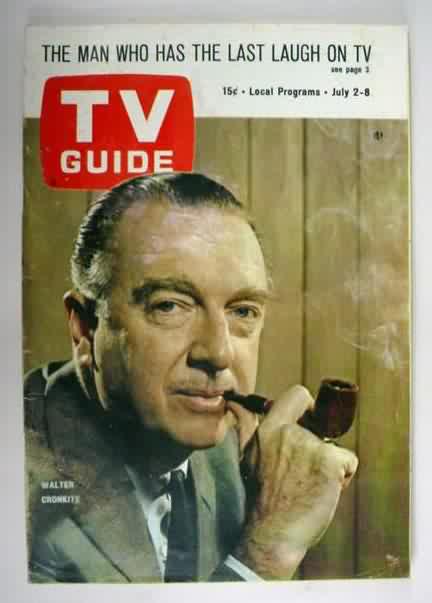
Remember Edward R. Murrow?  No?  Me neither.  How about Walter Cronkite?  I met him once in an elevator in 1980 (if by “met” you mean that I mistook him for the elevator man and ordered the most famous news anchor of the day to take me to the fifth floor.  I recognized him by the familiar resonance of his voice as he replied, “Well, alright, young lady,” and we continued on together for the rest of the ride in an amiable silence, him smiling benignly, me wishing there was somewhere to hide in an elevator).

But I digress.  Here’s the point: for those of us ancient enough to remember, there was a time when everyone turned to a Walter Cronkite for the news.  The news guys didn’t always get it right, but truth was what they were aiming for.  Then somebody got the idea to give the news a slant — let’s not descend into name-calling here but SOMEBODY (rhymes with pox) got the idea to make news a little more exciting for their audience.  The old news was boring – while the new news was provocative and inflammatory, a veritable cocktail of rhetoric and innuendo with the occasional fact thrown in like a garnish.  Fact: the olive in the martini glass of new news.

And it worked.  The public liked the new news, or at least they liked it better than the old news, which was bad news for the purveyors of real news (although ironically it worked out very well for the champions of fake news).  Soon, everybody was busy finding an angle, so that now instead of that one boring half an hour in the classroom, we have twenty-four hours a day of happy hour, with everyone shouting to be heard over the noise in the bar.  Five o’clock somewhere; time for a drink!

But I digress.  What I meant to say was this: today I read in a press release that Amway Global has entered into a partnership with Interleukin Genetics to sell their trademarked Inherent Health line of genetic tests, including the new Weight Management Genetic Test and the soon-to-be released Bone Health Genetic Test, which measures liability for osteoporosis.  How excellent is that?

Of course, they’re not entirely sure that it actually measures liability for osteoporosis.  Sure, they stand by their claim that it will improve peoples’ health – but the test is not even due out for another month, so it is far too soon to have any idea if it works and besides, according to the press release, claims like this are not promises but “forward-looking statements.”  When an organization is trying so hard to be forward-looking, it is hardly fair to expect them to be right at the same time, since predicting the future is a dicey business (as people are likely to discover, using the Inherent Health line of genetic tests).  And the company tells you right up front (if by “up front” you mean buried in the small print at the end): “Because such statements include risks and uncertainties, actual results may differ materially from those expressed or implied by such forward-looking statements.”

Naturally, Amway “disclaims any obligation or intention to update these forward-looking statements.”  Of course not.  Because they might not launch the test at all, or the technology might become obsolete, or the whole thing might turn out to be complete and utter bulls**t.  But how boring is all that fact-checking stuff?  And don’t they already know what their customers want to hear?

Here’s a backwards-looking statement I would like to make: I think I’ve seen this movie before.  It’s called The Invention of Lying and it stars Bill O’Reilly and Lou Dobbs and Keith Olbermann.  The critics hated it, but it has a happy ending – eventually, everybody hears only what they want to hear, and if by mistake they stumble onto information that contradicts their preconceptions, they are free to disregard it entirely – because all statements include risks and uncertainties, and actual results may differ materially.

Scream and yell and howl at the moon, but Glen Beck is not going off the air until his ratings drop and Amway is going to sell genetic tests if people will buy 66waltercronkitethem.  Where does that leave genetic counselors?  Shall we agree to be the PBS news of genetic testing: a sober, sensible broadcast admired by many and watched by few?  There are worse things in life one could be than Jim Lehrer.  I think Walter Cronkite, were he still alive and assuming he had gotten over the incident in the elevator, would be proud.

Or, we could all go work for Amway… five o’clock somewhere; time for a drink!

2 Comments

Filed under Laura Hercher

DC Takes on DTC: The “T” Doesn’t Stand For Tomorrow Anymore

On the first day of a two-day workshop on direct-to-consumer genetic testing co-sponsored by the Institute of Medicine and the National Academy of Science, Muin Khoury of the CDC raised the following question: if we speak out against the current crop of micro-array based genome-wide screens. are we allowing the perfect to be the enemy of the good?  An answer, suggested the generally skeptical panel, might be based on how strictly you defined the word “good.”  Several speakers, including Dr. Khoury, were unimpressed by the predictive capacity of today’s SNP-based disease-gene associations.  Despite some notable successes where specific alleles have been demonstrated to increase relative risk in a meaningful way (age-related macular degeneration was usually the example), the massive number of genes identified through GWAS since 2006 have been, as Alan Guttmacher of NHGRI stated in his talk, “great for understanding the biology of the disease, but weak predictors accounting for only a small fraction of heritability.”

Complaints fell largely into three categories: validity, utility and the public health risks of giving out this information, right or wrong.  As regards validity, a number of speakers pointed out that these early data were largely unreplicated and that standards did not exist to define what constituted a meaningful level of “association.”  Utility was usually invoked to question whether or not the test would add information that was clinically significant – would it affect medical decision-making, or provide a better indicator than simpler tests or the underutilized gold standard of family history (oh that again!).  These are excellent questions, since most GWAS-based associations don’t move the dial much on risk – increases tend to be in the range of relative risks under two, which, in technical terms, means you are a smidge more – or less – likely to get the disease or condition.  But cost is also a question of utility, since changes that are not affordable cannot be incorporated into medical practice.  The cost of scanning continues to fall and a dizzying pace – and multiple panelists insisted that we will see complete genome sequencing for under $1000 by the end of 2010 – but what about the costs of follow-up?  What pot of money will the insolvent U.S. medical system find to pay for added MRI’s, or blood tests, or doctor’s visits for patients whose SNP profiles suggest an increased risk or this or that?  Reading the websites for, Navigenics, 23andme, and deCODE, you might come to believe that your doctor will thank you for bringing this useful information to his or her attention, but Dr. Patricia Ganz of UCLA Medical School, brandishing the twenty-five page report from 23andme sent to her by a patient, wondered aloud if the average physician would in fact appreciate that lovely extra time together, reading pie charts.

And what does all of this mean for genetics counselors?  Joe McInerney, executive director of NCHPEG, spelled out the good and the bad of it in his talk on understanding among health professionals.  Genetics, he predicted, will be the first field in medicine to be de-centralized: moved from the realm of specialists back into the world of primary care.  Will we move from being educators of patients to being educators of health professionals?  McInerney suggested that pressure from patients interested in understanding what to do with their $1000 genomes will push physicians to seek expertise in genetics.  Other participants pointed out that the generalized field of genetic counseling may be asked to provide more in the way of genetic counselor specialists to meet demand as the walls between Mendelian disease and common complex disease come crumbling down in an avalanche of new information.  Forget the term “genetic disease,” McInerney declared!  They are all genetic diseases now – and in a world that he described as “woefully unprepared” for the era of genomic medicine now approaching with all the subtlety and control of a locomotive off the tracks, the question lingers: where will we find ourselves in this new landscape?  In the absence of a perfect answer, are we prepared to define when “good” is “good enough”?

5 Comments

Filed under Laura Hercher

Perils of Language: Why Sonia Sotomayor Won’t Call Herself “Pro-Choice”

As Sonia Sotomayor faces the Senate Judiciary Committee this week, two things are certain:Sonia Sotomayor

1. Much of the questioning will be about abortion.
2. You will almost never hear the word abortion.

When we talk about this subject – in speeches, in newspapers, and on our NSGC list serve – the dialogue is shaped by the words that we use, and the words that we avoid.  In the Senate, the discussion will use code words like “judicial philosophy” and “stare decisis.”

The rest of us will make do with more accessible terms like “pro-life” and “pro-choice.”  Rereading the contributions of genetic counselors following the heinous murder of Dr. Tiller, it is striking how much the use of that familiar shorthand directs the conversation into well-worn ruts of left and right, pro and con, when the truth is I suspect that the majority of counselors – like the majority of Americans – have more in common on this difficult subject than readily meets the eye.

Take a look at the most recent Gallup Poll results of the subject of abortion. The headline in May was “more Americans than ever before identify themselves as “pro-life.”  Had this poll been taken after Dr. Tiller’s murder, the results might have been different – and the news organizations would have proclaimed this a change of heart.  But really, how many hearts were changed?  It only illustrates the ambivalence with which Americans attempt to shoehorn their complex and emotional attitudes toward abortion into inflexible categories drawn up by impassioned ideologues on both sides.

In stark terms, “pro-life” suggests that a fetus is no different than a baby.  If this is truly what you believe, how can any abortion be justified?  Many participants in our discussion complained about the intransigence of pro-lifers who won’t make exceptions for rape, incest and so on – but how many of us would identify circumstances under which it is acceptable to end the life of a baby?  Just over twenty percent of the population is opposed to all abortion, a position which may be intransigent, but is nonetheless morally consistent.

But look at the Gallup Poll results in greater detail and you will see that the vast majority of Americans favor abortion in certain circumstances.  What does this suggest?  Despite the fact that it is hard to talk about and it makes people uncomfortable, most of us believe that becoming a human being is a process – a continuum. We all seek to identify a point along that continuum when “human-ness” becomes so compelling that our moral obligations are clear.  But whether or not you pick conception, or quickening, or viability or birth, the truth is that there are few of us who would not admit that if the building were on fire and we could only save one soul, we would go for the two-week old baby over the frozen embryo every time.

A majority of genetic counselors identify themselves as pro-choice (although not all, as we all learned in that listserve conversation!).  I am guessing that despite our political and professional stake in that identification, most of us have our own sliding scale, and we may all find ourselves a bit queasy about an abortion that occurs late or for a reason we find “inadequate.”  I believe that what can get lost in the language of political engagement is that we are largely in agreement that abortion is an ugly necessity until the moment when it becomes entirely untenable.  When is that moment?  Don’t we all struggle with that?  Can’t we all sympathize with the desire for a clear and convincing answer?  Don’t we know it will never come?

Good luck, Sonia!

1 Comment

Filed under Laura Hercher