Author Archives: Robert Resta

Metaphorically Speaking

With more than 30 years of experience, my tenure as a genetic counselor is roughly equal to the age of  the average practicing genetic counselor. It is no exaggeration to say that I entered the field when many of today’s genetic counselors were still zygotes. A few years ago I ran into a patient whom I had counseled during her pregnancy 27 years ago who proudly informed me that the daughter she was pregnant with back then is now a genetic counselor.

Truth be told, I have reached  a point in my career where I question my relevance to the genetic counseling profession. I worry that the issues that concern and stimulate me are irrelevant to the current and future practice of genetic counseling, that I am stuck in a professional time warp where I am fighting yesterday’s battles and fretting about irrelevant ethical and clinical dilemmas. Maybe my work here is done.

Even more concerning is the possibility that younger patients may think that I cannot possibly understand their problems. They are at vastly different points in their life cycles than I. There is little overlap between our cultural reference points and we likely have distinctly different comfort levels with the technological advances of the last 3 decades. Who wants to be counseled by their father?
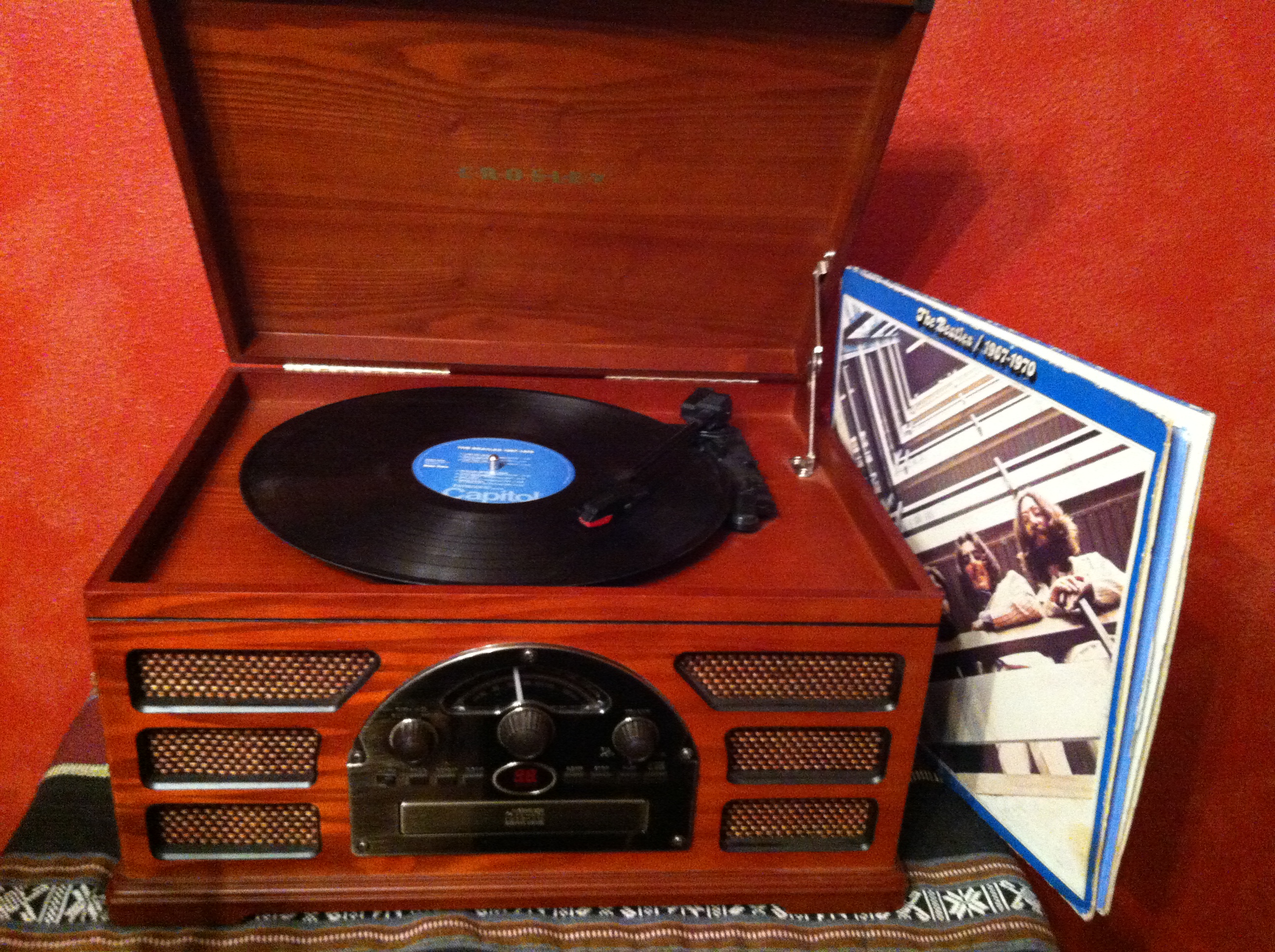
Photo courtesy of Lizzie Resta

Phone

VHS Tapes For VCR

When I first started out as a counselor, I fretted that I was so much younger than my patients that they would not take me seriously. Now I struggle with how to relate to a 30-year-old female BRCA mutation carrier trying to decide whether she should tell her fiancé about her carrier status, and if should she have a prophylactic mastectomy, which in her mind might render her an “unfit” mother because she would not be able to breast feed. My insecurity has come full circle. Sure, good counseling skills should make those differences irrelevant, but still…..

The potential generation gap between me and my younger patients surfaced recently when I met with a woman whom I had initially met with in the 1990s when she was pregnant and amniocentesis had revealed an apparently balanced de novo translocation.* Because of our past experience together she requested to meet with me again because of her subsequent personal and family history of cancer.

Before we started addressing her current situation she told me that she wanted to let me know how much she had appreciated the counseling I had provided during her pregnancy nearly two decades ago. What she had found particularly helpful was a metaphor I had used to help her grasp the concept of translocations. “Bob, you described chromosomes as essentially being a set of encyclopedias, genes were the words in the encyclopedias, and DNA was the alphabet used to spell the words. A balanced translocation was like a few chapters from Volume 10 had broken off and joined Volume 4, and vice versa. You couldn’t say for sure if a few words or letters were lost as a result of the translocation, but as far as the lab could tell, the encyclopedia had all of the necessary information, just rearranged. The light bulb went on in my head, and I was able to make a decision to continue that pregnancy.” I am not claiming that I broke new counseling ground with this explanation; I suspect that many genetic counselors use some version of it.

She continued “My husband and I liked that imagery so much that we used it when we finally decided to tell our teenage son about his translocation.” After they broke the news to their son about his genomic constitution, the patient said that her son silently contemplated what he had just been told. The parents held their collective breath, anticipating a complicated genetics question or a deep emotional response. Finally, he looked up and asked “An encyclopedia – is that anything like Wikipedia?”

Well, I thought, I wasn’t just being paranoid about my relevance to genetic counseling. Even my Genetics-To-English Dictionary is obsolete. I really do need to think about packing it in as a counselor and taking an administrative position with no patient contact.

Rare First Edition of the Genetics To English Dictionary

After I recovered from that shock, I got to thinking more clearly about their son’s statement. Hey, I thought, maybe I could update my Genetics-To-English Dictionary and appropriate the Wikipedia metaphor to my current work in hereditary cancer. Wikipedia is essentially the genome. It contains a lot of information, but some of that information is inaccurate and needs to be corrected and updated, much as DNA can acquire mutations and needs to be repaired. Mismatch repair proteins, the culprits in Lynch syndrome, are like the anonymous editors who vigilantly proofread Wikipedia, reporting and correcting typos to restore the integrity of the information. When the mismatch repair protein genes are mutated, the proofreaders are less accurate, DNA damage accumulates in the cell and eventually leads to cancer. In Lynch syndrome, the proofreader has a hereditary dyslexia.

Perhaps there still is some hope for me as a genetic counselor. But first I have to figure out how to stop my stupidphone from making that awful chirping sound. At precisely 3:12. AM. Every morning.

* – Some clinical details of this scenario have been changed to maintain confidentiality.

7 Comments

Filed under Robert Resta

Caught In The Act

I keep a bowl of chocolates on a table situated between the two chairs that accommodate patients in my office. It is a simple gesture, a small attempt at creating a friendlier environment for conducting the sometimes scary business of genetic counseling. I spread enough bad jujus as part and parcel of my work; I can try to do a little something to offset the negative karma. And it is decent chocolate, not Halloween rejects or forgotten treats that have been lurking in the back of the snack cupboard since the Clinton administration.

Although my chocolate stash has not provided great insight into the psychological complexity of genetic counseling, it has been a surprising and at times amusing source of insight into human behavior on a micro-scale. As they used to say on the old Candid Camera television show, I catch people in the act of being themselves.

Guys, for the most part, walk in, see the chocolate, and say “Hey, great, chocolate!” and then unabashedly help themselves to a few pieces. Many women, however, tend to have a more complicated relationship with chocolate. Here I share a few examples that illustrate this tangled web.

Maybe He Won’t See Me: This is the most common scenario. They want chocolate but do not want to be “caught” eating in front of me, as if somehow it violated social norms or might shape my opinion of them. As we engage in the counseling process, their eyes involuntarily sneak sideways glances at the bowl, the siren call of the miraculously transformed pods of Theobroma cacao too alluring to resist (One patient actually begged a là Odysseus “Please, before I eat it all, tie my hands to the arms of this chair.”). They can get wily too, waiting for an opportunity that distracts my attention, such as when I turn my back to them to complete a test request form or leave the room to photocopy some paperwork, and then sneak a piece or three. Either they quickly unwrap and eat it, hoping that I did not detect the maneuver, or sequester their pilfered pleasure into their purses. If I happen to notice their covert actions, they voluntarily offer an explanation along the lines of “Oh, I just wanted to bring home a piece for my son. He really likes chocolate.” What, like your kid expects a treat every time his mother has a doctor’s appointment?

Get It Away From Me:  Here will power is a serious problem. They sit down and unthinkingly pluck pieces out of the bowl without ever taking their eyes off of me, their uncannily accurate radar guiding them to their personal dark or milk chocolate preference. After a few minutes they realize that they have worked their way through four or five pieces and plead “Please, take this away and hide it in a drawer.” It reminds me of the slyly clever Cookies episode from Arnold Lobel’s delightful Frog and Toad children’s books.

Oh Heck, Why Not?: Like good Christians shunning Satan’s temptations, these patients nobly avoid the chocolate for the duration of the session. But as they prepare to leave, they steal a longing glance at the bowl, torn between desire and decorum. I usually suggest that they take a piece to reward themselves after an emotionally exhausting counseling session or to recover from the physical trauma of their upcoming blood draw. “Oh, I shouldn’t ….. well, alright. I guess I can have one piece since I didn’t get chocolate syrup drizzled on the whip cream on my morning mocha. I will save it for after lunch.” Perhaps in the complicated calculus of calories and diets chocolate has fewer calories after lunch or the mocha counts as Morning Calories and the chocolate as Afternoon Calories.

Calories and Insulin: These patients first pass the chocolate under their noses before popping it into their mouths, like an oenophile sniffing a Premier cru Bordeaux. They savor the pleasure of the silky sweet sensation on their tongues and palates, torn between swallowing and lingering on the moment and sometimes emit a quietly restrained orgasmic “Mmmm.” Then I think back to my review of their medical records and recall multiple appointments at the Diabetes Wellness Program or the Weight Control Clinic, and I feel like a bad clinician who should have planned more carefully for the needs of my patients.

The No Holds Barred Chocolate Addict: Social etiquette is quickly abandoned as these patients unselfconsciously dig into the bowl like Hansel and Gretel in the witch’s cottage. They think nothing of emptying the bowl and leaving only the crumpled wrappings, making it look as if a swarm of locusts had descended on my office. A patient once asked “Do you have any more dark chocolate? My sister just ate the last piece, and I really don’t care for milk chocolate.”

Should Seymour Kessler or Jon Weil reads this piece, no doubt he will roll his eyes and think “For crissakes, Bob, didn’t you learn anything from my teachings? You need to be attending to the profound psychosocial aspects of genetic counseling and the alleviation of human suffering.” Well, Jon and Seymour, I do strive to be a serious and insightful counselor. But sometimes patients – and I – need a piece of chocolate too.

3 Comments

Filed under Robert Resta

Questions For The Panel

If you are a genetic counselor engaged in testing for hereditary cancers, I suspect you are as bewildered as I am these days. With so many labs offering BRCA testing post Association for Molecular Pathology v. Myriad Genetics, Inc. it is difficult to know which labs best serve our patients in terms of value, reliability, insurance coverage services, clinical support, and quality assurance. Familiar labs are offering new tests and unfamiliar labs are offering testing at Costco prices. Not to mention various law suits and counter-suits over BRCA testing that make me worry that some judge somewhere is going to tell a lab to put all of its testing on hold, leaving patients’ test results in legal limbo.

But what really has me confused – and not a little bit upset – are the new multi-gene cancer panels.

The advantages of the multi-gene panels are obvious. They are cost-effective. They help avoid pondering “Gee, that family really could have been a Cowden. I really should have run PTEN” into the sleep-disturbed wee hours of the morning. Panels will also probably result in significant syndromology reassessment. If you offer PTEN testing only to families who look like they  have Cowden syndrome,  you lose much of the true clinical variability of the condition. And, with all respect and apologies to Robb Pilarski,  Cowden syndrome is in serious need of re-assessment.

Savvy patients are beginning to demand multi-gene panels because they read about them on the Internet or heard about it at their support groups. And I would not be at all surprised if DTC marketing of gene panels starts to rear its ugly head along side the tadalafil, cyclosporine, ibandronate, and eszopiclone commercials that run during the evening news.

So what’s not to like about  multi-gene panels? Let’s face it – many of us are just plain bored with BRCA testing. Panels all cost about the same price, and not terribly more expensive than just running BRCA1/2. Woe to a clinic that only offers BRCA1/2 testing when their crosstown rival routinely offers multi-gene panels to everyone. And who wants to look like an out-of-it fuddy dud who only offers a test developed in the previous century? Isn’t it great to have a choice to run a 6 gene panel, a 16 gene panel, a 26 gene panel, or a 49 gene panel to suit the needs of patients and clinicians? You just choose the panel that’s right for the patient.

And therein lies the rub. How do I know which panel is right for my patient? Labs offer little in the way of clarification as to why certain genes are included or excluded from a panel. From the clinician’s perspective, it seems like the choices reflect the arbitrary expertise of the lab with certain genes, the economic calculations of a given lab, and the desire to out-gun the other labs – why sail a 6 gun sloop when a 40 gun ship of the line can blow it out of the water? In my darker moments, I think that we sometimes choose a lab because a famous geneticist is affiliated with it or a friend from grad school works there.

If clinicians and the labs are honest about it, most of us have little idea of how to guide patients who have a deleterious mutation in genes like RAD51, GEN1, XRCC2. Sure, most labs provide references that might justify inclusion in the panel. But the labs do not cite contrary articles that suggest the predictive power of the particular gene might be low nor do they mention the paucity of publications on the clinical management implications of many of the genes.

There is also a noticeable absence of information on the demographic, clinical, or family history characteristics that might point to one panel over another. Are mutations in one set of genes more common in Russians, Japanese, or Native Americans? Are weak family histories suggestive of one group of genes and strong family histories indicative of another set of genes? What about age of onset? The tumor’s genetic or pathologic profile? Breast only families? Breast and colon families? Clinicians don’t know and neither do the labs.

A step in the right direction will be the pre-conference symposium on gene panels at the upcoming NSGC Annual Education Conference on October 9th. But that is only small bandage on a gushing artery. Bigger measures are needed, and here I offer a few:

1) The key professional organizations – NSGC, ASCO, SGO, etc. – need to form a joint committee that identifies a minimum set of critical genes that should be included on all breast, ovarian, or whatever cancer panels, à la newborn screening. Labs would be free to include whatever additional tests they would like. A joint panel would prevent each society from recommending its own preferred panel that might result in confusingly different recommendations from other professional organizations. Such a panel must take great pains to avoid any financial or intellectual biases.

2) The genes included on the panels should be rated according to their clinical utility and the strength of the data based on an analysis of peer-reviewed publications.

3) Centralized databases should be established for tracking patient outcomes,  clinical and demographic variables, and variants of uncertain significance. Labs that fail to participate in joint databases should be singled out so that clinicians would have the option not to utilize labs that declined to participate in joint registries. While it is important for labs to stay competitive, fiscally sound, and profitable, we can’t lose sight of the core ethical value that the primary goal of genetic testing is to serve patients, not bottom lines. Failure to share data strangles the tree of patient care at its roots.

4) Lab websites should include a balanced discussion of the pros and cons of why each gene is included in the panel – particularly for those genes that are not recommended by the above suggested joint committee – and a regularly updated link to a Pubmed search for that particular gene, not a simple link to one or two articles.

5) The joint committee could also serve an advisory and educational role to health insurers so that patients have equal access to appropriate testing, regardless of which plans cover them.

No doubt The DNA Exchange’s wise and insightful readership have their own ideas, opinions, and recommendations. Let’s hear about them.

5 Comments

Filed under Robert Resta

Freud, Kesey, Campbell, And The Case of A Congenitally Unusual Vagina

Vintery, mintery, cutery, corn,
Apple seed and apple thorn;
Wire, briar, limber lock,
Three geese in a flock.
One flew east,
And one flew west,
And one flew over the cuckoo’s nest.

A recent story about teeth grown from stem cells that were extracted from urine reminded me, in the odd ways that brains make associations, of One Flew Over The Cuckoo’s Nest. I first read Ken Kesey’s novel in the mid-1970s when I was majoring in anthropological folklore at Brooklyn College,  a wannabe Joseph Campbell. Kesey’s novel, viewed through my newfound mythological lens, was ripe with primal imagery and mythological motifs . A decade and a career later, I came across a case report in the British Journal of Obstetrics and Gynaecology of a rare congenital anomaly and in a flash my worlds of mythology and genetic counseling merged. And it all starts with a vagina, or more precisely, a toothed vagina.

Three near universal figures in folklore are Trickster, Hero, and the Vagina Dentata. Trickster takes on many shapes and forms and plays different roles in different cultures. A common story involves Trickster disobeying the social rules to upset cultural norms. One could make the case that Bugs Bunny is the culturally distorted Looney Tunes descendant of Trickster Rabbit. Hero is often the Founding Father or Savior of a culture who must overcome a great obstacle or defeat a horrible monster, not uncommonly with the help of Trickster. The Vagina Dentata figure is a female beast – sometimes called The Terrible Mother –  who is endowed with a toothed vagina with which she emasculates and controls men.

As you might guess, the vagina dentata figure is a frequent target of psychoanalytic theory and feminist critiques. Clearly this goes deep into Freudian territory. Some view it as the mythological re-telling of the conflict between patriarchal and matriarchal societies. Females are portrayed as monsters because the story is told by male victors.

Set in what was then called an asylum  for the insane in Oregon, the plot centers on Randle Patrick McMurphy (better known to many of us as Jack Nicholson), Chief Bromden, and Nurse Ratched, the three geese of the rhyme’s flock. McMurphy/Trickster wreaks havoc by commandeering boats and buses, and generally irritating Nurse Ratched by flaunting her rules that give her absolute control of the inmates. As Nurse Ratched describes McMurphy to a co-worker: Sometimes a manipulator’s own ends are simply the actual disruption of the ward for the sake of disruption.

Chief Bromden is Hero, a big man whose large size is a phallic symbol and inability to speak is a manifestation of his impotence and domination by Nurse Ratched.

Nurse Ratched is the Vagina Dentata. A ratchet wheel is a toothed wheel (okay, the spellings aren’t exactly the same, but give Kesey some literary license here) and cuckoo’s nest is an old slang term for vagina. Chief describes Nurse Ratched’s  monster-like qualities:

She’s going to tear [them] limb from limb, she’s so furious. She’s swelling up, swells till her back’s splitting out of the white uniform and she’s let her arms section out long  enough to wrap around the three of them five, six times. She looks around her with a swivel of her huge head…and she blows up bigger and bigger, big as a tractor….

Later, McMurphy discusses Ratched with another inmate:

Inmate: She’s not some kind of giant monster… bent on sadistically pecking out our eyes.

McMurphy: No, buddy, not that. She ain’t peckin’ at your eyes. That’s not what she’s peckin’ at.

Inmate: Not our eyes? Pray then, where is Miss Ratched pecking, my  friend?

McMurphy: At your balls, buddy, at your everlovin’ balls.

With his slyness and fondness for breaking rules, McMurphy gains Chief’s trust by sharing a pack of gum and gets him speaking again , symbolically restoring Chief’s phallic potency.

Later in the novel, McMurphy recruits some prostitutes to help release the sexual repression of the stuttering Billy Bibbit. Nurse Ratched discovers the shenanigans and humiliates Billy by threatening to tell his mother. Subsequently, the shamed Billy commits suicide for which McMurphy blames Nurse Ratched. Enraged, McMurphy chokes Ratched and ripped her uniform all the way down the front, screaming again when the two nippled circles started from her chest and swelled out and out, bigger than anybody had ever imagined, warm and pink in the light...

McMurphy’s punishment for the assault is lobotomy, the symbolic equivalent of castration for Trickster whose power lies in his wits. Chief, his vitality restored by McMurphy, smothers the lobotomized McMurphy (a half century before Oregon passed its Death With Dignity law), rips a control box off the floor, smashes a window, and escapes to freedom, Hero resurrected.

Of course, this is only one of many ways of reading the novel. Did Kesey have mythological motifs in mind when he formulated the novel? That’s unknowable, but if folklorists are right, mythology is always on our minds. The tales that emerge from writers and storytellers tap into deep subconscious wells. The sexual and power conflicts within our minds and our society play out in our stories; we can’t help but tell these tales.

It is not surprising that congenital anomalies and genetic disorders can play mythological and religious roles that range from sacred to profane. Congenital alterations of the flesh may be transformed into hero or beast. It’s hard to say if an actual toothed vagina is the source of the mythological figure, but even the rarest encounter (although ovarian dermoid cysts not uncommonly contain teeth) with this anomaly would likely have left a deep and lasting impression. As Chief says, “It’s truth even if it didn’t happen.”

Leave a comment

Filed under Robert Resta

Albatross

Ah! well a-day! what evil looks
Had I from old and young!
Instead of the cross, the Albatross

About my neck was hung.

And till my ghastly tale is told,

This heart within me burns

He went like one that hath been stunned,
And is of sense forlorn:
A sadder and a wiser man,

He rose the morrow morn.

– Excerpts from The Rime of The Ancient Mariner, by Samuel Taylor Coleridge

Eugenics. I can hear the thud as the collective eyes of genetic counselors roll heavily at the mention of the E-word.  That finger has been wagged in our faces ad infinitum. Alright already, we have learned our lesson from this shameful past. That was like more than half a century ago. Do we have to still keep apologizing for something we never did? Enough with the hand-wringing and perseveration. We’ve smoked this one down to the filter.

Well, no, apparently we are not done. As historian of medical genetics Nathaniel Comfort has pointed out in a recent thoughtful Genotopia blog (with an equally thoughtful commentary by Alex Stern, the biographer of our profession), eugenics discussions are back with us. We need to keep having the discussion because apparently we are not sadder and wiser people this morn. Some even think – with great hubris, in my view – that with our supposedly greater wisdom and technological advances, maybe some version of eugenics is not such a bad idea after all.

I am not going to repeat Nathaniel’s and Alex’s arguments here; visit the Genotopia blog and read the originals. What I want to do is to offer a  framework for thinking about the issues raised by these historians and introduce the concept of genetic discrimination into the mix.

Genetic discrimination, in my definition, is discrimination based on a person’s presumed or actual genotype and it’s presumed or actual phenotypic expression. The word discrimination comes from  the Late Latin discriminationem, meaning “to make distinctions” and can have both negative and positive connotations. Racial and gender discrimination that results in suffering and inequity is bad. But a discriminating person is one who shows great taste for fine things. Not to try to dance too many angels and devils on the head of this pin, but perhaps when discrimination has a negative effect, it could be called dyscrimination.

Eugenics, then, can be viewed as a form of negative genetic discrimination, the goal of which is to improve the genetic health (whatever that means) of future generations.

Prenatal diagnosis, the usual aim of eugenic critiques, is not eugenic because it does not try to alter allele frequencies of future generations. Down syndrome is almost never an inherited disorder, and people with Down syndrome rarely reproduce. Prenatal diagnosis is not an attempt at “the self direction of human evolution,” as the 1921 Second International Eugenics Congress defined eugenics.  But from the standpoint of some, prenatal diagnosis is a form of negative genetic discrimination – fetuses are discriminated against because of their genome and the common but inaccurate perception of the Down syndrome phenotype as a backward child with a heart defect but a pleasant personality. Although the insensitive term mongolism is rare these days, the common image of “the Mongol child” has not evolved as much as it should have.

Pre- or early pregnancy screening of parents for mutation carrier status for various genetic conditions, on the other hand, might rightfully come under eugenic criticism since its explicit goal is to improve the genetic health of future generations and to wipe out genetic diseases by preventing the conception of homozygous recessive offspring. Never mind the nonsense spewed forth on some websites; carrier screening usually has very little to do with improving the health and quality of life of babies who are born with genetic conditions. Carrier screening can result in reduced suffering if fewer children are born with life threatening or medically serious disorders but it rarely improves the health of babies who are born with those conditions. Whether this is a “good” or a “bad” form of eugenics, and how commercial laboratories advertise their product, are questions open to healthy debate.

Newborn screening, as it is currently practiced, is not eugenic because its intent is to improve the health of a child by treating the presumed phenotype based on the genotype. Newborn screening could thus be viewed as a positive form of discrimination, albeit one with flaws that we are not comfortable acknowledging . But newborn screening can also be viewed as negative genetic discrimination, depending on the condition being screened for. Some people who are deaf have raised serious concerns about screening newborns for hearing loss.

Genetic screening for adult onset disorders like Lynch syndrome or familial hypercholesterolemia may be positive genetic discrimination. The goal of this screening is to treat the phenotype based on the genotype with the hope of reducing the incidence of serious, life-threatening diseases or to mitigate their effects. Dietary changes, treatment with statins, high risk cancer screening, and surgery are strategies that are offered to people at increased hereditary risk of developing these diseases. Of course, if there were to be widespread preimplantation or prenatal diagnosis for these conditions, then we should rightly raise eugenic questions.

Why make these distinctions? Because the word eugenics has become an angry accusation that ends discussions. The social effects of genetic medicine and genetic counseling should always be open to vigorous scrutiny but the criticism needs to be accurate and sensitive to nuance. Maybe some of what we genetic counselors do is eugenic, and maybe under certain situations, this may not be as terrible as it sounds. And maybe some of what we do is dyscriminatory but not eugenic; we need to understand why it is dyscriminatory so we can do something about it. And maybe lots of what we do is very helpful for many people and not particularly eugenic. To cram all of medical genetics into a eugenic framework prevents any progress from ever being made. The two sides start to resemble Democrats and Republikans in a dysfunctional Congress, never able to engage in meaningful debate. Let’s get this albatross off our necks.

2 Comments

Filed under Robert Resta

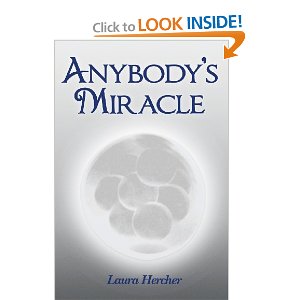
A Review Of “Anybody’s Miracle,” A Novel By Laura Hercher, Genetic Counselor

It’s not everyday that a genetic counselor publishes a novel. In fact, I think that has only happened on one day, with the recent publication of Anybody’s Miracle (Herring River Press) by our genetic counseling colleague Laura Hercher.

41wxG7-Kp-L._BO2,204,203,200_PIsitb-sticker-arrow-click,TopRight,35,-76_AA300_SH20_OU01_

Laura is my partner in blogging crime here at The DNA Exchange. One might rightly point my own finger at me and accuse me of a conflict of interest in reviewing a book written by a fellow DNA Ex’er. While this review may amount to a bit of free advertising for Laura, I will not receive a single ha’penny or any other form of compensation from Laura, her publisher, or anybody connected with Laura.

Anybody’s Miracle is about the tangled web we weave once we begin to conceive. The story centers on Robin Hogan, a bright, beautiful Catholic woman whose otherwise wonderful life lacks one thing – children. Unable to conceive naturally, she and her husband suffer through the trials and tribulations of infertility work-ups. After nearly losing her life from ovarian hyperstimulation, she conceives twin boys with the help of IVF, and here the story takes off after a slowish start.  She desperately wishes to conceive another child even though the risks to her health are great. Robin then becomes driven to learn the fate of her frozen embryos, who she thinks of as her children. Robin’s sleuthing  leads to the discovery that one of her embryos resulted in a successful pregnancy for an infertile couple and  she hatches an entirely unethical scheme to learn the couple’s identities. Robin’s becomes obsessed with the child – the daughter she never had! –  and takes to spying on the family and photographing  the girl from a distance.

Just when the going starts to get creepy, the plot twists like a helix when the little girl develops leukemia and requires a bone marrow transplant.  Of course the only compatible donor  turns out to be one of Robin’s twin boys, who is the girl’s genetic brother. Because of poor communication, misconceptions, and Robin’s Hitchcockian obsession with the girl, the two families clash when the girl’s parents not unreasonably believe that Robin will demand they give up their daughter to Robin in exchange for using her son as a bone marrow donor. Lawsuits, meetings with high-profile lawyers who have their own agendas, and media hoopla follow in grand style. The craziness is resolved only with the unwitting help and innocence of a hungry little boy.

Set during the 1990’s and early 2000’s, the story plays out against the major events and trends of that era – the dot.com bust, 9/11, cell phones, homosexuality taking its first tentative steps out of the social closet, and parents obsessed with raising their children as if they were organic vegetables. Perhaps the greatest miracle of all – the breaking of the Curse of the Bambino by the  2004 Boston Red Sox – plays a critical symbolic role. The novel explores  several themes near and dear to the hearts of genetic counselors – the conflicts that arise when parenthood is defined by genetic, social, and gestational criteria; the moral and social status of embryos; and how the often deep and profound childbearing urge will push some people to great personal and ethical extremes.

The book is an easy and enjoyable read, and the pacing, though occasionally uneven, will keep you wanting to know what happens next. I thought the ending wrapped things up a bit too neatly and happily. I was also hoping for a larger role for a genetic counselor character (genetic counseling is mentioned very briefly  when an “offstage” GC make what I would describe a bad professional judgment call), but that does not detract from the novel. Anybody’s Miracle arrives just in time for a good summer read for genetic counselors. Maybe if you bring it to the AEC in Anaheim in October, you can get Laura to autograph your copy.

The closest similar achievement by a genetic counselor that I know of was by Anna Phelan, a former genetic counselor who wrote the script for Mask, the 1985 Peter Bogdonavich movie that starred Cher and was based on the life of Rocky Dennis, a young man with craniodiaphyseal dypslasia. Anna went on to contribute to  Gorillas in the Mist,  Girl, Interrupted and other films. There are a number of creative talents in the genetic counseling community – Jon Weil’s intriguing pottery, the photography of  Jean Pfotenhauer and Liane Abrams, to name just a few . Use the Comments section below to tell us of the creative skills of other genetic counselors so we can celebrate the talents of all of our colleagues.

2 Comments

Filed under Robert Resta

Star Power

BRCA is a hot news item these days. The SCOTUS ruling on the Myriad patent. Angeline Jolie writing in the New York Times about her experience with BRCA testing. A movie about BRCA testing starring Helen Hunt as Mary-Claire King (Hey,when they make the movie about me, they will have to get Clooney or Depp for the lead). But BRCA testing has been around for about 15 years and I have met with  thousands of patients who have gone through the decision-making process about genetic testing. For some the choice was a snap; for others it was a difficult, soul-searching affair. I eventually realized  the obvious – nobody undergoes BRCA testing until they are emotionally ready.

Public lectures, brochures, ad campaigns, podcasts, TV commercials, advertisements, physician referrals, and word of mouth all increase awareness of BRCA testing but they do not necessarily drive people to actually meet with a genetic counselor or to undergo testing. When reviewing medical records prior to a patient’s appointment, I frequently see the notation “Recommended that the patient see Bob Resta for BRCA testing” repeated multiple times over the years by different providers – radiologists, family practitioners, gynecologists, etc. Patients often need a trigger to make the appointment phone call. A cancer diagnosis pushes some patients to testing to help guide their treatment decisions, which, from a preventative public health stand point, is a significant systems failure. Many patients, particularly those who have not yet been diagnosed with cancer, need an emotional trigger – a friend diagnosed with cancer, reaching the age when a parent was diagnosed with cancer, coming to grips with the responsibilities of parenthood, or an experience that causes them to acknowledge their mortality.

These triggers have resulted in a more or less steadily increasing flow of  referrals, with occasional rises and dips that follows a pattern that is no more transparent to me than the whimsical ups and downs of the stock market. But overall cancer genetic counseling and testing is still underutilized.

And then came Angelina Jolie.

I am guessing that most cancer genetics programs were swamped with a tsunami of referrals after May 14th.  Rumor has it that  some genetic counselors have taken to saying that the AJ Panel now stands for Angelina Jolie Panel, not Ashkenazi Jewish Panel (well, not really, I just made that up, but it could be true). At my institution, I roll my own; I am the only genetic counselor in our hereditary cancer program, so the leap in patient volume has been particularly acute for me.

Wave

Initially I thought I was just a cranky old counselor complaining about a couple of busy days. But then I  compared my patient load in the 4 weeks before Angelina Jolie’s New York Times piece on May 14th  to the 4 weeks after. I grant you this is not exactly a scientific methodology, and I can think of all kinds of faults in the study design. But it probably provides a reasonable approximation of reality.

In the 4 weeks before May 14th, I met with 54 patients, almost all of whom were new patients, a typical volume for me. Twenty of those 54 visits (37%) were by patients who had a family history of  cancer, rather than having been diagnosed with  cancer. 35 patients underwent BRCA testing.

In comparison, in the 4 weeks after May 14th, there have been 90 clinic visits, a 66% increase compared to the prior 4 weeks.  58 patients underwent BRCA testing, also a 66% increase. It was not due to mini-epidemic of breast cancer in my neck of the woods (although Seattle has the highest incidence of breast cancer in the country) – 52 of those 90 visits (58%) were by healthy patients who had a family history of cancer.

Perhaps this bump in my workload was  a seasonal thing as people clear off their to-do lists before summer vacation, but I did not find similar patterns in April/May/June of 2011 or 2012. In fact, in 30 years of practice, I do not believe that my patient volume has ever risen so rapidly so quickly. It is fair to say this increase is largely due to Ms. Jolie’s revelation. Presumably this will eventually taper off. But I already have 20 patients on my schedule for the coming week.

I usually ask patients what motivated them to come in for genetic counseling at this particular time in their lives. A few patients have admitted that Ms. Jolie was their impetus for seeking genetic counseling.  But most were quick to say – sometimes without prompt – “I am not here because of Angelina Jolie. I just decided it was the right time to come in.” That may be true for some, but I suspect that downplaying the Angelina Jolie angle may reflect a bit of embarrassed denial on the part of others. All of us are influenced by influential people, which is why we call them influential. Influence, however, can be so subtly pervasive that we cannot detect its fingerprints. Just ask Don Draper.

Movie

I am not critical of Angelina Jolie’s decision to share her story. No matter how famous you are, it has to be difficult to share such an intensely personal narrative with just about every human being on earth. And her actions may very well help save lives and reduce suffering, which is what we are trying to do in medical care. To many of us, though, it seems paradoxically odd but not surprising that a movie star can play such a critical role in people’s lives. She is not a health care expert; she doesn’t even play a doctor on TV.

But as I have argued before, genetic counselors have less influence on patients than we like to believe. Medical decisions and healthcare utilization are shaped by a complex web of emotional, social, cultural, and psychological factors, many of which people are not willing to acknowledge or are even cognizant of, and which are beyond the control of genetic counselors.

If we want to better integrate genetic counseling into standard medical care, we need to move beyond a model of Healthcare Provider Education and  Referral Pamphlets  Are The Best Way To Get People Into Our Offices. We need to take a page from DTC genetic companies’ playbooks and make it less of a hassle for patients to utilize genetic counseling and testing. We need to tap into social psychology and tease out the factors that lead patient’s from their front doors to our office doors. The future of the genetic counseling profession depends on it.

2 Comments

Filed under Robert Resta

And Bob’s Your Uncle: A Guide To Defining Great Aunts, Great-Great Grandparents, First Cousins Once-Removed, and Other Kinfolk

When genetic counselors attend family reunions, their unofficial job becomes Namer-of-Relationships. “Keith, you and I are first cousins once-removed. Viola is my great aunt. Margo, you are my mother’s second cousin’s second wife so you would be…..well, some kind of in-law or kissing cousin, I guess.”  It gets confusing, even for experts. It is even more difficult for patients or referring providers who try to relate a family history of a second cousin with a cleft palate and a heart defect but who is actually a first cousin once-removed.

Below I have created a generic pedigree that illustrates the most common familial relationships in the kinship system of the modern Western English-speaking world. The pedigree undoubtedly contains errors and omissions. So, in the spirit of crowd sourcing, I encourage my fellow pedigree wonks to scrutinize it and report mistakes, mislabelings, missing relatives, and thoughtful commentary in the Comments section below (this would also be a great discussion topic for a few hours of a genetic counseling student seminar).

Click to Enlarge

Click to Enlarge

The accompanying explanatory table supplies details, controversies and inconsistencies. I am cowardly avoiding the complicated relationships that stem from assisted reproductive technologies such as donor eggs, donor sperm, surrogate mothers, etc. Of course, the person you decide to call Mother, Father, Uncle, Cousin, etc. is based not on genetic relationship but on personal experience, family preferences, and social norms.

For those not familiar with pedigree arcana, each individual is identified with a numbering scheme such that relatives in the first generation (at the top of the pedigree) are identified with a Roman numeral  (e.g., I) and an Arabic numeral (e.g., 2). This indicates, reading from left to right, that I-2 is the second person on the first line of the pedigree. The next generation down is numbered II, and so on. Thus, IV-7 is the seventh person in the fourth generation and who is the the proband or propositus, the reference point for the relationships. IV-7’s father is III-3, IV-7’s paternal great grandfathers are I-2 and I-4, and so on.

There seems to be no widely accepted guidelines for when to include hyphens in a relationship name (e.g., great-grandfather vs. great grandfather). Since this is my blog post, I get to decide the grammatical rules. Thus, because I tend to be a minimalist, I hyphenate only when there is more than one “great” in a title. In the pedigree, I-1 is a great-great-uncle, but I-2 is a great grandfather. I also use hyphens in “removed” relationships (e.g., first cousin once-removed) because, well, it just looks right. Stepmother seems to be more common than either step mother or  step-mother. However,  “stepbrother” is infrequent. For consistency, I recommend the spaced-but-not-hyphenated style for “step” and “half” descriptors” (e.g., half brother, step mother).

An alternative graphic to describe family relationships is the Canon Law Relationship Chart.

Image from Wikipedia Commons, under the GNU Free Documentation License. http://en.m.wikipedia.org/wiki/File:Canon_law_relationship_chart.svg#section_2

Image from Wikipedia Commons, under the GNU Free Documentation License. http://en.m.wikipedia.org/wiki/File:Canon_law_relationship_chart.svg#section_2

The relationships illustrated in the pedigree are described as follows:

Self, You, (AKA Proband, Propositus): IV-7, the person who is the reference point for  all relationships in the pedigree.

Parents:

Genetic Father: III-3

Genetic Mother: III-4

Step Parent: III-5, the new or former spouse of your genetic mother or father.

Siblings

Full Brother: IV-8. Male siblings with whom you share both genetic parents.

Full Sister: IV-9. Female siblings with whom you share both genetic parents.

Half Sibling: IV-10. A sibling with whom you share only one genetic parent. Or, as one of my patients said to me the other day “She is my half of a sister.”

Step Sibling: IV-11. A sibling with whom you share no genetic parents, e.g., the son  your stepfather had with his previous wife.

Children

Son: V-2. A male child.

Daughter: V-3.  A female child.

Step Child: V-1. The son or daughter that your spouse had with a previous spouse.

Grandchildren

Grandson, Granddaughter: VI-1. Your child’s son and daughter, respectively.

Great Grandson, Great Granddaughter: VII-1. The son and daughter, respectively, of your grandson or your granddaughter.

Grandparents

Grandfather: II-3, II-5. The father of your mother or father. But note the inconsistent use of grand and great. The brother and sister of your grandfather is your great uncle and great aunt (vide infra, Great Uncle, Grand Nephew). Presumably the word stems from the French grand-père, which itself goes back to the 12th century. Prior to the French influence, a grandfather was referred to as a grandsire, and prior to that, in Old English, the Germanic-derived ealdefæder or eldfader.

Great Grandfather:  I-2, I-4, I-6, I-8. The father of your grandparent.

Grandmother: II-4, II-6. The mother of your mother or your father.

 Great Grandmother: I-3, I-5, I-7, I-9. The mother of your grandparent.

Uncles, Aunts

Uncle: III-2, III-8. A brother of one of your parents

Aunt: III-1, III-9. A sister of one of your parents

Great Uncle: II-2, II-7. A brother of one of your 4 grandparents.  I thought about recommending the  less commonly used title Grand Uncle (or Grand Aunt) because these individuals are in the same generation as your grandparents. When they are referred to as Great relatives, it seems to imply that they are in the generation prior to your grandparents’ generation. I suspect, though, that Great is so well established that it is unlikely to replaced by Grand. And you share more genetic information with your Grandparents than you do with your Great Uncles, so perhaps using Great rather than Grand is an acknowledgment of that genetic difference (vide supra, Grandfather; vide infra, Grand Nephew vs. Great Nephew).

Great Aunt: II-1, II-8. A sister of one of your 4 grandparents

Great-Great Uncle: I-1. A brother of one of your 8 great grandparents. Note the slightly confusing terminology – the siblings of your great grandparents have two “greats” in their relationship title, compared to only one “great” in their sibling, your great grandparent.

Great-Great Aunt: I-10. A sister of one of your 8 great grandparents.

Nephew, Nieces

Nephew, Niece: V-4, V-6, V-5, V-7. The son and daughter, respectively, of your sibling.

Great Nephew (Grand Nephew), Great Niece (Grand Niece): VI-2, VI-3.  The son and daughter, respectively, of your nephew or niece. In genealogy circles, it is more common to use Grand rather than Great, on the basis that this relative is as many generations removed from you as your grandparent is, only in the other direction. However, in my view, if the siblings of your grandparents are Great Uncles and Great Aunts, then it seems to me that there is greater symmetry in calling them Great Nephew rather than Grand Nephew. Besides, you share as much genetic information with your Great Nephew as you do with your Great Aunt, so from that standpoint it makes more sense to go with Great rather than Grand (vide supra, Great Uncle, Grandfather.

Cousins

First Cousin: IV-1, IV-2, IV-3, IV-4, IV-12, IV-13, IV-14, IV-15. The children of your aunts and uncles.

Second Cousin: IV-16.  The children of your parents’ first cousins.

First Cousin Once-Removed : V-8, III-10. The children of your first cousins OR the parents of your second cousin (who could also be properly called your second cousins once-removed). Once-removed refers to the fact that the relative is one generation removed from you, either one generation above or one generation below. The children of your second cousins could also be called your second cousins once-removed. This is one of the confusing areas where different relatives can have the same title and the same title could be applied to different relatives.

First Cousin TwiceRemoved: VI-4. The grandchildren of your first cousins.

Unnamed Relationships:

IV-5, III-6, III-7. As far as I am aware, in Western European kinship systems, there is no title for your spouse’s previous spouse IV-5), your step parent’s previous spouse (III-6), or the previous spouse of your step parent’s previous spouse (III-7).

85 Comments

Filed under Robert Resta

Customer Disservice?

“Words used carelessly, as if they did not matter in any serious way, often allowed otherwise well-guarded truths to seep through.”
― Douglas Adams, The Long Dark Tea-Time of the Soul

Vocabulary is never just a bunch of words. Consciously or unconsciously, word choices reflect underlying ethical, moral, and philosophical values. Which brings me to why I have a problem with the growing trend to embrace the Customer Service Model of Patient Care.

Genetic counselors wake up every morning and go to work because we are driven by a desire to help people. We strive to use our skills to alleviate the psychological and physical turmoil dealt by the cruel and impersonal hand of Genetic Fate. We encourage patients to pour out their sadness, anger, fear, and insecurity in the safe havens of our offices where we offer comfort, unquestioning support, and some hope in their darkest hours. We want their lives to be better for having met with us. I witness this same deeply ingrained desire to help patients in many of my health care colleagues  – physicians, nurses, imaging technicians, office staff.

Suffering

So what’s not to like about the Customer Service Model of Patient Care? It encourages health care providers to be supportive and respectful, and to put patients at the center of clinical encounters. Customer service skills in the clinic are important to our relationships with referring physicians, and for genetic counselors who work in lab positions where they interact primarily with health care providers.

My uneasiness with the Customer Service Model stems from the implications of referring to patients as customers. Think about it. Labeling people as customers subtly focuses the health care interaction on profit. Patients are stripped of their emotional and physical vulnerabilities and reduced to revenue sources. It is downright disrespectful. Why should I feel compassion for patients if I am trying to convince them to fork over their hard-earned money?

Cash Patients

The message communicated by the vocabulary is not “Let us try to alleviate your suffering and to care for you as human beings.” Rather the message is “I am being nice to you so you will keep coming back to my store.” And, inevitably,  models of customer service developed by highly successful corporations like Amazon, Nordstrom’s, and Starbucks are held up as paradigms for healthcare providers to emulate. Scripted patient interactions and Greeters at hospital entrances cannot be far behind. But corporately-mandated niceness can be as transparent to patients as a pair of Lululemon yoga pants.

Typically, the Customer Service Model is presented as a clever acronym, such as  MAGIC, ACES, FISH!, or HEAT. Does anyone sincerely believe that the complex interaction between health care provider and patient can be  simplified to a conveniently bulleted PowerPoint slide?

I am not a financial naif. I am acutely aware of the dire economic status of the American health care system, the razor-thin profit margins of hospitals, and the critical importance of a fiscally sound organization. But there is no reason to believe that the Customer Service Model generates any more income or additional business than empathic providers and highly competent medical care. Indeed, keeping the focus on the patient – rather than the customer – has the potential to increase hospital revenue because it implies that health care providers are emotionally invested in the care of their patients.

The possibility that patients might think that the medical encounter is financially driven is re-enforced when they walk into physicians’ offices where nutritional supplements, skin care products, eyeglasses, and other medical “accessories” are offered for sale. If patients are led to believe that we view them as customers, then it could reduce their trust in us and the care we provide. Why should patients trust our medical advice if they think we are trying to profit from their suffering? This makes it all the more critical to stay sensitive to the appearance of conflicts of interest and to our blind spots.

We cannot honestly say to ourselves “Well, I know I am calling them customers, but I don’t really think of them as customers.” As George Orwell pointed out, language can corrupt thought as readily as thought can corrupt language. We must choose our words carefully.

Word Choice

4 Comments

Filed under Robert Resta

Screening Everyone For Everything: A Changing Model of Screening For Carrier Status of Genetic Diseases?

The heterozygote carrier screening paradigm  is  starting to shift from ancestry based screening  for carriers of a single or a few genetic diseases to pan-ethnic screening for carriers of a wide range of genetic diseases. New techniques of DNA sequencing make it possible to test a single sample to determine carrier status for dozens of genetic conditions at prices that make carrier screening panels (CSPs) very tempting to healthcare providers and patients. Since carrier screening for one or another genetic disease – cystic fibrosis, Tay-Sachs, hemoglobinopathies – is already offered to essentially all women who are pregnant or planning a pregnancy, why not “screen everyone for everything” at no greater up front cost? And it doesn’t even require a blood sample; a less intimidating buccal sample works just fine.

Part of the understandable justification to move beyond targeted carrier screening programs is the futility of trying to classify people into distinct ancestry/racial/ethnic categories. Gene mutations and genetic diseases have a pesky habit of flowing fluidly between populations, and cultural heritages can be lost through assimilation (See Interesting Digression* below).

People

So why object to CSPs? After all, don’t people have a right to “know their DNA” and to understand what health and reproductive risks they face?

I am not suggesting that we should stand in the way of anyone’s wishes to “know their DNA.” If someone chooses to acquire that knowledge without the benefit of meeting with a genetic counselor, well, I may disagree with that decision but I respect it. But whether people decide to undergo carrier testing through a genetic counselor or through an online testing company, they need information that is forthright, complete, and transparent; they do not need subtly biased sales pitches. Private companies do not have a vested interest in talking people out of genetic testing.

Before we examine how some labs “objectively” describe carrier screening to patients, we must acknowledge an ethically uncomfortable truth. Carrier screening does not consistently lead to better treatments,  encourage greater tolerance of disabilities,  stimulate research into cures, or improve psychosocial adaptation to genetic disease. The only compelling reason to devote economic and medical resources to carrier screening is to reduce disease incidence. For better or worse, that is the measure of success of Tay-Sachs screening in Ashkenazi Jews and thalassemia screening on Cyprus.

Three strategies can reduce the incidence of genetic disease. One is mate selection based on carrier status, which is rare except in select populations such as Ultra-orthodox Jews (Hey Single Women out there, when was the last time you met potential Mr. Right and said “Er, you can buy me a drink but do you mind if I take a pedigree and a cheek swab from you before I give you my phone number?”). A second approach is preimplantation genetic diagnosis, but it is available to only a miniscule percentage of the population. The third and only realistic option for most patients is the elephant in the room – prenatal diagnosis with termination of affected fetuses.

Bar

Take a look at the  web sites of companies such as Counsyl or 23andMe and you get a different narrative. The word “abortion” does not appear. Instead, you read about sperm/ovum donation, preimplantation diagnosis, mental preparation, watchful waiting, and early treatment. No mention is made that early treatment requires testing the baby anyway and that some treatment is available for only a handful of the screened conditions. The websites do not bring up the point that there are no large-scale studies that have shown better familial adaptation to genetic disease when parents have prenatal awareness of their carrier status, so couples really cannot know if testing really will result in mental preparedness. And I am still not sure what watchful waiting is, and how it differs from mental preparedness.

waiting

A second concern is that screening for very rare conditions plays on the emotionally vulnerable state of many pregnant women and the difficulty almost anyone has in understanding very, very small numbers in a psychologically meaningful way. Take for example, a condition that has an incidence of 1/100,000 births with a 75% carrier detection rate. Before carrier testing, a couple would have an ~99.9999% of NOT having an affected child; after carrier testing that probability would increase to ~99.99999%. Really, who can tell the difference between those two statistics? It’s difficult just trying to count the number of nines in those numbers. But read about the condition’s severe intellectual disabilities and physical birth defects, and, damn the statistics, give me that test.

A third concern is the lack of complete information about test sensitivity on the information portion of the website. For example, a patient with normal carrier test results might understandably think they would not have to be concerned about having a child with Bardet Biedl syndrome. What the site does not indicate however is that BBS1 and BBS10, the two loci included in the  panel, account for less than half of patients with Bardet Biedl syndrome, and that the dozen or so other genes that can cause Bardet Biedl syndrome are not included in the test panel.

A fourth, and maybe the greatest, concern is the ethical difficulty of deciding which conditions to include on a CSP. Tay-Sachs screening among Ashkenazi Jews and thalassemia screening in Cyprus developed with significant input from families, medical professionals, and community and religious leaders. There was widespread agreement in those communities that these were serious diseases and that carrier screening, mate selection, or prenatal diagnosis were ethically acceptable ways of reducing disease incidence. Very little community dialogue has taken place over CSPs. Do we really believe that the world is a better place if we screen for carriers of a common form of hereditary deafness or, God help us, red hair color?

Redhead

And ruminate on this: a study of 3 million cystic fibrosis carrier tests performed at a single US lab found that 25,000 CF carrier screens needed to be performed to detect one affected fetus. And this is for a relatively common genetic condition with a frequency of about 1/4000 US newborns and  a screening program whose success remains debatable. How many carrier screens will need to be performed to detect a fetus or newborn with a rare disorder like isovaleric academia, with a frequency of 1/250,000 births?

It could be that I am just the last of the old wave of genetic counselors who are out of touch with new technologies and changing ethical values, the proverbial last leaf on the tree. Maybe I am a 20th century genetic counselor in a  21st century world in which private industry will become the primary mode for the delivery of medical genetic services. Perhaps when I retire in a decade or so the genetic counseling community will issue a collective sigh of relief. But sometimes Old School cranks have a point.

MR900400816

* – Interesting Digression: I recently learned about the Jews of Acadiana, Jewish merchants who settled among, and who were often culturally and reproductively assimilated into, Louisiana’s Cajuns (although the Cajun Tay-Sachs mutations stem from their French Canadian origins and predates the Ashkenazi admixture). Also, an exploration of why Tay-Sachs screening caught on among Ashkenazi Jews but not among Cajuns would make for  an interesting socio-medical-historical study. If a  large scale  Tay-Sachs screening program were to be introduced among Cajuns, perhaps its motto would be Laissez les bon genes roulez.

Accordion

15 Comments

Filed under Robert Resta