There is an intersting opinion piece in the NYT this week titled We Need to Talk About our Eggs. The author argues that it is the responsibility of the medical community to bring up the discussion about fertility with women, before it is too late for them. Is she right?
Let’s STOP talking about the $1000 genome! Please.
Unless you’ve been living under a rock since 2001, you’ve been hearing about the $1000 genome for years. The inevitable, the holy grail, the game-changer – the ultimate goal post as proclaimed by an entire chorus of Chicken Little genomicists crying, ‘The cost of sequencing is falling! The cost of sequencing is falling!’ And it’s true! Not only has the cost of sequencing dropped faster than Facebook stock on IPO day, but the product has improved at the same time, in speed, accuracy and coverage. Will it be transformational? It already is.
The early references to the ‘$1000 genome’ were purely aspirational, tossed out in stark contrast to cost of the newly-completed 2.7 billion dollar genome generated by the Human Genome Project. But the emergence of the $1000 genome as a meme began in earnest in 2005, when the Craig Venter Foundation offered $500,000 to whoever got there first, an incentive that has since evolved into the $10,000,000 Archon X Prize (100 human genomes/30 days/98% accuracy), to be contested in September, 2013.
HERE is what the ‘$1000 genome’ DOES NOT MEAN: that getting your DNA sequenced will cost $1000. This may be self-evident to all the genomics experts competing to win the Archon X prize, but it is anything but obvious to everyone else. The $1000 figure covers only renewables – those things like reagents and chips that are consumed in the process of sequencing. It does not include the cost of the sequencer or the cost of the tech who runs the sequencer. It does not cover overhead or profits. And most of all, it does not cover the costs associated with interpretation, without which a DNA sequence is merely an endless stream of A’s, C’s, T’s and G’s.
Sequencing as a “once-in-a-lifetime expenditure”? More caveats! Integrated sequencing and interpretive processes make it difficult to re-examine old data, and with both our knowledge base and our sequence quality improving by leaps and bounds, lab experts have assured me that re-sequencing would make more sense than working with data that is even a few years old. So the whole sequencing-at-birth idea? Not so much – at least, not yet.
Finally, while the magic of sequencing may lie in the technology that makes it possible, the value of sequencing lies in our ability to translate that technological virtuosity into improved health. A number of exciting early reports demonstrate the potential health benefits; unfortunately, most of them fail to acknowledge all the ways in which these early adopters do not represent the general public. A highly-publicized article in Cell in spring 2012 described the experience of Michael Snyder, a molecular geneticist from Stanford who experimented on himself using genetic sequencing followed by a serially repeated, battery of tests designed to monitor his health and biochemistry. When his genetic sequence showed a variant associated with an elevated risk for type II diabetes, Dr. Snyder added a close monitoring of his blood glucose and other markers for diabetes — a testing regimen unprecedented for someone without risk factors for the disease. Lo and behold, following an attack of respiratory virus, Dr. Snyder’s blood glucose levels rose to a level consistent with type II diabetes! The doctor improved his diet and increased his level of exercise, and six months later his blood glucose levels were normal.
Was this, as suggested, a miracle of preventative medicine? It’s a little hard to know from a sample of one. Because aggressive monitoring is not done for individuals with no signs or symptoms of diabetes, we don’t know much about the likelihood of transient high blood glucose. But one thing is indisputable: like the Personal Genome Project participants and other high profile subjects of whole genome sequencing, Dr. Snyder had available to him levels of expertise and medical care that are not in any way typical. For much of America, paying for routine medical care is a challenge, and paying for acute or chronic medical care the most likely cause of personal bankruptcy. And even people with money to spare don’t usually get a sit-down with George Church to discuss their most disturbing sequence variants.
Whoever wins the Archon X Prize next year: I salute you. The $1000 genome is an enormous technical achievement and you deserve every penny! But let’s not confuse people about what it means. Let’s not confuse the $1000 genome with the $10,000 interpretation or the $25,000 follow-up. The meme that represents the future of genetics should not be a bait-and-switch.
Ha! What a funny thing for me to say. Genetic counselors don’t feel sorry for 23andMe. After all, they offer a service of which many of us are deeply distrustful, suspecting that for all the data they provide, all the fact-filled blurbs and fancy graphics, their outpouring of information often serves to obscure rather than to illuminate the more significant truth: that most of the time, these reports are not a valid or reliable source on which to base decisions about your health and well-being. That their message promotes a kind of mantra of genetic determinism that complicates our job, since it creates expectations that cannot be fulfilled. That their credibility and media presence have less to do with scientific bona fides than an intimate relationship between their founder Anne Wojcicki and Google’s Sergei Brin, which gives 23andMe access to both some very deep pockets and the reflected glory of an association with the epitome of technological wizardry.
And now they are doing research, and they don’t even have to bother with an IRB. It’s so unfair.
But really, you should feel sorry for 23andMe. I’m serious.
It’s not easy being them. Think about it this way: the entire premise of the 23andMe sales pitch is that they can offer you valuable information. Valuable how? Well, presumably because it will SAVE YOUR LIFE, or something to that effect. “Personalize your healthcare,” they say on the website. “Prepare for serious diseases.” However, at the same time, 23andMe can not say that any of this valuable information is diagnostic. They have to be careful not even to imply that it is diagnostic, because offering diagnostic information constitutes a medical test, and medical tests are subject to a much more rigorous degree of government regulation. If you were a company, would you care to invite a greater degree of scrutiny from the FDA? No, you would not.
It’s a fine line they walk. You’d have to be clear-headed and on your game to walk a line like that. I bet those guys in corporate communications at 23andMe have to stay stone cold sober all the time. You know that show Mad Men? The opposite of that.
Now, a tough job gets even tougher. Last month, 23andMe announced their first-ever patent, awarded for a method of determining an individual’s risk for Parkinson’s disease, a finding drawn from a study of 5,000+ PD patients who were offered the 23andMe genome screen virtually for free – what the company refers to as “the largest Parkinson’s community for genetic research in the world.”This was a big day for the company, since the patent represents not only a new potential line of revenue but proof in principle for their strategy of crowd-sourced genetic research. Given their outsider status, 23andMe was probably prepared for a certain level of pushback from the standard-bearers of academic research. What they may not have expected was that their big day would be marred by an insurrection in the ranks – but to their apparent surprise, the announcement drew outraged responses from many 23andMe research participants.
It turns out that many in the “Parkinson’s community” felt betrayed by the patent application, perceiving it as an unexpected move to monetize on the part of the company they believed was only interested in a cure – after all, Sergei Brin himself has revealed that he has a genetic risk for PD. While the press releases from 23andMe emphasize the importance of the patent as not a money-maker but an inducement for other companies to use this information to develop treatments – “the patent will be important for a biotech or pharmaceutical company to pursue drug development” – the majority of the voices making themselves heard seem to find this a dubious distinction. Admittedly, it defies logic to assume that a commercial entity would file for a patent merely so someone else could (eventually) make a profit, and in fact if we are looking for evidence of capitalistic intent, we can find it conveniently staring out at us from the informed consent that all 23andMe customers are required to sign: “If 23andMe develops intellectual property and/or commercializes products or services, directly or indirectly, based on the results of this study, you will not receive any compensation.”
So why did so many research participants feel deceived by a naked expression of commercial intent? Well, it turns out that, once again, hard cold facts spelled out in black and white, however clearly stated, were less convincing than a fundamentally different message that was never articulated but merely implied, insinuated, forcefully and emotionally conveyed by the fundamental nature of the language used. “Join us” they said. “Everyone can help.” 23andMe research is billed as a community effort, “powering research breakthroughs.” It’s like a research Wiki. “I had assumed that 23andMe was against patenting genes and felt in total cahoots all along with you guys,” said one research participant. “If I’d known you might go that route with my data, I’m not sure I would have answered any surveys.”
Okay, so as insurrections go, this one is a bit of a tempest in a test tube. Should we care? Is it a problem if a small number of people who didn’t read the fine print feel misused? C’MON PEOPLE. You haven’t been abused. You haven’t been robbed. You did not sacrifice flesh or blood — just a little spit. But the objections of the 23andMe crowd should be noted by all companies (or researchers) who want to make use of the DNA and altruism of willing donors. It’s a very fine line you draw for yourself when you unpack those chromosomes: hard to walk, easy to trip over. If you tell people that the genomic revolution is all about their health, and it turns out to be more about your profits, once-willing participants may be more inclined to spit at you than spit for you. If 23andMe plans to make data mining an integral part of their revenue stream – and this patent is one pretty clear indication of their intent – then they will have to find a way to convince their target audience that this is a chimera of a company, a capitalist beast with the loving heart of a non-profit enterprise.
Let me begin this post with a confession: I watch Bravo TV’s Toddlers and Tiaras. No, I am understating the facts: I LOVE Toddlers and Tiaras. For those of you unfamiliar with the show (um…seriously?), it provides a little window into the weird but apparently very popular world of beauty pageants for the preteen set, if you define “preteen” to include all ages from birth to puberty. Typically, each show follows three contestants through their weekly pageant prep – this would include extensive coaching on how to stand and turn (pretty feet!), spray tanning, gluing on of false eyelashes, etc – and then during the pageant itself. Then everybody gets a crown, and one kid wins, and the rest of the girls cry, and everyone goes home. It’s fantastic.
In the classic reality tv show, the drama – the “it’s-like-a-car-wreck-you-can’t-look-away” quality – stems from the vast gulf between what you think of these people and how they imagine themselves to be seen. In this case, this applies not so much to the children as to their parents, who are considerably more bizarre than the kids, without even the excuse of being children. Is it peculiar to watch a 3-year-old in a bikini shimmy on stage? Not as strange as watching an overweight mom in a TEAM CHELSEA tee shirt unconsciously mimicking every wiggle and pout. Here are some of the things the moms say: “Who’s gonna shake their tushie? You’re gonna shake your tushie!” and “Stop that crying; you are ruining your make-up” and “Princess! What do you mean she won princess? That is like saying my child is a loser!” and “If my husband knew what we spent on pageants we would probably be divorced” (side note: they do tell these people they are on tv, right?). Famously, one mother sent her 3-year-old out dressed as a prostitute a la Julia Roberts in Pretty Woman. AND SHE WON. Some of the kids are monsters and brats, yes. But the parents are the freak show. And what a freak show! Try not to think of it as terrible television. Try to think of it as an unscripted Fellini movie.
Judge away, all you judgers! Personally, I have always suspected that reality shows are an art form, just like graffiti and rap music. And now – now Toddlers and Tiaras has raised the bar. They have moved to new territory. They have, in fact, surpassed themselves. Because last week, the show featured Lacy-Mae Mason, an 8-year-old girl with achondroplasia.
Don’t cringe! I see you cringing. This was no horrible “we represent the Lollipop Guild” moment. This was an 8-year-old girl – a pageant participant and not a sideshow. An 8-year-old girl with short arms and short legs and a very pretty face. Watching the show, I am not positive that I agree with her mother, who said she believes “her size hasn’t been an issue,” but I am certain she was the sanest pageant mom ever on T&T. “She entered her first pageant because they were handing out trophies just for participating,” Mason said. “I thought it would be great for her self-esteem to tell her one day that the trophy on her mantle was from a beauty pageant.” And the kid – don’t get me started. Lacey-Mae Mason is my hero.
A cute little-person story, I thought. Very inspirational for kids with disabilities; all that blah, blah, blah. But no – it was something more.
Source: Fox News
Because this child wasn’t just not-a-freak. This child, in a world of freaks, was normal. On a show that specializes in twisted family dynamics and the perversion of childhood, the kid with achondroplasia represented normalcy and healthy relationships. This wasn’t Frankenstein or The Hunchback of Notre Dame. This was The Little Drummer Boy. It was Rudolph the Red-Nosed Reindeer. This wasn’t about pity or tolerance or sensitivity to the needs of those who don’t measure up. Their depiction of Lacey-Mae didn’t carry the message that little people are human too. In that twisted environment, Lacey-Mae and her family were an illustration of what human ought to be. She lit up that stage, and when she won one of the bigger prizes, you didn’t wonder for one moment if it was a sympathy vote. “I’m a GIANT pageant princess!“ Lacey-Mae said. Yes you are, sweetheart. Yes you are.
I have never enjoyed participating in the Culture Wars. To begin with, I have the problem of unilateral disarmament, because I’m not a gun person. I do not buy guns. Not real guns, not bb guns, not paintball guns, not pop guns, not even water guns, although I admit that super-soakers are tempting. For the many small children in my life, my personal stand against guns makes absolutely no difference. The ones whose parents want them to have guns, have guns. The ones whose parents don’t, don’t. It is precisely because I don’t control the role of guns in their lives that I am permitted to make this decision based solely on my own preferences — my conscience, you might say. So, Auntie Laura gives them another gift.
Healthcare, on the other hand, is not a gift. Healthcare, for most Americans, is a part of the compensation package. My daughter does not need to get her healthcare through her job, so instead they pay her more money. That’s how it works. And if you can’t get something through your healthcare (for free, or with a co-pay, or counting against your deductible — whatever), then it costs you extra, which means you might not get it at all.
This is the issue at the heart of all the recent fuss over the government healthcare plan, which mandates that insurance policies provided by your employer pay for contraceptives, even if your employer is a Catholic hospital or some other entity with a conscientious objection to birth control. The compromise suggested by President Obama allows religious employers to specify that their dollars will not be used for contraceptives, which will instead be paid for solely out of the employee’s contribution to the plan. The Catholic bishops have criticized this as merely a fiscal slight of hand, which of course it is – a slight of hand made necessary by their insistence that people that work for them cannot use their own compensation as they see fit. For the record, gentlemen in skirts: these people are employees, not acolytes. Once you give them the money, it’s theirs to keep. Or to spend — on condoms or porn or Rice Krispies treats – because all that stuff is LEGAL (You know what is NOT legal? Sex with children. But for some reason that doesn’t seem to get the Catholic Church quite so riled up. Makes perfect sense — there’s no contraceptives involved before puberty).
Okay, so that was a little nasty. See what happens when you bring politics to the workplace? That’s why so many counselors try to leave their politics at home. But this week, candidate for the Republican presidential nomination Rick Santorum brought politics smack dab into the clinic, through a series of media appearances where he denounced prenatal genetic testing, saying that “prenatal screening, specifically amniocentesis, … is done for the purpose of identifying maladies. And in most cases, physicians recommend abortion.” Because, Santorum states, these tests are done to “cull the ranks of the disabled”, employers who disagree with the intent of testing should be able to insist that prenatal testing not be covered by their employee’s insurance policy.
Don’t get him wrong! Santorum insists he doesn’t want to stop anyone from getting amniocentesis or CVS. That would be just the sort of intrusion by government that he dislikes so much. All he asks is that women who work for people of conscience pay for the tests themselves – not get them “for free,” as he says, by which he means that it comes out of the insurance fees that in part you pay for and in part you earn. Instead, you have to pay out thousands of dollars for a test. That’s not, like, stopping anybody.
Are you appalled yet? I hope so, because this is cutting pretty close to home. Keep in mind, this guy is a couple of awkward Romney moments and a few tanks of $6 gas away from being President of the United States of America. And surely this much ignorance on the national stage bears correcting — but where to start? It’s tempting to focus on the low-hanging fruit. Like, NO, Rick: most amnios do not, in fact, “lead to abortion”. Most amnios are normal and lead to reassured parents-to-be. And sometimes, when there is a problem, prenatal diagnosis allows us to avoid, ameliorate or even fix it.
Tempting to go there, sure. But we don’t want to win the battle and lose the war. By pointing to alternate uses of amnio like they were exculpatory, we imply legitimacy for the argument that prenatal testing for abnormalities is morally suspect if it is done to allow the couple to choose termination. We suggest that really, you need some other excuse to justify testing. And we all know that a lot of women have prenatal testing principally to check for chromosome anomalies — and that is legitimate medical care, and it’s not up to Rick Santorum or a bishop or a rabbi or an imam to decide what medical care is going to be available to them.
Where is the outrage, I ask you?Where is the statement from the NSGC? This is a full frontal, ill-informed attack on the fundamental concept of prenatal testing. It could affect our patients’ ability to get care, and it is certainly having an impact right now on the way Santorum’s listeners view our practice. Shouldn’t we be, you know, objecting?
I believe in the right of conscience. But your right to conscience doesn’t trump someone else’s right to healthcare. Scientologists can’t not cover psychiatry for their employees and Jehovah’s Witnesses can’t not cover blood transfusions for their employees and, as much as it pains me to say it, should the day come that I have employees, I won’t be able to not cover self-inflicted gunshot wounds. It’s true the world’s not fair – but this way, it’s just a little bit fairer.
We suspect that many genetic counselors out there got hooked on genetics by an intriguing bit of information, something that grabbed your attention and made you say “Hey, that’s pretty cool. I want to learn more about this field.” Sure we all want to help people and be good counselors, but the intellectual stimulation of the complex field of genetics also plays a critical role in keeping the spark in your career relationship.
So, in a slightly belated Valentine’s Day posting, we wonks and nerds here at the DNA Exchange (well, there is no “here” here, just 5 of us who email back and forth on an irregular basis) decided to provide some Genetic Factoids that caught our fancy. They include the profound, the moving, the questionable, the near sensationalist, and some gee whiz stuff. Be stimulated by them, have fun with them, and in the Comments section, share your fave facts about genetics with our readers.
♥During the course of mammalian evolution, the RNA of retro- and other viruses have become integrated into host genomes, thanks to that clever devil of an enzyme, reverse transcriptase. Currently about 8% of the human genome is derived from these viruses. And these are not just inconsequential inert bits of DNA. Some viruses play a critical role in mammalian biology. For example, the HERV-W retrovirus plays an important role in placental physiology, and, by one estimate, 0.4% of human genetic diseases are the result of insertions of Alu elements of retroviral origin. On top of that, about 90% of the cells in the human body are not actually human, as we are inhabited by a large populations of bacteria and other microbes (biology makes for strange bedfellows). Among other things, this calls into question just how much we are defined by “our” DNA, as well as how we delineate the borders between species. It also makes me smile about our growing obsession with germophobic practices. (Horie M, et al. Endogenous non-retroviral RNA virus elements in mammalian genomes. Nature , 2010, 463:84-7; Ryan F. Human endogenous retroviruses in health and disease: a symbiotic perspective. J R Soc Med, 2010, 97:560-5.; Katzourakis A, Gifford RJ. Endogenous viral elements in animal genomes. PLoS Genetics, 2010, 6(11):e1001191)
♥ The largest mammalian gene family has nothing to do with placentas, fur, intelligence, or behavior. Instead, the award for body system with the most DNA devoted to it goes to the olfactory system. Three percent of the human genome codes for olfactory receptors, more than the combined total of genes devoted to immunoglobulin and T-cell receptors. The smell of love is in the air, we have the genes to help us detect it, and Chanel takes advantage of that. (Shepherd GM Neurogastronomy: How the brain creates flavor and why it matters. 2011. Columbia Univ. Press)
♥ In the United States in 2009, there were as many babies exposed to maternal PKU as there were babies born with PKU. Given the inadequate funding for follow-up of patients who have genetic diseases detected by newborn screening and the potentially harmful effects of maternal PKU, the benefits of PKU newborn screening in preventing developmental disabilities hang in a delicate balance. It also makes one wonder what surprises the law of unintended consequences holds for expanded newborn screening (vide supra, hemophilia). (Resta R (2012) Generation n + 1: Projected Numbers of Babies Born to Women with PKU Compared to Babies with PKU in the United States in 2009. Am J Med Genet(in press).)
♥A study of 194 DNA exonerations of criminal convictions found that witness/victim misidentification was a factor in 75% of wrongful convictions. False confessions were obtained in 30% of the cases, and jailhouse/government informants played a role in 22% of false convictions. Invalid forensic science testimony played a significant role in wrongful convictions, including serology (38% of cases, mostly blood, saliva, semen, and vaginal fluids), hair comparisons (22%), fingerprinting (2%), and bite mark analysis (3%) (And CSI make it look so easy and objective). Of exonerees, 58% were African American, and 43% of crimes were classified as cross-race (i.e., a perpetrator of one race committing a crime against a victim of a different race). DNA plays a critical role in the legal system. Still, I am shocked by proposed state laws that require collecting DNA at the time of arrest (not at the time of conviction). (Hampikian G, et al. The genetics of innocence: Analysis of 194 US DNA exonerations. Ann Rev Genomics Hum Genet. 2011. 12:97-120.)
♥About 8-9% of dizygotic twins are the result of more than one coition and 1/400 dizygotic twins born to married white women in the US are bipaternal. Some people are very romantic. ( James WH. The incidence of superfecundation and of double paternity in the general population.Acta Genet Med Gemellol (Roma).1993.42(3-4):257-62.)
♥Elizabeth Taylor’s thick eyelashes were the result of a mutation in FOXC2, which can cause lymphedema-distichiasis syndrome (though she did not appear to have “photo”-phobia). (Elizabeth by J. Randy Taraborrelli, Grand Central Publishing, 2006).
♥ Because of a mutation and in-breeding, the town of Sao Pedro, Brazil has a 10% rate of twinning. Most of the twins have blue eyes and blond hair, which had raised suspicions that the unusual number of twins was the legacy of some peculiar science experiment by German ex-pat in hiding Josef Mengele (Nazi ‘Angel of Death’ Not Responsible for Town of Twins, New Scientist, January 27, 2009).
♥Levels of gene expression for genes involved in fighting infection are lower in people who are lonely, according to researcher Stephen Cole (Ah, yes, but the lonely suffer less from heartache).(Cole S. et al., Social regulation of gene expression in human leukocytes. Genome Biology, 2007, 8:R189).
♥In a study by Muscarella and Cunningham, males and females viewed 6 male models with different levels of facial hair (beard and mustache or none) and cranial hair (full head of hair, receding and bald). Participants rated each combination on 32 adjectives related to social perceptions. Males with facial hair and those with bald or receding hair were rated as being older than those who were clean-shaven or had a full head of hair. Beards and a full head of hair were seen as being more aggressive and less socially mature, and baldness was associated with more social maturity.Of course, social maturity is very difficult to measure in men. (From: http://en.wikipedia.org/wiki/Baldness; Muscarella, F. & Cunningham, MR. The evolutionary significance and social perception of male pattern baldness and facial hair. Ethology and Sociobiology, 1996, 17 (2): 99–117. doi:10.1016/0162-3095(95)00130-1).
♥If you were to recite the ATCG sequence in your own DNA (which is 3 billion bases pairs long) and uttered 100 ATCG sequences per minute without taking a break for sleeping, eating, or drinking, you would speak for 57 long years. Not so helpful for maintaining close relationships.
♥ A report in Scientific American in late 2011 looked at the websites that were most commonly linked to by science-lovers on Twitter. There are several flaws inherent in the “study design,” but regardless it is interesting to note that Genetics and Astronomy were very closely linked: meaning people who linked to Astronomy articles & content were more likely to also link to Genetics content and visa versa (Hey there Genetic Counselor, you with the stars in your eyes). Other interesting correlations included Physics and Fashion as well as the fact that Chemistry appeared to be an outlier, not being linked to any other science.
♥ In terms of heritability versus shared environmental effects, genetic factors account for 50-64% of an individual’s right-wing authoritarian attitudes with 0-16% due to shared environmental effects, while genetic factors account for approximately 54% of an individual’s extraversion, 49% of their conscientiousness and 57% of their openness with no appreciable shared environmental effects. (Bouchard TJ. Genetic Influence on Human Psychological Traits. Curr Dir Psychol Sci. 2004;13(4):148-51.)
What were the most important news stories in genetics this year? Google the keywords “top stories genetics 2011” and page 1 entries include links to an article on direct-to-consumer testing to “determine your child’s athletic potential” AND an announcement of the sequencing of the cannabis genome. With all due respect to recreation in ALL its forms, neither of these made my list – but it does go to show, we live in exciting times. My Top Ten include stories that made news around the globe as well as others, largely ignored, that lingered in my mind as harbingers of change or hints of things to come. Here’s my own idiosyncratic assemblage of ten trending hashtags I’m betting will drive the conversation for years to come:
1. NEXT GENERATION SEQUENCING
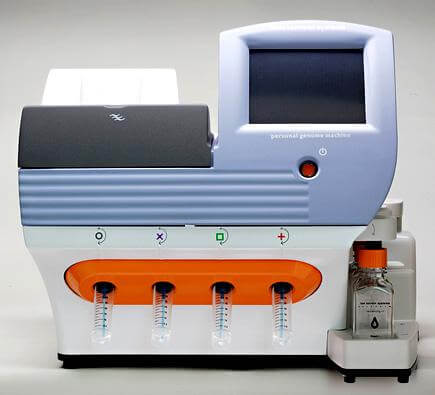
Ion Torrent Introduces the Personal Genome Machine, a $50,000 small-scale sequencer with a 2 hour turn-around time for 100,000 base pair reads. OK, this actually happened in December, 2010, but to be fair no one noticed until January. The PGM can’t duplicate the quantities of data produced by other next-gen sequencers, but its low cost, desk-top size and speed make it emblematic of the increasing availability of genome sequencing.
2. NON-INVASIVE PRENATAL SCREENING
Non-Invasive Prenatal Screening becomes a reality: Sequenom introduces MaterniT21, a Down syndrome test done on free-floating fetal DNA from a maternal blood sample drawn as early as 10 weeks gestation. Rebounding from an embarrassing episode in 2009 that began with some executives deciding to make the research data look a little more exciting for investors and ended with the former senior VP for research and development pleading guilty to conspiracy to commit securities fraud, Sequenom became the first of several competitors to offer a test based on this ground-breaking technology, which is projected to eventually offer a means of analyzing the entire fetal genome in the early stages of pregnancy, without the risks or costs (or the 2nd trimester terminations) associated with amniocentesis or CVS. In a related development: tests based on similar technology are already widely available to predict gender. The Consumer Genetics Pink or Blue Pregnancy Test is sold at your neighborhood drug store and on Amazon (but NOT in India or China!); a study published in JAMA this summer estimates that it is accurate over 95% of the time.
3. SYNTHETIC LIFE
On May 20th, 2011, Craig Venter of the J. Craig Venter Institute announced the creation of the world’s first synthetic life form. Manufactured by adding a man-made genome (sequenced by machine) to a pre-existing bacterial cell emptied of its own DNA, the resulting one-celled organism was a wholly novel life form capable of replication. Critics accused Dr. Venter of playing God, charges Venter vehemently denied. “Who says I’m playing?” Venter explained.Yes — I’m kidding But he did say, in describing this milestone, “we took two years off to sequence the human genome and then got back to the task at hand.” Here are his remarks in full, introducing the first “synthetic cell”:
4. MYRIAD QUESTIONS ON PATENT LAW
In 2010, Judge Robert Sweet shocked the world of patent law when he ruled that isolating and purifying genes did not transform them from something naturally occurring into a product of man’s ingenuity – meaning that under law, the DNA sequence of a gene was not something that could be patented. Genes, he said, are “the physical embodiment of information,” and cannot be treated like other chemicals, where any change in the molecular structure is transformation enough to justify a patent. In July, the Federal Court of Appeals overturned Judge Sweet’s decision in ACLU v. Myriad, ruling that genes in isolation were “markedly different” from genes in their natural form. This decision affirmed the pre-existing status quo permitting gene patents, and set the table for a possible Supreme Court showdown in 2012 to determine the fate of DNA patenting. The High Court has already heard related arguments in Mayo v. Prometheus, a case that hinges on whether or not observations of natural phenomena – in this instance, how the body responds to thiopurine drugs – can be patented. Both cases will affect the development of personalized medicine in ways that are hard to predict – some experts claim that nascent technology like whole genome sequencing will never make it into clinical use if the cost reflects license fees from thousands of individual patent holders. Others suggest that the technology will not be developed in the first place, if industry does not believe its investment will be protected. And just to add a bit more carbon to the uncertainty of the patent law climate, on Halloween the European Court of Justice ruled that NO procedure involving human embryonic stem cells can be patented (Boo! Scared you, European biotech!). Their decision rests on the idea that the use of human fetal tissue for commercial purposes is contrary to public morality, and it sets up a striking contrast with the U.S., where these patents remain enforceable.
5. RARE VARIANTS
Genome-wide association studies were billed as a sort of shortcut to making genomic information relevant to clinical practice, but after years of GWAS results that provoked the response ‘that’s interesting , but what does it mean?’, sequencing for rare variants has done what studies of common variants could not do: moved genomics into medical practice. In January 2011, Nicholas Volker was declared by Forbes Magazine to be “the first child saved by DNA sequencing,”after doctors at the Medical College of Wisconsin did full sequencing on a chronically ill 6-year-old with unexplained intestinal disease. In October, Scripps Health launched a program using whole genome sequencing to determine the cause of idiopathic diseases. Rare variants have also helped us keep chipping away at the notorious “missing heredity”: this fall, DeCode Genetics announced the discovery of a sequence variation that increases the risk of ovarian cancer by more than 8-fold; this highly predictive risk factor was uncovered by GWAS studies adapted to include rare variants (And you thought they were out of business, didn’t you?).
6. EPIGENETICS
In October, the International Journal of Epidemiology published an article that didn’t get a lot of press, perhaps because of the particularly opaque and not particularly grammatical title: “Associations with early-life socio-economic position in adult DNA methylation”. The article demonstrates a correlation between early life experience and adult DNA methylation patterns, suggesting that childhood experience may create lifelong changes in gene expression and affect health outcomes into adulthood. This finding supports earlier observations in rodents and other mammals, and it may indicate a mechanism by which epigenetic changes can be transmitted across multiple generations – evidence insupport of the widely held suspicion that epigenetics is yet anther suspect to be reckoned with in the mystery of the missing heredity.
7. GENE THERAPY
For decades, gene therapy has held itself out to be our knight in shining armor, while acting more like that bad boyfriend from high school, full of sweet talk and promises he couldn’t keep. It’s been NOTHING but heartbreak and 12-step programs for years now (Step 1. Admit that you are powerless to control gene expression. Step 2. Find a vector you can believe in…). Finally, SOME ENCOURAGING NEWS! In separate studies published this year, researchers reported encouraging early results for the use of gene therapy to treat both SCID and Hemophilia B. Has the bad boy of the genetics world really matured into a responsible citizen, or is gene therapy going to go Charlie Sheen on us yet again? Give him another chance, venture capitalists. Give him a chance, okay? Just don’t give him a key to your apartment. Not yet, anyway.
8. CONSUMER-DRIVEN GENETIC TESTING
American Association of Blood Banks 2011 report indicated that paternity testing has increased 400% over the last two decades. This evidence supports the notion that the public is increasingly comfortable with the use of genetic testing outside of conventional medical applications. The Identigene Paternity Test Collection kit is available at Walgreens for $27.58 (with an additional $129 lab fee; more fees are required for results that are admissible in court).
9. REGULATION OF GENETIC TESTING
In June, letters from the FDAsent to personal genomics firms 23andMe, Navigenics, DeCode Genetics, Pathway Genomics and Knome as well as the chip maker Illumina, articulated an evolving consensus within the agency that genomic tests constitute a medical device and should be subject to regulation under the FDA mandate. The letters, which followed the announcement of a Pathway Genomic’s plan to market direct-to-consumer testing through the drug store chain Walgreen’s, represented an opening salvo in the orchestration of a regulatory structure for genetic testing.
10. NOVEL TREATMENTS ON THE HORIZON
In September, 2011, researchers at Vanderbilt University announced a major step forward in the development of a potentialnew therapy for Fragile X that targets not the symptoms but one of the underlying causes – a paradigm shift in medical care for the type of genetic syndrome long considered untreatable. Building on earlier studies that demonstrated a relationship between excessive protein synthesis and the Fragile X phenotype, the Vanderbilt approach uses novel drug-like molecules that down-regulate the mGlu5R receptor to reduce receptor-mediated protein synthesis.Researchers are hopeful that this therapy will improve neurological manifestations of Fragile X, which often include autistic-like behaviors – raising the tantalizing prospect that success might constitute proof in principle of our ability to treat autism and other cognitive and neuro-developmental disorders. Seaside Therapeutics, the industry money behind the Vanderbilt studies, plans to begin its clinical trials in 2012. Meanwhile, the continuing Seaside-Vandy partnership is at work on development of a second drug, designed to reduce social withdrawal. In a report released to the press by Seaside in May, V.P. of research Aileen Healy stated, “We are now beginning to believe that intellectual disability is not, as previously understood, an immutable condition.Translating our understanding of the biological effects of key genetic mutations has revealed a variety of promising mechanistic approaches to treat Fragile X syndrome, which I believe represent an exciting opportunity to realize the mission of developing effective therapeutics.”How 2011 is this story? Let me count the ways:
Research illuminates the pathophysiologyof the disease, providing new targets for therapy – just like those guys from the HGP said it would!!!
New information suggests that a familiar syndrome is more complicated than we thought – and that damage caused by the genetic defect, as with Down Syndrome, is only partly congenital and accumulates over time.
Cutting edge therapy involves interfering with gene expression.
Academia partners with industry, to find scarce recession-era funds – and to participate in the profits, should any materialize.
Industry partners with academia, to help defray the burdensome investment of time, money and brainpower associated with drug development.
Some things we expect to be easy turn out to be impossible. Some things we expect to be impossible turn out to be – well, not easy, but possible. In 2011,trying to predict the winners and the losers is a fool’s game (which is why I am recapping 2011 here, and making NO predictions for 2012).
Treatments for genetic disease that decrease morbidity and improve outcomes but do not cure will require life-long treatment – raising serious new questions about how we will be able to afford what we are able to do.
And the most 2011 point of all:this new therapy is great in theory but it hasn’t helped anyone – not yet.
June, 2011 marked the 10th anniversary of the great ‘Mission Accomplished’ moment of the Human Genome Project, when President Clinton, with no regard whatsoever for his own personal safety, stood directly in between Francis Collins and Craig Venter to announce the completion of “the most important, most wondrous map ever produced by humankind.” In November, in honor of the occasion, the American Museum of Natural History, in partnership with the Council for Responsible Genetics, hosted a panel discussion entitled “The Human Genome and Human Health – Will the Promise Be Fulfilled?” This was an opportunity for four very smart people to recap the discussion of everything that hasn’t happened as predicted in the last 10 years (Oh, the missing heredity! Oh, the shortcomings of personal genomics!) and why, in retrospect, this was all entirely predictable, as things generally are in retrospect. And then the two scientists on the panel predicted that we are on the cusp of great things and the two social scientists on the panel warned that great things come at a steep price and we all agreed, and why not? After all, we almost always are, and they almost always do.
The thing about making predictions is that it is hard to get it wrong if you go with generalities (it’s always something!) and even harder to get it right, if you are going after specifics. Thousands of people will have a heart attack this year. The guy sitting in front of you with the ten pounds of jelly donut hanging over his belt buckle? Hard to say. So we in the prognostication business cling to certain reliable, gospel truths. Technology will get faster and cheaper every year! Understanding pathophysiology will lead to cures! You will meet a tall, dark, handsome stranger! No – sorry, that one isn’t us. New studies will illuminate the relationship between genotype and phenotype! Hallelujah.
Here’s another one: personalized medicine will save us money! Can I get an amen? It’s something we hear all the time, in medical journals and newspapers and political speeches. “The savings from personalized medicine,” said a man in the audience at the panel discussion, nodding his head with conviction, “how soon we will see that?”
“Well,” said Dr. Robert Green, renowned neurogeneticist from Beantown (Hah-vard, of course) “I am not convinced that it will save us money. I think it might cost us money.” You could almost hear the band stop playing.
Is he right? The Personalized Medicine Coalition cites savings as one of the intrinsic advantages: “The cost of health care in the United States is on an unsustainable upward climb. Incorporating personalized medicine into the fabric of the health care system can help resolve many embedded inefficiencies, such as trial-and-error dosing, hospitalizations due to adverse drug reactions, late diagnoses, and reactive treatments.” (The Case For Personalized Medcicine, 3rd Edition.)
But think about it. Someone comes into your office carrying their personal genomic printout from 23andMe or Navigenics or whoever comes next. They have an increased risk of Condition X. What do you suggest? Step 1: increased screening and testing. Well maybe the testing modalities are not that good. Too bad. You suggest them anyway, because it is downright cruel to tell a person they have an increased risk of the dreaded Condition X and that THERE IS NOTHING TO DO ABOUT IT. Why do we send people who are BRCA 1 or 2 positive for bi-annual screening of their ovaries? Because it is a great screening test? Noooo. Because it is all we have to offer? Bingo.
And remember, that printout is going to contain multiple increased risks. So, step 2: return to step 1, and repeat.
Now, conversely, someone comes into your office with a paper saying that they have a decreased risk of Condition Y. Do you tell them to stop doing screening? Skip their annual physical? Start smoking cigarettes? Noooo. Because you know perfectly well that SOMEONE with exactly this genotype is going to get Condition Y, and you don’t want to be responsible if it turns out to be THIS GUY (see Paragraph 2 on the challenges of prognostication).
We are forgetting the medical equivalent of Moore’s Law: that visits to the doctor result inevitably in EXPONENTIALLY MORE VISITS TO THE DOCTOR. Call it Dr. Moore’s Law: Medical Care Generates Additional Medical Care at a Rate that is Exponential.
Now, please, don’t get me wrong. I realize that, at times, personalized medicine is going to save us money. Pharmacogenetics improving the use of medication will save time, money, and lives. Preventing certain forms of chronic disease like diabetes, if we find a way to intervene for those most at risk, will save a fortune. But right now, the savings are much more speculative than the costs. A reflexive adherence to the dogma that personalized medicine saves money creates a hype that can only lead to disappointment. Making medicine better is a huge goal: making medicine solvent is too much to ask of any fledgling field. Feeding the hype is tempting, because it generates the sort of excitement that brings in attention and funding. But ultimately, propagating a dogma that generates unrealistic expectations will snatch defeat from the jaws of victory, as our real-life success stories are weighed against the myths of our own making.
*Gratuitous Kant reference. Philosophy students: please enjoy.
A commentary by Anne Madeo, Barbara Biesecker, Campbell Brasington, Lori Erby and Kathryn Peters in the August issue of the American Journal of Medical Genetics (The Relationship Between the Genetic Counseling Profession and the Disability Community) is going to raise some hackles because it takes on the most sacred cow in genetic counseling: the belief, bordering on dogma, that genetic counselors are good. Not just good as in the absence of bad, or good like ice cream and lazy Sundays, but good in the dare-I-say religious sense. Good-doing. Doers of good. Beyond well-intentioned, because well-intentioned suggests that one might do the wrong thing by accident. Genetic counselors are trained good-doers, there to protect and rescue patients from the less finely calibrated ministrations of other medical professionals, particularly doctors.
The perfidy of doctors is sometimes a corollary to the gospel of genetic counseling, in which it is stated that genetic counselors do good.
But I digress. And while I am digressing, let me hasten to add that I think genetic counselors are as nice as group of people as I have ever known. And I am not just saying that because I don’t want to get nasty looks at the next NSGC conference; I mean it. Genetic counselors are as a rule neither cynical nor uncaring, and I have found them to be absolutely dedicated to doing right by their patients.
But you can’t do right by all people all of the time, not if you believe that doing right means supporting them in whatever they decide. You can’t. Let’s say a woman carrying a fetus with Down Syndrome arrives in your office. So now you have a tightrope to walk. Because if she decides to terminate but has the least degree of uncertainty or guilt, any positive remarks you make about DS kids (They are cute, aren’t they? And the new research is promising…) is likely to echo in her ears as a reproach. And if she decides to keep the baby, any negative remark you make about DS kids (They do have a lot of medical issues one should really mention…right? And lots of people in her shoes would terminate…) is likely to be remembered as proof that the genetics people thought my baby – my baby! – should have been aborted.
Genetic counseling – if it was easy, everybody would do it. Madeo and company don’t attack genetic counselors, nor do they underestimate the complex balancing act involved in this counseling scenario. They do suggest that the few available studies suggest that counselors and the NSGC have been more involved with protecting women’s rights to terminate and reassuring those that do, rather than protecting the rights and interests of persons with disabilities. Of course, this is in part because it is abortion rights that have been under siege. They quote Arthur Caplan from 2009, advocating activism in a phrase that syntactically ties the anti-abortion movement with Naziism: “If counselors do not speak up on behalf of their clients, who will?” True, the authors say, and yet, they suggest– is it hard to understand that many parents of children with DS feel their babies are under siege as well? There aren’t as many as there used to be. They call that threatening. We call it success (yes we do. Be honest. Improving our prenatal screening is not about giving parents the chance to know in advance that they are having a kid with DS. And if it was, insurance wouldn’t pay for it). So they would like to balance the equation. “If counselors do not also speak up on behalf of clients who choose not to terminate a pregnancy, then who will?” the authors ask of us. “If counselors do not also speak up on behalf of clients with disabilities, then who will?
A response by the NSGC for the most part focuses on rebutting the charges that either the organization or its members fails to recognize its special obligation to those affected by genetic syndromes and genetic disease. NSGC President Karin Dent does an admirable job detailing the position statements, collaborations, educational outreach efforts that document our commitment to people with disabilities. We are trying, the thing says! We do so much! But there is something about this primarily defensive posture that denies the essence of the problem. Defensiveness is our Achilles heel. “I’m just a soul whose intentions are good” sings Bob Resta in his accompanying commentary, “Oh Lord, please don’t let me be misunderstood.”
As Resta correctly suggests, defensiveness over the issue of whether or not we are fair may be leading us to miss the central issue of this drama: DS births aren’t just going down, they are going down selectively. Some communities and demographics have better access to screening and intervention; others are more willing to use them. This is true of DS today, as it will be true of many other screening programs in the future. The very things that in our lifetimes have been the sort of thing that can happen to anyone (there but for the grace of god go I…) are becoming the sort of thing that only happen to “some people.”
“Imagine yourself in our shoes,” writes Patricia Bauer, the mother of a girl with DS, “as the question hangs in the air at neighborhood gatherings, at the park, at the supermarket. ‘‘Didn’t you have the test?’’ someone asks, eyeing our child’s face with a raised eyebrow that seems to betray surprise, curiosity, disapproval…. If you had been a responsible parent, they seem to say, wouldn’t you have exercised your legal right to abort…”
Lurking in her words is a sociological issue of enormous proportions, one where we may exercise our board-certified ability to do good, if we can stop making the issue all about us.
Recently, members of the NSGC received a booklet called Understanding a Down Syndrome Diagnosis, full of lovely pictures of children with Down syndrome and their families, accompanied by a factual but largely positive text (…“According to some studies, siblings of children with Down syndrome tend to be more compassionate and well-adjusted than their peers.”). Though clearly intended to be both inoffensive and non-polemical, the guide provoked a debate on the NSGC list serve that was vintage genetic counselor, by which I mean that it was sincere, well-intentioned, polite and juiced by the belief that in doing the right thing in the right way, counselors could protect their patients from unnecessary emotional distress.
The basic argument was this: was this booklet a useful tool for couples who had not yet decided what to do after a prenatal diagnosis of Down syndrome, or did it paint such a rosy picture that it might make those who went on to choose termination feel judged? Assuming we are all striving to be neutral, what is neutral? Does it mean actively reaching out to present alternatives in a positive light and to counterbalance negative stereotypes, or is it more a matter of trying to intuit where the family is emotionally, and supporting that decision? Is non-directiveness literally NON-directiveness, or is it perhaps closer to ALL-directiveness; is there a responsibility to establish that all possible options are legitimate and acceptable?
Of course, as has been mentioned before, our baseline for “neutral” must take into account that we start this discussion in a hole: the fact that termination is on the table in the first place is, like it or not, something of a statement of where we stand on Down syndrome. I think this is a reality that a lot of people in the field don’t see or don’t acknowledge, and which is self-evident to patients. We are so wounded, as a group, by any suggestion that genetic counselors (of all people!) could harbor ill intentions toward individuals with Down syndrome. We are improbably surprised when people make this connection. I know a lot of you work with these families and adore these children and all that, but, you know, face facts, WE DO. I mean, we (individually) DON’T, but we (collectively) DO. Geneticists run studies to improve on the prenatal detection of Down syndrome. Why do we do that? To improve prenatal care? Please.
A friend of mine whose first four children were boys was talking to me once about the post-amnio results conversation she had with her genetic counselor for pregnancy number five. She was offered the chance to find out the baby’s gender (she declined). Everybody, including her neighbors, and her family, and the guy who worked at the ice cream truck, and certainly her genetic counselor, all knew that this woman was hoping and praying for a girl. But had her counselor told her that the fetus was a boy, she would not have followed up that unwelcome piece of information with anxious questions about whether or not my friend would like to come in and discuss her options. We test for Down syndrome in order to give the option of termination. That is an essential truth. Everything else is window-dressing.
In fact, the discussion over this booklet raises a very fundamental question about whether or not our ideal of giving out information in a fashion that is both supportive and neutral is attainable. Let’s be brutally realistic. Parents of children with Down syndrome know that being given the choice to terminate is a commentary on how other people view their children with Down syndrome. They know this because it is true. And any image or anecdote or statistic showing how individuals with Down syndrome are beloved by their family members is bound to feel like a reproach to couples who decide to terminate. You can certainly say these things with more sensitivity or less sensitivity, but they mean what they mean. No amount of searching for the best language is going to change that.
Well, for my own peace of mind I probably prefer to say some nice things about the joys of raising a child with Down syndrome, and give out this pretty booklet – after all, I am really – just like the rest of you – not against children of any sort, however abled. But at the risk of ruffling even more genetic counselor feathers, I would like to wonder out loud whether this is mainly a benefit for me, as opposed to the family in question. I think it comes down to this: how likely is it that a family’s decision will depend on their perception of what the genetic counselor thinks is a good idea? Do we really have that much influence? I kind of doubt it. We may be able to affect how the couple feels about that decision to some small degree — to make them feel better (or worse). We can certainly influence whether or not they look back on their experience with genetic counseling and think kindly of us. But a couple has to be truly on the fence if the intervention of a third party who is a transient if well-informed presence in their lives is the actual deciding factor in how they feel about raising a child with disabilities.
So if we are only impacting how they feel about the decision and not the decision itself, is it necessary or even advisable to introduce information we think is important, and should we stick to giving them only whatever information they specifically request? And if we want to demonstrate our bona fides about supporting families who choose to raise children with Down syndrome, perhaps we should think about creative and public ways to do just that, and not rely on the old idea that our personal neutrality in the confines of the counseling session is going to achieve the dual goal of enabling a family’s right to choose, and demonstrating our respect and humanity for persons with genetic disabilities.





 The DNA Exchange