A couple of months ago I was interviewed by a few undergraduate students doing a class project on Reproductive Genetics. As anticipated, their questions centered on new technologies, such as preimplantation genetic diagnosis, and then quickly veered toward the topic of creating ‘designer babies.’ After completing the interview, I felt like I had taken the wind out of their sails. For all of their enthusiasm and controversial questioning, I had simply and consistently reiterated two points:
We don’t have the scientific understanding and capacity to pick and choose for cosmetic traits.*
In my honest (and perhaps wishful) opinion, I hope we never gain the ability to do so.
I was reminded of that interview when The Globe and Mail ran a front-page story at the beginning of January: ‘Unnatural selection: Is evolving reproductive technology ushering in a new age of eugenics?‘ It is a piece that we have all read a dozen times before, with quotes from GATTACAto boot. As I started in on the article though, I had a brief moment of self-doubt. More specifically, I wondered if my own ‘wishful thinking’ (point number 2, above) might cloud my judgement and ability to see what is actually being offered in the real world. What if someone is offering testing in the realm of ‘designer babies’ that I am not aware of?
In the end, contrary to what the title suggests, the article mostly focused on Mendelian diseases and the well-known ethical ‘slippery slope’ discussion. It was also chock full of quotes from medical professionals who bluntly state that we don’t have the capability to select for cosmetic traits, and will likely never have the ability to accurately do so.
There were still things in the article that surprised me, though. For one, the openness of PGD gender selection testing being routinely offered by a US-based center for non-medical indications. I also learned about a fertility center called Natera, that has considered using PGD to test for common complex disease, such as psoriasis. (In looking into the company further I was happy to see that they have a number of genetic counselors on staff.) Most notably, I was surprised by quotes from a number of fertility specialists who say they routinely get questions about whether they can select for specific cosmetic traits.
Dr. Steinberg’s work in Tinsel Town means that he is well acquainted with such desires. “We get requests for all kinds of things. We had a pop star inquiring if her vocal abilities could be passed on to her children,” and elite athletes asking, “Do you think you could make it a tall boy?”
The thorn in a genetic counselor’s side
As genetic counselors, we will spend the rest of our professional lives explaining that our role does not involve the creation of ‘designer babies.’ This is a professional hazard that we have no choice but to accept. As frustrating as this perpetual conversation may be, at least right now we have the science to fall back on: We can‘t do that. We don‘t do that.
But, what if? What if the science gets there, and the myth of the ‘designer baby’ becomes a reality?
I’m pretty confident that we will not see a day when parents routinely use reproductive technologies to select for cosmetic traits, or even against multifactorial diseases. The complexity of the genome is too great, and the gene-gene, gene-environment, epigenetic interactions too numerous and minute to control. But, maybe I’m just blinded by my personal opinions on the matter.
I’d love to hear what others think. Cast your vote and/or share your thoughts below.
*Cosmetic traits being used to describe polygenic phenotypic traits, such as height, eye color, hair color etc.
Many people don’t know that the human eye has a blind spot in its field of vision. There is a part of the world that we are literally blind to. The problem is, sometimes our blind spots shield us from things that really shouldn’t be ignored. Sometimes our blind spots keep our lives bright and shiny.
– Meredith Grey, character from ABC TV Series Grey’s Anatomy
It’s safe to say that genetic counselors are not in it for the money. I prefer to believe that our practice is guided by what we perceive to be our patients’ best clinical and psychosocial interests, with no concern for fiscal gain for ourselves. But however bright and shiny we may be, we are only human and subject to the same economic pressures, character flaws, and temptations as everybody else. I am not claiming that there is wide scale greed and corruption in the profession. What worries me more is that our blind spot can prevent us from detecting or admitting the possibility of a conflict of interest.
This topic has not been openly discussed among genetic counselors, so it’s about time the subject was broached. I suspect this discussion will evoke discomfort, defensiveness, and not a little denial. Financial conflicts of interest might arise in many areas of genetic counseling but I will explore just three: when genetic counselors work for laboratories as expert advisors on genetic testing, when we need to justify our clinical positions to hospital administrators, and at our annual education conference.
Medical laboratories and their employees are driven by a genuine desire to help referring physicians and their patients. I have been uniformly impressed by the help I receive from lab counselors who have walked me through the testing maze in complicated clinical situations. But let’s face it – labs are profit-driven corporate entities. If an insufficient number of tests are ordered, the laboratory and its investors lose money. Hopefully laboratory directors do not set monthly test quotas (“Resta, I better see 150 TRFs for our new autism screen next month or you are out of a job.”). But if the number of tests drops below a certain threshold, some manager somewhere is going to notice. Labs may choose to discontinue that particular test, but more likely they will try to boost test uptake.
The need to make a profit, with the attendant job security for us, is a powerful motivator that can subconsciously influence conversations between lab counselors and healthcare providers. Think of those gray situations where multiple tests can be ordered but it is unclear just how likely they are to be positive or clinically useful (“Well, this doctor does not want to leave any stone unturned in working up this family so maybe I should suggest Test X that she hadn’t thought of, even if is very unlikely to be positive and will not change clinical management.”).
Or consider labs that offer SNP testing for risk assessment for common disorders like diabetes or cardiovascular disease, tests that do not yet have proven clinical value. One might justify such testing under the rubric of “Patients Have A Right To Know.” But patients also assume that because a test is available and yields a precise sounding risk estimate, it must have some clinical value, and therefore patients think they have a right to know. Is offering such tests motivated by an altruistic desire to ensure that patients’ rights are not denied, by profit-seeking, or by misguided clinical judgment? The answer is murky.
Genetic counselors who work in medical centers are just as liable to conflicts of interest as their laboratory counterparts. In these tough economic times, we are being called upon to justify our jobs to administrators who face dwindling budgets and might have less of an appreciation for clinical and psychosocial issues. In response, we might look to increase our patient volumes, and one way to do that is to expand the indications for referral to genetic counseling beyond what might be considered “medically necessary.” You might then tell your boss that broadened guidelines will increase downstream revenue through more extensive screening and increased rates of prophylactic surgery. Surely we are not talking our patients into salpingo-oophorectomies or breast MRIs to enrich the hospital’s coffers or to secure our jobs, but that is the message we are communicating to hospital administration (for the moment, ignoring the fact that we have little data to prove that assertion).
Or think about fetal diagnostic testing through maternal serum, which will presumably reduce the need for amniocentesis and CVS. Even if maternal serum testing proves to be not quite diagnostic and still require invasive testing for verification, First Positive rates will be much lower than with traditional serum/ultrasound screening. This in turn might lower departmental revenue by reducing the number of counseling referrals, invasive procedures, and karyotypes. Just how will those economic considerations affect our job security, how we evaluate these new tests, how we present them to our patients, and how we integrate them into our clinics?
The National Society of Genetic Counselors (NSGC), our collective face that we present to the public, has expanded its financial relationship with private laboratories. For example, in 2011, about 25% of the revenue from the Annual Education Conference came from corporate exhibitors and sponsors (contributing ~$216,000 of the total conference revenue of ~$820,000). Our professional relationships with labs are critical on many levels. But accepting money from them tacitly – if not officially – condones their services. NSGC would probably not accept certain labs as exhibitors or sponsors if those labs offered questionable services, like using genetic testing to find the perfect mate or to improve your sex life through nutrigenomics. Excluding some labs lends a certain amount of legitimacy to those labs from whom we do accept funds.
And let’s not forget those breakfasts and evening debaucheries that some private labs sponsor at every Annual Education Conference, or those exhibitor booths where we fill our corporate-logo imprinted conference tote bags with giveaway geegaws and doodads (“Oh, I’m just bringing these home for my kids. I am certainly not going to use this lab just because they gave me a glow in the dark double helix pen and a piece of chocolate. Even if it is a Dove dark chocolate.”).
You are deluding yourself if you think these drinks and trifles do not subtly affect your selection of a lab to run your tests. Just about every research study on this topic has concluded that those not-so-freebies do influence healthcare providers. Besides, if those giveaways didn’t help a business’s bottom line, do you think they would waste money giving them away? And when we go home and take those tote bags to the grocery like responsible Green Citizens, we become walking billboards that announce to the world that NSGC and Lab X are awfully cozy with each other.
I am not saying that genetic counselors should be unconcerned about their institutions’ bottom lines, or that the NSGC should abandon relationships with corporate sponsors. I have no idea of the magnitude of the problem because it has not been systematically studied. It is almost impossible to study it ourselves; those of us in the middle of are likely to have a hard time seeing it. Somebody outside of our profession needs to study this.
What the profession can do for itself is to clearly define financial conflicts of interest and develop guidelines to help genetic counselors navigate the treacherous waters of the Great Sea of Conflicts of Interest.
Am I being overly worried? Are there other aspects of genetic counseling that are vulnerable to these concerns? Share your thoughts and comments and air out this dusty old closet that we have avoided opening.
What were the most important news stories in genetics this year? Google the keywords “top stories genetics 2011” and page 1 entries include links to an article on direct-to-consumer testing to “determine your child’s athletic potential” AND an announcement of the sequencing of the cannabis genome. With all due respect to recreation in ALL its forms, neither of these made my list – but it does go to show, we live in exciting times. My Top Ten include stories that made news around the globe as well as others, largely ignored, that lingered in my mind as harbingers of change or hints of things to come. Here’s my own idiosyncratic assemblage of ten trending hashtags I’m betting will drive the conversation for years to come:
1. NEXT GENERATION SEQUENCING
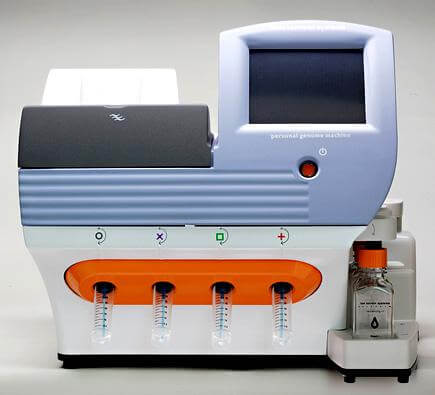
Ion Torrent Introduces the Personal Genome Machine, a $50,000 small-scale sequencer with a 2 hour turn-around time for 100,000 base pair reads. OK, this actually happened in December, 2010, but to be fair no one noticed until January. The PGM can’t duplicate the quantities of data produced by other next-gen sequencers, but its low cost, desk-top size and speed make it emblematic of the increasing availability of genome sequencing.
2. NON-INVASIVE PRENATAL SCREENING
Non-Invasive Prenatal Screening becomes a reality: Sequenom introduces MaterniT21, a Down syndrome test done on free-floating fetal DNA from a maternal blood sample drawn as early as 10 weeks gestation. Rebounding from an embarrassing episode in 2009 that began with some executives deciding to make the research data look a little more exciting for investors and ended with the former senior VP for research and development pleading guilty to conspiracy to commit securities fraud, Sequenom became the first of several competitors to offer a test based on this ground-breaking technology, which is projected to eventually offer a means of analyzing the entire fetal genome in the early stages of pregnancy, without the risks or costs (or the 2nd trimester terminations) associated with amniocentesis or CVS. In a related development: tests based on similar technology are already widely available to predict gender. The Consumer Genetics Pink or Blue Pregnancy Test is sold at your neighborhood drug store and on Amazon (but NOT in India or China!); a study published in JAMA this summer estimates that it is accurate over 95% of the time.
3. SYNTHETIC LIFE
On May 20th, 2011, Craig Venter of the J. Craig Venter Institute announced the creation of the world’s first synthetic life form. Manufactured by adding a man-made genome (sequenced by machine) to a pre-existing bacterial cell emptied of its own DNA, the resulting one-celled organism was a wholly novel life form capable of replication. Critics accused Dr. Venter of playing God, charges Venter vehemently denied. “Who says I’m playing?” Venter explained.Yes — I’m kidding But he did say, in describing this milestone, “we took two years off to sequence the human genome and then got back to the task at hand.” Here are his remarks in full, introducing the first “synthetic cell”:
4. MYRIAD QUESTIONS ON PATENT LAW
In 2010, Judge Robert Sweet shocked the world of patent law when he ruled that isolating and purifying genes did not transform them from something naturally occurring into a product of man’s ingenuity – meaning that under law, the DNA sequence of a gene was not something that could be patented. Genes, he said, are “the physical embodiment of information,” and cannot be treated like other chemicals, where any change in the molecular structure is transformation enough to justify a patent. In July, the Federal Court of Appeals overturned Judge Sweet’s decision in ACLU v. Myriad, ruling that genes in isolation were “markedly different” from genes in their natural form. This decision affirmed the pre-existing status quo permitting gene patents, and set the table for a possible Supreme Court showdown in 2012 to determine the fate of DNA patenting. The High Court has already heard related arguments in Mayo v. Prometheus, a case that hinges on whether or not observations of natural phenomena – in this instance, how the body responds to thiopurine drugs – can be patented. Both cases will affect the development of personalized medicine in ways that are hard to predict – some experts claim that nascent technology like whole genome sequencing will never make it into clinical use if the cost reflects license fees from thousands of individual patent holders. Others suggest that the technology will not be developed in the first place, if industry does not believe its investment will be protected. And just to add a bit more carbon to the uncertainty of the patent law climate, on Halloween the European Court of Justice ruled that NO procedure involving human embryonic stem cells can be patented (Boo! Scared you, European biotech!). Their decision rests on the idea that the use of human fetal tissue for commercial purposes is contrary to public morality, and it sets up a striking contrast with the U.S., where these patents remain enforceable.
5. RARE VARIANTS
Genome-wide association studies were billed as a sort of shortcut to making genomic information relevant to clinical practice, but after years of GWAS results that provoked the response ‘that’s interesting , but what does it mean?’, sequencing for rare variants has done what studies of common variants could not do: moved genomics into medical practice. In January 2011, Nicholas Volker was declared by Forbes Magazine to be “the first child saved by DNA sequencing,”after doctors at the Medical College of Wisconsin did full sequencing on a chronically ill 6-year-old with unexplained intestinal disease. In October, Scripps Health launched a program using whole genome sequencing to determine the cause of idiopathic diseases. Rare variants have also helped us keep chipping away at the notorious “missing heredity”: this fall, DeCode Genetics announced the discovery of a sequence variation that increases the risk of ovarian cancer by more than 8-fold; this highly predictive risk factor was uncovered by GWAS studies adapted to include rare variants (And you thought they were out of business, didn’t you?).
6. EPIGENETICS
In October, the International Journal of Epidemiology published an article that didn’t get a lot of press, perhaps because of the particularly opaque and not particularly grammatical title: “Associations with early-life socio-economic position in adult DNA methylation”. The article demonstrates a correlation between early life experience and adult DNA methylation patterns, suggesting that childhood experience may create lifelong changes in gene expression and affect health outcomes into adulthood. This finding supports earlier observations in rodents and other mammals, and it may indicate a mechanism by which epigenetic changes can be transmitted across multiple generations – evidence insupport of the widely held suspicion that epigenetics is yet anther suspect to be reckoned with in the mystery of the missing heredity.
7. GENE THERAPY
For decades, gene therapy has held itself out to be our knight in shining armor, while acting more like that bad boyfriend from high school, full of sweet talk and promises he couldn’t keep. It’s been NOTHING but heartbreak and 12-step programs for years now (Step 1. Admit that you are powerless to control gene expression. Step 2. Find a vector you can believe in…). Finally, SOME ENCOURAGING NEWS! In separate studies published this year, researchers reported encouraging early results for the use of gene therapy to treat both SCID and Hemophilia B. Has the bad boy of the genetics world really matured into a responsible citizen, or is gene therapy going to go Charlie Sheen on us yet again? Give him another chance, venture capitalists. Give him a chance, okay? Just don’t give him a key to your apartment. Not yet, anyway.
8. CONSUMER-DRIVEN GENETIC TESTING
American Association of Blood Banks 2011 report indicated that paternity testing has increased 400% over the last two decades. This evidence supports the notion that the public is increasingly comfortable with the use of genetic testing outside of conventional medical applications. The Identigene Paternity Test Collection kit is available at Walgreens for $27.58 (with an additional $129 lab fee; more fees are required for results that are admissible in court).
9. REGULATION OF GENETIC TESTING
In June, letters from the FDAsent to personal genomics firms 23andMe, Navigenics, DeCode Genetics, Pathway Genomics and Knome as well as the chip maker Illumina, articulated an evolving consensus within the agency that genomic tests constitute a medical device and should be subject to regulation under the FDA mandate. The letters, which followed the announcement of a Pathway Genomic’s plan to market direct-to-consumer testing through the drug store chain Walgreen’s, represented an opening salvo in the orchestration of a regulatory structure for genetic testing.
10. NOVEL TREATMENTS ON THE HORIZON
In September, 2011, researchers at Vanderbilt University announced a major step forward in the development of a potentialnew therapy for Fragile X that targets not the symptoms but one of the underlying causes – a paradigm shift in medical care for the type of genetic syndrome long considered untreatable. Building on earlier studies that demonstrated a relationship between excessive protein synthesis and the Fragile X phenotype, the Vanderbilt approach uses novel drug-like molecules that down-regulate the mGlu5R receptor to reduce receptor-mediated protein synthesis.Researchers are hopeful that this therapy will improve neurological manifestations of Fragile X, which often include autistic-like behaviors – raising the tantalizing prospect that success might constitute proof in principle of our ability to treat autism and other cognitive and neuro-developmental disorders. Seaside Therapeutics, the industry money behind the Vanderbilt studies, plans to begin its clinical trials in 2012. Meanwhile, the continuing Seaside-Vandy partnership is at work on development of a second drug, designed to reduce social withdrawal. In a report released to the press by Seaside in May, V.P. of research Aileen Healy stated, “We are now beginning to believe that intellectual disability is not, as previously understood, an immutable condition.Translating our understanding of the biological effects of key genetic mutations has revealed a variety of promising mechanistic approaches to treat Fragile X syndrome, which I believe represent an exciting opportunity to realize the mission of developing effective therapeutics.”How 2011 is this story? Let me count the ways:
Research illuminates the pathophysiologyof the disease, providing new targets for therapy – just like those guys from the HGP said it would!!!
New information suggests that a familiar syndrome is more complicated than we thought – and that damage caused by the genetic defect, as with Down Syndrome, is only partly congenital and accumulates over time.
Cutting edge therapy involves interfering with gene expression.
Academia partners with industry, to find scarce recession-era funds – and to participate in the profits, should any materialize.
Industry partners with academia, to help defray the burdensome investment of time, money and brainpower associated with drug development.
Some things we expect to be easy turn out to be impossible. Some things we expect to be impossible turn out to be – well, not easy, but possible. In 2011,trying to predict the winners and the losers is a fool’s game (which is why I am recapping 2011 here, and making NO predictions for 2012).
Treatments for genetic disease that decrease morbidity and improve outcomes but do not cure will require life-long treatment – raising serious new questions about how we will be able to afford what we are able to do.
And the most 2011 point of all:this new therapy is great in theory but it hasn’t helped anyone – not yet.
June, 2011 marked the 10th anniversary of the great ‘Mission Accomplished’ moment of the Human Genome Project, when President Clinton, with no regard whatsoever for his own personal safety, stood directly in between Francis Collins and Craig Venter to announce the completion of “the most important, most wondrous map ever produced by humankind.” In November, in honor of the occasion, the American Museum of Natural History, in partnership with the Council for Responsible Genetics, hosted a panel discussion entitled “The Human Genome and Human Health – Will the Promise Be Fulfilled?” This was an opportunity for four very smart people to recap the discussion of everything that hasn’t happened as predicted in the last 10 years (Oh, the missing heredity! Oh, the shortcomings of personal genomics!) and why, in retrospect, this was all entirely predictable, as things generally are in retrospect. And then the two scientists on the panel predicted that we are on the cusp of great things and the two social scientists on the panel warned that great things come at a steep price and we all agreed, and why not? After all, we almost always are, and they almost always do.
The thing about making predictions is that it is hard to get it wrong if you go with generalities (it’s always something!) and even harder to get it right, if you are going after specifics. Thousands of people will have a heart attack this year. The guy sitting in front of you with the ten pounds of jelly donut hanging over his belt buckle? Hard to say. So we in the prognostication business cling to certain reliable, gospel truths. Technology will get faster and cheaper every year! Understanding pathophysiology will lead to cures! You will meet a tall, dark, handsome stranger! No – sorry, that one isn’t us. New studies will illuminate the relationship between genotype and phenotype! Hallelujah.
Here’s another one: personalized medicine will save us money! Can I get an amen? It’s something we hear all the time, in medical journals and newspapers and political speeches. “The savings from personalized medicine,” said a man in the audience at the panel discussion, nodding his head with conviction, “how soon we will see that?”
“Well,” said Dr. Robert Green, renowned neurogeneticist from Beantown (Hah-vard, of course) “I am not convinced that it will save us money. I think it might cost us money.” You could almost hear the band stop playing.
Is he right? The Personalized Medicine Coalition cites savings as one of the intrinsic advantages: “The cost of health care in the United States is on an unsustainable upward climb. Incorporating personalized medicine into the fabric of the health care system can help resolve many embedded inefficiencies, such as trial-and-error dosing, hospitalizations due to adverse drug reactions, late diagnoses, and reactive treatments.” (The Case For Personalized Medcicine, 3rd Edition.)
But think about it. Someone comes into your office carrying their personal genomic printout from 23andMe or Navigenics or whoever comes next. They have an increased risk of Condition X. What do you suggest? Step 1: increased screening and testing. Well maybe the testing modalities are not that good. Too bad. You suggest them anyway, because it is downright cruel to tell a person they have an increased risk of the dreaded Condition X and that THERE IS NOTHING TO DO ABOUT IT. Why do we send people who are BRCA 1 or 2 positive for bi-annual screening of their ovaries? Because it is a great screening test? Noooo. Because it is all we have to offer? Bingo.
And remember, that printout is going to contain multiple increased risks. So, step 2: return to step 1, and repeat.
Now, conversely, someone comes into your office with a paper saying that they have a decreased risk of Condition Y. Do you tell them to stop doing screening? Skip their annual physical? Start smoking cigarettes? Noooo. Because you know perfectly well that SOMEONE with exactly this genotype is going to get Condition Y, and you don’t want to be responsible if it turns out to be THIS GUY (see Paragraph 2 on the challenges of prognostication).
We are forgetting the medical equivalent of Moore’s Law: that visits to the doctor result inevitably in EXPONENTIALLY MORE VISITS TO THE DOCTOR. Call it Dr. Moore’s Law: Medical Care Generates Additional Medical Care at a Rate that is Exponential.
Now, please, don’t get me wrong. I realize that, at times, personalized medicine is going to save us money. Pharmacogenetics improving the use of medication will save time, money, and lives. Preventing certain forms of chronic disease like diabetes, if we find a way to intervene for those most at risk, will save a fortune. But right now, the savings are much more speculative than the costs. A reflexive adherence to the dogma that personalized medicine saves money creates a hype that can only lead to disappointment. Making medicine better is a huge goal: making medicine solvent is too much to ask of any fledgling field. Feeding the hype is tempting, because it generates the sort of excitement that brings in attention and funding. But ultimately, propagating a dogma that generates unrealistic expectations will snatch defeat from the jaws of victory, as our real-life success stories are weighed against the myths of our own making.
*Gratuitous Kant reference. Philosophy students: please enjoy.
Justin Lorentz is a genetic counselling student completing his second and final year of his MSc at McGill University. Before entering the world of genetic counselling he studied at the University of Waterloo and in 2010 graduated with a BSc in Molecular Biology and Biotechnology. He is a member of both the NSGC and CAGC and has been actively involved in Genetic Counselling Awareness Week since its infancy. Justin manages a Twitter account under geneharbinger which is dedicated to the field of medical genetics and genomics.
As a genetic counselling student it can be tough trying to stay on top of the seemingly exponential learning curve that marks our graduate program. In an attempt to ride this curve I find myself processing and digesting a lot of information about genetic conditions. The strategy I use to make sure this information is absorbed and retained is somewhat multidimensional in that I gather different forms of media to learn the same thing. For example I may look at Wikipedia (you do it too), I read through books, I browse through the literature, print off pictures on Google images, and I have even been known to listen to podcasts.
One day during class, the disorders under the umbrella of Limb Girdle Muscular Dystrophy (LGMD) came up and our lecturer mentioned how a patient’s gait, among many other things, can act as a clue in making a diagnosis. The lecturer was not willing to demonstrate a gait characteristic of someone with LGMD and, after mentally sifting through my usual research schema; I realized I would need to get creative if I was going to actually see this gait.
That night I went home and I typed “Limb Girdle Muscular Dystrophy” into the YouTube search bar and to my surprise I got plenty of results. The main contributor was a user named John71377 AKA John Graybill, a 34 year-old man who has LGMD type 2A. When I visited his YouTube channel here my interest was in his gait, but after watching the first 30 seconds of a video I didn’t care about that anymore. John showed me a little about his life that I would never see in a clinic or read in a textbook. As I sifted through over 30 videos of him demonstrating how he gets out of bed, goes up and down stairs, and how he stands up from a seat, I realized I would never forget about LGMD. To this day I see John when I think of this condition.
John Graybill’s YouTube channel. The current video is a demonstration and description of how John walks. On the left are his other videos that include demonstrations of how John get goes up and down stairs, rises from the ground, etc.
Comments posted in response to one of John Graybill’s videos.
I quickly realized that John’s goal in making his videos was not to show genetic counselling students how he walks; instead it was to help other people with muscular dystrophies like LGMD by sharing tips and advice about how he has overcome his limitations. In addition to his videos he advertises his website he created to raise awareness about LGMD, particularly type 2A. After looking at the comments on his channel, and then watching him on a PBS special I am confident he has been successful.
After “meeting” John, I wanted to see if there were other people who have shared their life with a genetic condition on YouTube. In a matter of seconds I “met” Jim who has myotonia congenita. He posted this video with the intention of educating the public about his condition. He shows how his body reacts when he moves rapidly and he explains how he can overcome the limitations of his condition through stretching. Then I “met” Elliot Adler, a 10 year old boy who has Charcot-Marie Tooth (CMT). With the help of his mom, he created this video raising awareness for CMT. He says that the more people who know about his feet means the better the chances of finding a cure.
Although the intentions of these videos are different, I saw similarities when I looked at the comments written about them. From what I have seen, there have always been comments from other YouTube members who could personally relate to the videos because they had a friend or relative with the same condition or because they have it themselves. Almost every comment provided support, and sometimes members would even network and share email addresses.
It is important to note that the people watching these videos are not just those who can personally relate to them. Furthermore, it is not just people with genetic conditions that are making these videos. Patient organizations such as the Canadian SADS Foundation have harnessed the power of YouTube and create videos like this one to educate the general population, spread awareness, and raise money for research.
YouTube is being used everyday as an educational tool for patient organizations, for patients with genetic conditions, and for the occasional medical genetics practitioner. It might be time for the genetic counselling community to begin thinking about whether there is a place for YouTube in their practice. YouTube videos made by organizations pose many of the same benefits and limitations as websites made by organizations. Personal YouTube videos in many ways are like personal websites, and similar disclaimers may apply if they were ever to come up in a session. But like how reading a book provides a different experience than watching a movie; viewing a website on LGMD will provide an experience that cannot be compared to seeing someone with LGMD move through their house. YouTube can be a powerful resource in this field (for better or for worse).
What information does YouTube have on your field of genetic counselling? It might be good to check it out. I bet some of your patients have done just that already.
I am unabashedly the pedigree’s biggest fan.* Although those new-fangled “-omics” testing technologies may soon surpass the analytic power of the pedigree, I suspect that pedigrees will be a critical part of genetic counseling for as long as it is practiced in its current form.
I have resisted using family history questionnaires because for most patients those questionnaires probably just feel like homework assignments. Besides, I am not convinced that questionnaires really save much clinic time. More critically, the process of constructing a pedigree provides great insight into a patient’s understanding of genetics, disease, and family dynamics. And, truth be told, a questionnaire lacks a pedigree’s minimalist elegance and concise pictorial encapsulation of complex information. Ludwig Mies van der Rohe would have embraced the simple rhythmic modularity of a multi-generation pedigree.
But pedigrees are not measures of scientific realities like the speed of light in a vacuum or the Avogadro constant. Pedigree nomenclature is a product of the sociocultural background of the geneticists who devised it. Pedigree symbols were formalized a century ago by scientists (eugenicists, if we are to be honest about it) raised in the Western Judeo-Christian tradition, a tradition that reflects
An Australian Aborigine kinship system
the background of many current genetic counselors.
The sociocultural biases of pedigree nomenclature are most apparent in its limits. So, what are some of those limitations and what do they have to tell us?
Simply put, pedigree nomenclature functions best for people who have one mating partner for life as well as for kindreds with few or no consanguineous matings, and further assumes that people can be neatly placed into one of two discrete gender categories.
Let me expand on these points. Pedigrees are best suited for a simple family structure that broadly reflects the Christian ideal of a single spouse for life. Sure, pedigrees are capable of including a second partner, but they quickly grow into a mess of confusingly angled lines and icons when someone has more than two mating relationships. This problem is compounded when the proband’s relatives also have multiple mates.
In some non-Western societies, people are expected to marry their cousins whereas Westernized societies generally stigmatize consanguineous matings. Christianity grudgingly allows for the occasional cousin marriage but marrying a first cousin can require special dispensation from the Vatican. Frequent cousin marriages within a family are discouraged. The pedigree of a patient whose family includes multiple generations of consanguineous matings is a complex web of double mating lines and hooked or crisscrossed lines of descent. Such families are better described by inbreeding coefficients than by ideograms.
Pedigree nomenclature also assumes that people are either male or female, just like God created Adam and Eve. This is a peculiar assumption, considering that intersex individuals are not uncommonly encountered in the genetics clinic. It is probably more accurate to say that gender and sexuality represent a spectrum, with male heterosexual at one end and female heterosexual at the other. Yes, I know that the nomenclature allows for the depiction of people who may not phenotypically, socially, or genetically fit neatly into either male or female. But the technique is awkward, and was developed almost a century after pedigrees had become part of the genetics toolkit. They are literally square pegs in round holes.
There are other subtle psychological aspects of pedigree nomenclature. For example, it reinforces mendelian and reductionist views of complex biological phenomena. Those neat arrangements of squares, circles, and lines can
Pedigree nomenclature of the Eugenics Record Office, Cold Spring Harbor.
subconsciously seduce the clinician to think “Oh it must be a dominant condition with variable penetrance or reduced expressivity” or “With all those inbreeding loops it surely must be a recessive trait.” When you construct a figure intended to illustrate mendelism, everything starts to look mendelian. And, as eugenicists knew all too well, the ability of those dark and light geometric shapes to reify cultural constructs like feeble-mindedness or pauperism can make the pedigree a magnificently effective propaganda device.
Don’t get me wrong. I do not advocate eliminating pedigrees from the clinic or changing the nomenclature. Far from it. Hey, I was part of the group that established standards for modern pedigree nomenclature. But we must be willing to make the difficult acknowledgment that pedigrees are not objective scientific tools that take honest and accurate measure of biological traits. All kinship systems reflect the culture that developed them. Pedigrees are the product of geneticists, with all of their faults, prejudices, strengths, and humanity.
This week (November 20-26) genetic counsellors across Canada will be participating in the 2nd annual Genetic Counselling Awareness Week (see my post on this topic last year.) The theme for this year’s event is centered around dispelling common myths about genetics.
For a 2nd year in a row I am serving as a co-chair for this initiative, and for the second year in a row I am blown away by the amount of work and thought that GCs have put in to ensuring this week is a success. Even seemingly simple events, such as organizing a trivia night or movie screening, require an incredible amount of planning and coordination. GCs in Canada are taking time out of their busy lives and are volunteering their time and expertise.
I am hoping to put together a follow-up post after this week is over, with a ‘behind the scenes’ look at GC Awareness Week, in the hopes that it might provide some insight and incentive for other countries to follow suit. But for now I will just leave you with some highlights of what is coming up this week:
Genetic Counsellors in Edmonton, Alberta and Winnipeg, Manitoba will be featured on local news programs.
Groups in St. John’s, Newfoundland and Ottawa, Ontario will each be hosting a trivia night at a local pub. The GCs in Winnipeg are hosting a similarly themed evening, using clips from popular television shows, to help dispel common myths about genetics.
Several centres will be setting up information booths within their institution, in order to liaise directly with patients and hospital staff.
Rumor has it an Alberta-based group will be putting together a fun-loving You Tube video this year. Click here for last year’s video from GCs at North York General Hospital.
Want to help spread the word? Pass along any relevant info to family members and friends who live in Canada, or use the designated hashtags #GCAwarenessWeek#geneticcounselling and #CAGC when tweeting about GCAW or GC-related issues throughout the week.
Image credit: TheFutureisUnwritten (link to image here)
I proudly admit to being a Word Nerd, a hound who sniffs a trail on a random dictionary page for the sheer pleasure of flushing out obscure words. Today’s finds were haček, hachure, and hackbut. So let me combine two of my passions – words and genetic counseling – and share a few irreverently serious thoughts on some selections from the genetics lexicon.
Genetic Counselor –This professional title is just plain wrong. We should more properly be called genetics counselors, i.e., those who counsel about genetics. The s-less form gives the impression that being a counselor is the result of a hereditary predisposition towards counseling (“I’m sorry,” she said to the patient after an overly long counseling session, “Sometimes I can’t stop myself from counseling. It must be genetic.”). A health professional who counsels about diabetes is called a diabetes counselor, not a diabetic counselor. Unless of course you were describing a counselor who happens to have diabetes. Hey NSGC – time for you to take the lead on this one and change the name of our profession, though I shudder to think of the impact on the fine print of those state licensure laws.
Chimaera vs. Chimera. I prefer the “ae” spelling because “ae” words are uncommon in American English and its occurrence in the middle of the word makes it look like a hybrid word, just as a chimaera is a rare and unusual genetic hybrid. The word comes from the mythological fire-breathing female creature said to be the product of an incestuous union and is an anatomic pastiche of a lion, a goat, and a serpent. It is derived from the Greek khimaira, a year old she-goat. Its earliest use in English, in the 16th century, meant “wild fantasy.” The chimaera fish is a member of the Chimaeridae, a class of cartilaginous fishes. Given these connotations, the term is insensitive and evokes a sideshow spectacle. If I were someone who were chimaeric, I would lobby for a new designation for this phenomenon when it occurs in humans.
Meiosis/Mitosis. It is blatantly unfair and inconsiderate that two words that describe processes broadly similar in outline but critically different in detail and outcome should have easily confused names. When I learned about cellular division, I resorted to the mnemonic “Meiosis has an ‘e’, and ‘e’ is the first letter in egg; thus, eggs undergo meiosis, not mitosis.” It also helps to know that meiosis comes from the Greek word for “lessening,” reflecting its characteristic reduction division (though during mitosis the amount of DNA doubles from 2N to 4N and then reduces to 2N…Oh, never mind). The great 19th century German biologist Walther Flemming coined mitosis after his observations of the dividing gill and fin cells of a salamander. Mitosis derives from the Greek word for “thread,” presumably referring to the dividing cell’s threadlike chromatin. The Online Etymology Dictionary translates the Greek a bit differently as “warped threads.” Warped Threads would be a good name for a Seattle alt band that sings quirky songs about salamanders (“Newt Is A Real Salamander”), Greek letters (“I Was Just Your Beta-Test Boyfriend”), and 19th century German biologists (“Virchow’s Virtues”).
Oocyte. I admit I like this one strictly because it’s fun to say, and to play with different pronunciations – “ooo-cytes” “oh-oh-cytes” “oh-uh-cytes” or, perhaps if an egg cell develops abnormally, “uh-oh-cytes.” As an added bonus, the o-shape that the mouth makes when saying the word evokes the shape of an egg cell. I am not a fan of oogonia or oogonium (or their even more awkward cousins, spermatogonia and spermatogonium). Oogonia sounds like an ancient continent, as in “During the Jurassic Period, tectonic forces broke up Gondwana into several smaller continents, including Oogonia, where only female dinosaurs thrived.” Oogonium could be a rare mineral as in “Oogonium mining resulted in contaminated ground water that was responsible for mutations in the oocytes of exposed field mice.”
Kindred, Kinship. While there is nothing wrong with pedigree – that old crane’s foot of a word – kindred and kinship are snazzier, a syllable shorter, and permit the Teutonic pleasure of the “k” sound. It also evokes a spirit of unity (the whole family is on this ship together and united by a special bond, as in kindred spirits). Besides, everybody thinks of dogs and horses when they hear pedigree, whereas kinship and kindred are usually only applied to humans. The related term sibship rolls off the tongue nicely too.
Products of Conception. This wins the Silver Medal for the coldest and most insensitive pregnancy-related term; the Gold goes to habitual aborter (both sound suspiciously like terms created by men for women). I recognize that it tries to communicate the idea that pregnancy includes a fetus as well as membranes and a placenta. But the term robs pregnancy of its emotional richness and sounds like a Marxist critique of a capitalist pregnancy factory where the female proletariat manufacture babies to generate profits for the owners.
Primitive Streak. I am fond of this one because it communicates the ancientness of this vertebrate biological structure. I am not the only one intrigued by this name. The Subdudes 1996 CD bears this title. It is also the name of a coolly outrageous clothing line developed by fashion designer Helen Storey and her sister Kate Storey, a developmental biologist. Their creations realize the early stages of embryonic development in fabric, and include such items as a dress featuring two sperm-shaped breast plates and a stunning white fake fur neurulation dress.
Genetic Drift. This term, attributed to the great geneticist Sewall Wright, clearly and non-technically evokes the word’s meaning without resorting to pedantic combinations of Greek words. You hear “genetic drift” and you immediately grasp what it refers to – random fluctuations in gene frequencies over time and populations, the evolutionary equivalent of Brownian motion. Genetic Drift was also the name of a wonderful series of genetics essays written by Larry Karp in the American Journal of Medical Genetics in the early 1980s and which were one of the inspirations for me to blog about genetics.
Nietzsche’s madman infamously proclaimed the demise of God in his 1882 work The Gay Science. Nietzsche was presumably dramatizing the idea that belief in God and the pervasive influence of Christianity in Europeans’ daily lives had ebbed throughout the 19th century.
Grant me permission to sidestep the heated debates among deists, theists, scientists, atheists, and all the other “-ists” about the existence of God and let me indulge in a bit of fanciful post-mortem speculation about the real culprits responsible for the Supreme Deity’s untimely death – the canals of England and Wedgwood pottery.
I want to be clear up front – part of my theory is unabashedly lifted directly from Simon Winchester’s excellent book The Map That Changed The World. The speculation about the role of Wedgwood pottery is my unique contribution.
Throughout the Middle Ages and up until the 18th century, much of the Christian world believed in the literal interpretation of The Bible. In this view, the Earth was created at 9 AM on a fine Sunday morning on October 23rd, 4004 BC, as calculated in 1650 by James Ussher, the Anglican bishop of Armagh in Northern Ireland. By the start of the 18th century, the annotated pages of the King James Bible included Ussher’s dating for every biblical event. For example, a good Christian could open the Bible to the story of Noah and in the margins read that the Great Flood began on the 17th day of the second month in the 600th year after the creation of the Earth.
But the supremacy of the Bible soon came under scientific scrutiny. The late 18th century saw the rise of England’s Industrial Revolution, the shift from cottage based industries and farming to large factories that manufactured textiles and other goods on a previously unimagined scale. England suddenly needed huge quantities of coal to be transported quickly and cheaply, which led to the construction of a complex network of canals for carrying coal on horse-drawn barges from the mines to the factories.
Canal construction required the land to be surveyed to determine the best route for the waterways. William Smith, a key figure in the history of geology, surveyed the canals in the Somerset coalfields. As Smith studied the layers of earth in the coal pits, he realized that these strata could be identified in the same order in widely separated parts of England and that each stratum contained a unique set of fossils arranged in a predictable and orderly fashion from oldest to youngest. Smith eventually produced the first stratigraphic map of England, which provided graphic evidence that the Earth must be considerably older than Ussher’s 6,000 year estimate. The first cracks started to appear in the rock solid Biblical view of the world.
The crippling blow to the literal interpretation of the Bible had its seed planted in 1769 when Josiah Wedgwood opened Etruria, his great pottery factory near Stoke-on-Trent in Staffordshire. Wedgwood realized that canals were a more cost-effective means of transporting clay to his factory and a far safer means of transporting his fragile products to their sales outlets. Wedgwood convinced Erasmus Darwin, his good friend and the eventual grandfather of Charles Darwin, to join him in investing in the construction of a system of canals running from the countryside to major cities.
These shrewd investments led to the Wedgwood and Darwin families becoming among the wealthiest in England. Charles Darwin’s father, Robert, united the families’ fortunes when he married Susannah Wedgwood, daughter of Josiah Wedgwood. Charles himself further entwined the wealth of the two families by marrying his cousin Emma Wedgwood.
This vast wealth directly paid for Darwin’s Beagle explorations, and also allowed him to avoid the shackles of employment and to lead the leisurely life of a wealthy country gentleman as he spent decades meticulously developing his theory of evolution. As Darwin acutely understood, the 1859 publication of The Origin of Species shocked the world, and still generates intense debate today. Whatever side one takes on these arguments, Darwin’s work shook many peoples’ beliefs in the literal interpretation of the Bible and the role of the Christian church in their perception of the world around them.
As Gil Grissom and the CSI crew know, solving a crime can be complicated and require making some not-so-obvious connections.
I have enjoyed the opportunity to be a part of this wonderful blog as an author.
I am leaving for Kenya where I will serve as a Peace Corps Volunteer for 2 years. I will serve as a Deaf Educator at a school for the deaf. I will also be a Behavior Communicator and will work with HIV/AIDS prevention within the deaf/hard-of-hearing community in Kenya.
I will also have a 3rd project which can be anything we want to do. Since genetic counseling is one of my passion I want to make my 3rd project something that has to do with genetic counseling. I would love to hear your input regarding genetic services in different countries and what we can learn from it.
While I am stepping down from this blog as an author, I do hope to continue to blog as a guest providing I have Internet access in Kenya.




 I have resisted using family history questionnaires because for most patients those questionnaires probably just feel like homework assignments. Besides, I am not convinced that questionnaires really save much clinic time. More critically, the process of constructing a pedigree provides great insight into a patient’s understanding of genetics, disease, and family dynamics. And, truth be told, a questionnaire lacks a pedigree’s minimalist elegance and concise pictorial encapsulation of complex information.




 The DNA Exchange