Are Masters Degrees Going Extinct?

How often do you find yourself explaining what genetic counselors do?  Do you ever feel like no one knows how to categorize your career?  The reality is that we are a little bit of everything and accordingly there isn’t a single label that fits us neatly.  We are medical professionals, researchers, educators, advocators, and administrators.

As genetic counselors, we are constantly reminded that we don’t fit neatly in a single category which can make our exact role confusing.  Academic institutions, private clinics, and medical institution are unsure how to utilize our skills or determine our status.   Would an advanced degree focusing on the clinical care of patients allow us to be more clearly “labeled” by institutions so that our knowledge is more respected and sought out?

Genetics is a constantly evolving branch of science.  Exciting, game changing scientific discoveries are announced frequently, genetic counseling changes with those discoveries.  As part of this evolution, genetic counselors are specializing and seeking out different roles within their institutions.  How do we ensure that the genetic counseling profession stays at the cutting-edge of the genetics movement and don’t get left behind?

Many health professions focused on clinical care have acknowledged that their current training may not allow room for future growth of their profession.  Nursing, physical therapy, psychology, and pharmacology are a few fields that now offer clinical doctorate degrees.

A clinical doctorate (CD) is an advanced degree that focuses on the clinical care of patients.  Individuals with a CD serve in a clinical role in a variety of settings where they provide patient care and patient focused research.  Upon the completion of the 3-4 years of post-baccalaureate training, the title “Doctor” can be used in the same sense as a “PhD Doctor.”

There has been an excellent discussion begun among genetic counselors weighting the pros and cons of a clinical doctorate degree for genetic counseling.  Some feel there isn’t a need for a higher degree in our profession.  Others are concerned about the cost, both financially and time involved.   Still others believe a higher degree for our profession would open more doors of opportunities for us and allow us to grow as a profession.  A piece of this discussion is available for review and comment on the NSGC clinical doctorate listerv.

For those who haven’t heard much about the topic yet, here’s a brief introduction to the options.  If  the decision is made to offer a higher degree for our profession there are two different approaches that can be taken:  Clinical Doctorate as Terminal Degree or Clinical Doctorate as Entry Level Degree.

Clinical Doctorate as Terminal Degree:  All genetic counselors would continue to be trained in a Masters level program with the Masters degree being the entry level degree.  Genetic counselors would then be given the option to pursue a clinical doctorate degree in genetic counseling if one desires to do so (a CD would not be mandatory).  This would mean that some genetic counselors would have a Masters and some would have a Doctorate.

Clinical Doctorate as Entry Level Degree:  The long-term goal would be that over 20 years all genetic counselors would have Clinical Doctorates.  This would be a slow process allowing for a smooth, positive, and easy transition from the current Masters degree to Clinical Doctorate degree for our profession.

Thoughts?  Concerns?  Pros?  Cons?  We want to hear from you!  We will continue this discussion with a follow-up blog post and we want to make this a two-way street exchange between all genetic counselors.

There is great informational PowerPoint presentation available for review at the NSGC website and plenary scheduled at the NSGC Annual Educational Meeting in 2012.

Co-authored by Dawn Laney and Kelly Rogel.  Dawn Laney  is a genetic counselor, research coordinator, and instructor at Emory University in the Department of Human Genetics.  Although she is a child of the computer age and is all for innovation she secretly prefers to use pen and paper to write rough drafts of anything creative.  Kelly Rogel is a graduate from Sarah Lawrence College’s Genetic Counseling program and is currently serving as a Peace Corps Volunteer Teacher for the Deaf  and HIV/AIDS Educator in Kenya but spends her free time learning more about how genetic services in Kenya can be expanded.
1 Comment

Filed under Kelly Rogel

The Age-Old Question

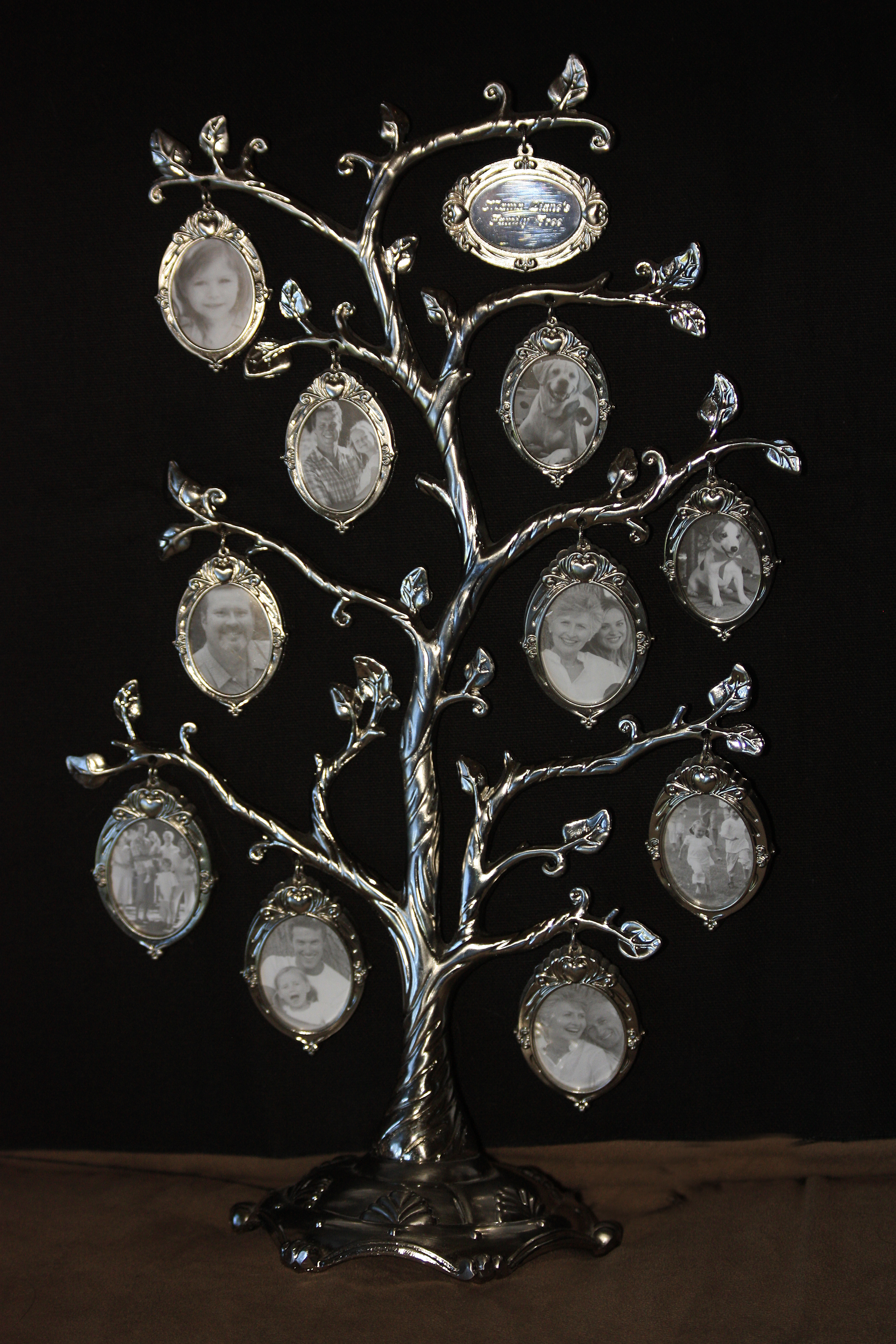
Tree Of Lives. Photo courtesy of genetic counselor Liane Abrams. For permissions and information, contact Lia Photography (925) 768-0006

“How old was your maternal grandmother when she died?” It seems a simple question, one we ask our patients every time we construct a pedigree. Many people know the answer to within a few years, an accuracy that is  perfectly fine for genetic counseling purposes. However, for a significant minority this seems to be a particularly challenging query, and they look at me as if I had asked them to use differential calculus to predict the orbital position of Ganymede on April 12, 2019.

Over the last few months I have informally collected responses to the Grandma’s Age Question. Here are some of the responses:

Grandmother and Grandchild. Photo courtesy of genetic counselor Liane Abrams. For permissions and information, contact Lia Photography (925) 768-0006.

1)    She died in 2006. Do the math.

2)    Do you mean Maw-Maw or Baba?

3)    Oh, that was the year we moved to North Carolina.

4)    Well, she died when my mother was 35. How old would that have made her?

5)    She died a long time after my grandfather died.

6)    She was born in 1898, and she died on her wedding anniversary.

7)    Do you mean my biological grandmother or my grandfather’s second wife who raised my mother?

8)    I never really liked her very much.

9)    She died of a heart attack. What is the average age of people dying from a heart attack?

10)  She died of the diabetes when she was 83. No wait, that was my Aunt Hannah, who married into the family but she was like a grandmother to me. Grandma J died of the pleurisy at 90. Or was that Nona? Nona was my Italian grandmother. She was a good cook but she didn’t like my father very much. Oh, I don’t know. One of my grandmothers died at 62 and the other one died when she was 90-something. I think. One of them had Congenital Heart Failure I know.

11)  She was old.

12)  She was young.

13)  Her sister lived to be 104 but Grandma didn’t live as long as her sister.

14)  She died a few years ago when she was 88. I mean, no, wait, she’s still alive.

15)  I know I put 73 on that form you sent me in the mail but I just made up an age because I felt like I had to put down some number. I really don’t know how old she was.

16) She was pretty old, oh, maybe….(thinks for a few moments)… 63. Huh, that’s my age now. But she looked so old to me!

17) She was so vain that she always lied about her age. She even destroyed her birth certificate so no one would ever know her true age.

18) Patient: She was 85. Husband, head turning towards patient: No, she was 86. Patient, head turning towards spouse: No, she died a month after we got married. She came to our wedding and told everybody she was 85. Husband, eyes rolling: No, she announced she was 86 at the wedding. You were too drunk to remember. Patient, head straight, eyes closed: Don’t roll your eyes at me. She was my grandmother, not your’s. And I know for a fact she was 85. Husband, looking out the window and exhaling: 86. Patient, looking directly at me: 85. He’s wrong. Husband, looking directly at me: Her grandmother was 86. She’s wrong. Silence.

So what counseling sense can I make of these responses? Well, like everything else about genetic counseling, there is no simple underlying pattern. Sometimes, the response is an opening to discuss complicated family dynamics or it provides a context that helps me better understand patients’ psychological dimensions. In other situations, divorces and strained family relations account for lack of familiarity with a relative. For some, the inability to recall the information stems from having recently been diagnosed with cancer or having a child identified with a serious syndrome,

Generations. Photo courtesy of genetic counselor Liane Abrams.
For permissions and information, contact Lia Photography (925) 768-0006

and their minds are focused on bigger issues than recalling obscure family facts.

Then there are organic explanations, like Chemo Brain and Pregnancy Raging Hormone Brain. And this can be a particularly challenging question for older patients, who have failing memory skills and whose grandparents may have died a half century ago.

Perhaps too grandma’s age is a bit of information that is less important to some people, knowledge lost with the disappearance of The Family Bible and the geographic dispersal of families in modern times.

I am interested to hear other counselors’ experiences and thoughts about the Grandma’s Age Question.

4 Comments

Filed under Robert Resta

In a World of Twisted Characters, One Little Girl With Dwarfism Stands Tall

Let me begin this post with a confession: I watch Bravo TV’s Toddlers and Tiaras.  No, I am understating the facts: I LOVE Toddlers and Tiaras.  For those of you unfamiliar with the show (um…seriously?), it provides a little window into the weird but apparently very popular world of beauty pageants for the preteen set, if you define “preteen” to include all ages from birth to puberty.  Typically, each show follows three contestants through their weekly pageant prep – this would include extensive coaching on how to stand and turn (pretty feet!), spray tanning, gluing on of false eyelashes, etc – and then during the pageant itself.  Then everybody gets a crown, and one kid wins, and the rest of the girls cry, and everyone goes home.  It’s fantastic.

In the classic reality tv show, the drama – the “it’s-like-a-car-wreck-you-can’t-look-away” quality – stems from the vast gulf between what you think of these people and how they imagine themselves to be seen.  In this case, this applies not so much to the children as to their parents, who are considerably more bizarre than the kids, without even the excuse of being children.  Is it peculiar to watch a 3-year-old in a bikini shimmy on stage?  Not as strange as watching an overweight mom in a TEAM CHELSEA tee shirt unconsciously mimicking every wiggle and pout.  Here are some of the things the moms say: “Who’s gonna shake their tushie?  You’re gonna shake your tushie!” and “Stop that crying; you are ruining your make-up” and “Princess!  What do you mean she won princess?  That is like saying my child is a loser!” and “If my husband knew what we spent on pageants we would probably be divorced” (side note: they do tell these people they are on tv, right?).  Famously, one mother sent her 3-year-old out dressed as a prostitute a la Julia Roberts in Pretty Woman.  AND SHE WON.  Some of the kids are monsters and brats, yes.  But the parents are the freak show.  And what a freak show!  Try not to think of it as terrible television.  Try to think of it as an unscripted Fellini movie.

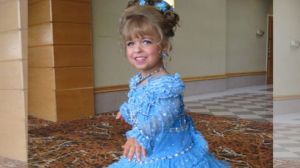
Judge away, all you judgers!  Personally, I have always suspected that reality shows are an art form, just like graffiti and rap music.  And now – now Toddlers and Tiaras has raised the bar.  They have moved to new territory.  They have, in fact, surpassed themselves.  Because last week, the show featured Lacy-Mae Mason, an 8-year-old girl with achondroplasia.

Don’t cringe!  I see you cringing.  This was no horrible “we represent the Lollipop Guild” moment.  This was an 8-year-old girl – a pageant participant and not a sideshow.  An 8-year-old girl with short arms and short legs and a very pretty face.  Watching the show, I am not positive that I agree with her mother, who said she believes “her size hasn’t been an issue,” but I am certain she was the sanest pageant mom ever on T&T. “She entered her first pageant because they were handing out trophies just for participating,” Mason said. “I thought it would be great for her self-esteem to tell her one day that the trophy on her mantle was from a beauty pageant.”  And the kid – don’t get me started.  Lacey-Mae Mason is my hero.

A cute little-person story, I thought.  Very inspirational for kids with disabilities; all that blah, blah, blah.  But no – it was something more.

Source: Fox News

Because this child wasn’t just not-a-freak.  This child, in a world of freaks, was normal.  On a show that specializes in twisted family dynamics and the perversion of childhood, the kid with achondroplasia represented normalcy and healthy relationships.  This wasn’t Frankenstein or The Hunchback of Notre Dame.  This was The Little Drummer Boy.  It was Rudolph the Red-Nosed Reindeer.  This wasn’t about pity or tolerance or sensitivity to the needs of those who don’t measure up.  Their depiction of Lacey-Mae didn’t carry the message that little people are human too.  In that twisted environment, Lacey-Mae and her family were an illustration of what human ought to be.  She lit up that stage, and when she won one of the bigger prizes, you didn’t wonder for one moment if it was a sympathy vote.  “I’m a GIANT pageant princess!“ Lacey-Mae said.  Yes you are, sweetheart.  Yes you are.

8 Comments

Filed under Laura Hercher

Corporate Sponsorship and Genetic Counseling: Questions and Suggestions

In two previous postings (Blind Spot and Are We There Yet?), I discussed my concerns regarding the potential for conflict of interest in genetic counseling. In this posting I address the complicated relationship between corporate sponsorship and the genetic counseling profession.

Let me be clear about a few matters up front. I believe that the National Society of Genetic Counselors (NSGC) is an excellent professional organization that strives to be ethical and to do the right thing for its members. I have no reason to believe that any corporation has placed undue pressure on NSGC or its members. I am not suggesting that private companies are inherently corrupt or evil.  I recognize the critical role of genetic counselors who are employed by laboratories and the importance of good laboratory medicine. I am not singling out NSGC as unique among professional medical organizations in seeking corporate sponsorship. My concerns are the potential implications of the financial relationship between genetic counselors and corporate sponsors.

To get an idea of the scope of the relationship between the genetic counseling profession and corporations, go to the publicly available section of the NSGC website and view the Sponsor and Exhibitor Prospectus, titled Partnership,  Sponsorship, and Exhibit Opportunities in 2012 (http://www.nsgc.org/Education/2012AEC/ExhibitorSponsorInformation/tabid/451/Default.aspx). This document outlines opportunities for corporate sponsorship, such as becoming an annual sponsor of NSGC, an issue of the NSGC newsletter Perspectives in Genetic Counseling, welcome receptions at the Annual Education Conference (AEC), AEC dinner seminars, and AEC Plenary and Educational Breakout Sessions, among other things.

Of course, corporate sponsorship benefits all NSGC members by reducing annual membership dues and conference registration fees, and helping NSGC carry out its duty to “promote the professional interests of genetic counselors.” I could not find information on the NSGC website about how much of the organization’s income is derived from corporate sponsors; I am guessing it is not a trivial amount.

I have two concerns about corporate sponsorship. One is the potential for intended or unintended suppression of scholarly research and presentations. For example, suppose Lab A provides $3,000 to sponsor an AEC Plenary Session, $10,000 to sponsor the AEC Exhibitor Suite Welcome Reception, and $20,000 to be an  annual NSGC Platinum Sponsor. What if a presentation proposed for that sponsored plenary session suggests that Lab A’s test is inferior to Lab B’s version of the same test? What if a speaker were critical of Lab A’s practices and policies? Would NSGC be reluctant to permit such a paper to be presented and risk losing $33,000 of support? I like to believe NSGC  and the sponsor would not suppress such presentations, but what assurances are in place to prevent this? Or, more subtly, might a researcher not even propose such a presentation for consideration to begin with, for fear of putting NSGC in an awkward position with the sponsor?

My second concern is the public perception of NSGC, an organization whose vision is “Integrating genetics and genomics to improve health for all.” Will the public believe that patients’ best interests are primary to NSGC if the organization is significantly beholden to corporations? Would public trust be further eroded if the NSGC president were employed by a company that was a significant sponsor?

So what are we to do about it? I am not wise enough to know the right answer, but options to consider are:

1)    Place no restrictions on corporate donations, with no clear-cut sponsorship guidelines or limits on the types of companies the NSGC will accept as sponsors. I think this would be a worrisome road to travel.

2)    Eliminate all corporate funding sources. I think this is unlikely to happen.

3)    Limit the amount of NSGC’s annual corporate sponsorship income such that the loss of corporate income would not threaten NSGC’s survival, and cap the amount of money that any one corporation can provide to NSGC.

4)    Limit AEC sponsorships to the Exhibitor Hall and a few other areas that do not have a direct connection to symposia, plenary sessions, and other venues for scholarly discussion.

5)    NSGC should articulate a clear and detailed policy about its relationship with corporate sponsors, something along the lines of the Council of Medical Specialty Societies Code for Interactions with Companies.  This policy should be prominently displayed on NSGC’s website and in the sponsor and exhibitor prospectus. NSGC may already have such a policy but I could not find it on the  website. The NSGC Code of Ethics addresses these issues in only the broadest terms.

6)    NSGC’s annual budget, including details of the funds derived from corporate sponsorship, should be available on the Member’s Only section of the website (it may be there now but I could not find it).

7)    Establish a standing review board, with no direct connection to NSGC or genetic counselors, to scrutinize NSGC funding sources and assure that the economic relationship between NSGC and private corporations follows widely accepted ethical principles.

8)    Take the time-honored organizational response of forming a task force to investigate the matter  and produce a formal report on the merits of the issues that I raised. The task force should include outside consultants who have no direct connection to NSGC.

9)    Ignore my concerns as the ranting of a scold who is unhappy unless he is criticizing something and hand out Bob Resta dartboards at the next AEC.

Perhaps some of these suggestions are already in place; it would be helpful to hear about them. And I would like to hear from all sides of the discussion – critics, supporters, and the confused.

Some additional thoughtful reading:

Steinman MA, Landefeld CS, Baron RB. Industry support for CME – Are we at the tipping point? NEJM 2012 366;12:1069-1071

Brody H. Clarifying conflict of interest. Amer J Bioethics 2011;11:23-8.

4 Comments

Filed under Robert Resta

Are We There Yet?

Everybody Needs Genetic Testing!

The Annual Education Conference

of the

National Society of Genome Service Specialists (NSGSS)

Proud Sponsors:  UneedaTest, Inc.; TestAll!, Inc; Twist-of-Fate, Inc; RLKVirchow Pathogenomics, Inc.; BraveNew Analytics, Inc.; AfterLife Genetics, Inc.

Faculty: Speakers will be chosen by our Corporate Sponsors from their secret list of paid consultants, and from their fashionably dressed, attractive, professional sales staff.

Conference Speaker$/Sale$$taff/Clinician$

Reminder: Continuing Education Credits require attendance at each session and ordering a minimum number of genetic tests from each Corporate Sponsor.

Wednesday, October 24

10:00AM – 11:00AM Opening Address by the UneedaTest-Sponsored NSGSS President:  UneedaTest – The Genetics Laboratory For All Of Your DNA Testing Needs. An objective, scientific discussion of why UneedaTest is the right choice for your patients’ genetic testing needs. Free iPads to the first 100 attendees who promise to send us 50 specimens next month!!

11:00AM – Noon Plenary Session: Corporate Driven Eugenics: Is It Really That Bad?

Noon – 2:00PM  Luncheon, sponsored by RLKVirchow Pathogenomics, where our motto is “Omnis venditiones e venditiones/All sales arise from other sales.” Free lunch requires proof of having ordered genetic tests from RLKVirchow Pathogenomics.

2:00PM – 3:00PM Plenary Session: Clinical Trials – A Barrier To Patient Uptake Of New Genetic Tests.

3:00PM- 4:00PM Plenary Panel Discussion: Fear of Genetic Disease – Your Best Marketing Tool.

4:00PM – 4:30 PM  Soma and Dark Chocolate Break, sponsored by BraveNew Analytics. Free give-away of stylized Malthusian Belts with BraveNew Analytics logo!

4:3oPM – 5:30PM Corpses Have DNA Too: The Dead – The Next Market For Genetic Testing. Sponsored by AfterLife Genetics – the home of true ancestry testing.

6:00PM –  Until You Drink The Bar Dry  Uneeda Party, Sponsored by Uneeda Test. An evening of food, drink, fun, and clever sales pitches  by Uneeda Test Sales Associates. Important Disclaimer: This event is not intended to influence your choice of genetic testing laboratory.

Thursday, October 25

3:00AM – 4:00AM Community Outreach – Special Educational Event for local elementary, middle school and high school students

4:00AM – 4:05AM NSGSS Business Meeting

4:05AM – 4:10AM Open Mike

4:10AM – 4:20AM Ethical Dilemmas in Genetic Counseling

4:20AM – 4:25AM Advanced Counseling Skills for Patients In Crisis

4:25AM – 4:30AM Presented Papers.

4:30 AM – 8:00AM Free Time to explore the Exhibitor Booths

8:00 AM – 10:00AM TestAll! Sponsored NSGSS Leadership Award Ceremonies & Breakfast

–       Huntington Award For Most TestAll! Tests Ordered For Adult Onset Conditions in a Pediatric Setting

–       Gattaca Award For Strongest Advocate of the TestAll! Really, Really Expanded Newborn Screening Panel

–       Podsnap Trophy, awarded to the Genome Service Specialist who ordered the greatest number of TestAll! prenatal tests on a fetus

10:00 AM – Noon TestAll! Sponsored Break-Out Sessions (Choose One)

–       Counseling Skills: How To Appear To Promote Autonomy, Empower Patients, And Seem Non-Directive – But Still Increase Hospital Revenue.

–       Legal And Social Issues: How Everyone Benefits From Exclusive Use Gene Patents. Really. No Kidding.

–       Professional Issues: The Relationship Between Laboratories and Genomic Service Specialists:  Clinical Partnerships, Not Conflicts of Interest

Noon – 1:30 PM Twist-of-Fate Sponsored Luncheon. Special Student Session: Basic Counseling Skills: How To Convince Reluctant Patients to Undergo Genetic Testing.

1:30PM – 3:00 PM  Nap Time. Free TestAll! pillows and blankets for you to keep and proudly display in your offices. TestAll! – the lab that lets you sleep easy, knowing that your patients are getting the greatest possible number of genetic tests. Limited to attendees who have ordered genetic testing through TestAll!, so order testing now to secure your pillow and blanket.

3:00PM – 4:30 PM Twist-of-Fate Sponsored Lecture Series

–     The Disability Community – Who Cares If They Don’t Like Us?

–      The Nuremberg Code: No Longer Relevant To Your Practice.

–      Newborn Screening: Not Just For Treatable Conditions Anymore.

–      Ethics, Shmethics: Ignore The Critics.

4:30PM  – 5:00PM Twist-of-Fate Sponsored  “Twist-of-Lemon Martini Break”

5:00PM – 5:30PM Professional Education Panel Discussion: The Clinical  Doctorate in Sales: The Newest Advanced Degree in Genetic Counseling.

5:30PM – 6:00PM Closing Conference Lecture: Understanding How Your Relationship With Corporate Sponsors Does Not Influence Your Choice of Genetic Tests or Laboratories.


11 Comments

Filed under Robert Resta

Wanted: Campaign to End Genetic Determinism

Today is National DNA Day, a day designated to promote genetics and genomics education. I’ve always found it a little unfortunate that DNA day falls so close to Earth Day (April 22). Clearly the latter is more recognized and celebrated throughout the world. Wouldn’t we do better to celebrate DNA Day six months from now, when it might get a little more attention? But in considering it further, I think we can benefit from the opportunity to celebrate DNA and our planet at the same time. If nothing else, it provides a perfect opportunity to tackle one of the biggest challenges we face in genomics education: Genetic Determinism.

Genetic determinism’ or the prevailing perception that our genes determine health and dictate our behaviour, is a misconception that healthcare providers and the genetics community tackle daily. In reality, we know that genes are only one piece of the puzzle. Our genes plus our environment and the complex interaction between the two must be considered in order gain a realistic understanding of health and disease risk.

A recent reminder of the perils of genetic determinism came in a New York Times article titled ‘Study says DNA power to predict illness is limited.’ This article reported on a study that looked at over 50,000 identical twins in relation to 24 common health conditions to determine how often one or both twins developed a particular condition. As the author reports,

Since identical twins share all of their genes, the investigators could ask to what extent genes predict an increased chance of getting a disease. Using a mathematical model, they reached an answer: not much. Most people will be at average risk for most of the 24 diseases.

So, what would the average person reading this article (or just the headline) likely take away from it? Probably: genes don’t matter.

I’ve found that I can measure how much traction a study has gained by the number of personal emails I receive from friends and family linking to a particular source. Needless to say, this was a particularly ‘hyped’ study. And one that I found quite frustrating, not because of what the findings were, but rather how the findings were being portrayed. I was not alone in this sentiment as evident by the amount of online chatter that ensued. Erika Check Hayden over at Nature News Blog nicely summed up the sentiment:

Geneticists don’t dispute the idea that genes aren’t the only factor that determines whether we get sick; many of them agree with that point. The problem, geneticists say, is not that the study… arrived at a false conclusion, but that it arrived at an old, familiar one via questionable methods and is now being portrayed by the media as a new discovery that undermines the value of genetics.

So, essentially just because your genes aren’t everything, doesn’t mean your genes are nothing.

The fact that genetic determinism continues to persist as a mainstream perception illustrates that we, as the scientific community, simply aren’t doing enough to communicate the ‘genes plus environment’ message to the general public. Or, we need to consider new approaches to delivering this message. As scientist and science writer Christine Wilcox argues:

…scientists pass the buck when it comes to communicating science. We write the papers, but then hand them off to journalists and say “here, explain this to everyone else.” … Then, we gripe and moan when the science is shottily explained or, worse, completely misinterpreted.

This argument can be extended beyond researchers to healthcare providers, and the genetics community in particular. For genetic counsellors specifically, our business is communication. Which brings us back to DNA Day: this day is not only an important initiative, but a yearly reminder that we could all be doing a little (or a lot) more.

This blog post was originally published on www.theGenoScape.com.

1 Comment

Filed under Allie Janson Hazell

Three Counseling Tip-lets To Make Your Job Easier

I am ashamed to admit that despite 29 years as a genetic counselor I have shockingly little in the way of great insights to pass on to colleagues. I have not developed cohesive counseling theories to guide the practice of genetic counseling, and patients remain enigmatic to me (and never seem to behave the way they do in textbooks or journal articles). Perhaps that is why I have shied away from  involvement with genetic counseling students and training programs. After about 30 minutes, I fear I would run out of helpful things to say. Often the best advice I can offer to a counselor who asks about how to handle a difficult session is  I don’t know. Just go in there and talk to them and see what happens.

But I  have managed to pick up a few small practical counseling tricks along the way. They will not cause you to re-think the underlying philosophy and ethics of your practice, but they can make your workday slightly more efficient and less stressful.  They may be frightfully obvious to many genetic counselors, but hopefully at least one of them will induce an Aha! moment.

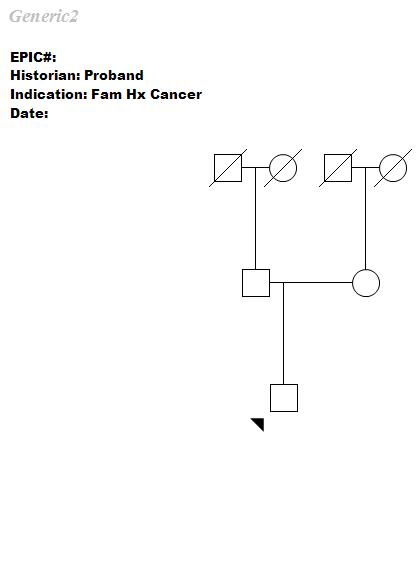
Helpful Tip-let #1: The Awkward Death Slash – With every pedigree, you must repeatedly ask the sensitive question “Is your (name that relative) alive?”  If the patient answers No, in full view of the patient you mark that relative’s icon with a backslash to indicate that the family member is deceased. The act of slashing the icon can symbolically evoke sadness and other emotions surrounding the death of a parent, grandparent, or – oh so painful –  child. It is an awkward moment at best. While a patients’ reactions can provide an opportunity to explore their emotional landscapes, you do not  want to unintentionally cause sorrow with a thoughtless gesture. There is already enough sorrow in genetic counseling; we do not need to compound it.

Distracted Gaze.
Photo courtesy of Liane Abrams.
For permissions and information, contact Lia Photography (925) 768-0006

A simple way around this sensitive situation is to ask the age at which the relative died. Patients often have to think for a moment about the answer, and almost inevitably briefly look away from you and stare off into the distance as they try to recall the age of their relative. In the moment that their eyes shift focus, you can discreetly mark the icon with a slash (have your pen poised just above the icon so you do not even have to look down to draw the mark). If the patient recalls the age  without shifting her gaze away from  you then ask the year of the relative’s death or birth. This will usually re-direct the focal point of the patient’s gaze.

I am amazed at how often this technique works.

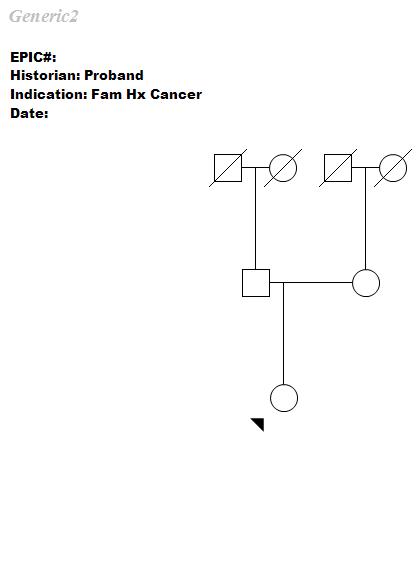
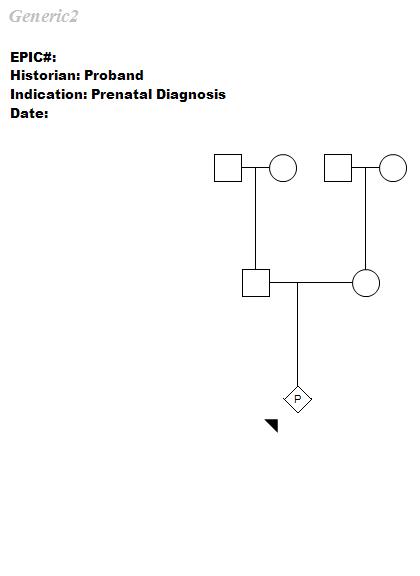
Helpful Tip-let #2: The Pedigree Template – I don’t know how many family histories I had taken before I realized that virtually every pedigree has three invariant components: a proband, the proband’s parents, and the proband’s grandparents. Therefore, there are essentially 3 near-universal pedigree templates (except maybe if you are working in ART):

1) A female proband

2)  A male proband

3) A pregnant patient

Print one of these templates on the form you use for drawing pedigrees, and voilá, you have at least 7 fewer symbols (4 grandparents, 2 parents, the proband) and 6 fewer lines (3 mating lines, 3 lines of descent) to draw with every pedigree. I  prepare the templates by hand and then make a  bunch of photocopies of each template. If you use a pedigree drawing app, simply create and save the 3 templates, and then use the appropriate template for the patient at hand.

It can save you a few moments per patient, and over the course of a week that can add up to a nice little chunk of time. And somehow, from a workflow standpoint, it is psychologically easier to draw a pedigree if some of the routine work is done before you start.

Helpful Tip-let #3: A (Non)Capital Idea – This tip-let is for genetic counselors who order BRCA testing. Myriad transmits test results using a secure web portal called ResultsNow. To view the results, the user logs-in at the familiar screen:

Entering your email address (Hmm… is that my work email or my private email?), your password (which changes every few months), and then the CAPTCHA code unique to each login can lead to frustrating typos (random letter/number combinations are more difficult to type than patterned combinations). The log-in is made none the easier when the letters and numbers of the CAPTCHA code are obscured by the background coloring, leading to the potential for even more mistaken keystrokes.

Although I cannot eliminate all of the typo potential, it helps to know that you do not have to type the CAPTCHA letters in CAPS!  Having one less detail to attend to will increase your keystroke accuracy. A small thing, to be sure, but it does make the process that much less frustrating.

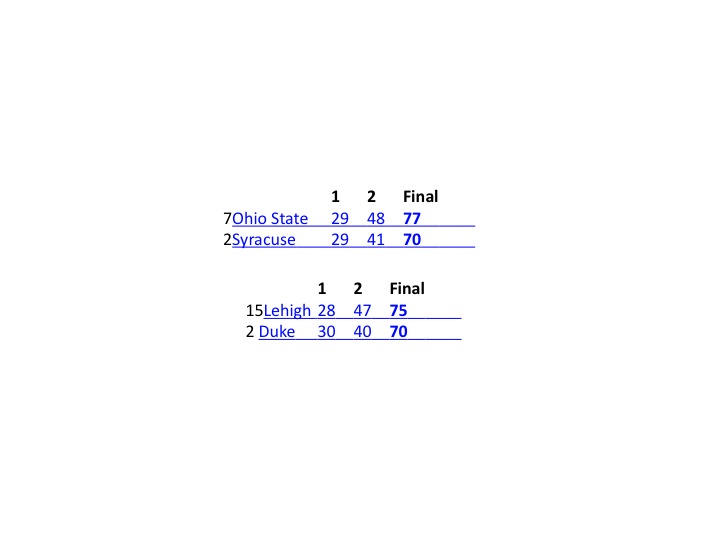
By the way, I am convinced that CAPTCHA codes contain hidden messages that reveal Secrets From The Great Beyond. In fact, the two ResultsNow messages that I received at the end of the day on March 12 included DVLS and MEN in the CAPTCHA codes, which I interpreted as an omen that the Duke Blue Devils and the Syracuse Orange would be the final two teams left playing in the NCAA Men’s Hoops Tournament.

Apparently the Great Beyond has a hard time with bracket picks too. Lehigh!? LEHIGH?!? ResultsNot is more like it.

Tip-lets do not seem to have enough gravitas to warrant a publication or AEC presentation. Nonetheless, they are an important part of our workday duties. It is rare that we get an opportunity to share this kind of information with each other. In the Comments below, tell us about your tip-lets (about genetic counseling, not about your system for picking winners of NCAA tournaments).

Gambling Chips.
Photo Courtesy of Liane Abrams.
For permissions and information, contact Lia Photography (925) 768-0006

6 Comments

Filed under Robert Resta

Whole Genome Sequencing and Calculating Risk Tolerance

I often liken the human genome to a savings bond. When we get it, we overpay. Eventually– barring an economic meltdown (or genomic bubble)—it matures. For most of us the return on investment will be low. But for a few of us, the return on investment will be substantial.

– Misha Angrist, Personalized Medicine 2011 8(6), pg 654

Most people who have met with a financial advisor have probably used some sort of Risk Tolerance Calculator at some point in time. These calculation tools are meant to help give you and the advisor an accurate sense of the types of investments and portfolios that are likely to be right for you. My husband and I went through this exercise again recently and it was interesting for me to see how different our risk tolerances are. I started thinking that this type of risk tolerance tool could be applied in a genetic counselling context, especially with respect to whole genome sequencing.

Last week John Lauerman published an article describing his experience with whole genome sequencing (through the Personal Genome Project) and his struggle to come to terms with his results: learning he carries a potentially life-threatening gene mutation. He reviews his results with Aubrey Milunksy, a Harvard geneticist who expressed concern over the reporter’s decision to participate in the genome sequencing research project. Their conversation highlights the two very different ways to look at the same information:

“You know it’s there, but you don’t know what it means,” [Milunksy] said. “You’re smack in the territory of inviting anxiety into your life. And this may have no meaning whatsoever in your entire life.” I disagreed. The results had actually taken some uncertainty out of my life, I told Milunsky… I have a rare mutation linked to rare conditions, most cases of which can be treated. Wouldn’t it make sense for me to undergo a blood test regularly to see whether my blood counts had changed?

In my role at Medcan, I counsel healthy people who are undergoing SNP-based genomic testing for preventative health reasons. Our current testing panel is centered on: 1) common diseases 2) SNPs that have the highest level of validation and 3) health conditions where ‘actionable’ preventative recommendations can be given. Clients have the option to opt-out of receiving certain results (for late-onset Alzheimer’s disease, for example), although anecdotally very few patients actively opt-out of receiving information. Conversely, clients routinely ask about the possibility to know ‘everything.’ These individuals aren’t concerned that there is no preventative recommendations related to particular health condition, they are just interested and curious to access as much info as they can. Just like John Lauerman, these are the type of people who would participate in the Personal Genome Project, if it were available to them in Canada.

A new genetic counselling challenge

Whole genome sequencing (WGS) presents a new challenge for the field of genetic counselling. It is impossible for genetic counsellors not to think about how different our role will be in the context of clinical results of an entire genome. In my opinion, it is not necessarily the ambiguity of the results that poses the biggest challenge (most of us already deal with ambiguous results on a daily basis), but rather the sheer volume of data that seems insurmountable. Most genetic counsellors will spend about 30-45 minutes with a client discussing genetic testing for a single gene. Using our current model, it seems incomprehensible to review results of a whole genome sequence.

To date, this issue has mostly been discussed in the context of returning WGS results to research participants. In his 2011 article in Personalized Medicine, Misha Angrist argues that the ‘feasibility issue’ shouldn’t be used as a reason not to return research results. Similarly, I agree that lack of feasibility should not be a reason to keep WGS out of the clinic. There are new models of care and new technological tools that can be developed to address the feasibility issue.

Genetic counselling ’risk tolerance’ tool

So, how do you manage to provide comprehensive genetic counselling in the context of piles and piles of data? I think the key is to find a way to distinguish between what people can know and what people want to know. The obvious idea (and similar to what we currently use at Medcan in counselling about the SNP-based genome testing) would be to create a comprehensive checklist of health conditions that people would like to opt-out of receiving. For understandable reasons this would be overly cumbersome and incredibly time consuming.

A more interesting thought would be to develop a ‘risk tolerance’ tool to help identify the type of information that an individual is comfortable receiving. This, when used in the context of pre- and post-test genetic counselling, could be a way to have patients start to think about the potential implications of various types of results and whether or not this is information that they’d like to know. Personalized reports could then be generated based on categorizing findings according to (for example):

  1.  Clinical validity (known disease associated vs. variants of unknown significance)
  2. Actionability (definitive clinical recommendations, some clinical recommendations, or no recommendations)

There are various ways to design this type of tool and personalized report. But a built-in mechanism to provide updated reports to reflect changes in categories or changes in patient decision-making (which may shift based on age, circumstance, health status) would be important.

As far as I know, I don’t think this sort of tool is being used currently, although I’d love to hear from genetic counsellors working in WGS research settings or in those clinics that are offering whole exome sequencing for complex cases. I do think this type of tool should be trialed in a research context, so when it comes time for clinical applications we are prepared to deal with the deluge of data.

While there are clearly differences between the financial application of a Risk Tolerance tool and one that is applied to health, disease prevention and diagnostics, I think this is an important concept to consider. The same justification that can be used to argue against a one-size-fits-all approach to medicine can be used when it comes to whole genome sequencing. As patients increasingly become more involved in their healthcare, it is important that we are armed with the tools to enable individuals to decide the type of information that they want to know.

This blog post was originally published on www.theGenoScape.com

3 Comments

Filed under Allie Janson Hazell

A Culture Warrior Takes on Amniocentesis

I have never enjoyed participating in the Culture Wars.  To begin with, I have the problem of unilateral disarmament, because I’m not a gun person.  I do not buy guns. Not real guns, not bb guns, not paintball guns, not pop guns, not even water guns, although I admit that super-soakers are tempting.  For the many small children in my life, my personal stand against guns makes absolutely no difference. The ones whose parents want them to have guns, have guns. The ones whose parents don’t, don’t. It is precisely because I don’t control the role of guns in their lives that I am permitted to make this decision based solely on my own preferences — my conscience, you might say.  So, Auntie Laura gives them another gift.

Healthcare, on the other hand, is not a gift. Healthcare, for most Americans, is a part of the compensation package. My daughter does not need to get her healthcare through her job, so instead they pay her more money. That’s how it works. And if you can’t get something through your healthcare (for free, or with a co-pay, or counting against your deductible — whatever), then it costs you extra, which means you might not get it at all.

This is the issue at the heart of all the recent fuss over the government healthcare plan, which mandates that insurance policies provided by your employer pay for contraceptives, even if your employer is a Catholic hospital or some other entity with a conscientious objection to birth control.  The compromise suggested by President Obama allows religious employers to specify that their dollars will not be used for contraceptives, which will instead be paid for solely out of the employee’s contribution to the plan.  The Catholic bishops have criticized this as merely a fiscal slight of hand, which of course it is – a slight of hand made necessary by their insistence that people that work for them cannot use their own compensation as they see fit.  For the record, gentlemen in skirts: these people are employees, not acolytes.  Once you give them the money, it’s theirs to keep.  Or to spend — on condoms or porn or Rice Krispies treats – because all that stuff is LEGAL (You know what is NOT legal?  Sex with children.  But for some reason that doesn’t seem to get the Catholic Church quite so riled up.  Makes perfect sense — there’s no contraceptives involved before puberty).

Okay, so that was a little nasty.  See what happens when you bring politics to the workplace?  That’s why so many counselors try to leave their politics at home.  But this week, candidate for the Republican presidential nomination Rick Santorum brought politics smack dab into the clinic, through a series of media appearances where he denounced prenatal genetic testing, saying that “prenatal screening, specifically amniocentesis, … is done for the purpose of identifying maladies.  And in most cases, physicians recommend abortion.”  Because, Santorum states, these tests are done to “cull the ranks of the disabled”, employers who disagree with the intent of testing should be able to insist that prenatal testing not be covered by their employee’s insurance policy.

Don’t get him wrong!  Santorum insists he doesn’t want to stop anyone from getting amniocentesis or CVS.  That would be just the sort of intrusion by government that he dislikes so much.  All he asks is that women who work for people of conscience pay for the tests themselves – not get them “for free,” as he says, by which he means that it comes out of the insurance fees that in part you pay for and in part you earn.  Instead, you have to pay out thousands of dollars for a test.  That’s not, like, stopping anybody.

Are you appalled yet? I hope so, because this is cutting pretty close to home.  Keep in mind, this guy is a couple of awkward Romney moments and a few tanks of $6 gas away from being President of the United States of America.  And surely this much ignorance on the national stage bears correcting — but where to start?  It’s tempting to focus on the low-hanging fruit.  Like, NO, Rick: most amnios do not, in fact, “lead to abortion”.  Most amnios are normal and lead to reassured parents-to-be.  And sometimes, when there is a problem, prenatal diagnosis allows us to avoid, ameliorate or even fix it.

Tempting to go there, sure.  But we don’t want to win the battle and lose the war.  By pointing to alternate uses of amnio like they were exculpatory, we imply legitimacy for the argument that prenatal testing for abnormalities is morally suspect if it is done to allow the couple to choose termination.  We suggest that really, you need some other excuse to justify testing.  And we all know that a lot of women have prenatal testing principally to check for chromosome anomalies — and that is legitimate medical care, and it’s not up to Rick Santorum or a bishop or a rabbi or an imam to decide what medical care is going to be available to them.

Where is the outrage, I ask you?  Where is the statement from the NSGC?  This is a full frontal, ill-informed attack on the fundamental concept of prenatal testing.  It could affect our patients’ ability to get care, and it is certainly having an impact right now on the way Santorum’s listeners view our practice.  Shouldn’t we be, you know, objecting?

I believe in the right of conscience.  But your right to conscience doesn’t trump someone else’s right to healthcare.  Scientologists can’t not cover psychiatry for their employees and Jehovah’s Witnesses can’t not cover blood transfusions for their employees and, as much as it pains me to say it, should the day come that I have employees, I won’t be able to not cover self-inflicted gunshot wounds. It’s true the world’s not fair – but this way, it’s just a little bit fairer.

7 Comments

Filed under Laura Hercher

Why We Love Genetics: A Group Post by The Staff of The DNA Exchange

We suspect that many genetic counselors out there got hooked on genetics by an intriguing bit of information, something that grabbed your attention and made you say “Hey, that’s pretty cool. I want to learn more about this field.” Sure we all want to help people and be good counselors, but the intellectual stimulation of the complex field of genetics also plays a critical role in keeping the spark in your career relationship.

So, in a slightly belated Valentine’s Day posting, we wonks and nerds here at the DNA Exchange (well, there is no “here” here, just 5 of us who email back and forth on an irregular basis) decided to provide some Genetic Factoids that caught our fancy. They include the profound, the moving, the questionable, the near sensationalist, and some gee whiz stuff. Be stimulated by them, have fun with them, and in the Comments section, share your fave facts about genetics with our readers.

 During the course of mammalian evolution, the RNA of  retro- and other viruses have become integrated into host genomes, thanks to that clever devil of an enzyme, reverse transcriptase. Currently about 8% of the human genome is derived from these viruses. And these are not just inconsequential inert bits of DNA. Some viruses play a critical role in mammalian biology. For example,  the HERV-W retrovirus plays an important role in placental physiology, and, by one estimate, 0.4% of human genetic diseases are the result of insertions of Alu elements of retroviral origin. On top of that, about 90% of the cells in the human body are not actually human, as we are inhabited by a large populations of bacteria and other microbes (biology makes for strange bedfellows). Among other things, this calls into question just how much we are defined by “our” DNA, as well as  how we delineate the borders between species. It also makes me smile about our growing obsession with germophobic practices. (Horie M, et al. Endogenous non-retroviral RNA virus elements in mammalian genomes. Nature , 2010, 463:84-7Ryan F.  Human endogenous retroviruses in health and disease: a symbiotic perspective. J R Soc Med, 2010, 97:560-5.Katzourakis A, Gifford RJ. Endogenous viral elements in animal genomes. PLoS Genetics, 2010, 6(11):e1001191)

♥ The largest mammalian gene family has nothing to do with placentas, fur, intelligence, or  behavior. Instead,  the award for body system with the most DNA devoted to it goes to the olfactory system. Three percent of the human genome codes for olfactory receptors, more than the combined total of genes devoted to immunoglobulin and T-cell receptors. The smell of love is in the air, we have the genes to help us detect it, and Chanel takes advantage of that. (Shepherd GM  Neurogastronomy: How the brain creates flavor and why it matters. 2011.  Columbia Univ. Press)

 During the early 1990s, two out of three of deaths among men with hemophilia were the result of AIDS related complications, the majority of which were young men who had acquired the virus during transfusion treatments. In 2009, about half of all people diagnosed with hemophilia in the United States were infected with the Hepatitis C virus. One disease’s cure is another disease’s cause (vide infra, PKU) (Committee Reports, 111th Congress (2009-2010), House Report 111-220, Departments of Labor, Health and Human Services, and Education and Related Agencies Appropriation Bill, 2010.;  Soucie JM et al. Mortality among males with hemophilia: relations with source of medical care. Blood. 2011. 96:437-42.)

♥ In the United States in 2009, there were as many babies exposed to maternal PKU as there were babies born with PKU. Given the inadequate funding for follow-up of patients who have genetic diseases detected by newborn screening and the potentially harmful effects of maternal PKU, the benefits of PKU newborn screening in preventing developmental disabilities hang in a delicate balance. It also makes one wonder what surprises the law of unintended consequences holds for expanded newborn screening (vide supra, hemophilia). (Resta R (2012) Generation n + 1: Projected Numbers of Babies Born to Women with PKU Compared to Babies with PKU in the United States in 2009. Am J Med Genet (in press).)
 

 A study of 194 DNA exonerations of criminal convictions found that witness/victim misidentification was a factor in 75% of wrongful convictions. False confessions were obtained in 30% of the cases, and jailhouse/government informants played a role in 22% of false convictions. Invalid forensic science testimony played a significant role in wrongful convictions, including serology (38% of cases, mostly blood, saliva, semen, and vaginal fluids), hair comparisons (22%), fingerprinting (2%), and bite mark analysis (3%) (And CSI make it look so easy and objective). Of exonerees, 58% were African American, and 43% of crimes were classified as cross-race (i.e., a perpetrator of one race committing a crime against a victim of a different race). DNA  plays a critical role in the legal system. Still, I am shocked by proposed state laws that require collecting DNA at the time of arrest (not at the time of conviction). (Hampikian G, et al.  The genetics of innocence: Analysis of 194 US DNA exonerations. Ann Rev Genomics Hum Genet. 2011. 12:97-120.)

 About 8-9% of dizygotic twins are the result of more than one coition and 1/400 dizygotic twins born to married white women in the US are bipaternal. Some people are very romantic. ( James WH. The incidence of superfecundation and of double paternity in the general population. Acta Genet Med Gemellol (Roma).1993. 42(3-4):257-62.)

 Elizabeth Taylor’s thick eyelashes were the result of a mutation in FOXC2, which can cause lymphedema-distichiasis syndrome (though she did not appear to have “photo”-phobia). (Elizabeth by J. Randy Taraborrelli, Grand Central Publishing, 2006).

♥ Because of a mutation and in-breeding, the town of Sao Pedro, Brazil has a 10% rate of twinning. Most of the twins have blue eyes and blond hair, which had raised suspicions that the unusual number of twins was the legacy of some peculiar science experiment by German ex-pat in hiding Josef Mengele (Nazi ‘Angel of Death’ Not Responsible for Town of Twins,  New Scientist, January 27, 2009).

 Levels of gene expression for genes involved in fighting infection are lower in people who are lonely, according to researcher Stephen Cole (Ah, yes, but the lonely suffer less from heartache).(Cole S. et al., Social regulation of gene expression in human leukocytes. Genome Biology, 2007, 8:R189).

 In a study by Muscarella and Cunningham, males and females viewed 6 male models with different levels of facial hair (beard and mustache or none) and cranial hair (full head of hair, receding and bald). Participants rated each combination on 32 adjectives related to social perceptions. Males with facial hair and those with bald or receding hair were rated as being older than those who were clean-shaven or had a full head of hair. Beards and a full head of hair were seen as being more aggressive and less socially mature, and baldness was associated with more social maturity.Of course, social maturity is very difficult to measure in men. (From: http://en.wikipedia.org/wiki/Baldness; Muscarella, F. & Cunningham, MR. The evolutionary significance and social perception of male pattern baldness and facial hair. Ethology and Sociobiology, 1996, 17 (2): 99–117. doi:10.1016/0162-3095(95)00130-1).

 If you were to recite the ATCG sequence in your own DNA (which is 3 billion bases pairs long) and uttered 100 ATCG sequences per minute without taking a break for sleeping, eating, or drinking, you would speak for 57 long years. Not so helpful for maintaining close relationships.

 1000 cell nuclei could be squeezed into a period mark at the end of a sentence. (http://www.geneplanet.com/the_abcs_of_genetic_analysis/interesting_genetic_facts)

 A report in Scientific American in late 2011 looked at the websites that were most commonly linked to by science-lovers on Twitter. There are several flaws inherent in the “study design,” but regardless it is interesting to note that Genetics and Astronomy were very closely linked: meaning people who linked to Astronomy articles & content were more likely to also link to Genetics content and visa versa (Hey there Genetic Counselor, you with the stars in your eyes). Other interesting correlations included Physics and Fashion as well as the fact that Chemistry appeared to be an outlier, not being linked to any other science.
In terms of heritability versus shared environmental effects, genetic factors account for 50-64% of an individual’s right-wing authoritarian attitudes with 0-16% due to shared environmental effects, while genetic factors account for approximately 54% of an individual’s extraversion, 49% of their conscientiousness and 57% of their openness with no appreciable shared environmental effects. (Bouchard TJ. Genetic Influence on Human Psychological Traits. Curr Dir Psychol Sci. 2004;13(4):148-51.)

 And, of course, let us never forget The Jumping Frenchmen of Maine.

3 Comments

Filed under Allie Janson Hazell, Jessica Giordano, Laura Hercher, Michelle Strecker, Robert Resta