Author Archives: laurahercher

VARIATIONS IN A MINOR KEY: SOME THOUGHTS ON PRENATAL TESTING IN AN ERA OF WHOLE GENOME SEQUENCING

James Watson is many things – geneticist, Nobel laureate, agent provocateur – but in the realm of psychiatry he is first and foremost the parent of a son with schizophrenia.  So when he spoke in 2007 at the World Congress of Psychiatric Genetics, it was as a family member, albeit a family member with an unusually good grasp of the science.  And it was as a family member that he exhorted the scientists in the audience to keep up the good work, so that “someday we could identify those individuals destined to suffer from mental illness in utero, and weed them out.”

How often do you hear an audible gasp in the midst of a plenary talk?  The dismay and the indignation were palpable.  Researchers throughout the day interrupted their talks on GWAS to express in the strongest possible language that the goal of their work was to understand the pathophysiology of the disease and perhaps to aid in diagnosis – not to provide pre-symptomatic risk  assessment and not – no, never – not to be used prenatally.

“But if this is what families want,” I asked one speaker later that day.  “How do you propose to restrict testing, once the means to test is available?”

“They can’t,” he replied.  “They must not.”

Ah.  Of course.  They must not – I will pass that along.

Five years later, it is not GWAS but whole exome sequencing and whole genome sequencing providing all the buzz at conferences.  Solving the diagnostic odyssey!  Revolutionizing cancer treatment!  Ushering in an era of personalized medicine!  It’s very exciting.  Prenatal testing is rarely mentioned, and then only in passing – while prognosticators sing happy songs of a not-so-far-off day when every baby will be sequenced at birth.

Sequenced at birth?  Will it even be necessary?  Maybe Mom and Dad have baby’s DNA already, on a hard drive or a memory stick or downloaded onto their cell phones along with the ultrasound pics.

This is not the genome sequencing story you are seeing in the papers or the blogs.  It’s not what researchers are excited about.  The ones we hear are all about science journalists getting their DNA decoded and setting off on odysseys of self-discovery that involve hours of consultation with clinical and academic superstars who donate their time. We hear about kids with strange constellations of symptoms finding answers after years of disappointment.  Those are heartwarming tales: anecdotal and difficult to imagine at scale, but hopeful and exciting nonetheless.  But there is another theme playing, in a minor key, and I hear it faintly, hidden beneath the violins and the trumpets.

I hear it, an unspoken question, when we debate the utility of genomic information.  What does to mean to say that information is actionable? (Prevention? Treatment? Cure?  Prenatally, there is only Yes or No.)  Can patients handle uncertainty?  (And what will we lose, when pregnancies are terminated just to be on the safe side?)  Doesn’t everyone have the right to know what is in their own DNA? (The information is available – why not use it?  What could possibly go wrong?)

Whatever tests are available postnatally will find their way into prenatal use.  The gateway technologies – PGD, cell-free fetal DNA testing – are in place. And there is no use saying, “they can’t, they won’t, they shouldn’t” because they can and they will – and sometimes they should.  There will be good uses too: success stories and disasters averted.  A blanket “no” is not an option, and granting anyone authority to pick and choose which uses are worthwhile vests altogether too much power in the hands of any one person, or profession, or bureaucratic entity.

The same tests can be done before or after birth, but the experience is entirely different.  Uncertainty after birth is an opportunity.  The least useful information is that which will absolutely come true, no matter what you do.  Uncertainty before birth is a crisis.  Anyone who has ever discussed a variant of uncertain significance with a pregnant mother can tell you that.  But what are the chances there will be developmental delay?  Are you certain that the heart will be affected? How sure are you that this means anything?  Not nearly sure enough.  Please understand that.

In general, notions of genetic determinism increase the likelihood that genomic testing will have negative consequences.  Fatalistic attitudes about the power of genes could lead people to overestimate the meaning of elevated risks and underestimate the meaning of reduced risks.  Anxiety, stress, missed mammograms – you have heard this before.  Shrug.  People are grown ups.  They will figure this out.  Information is power.

But we are in a whole new universe trying to reconcile underpowered and often misunderstood predictive testing in the context of prenatal use.  So please, in telling tales of all the wonderful things that genome sequencing will do, save space for a mention of what it cannot do.  Make sure they understand that there are great wide cracks in our crystal ball.  Do not oversell the value of genotype in the absence of phenotype.  Remember that in the end neither researchers nor physicians nor genetic counselors will dictate how this new technology will be used.  Others will make that call, and we will be in the choir, singing songs of praise laced with sorrow.

Follow me on Twitter:

https://twitter.com/laurahercher


4 Comments

Filed under Laura Hercher

GENETICS and The Year in Review: My Top Ten Stories of 2012

In casual conversation, the phrase “it’s genetic” can mean any number of things.  It can serve as an excuse (‘don’t blame me, blame my parents!’) or a humblebrag (‘it’s a gift; I take no credit.’).   But most often, when people say “it’s genetic,” what they imply is: ‘that’s the way it is and there is nothing to be done about it.’

One promise of the Human Genome Project was to give us the means to fight back against this inevitability of genes, through prevention, mitigation and cure.  The first ten years post-HGP were full of revelation and technical achievement, and yet fell far short of that goal: for all that we learned, the lives of patients with genetic disease were essentially unchanged.  Now, news on a multitude of fronts brings the tantalizing prospect of progress.  Will we remember 2012 as the year when genetics fundamentally changed clinical medicine?  Probably not.  But the signs are there: treatments popping up like crocuses in the snow, new tests making their way from research only into the clinical realm, beta versions of technology that can — and will — do better.  And the other signs too: a growing intransigence from those who fear where these changes will take us, and a popular interest in testing that often takes the form of overestimating the scope and specificity of what genetics can tell us.  Progress – and pushback – is the story of 2012.

10.  IT CAN’T GET MORE PERSONAL THAN THIS: A GENETICIST ANALYZES HIMSELF AND SHOWS US SOMETHING ABOUT THE POTENTIAL OF PERSONALIZED MEDICINE – AND EVEN MORE ABOUT IT’S COST

In Cell, Stanford Professor Michael Snyder published a study with an n of 1 that, despite its limitations, effectively captured the yin and the yang of personalized medicine.  The ”n” in this case was Dr. Snyder himself, who followed himself over a 14-month period using “genomic, transcriptomic, proteomic, metabolomic, and autoantibody profiles” – a staggering array of tests, with an equally staggering price tag. Long story short, Dr. Snyder’s genomic information suggested an increased risk for type II diabetes, so despite the absence of any family history or other risk factors, the medical profile was expanded to include a state of the art glucose test.  And in fact, following a viral infection,  Dr. Snyder’s blood sugar did rise.  Diagnosed with IDDM, the doctor’s blood sugar levels normalized after several months with changes in diet and exercise.  What didn’t normalize?  His life insurance premiums, which rose precipitously after the diagnosis was made.

What is wonderful about this story?  Dr. Snyder – who, it should be said, is a co-founder of company producing interpretive tools for genome studies – says the study saved him from months of damage, and may have saved his life.  Of course, you don’t really know, which is the thing about anecdotal reports.  Consider that, in a sense, all of medicine up until now could be viewed as one giant study with a massive ascertainment bias – after all, most of what we know about treatment comes from sick people.  Does it make sense that early and focused intervention worked?  Yes, it does.  Do we know that cutting out desserts and doubling down on his bike riding actually “cured” him?  No, we don’t.  Because this sort of testing is unprecedented, I’m not sure we know if transient changes in glucose levels are so abnormal following a virus.  Is this what risk means in the context of skinny guys with no family history?  Because in the context of obesity and family history, I am not convinced that cutting out pie is a game-changer.

But despite all the questions that remain, the Snyder study demonstrated proof in principle that the combined power of clinical measures and genomics – genes and gene expression – creates more value than either of these two alone.  And unfortunately it also demonstrates proof in principle that personalized medicine approaches are, at present, prohibitively expensive.  Bringing down the cost of sequencing is only a first step – it will take across the board reductions in the cost of testing, analysis and follow-up medical care if personalized medicine is not to be a niche service for the fabulously wealthy (and a few lucky academics with funding from NIH!).

9. RICK SANTORUM BRINGS THE CULTURE WAR TO AMNIOCENTESIS

In February of 2012, former Pennsylvania senator Rick Santorum went on the CBS News show Face the Nation and argued that employers who disapproved of prenatal diagnosis should not be compelled to pay for insurance policies that cover, say, amniocentesis.  An incremental extension of the argument against mandating insurance coverage for birth control which had become a hot button issue on the campaign trail, Santorum explained his opposition thusly: “Amniocentesis does, in fact, result more often than not in this country in abortion.”  Santorum, undeterred by the (modest) firestorm that greeted his results, doubled down on this position in a speech to the Christian Alliance: “One of the mandates is they require free prenatal testing in every insurance policy in America.  Why? Because it saves money in health care. Why? Because free prenatal testing ends up in more abortions and therefore less care that has to be done, because we cull the ranks of the disabled in our society.”

Okay, sure – it was silly season (aka, the Republican presidential primaries.  Remember Herman Cain?  Newt Gingrich and Ellis the Elephant?).  You might be inclined to dismiss this attack on prenatal diagnosis as nonsense.  Santorum certainly encourages us in our spirit of dismissiveness by getting his facts wrong – obviously MOST amnios don’t result in abortion.  Most amnios result in a reassuringly normal result.

But you know and I know that wasn’t what he meant.  Santorum is the father of a 4-year old with trisomy 18 (note to all

Photo credit: People.com

Photo credit: People.com

genetic counselors: yes, I agree with you; she probably is mosaic.  But I don’t know and neither do you.  So please stop asking).  He is a hero to a not inconsiderable segment of the population.  And his sentiments are not an anomaly.  And I am willing to bet that Santorum’s stand is not some last vestige of an outdated and ill-informed resistance to genetic medicine, but an early sign of the sort of intransigent hostility that advances in prenatal testing will engender.  The Obamacare requirement that insurance plans pay for amniocentesis is, Santorum said, “another hidden message as to what President Obama thinks of those who are less able.” Many people – real people, not caricatures, not Republican primary candidates – are worried about how genetic technology will be used, and what those choices say about how the world sees them.  Their fears will grow as our capabilities improve.  In focusing only on what Santorum got wrong, we risk ignoring the more significant subtext.  There are questions here that deserve a real response, minus the snark.  Genetics professionals need to be prepared to define themselves, or risk being defined by someone else.

8. CLARITY CHALLENGE: BIG DATA GETS COMPETITIVE

For years, discussion of the Archon X Prize for DNA sequencing has dominated sports-radio coverage of competitive genetics.  But this year, the annual handicapping of the Archon race (to sequence 100 genomes in 30 days or less, at a per-genome recurring cost of $1000 or less, to be decided once and for all in September 2013 and I don’t know about you but I am SO OVER IT) had to share the geek sports fan base with a new event: the Clarity Challenge.  In January 2012, Boston Children’s Hospital invited researchers around the world to analyze the DNA sequence data from 3 children with unknown genetic disorders.  Entrants were judged for their success in identifying genes or candidate genes for each child, and their ability to present their findings in a clear and accessible fashion.

The winner (Brigham and Women’s Hospital Division of Genetics – always nice for the crowd when the hometown team wins) was announced November 7 – PERHAPS YOU MISSED IT, as the press was inexplicably preoccupied with the U.S. presidential election, which occurred on November 6th.  Brigham’s team was praised for the clarity of its reports – a deciding factor, despite the fact that one of the runner-ups was actually the only team to identify putative deleterious mutations for all three kids.  More importantly, the competition highlighted the growing need for sophisticated and high quality analysis to complement the increasing quantity of sequence data.  The take-home from the Clarity Challenge is this: generating strings of A’s, C’s, T’s and G’s may be a technical tour de force, but only analysis will turn data into information, and provide clinical relevance.  For one child, the competition did result in a diagnosis after a 10-year medical odyssey – a success, but a qualified success, since the mutation for a muscle-wasting disease was identified by only 8 of 23 qualified groups participating.  Hailed as proof in principle of the power of DNA whole genome sequencing, the Clarity Challenge also illustrated the lack of universal standards for analysis (not to mention for handling tricky details like non-diagnostic findings unrelated to the presenting medical issue).

Mo’ data, mo’ problems, kids.  Having identified a serious issue that isn’t going away anytime soon, the Clarity Challenge is rumored to be gearing up for competition #2: the cancer genome analysis.  Great idea!  And guys — using a combination of computer simulations and a careful reading of the literature – in this case, the U.S. Constitution – I predict that the next presidential election will be held on November 8th, 2016.  PR protip: you might want to pick a different week to make any major announcements.

7. EU APPROVES A STEM CELL THERAPY FOR CLINICAL USE

glybera

Photo credit: Pharmafile.com

European Commission approval of Glybera, a stem cell therapy for familial lipoprotein lipase deficiency, marks a big step forward for the field, which had a tough year in 2011 when the first US trial of a stem cell therapy was shut down early as stem cell pioneer Geron withdrew to focus on experimental cancer therapies.  Poor stem cells!  It’s hard to be dumped for more lucrative therapeutics.  But researchers in stem cell therapy headed back to the gym – I mean the lab – and came back looking strong in 2012.  Reports suggest that a number of therapies have shown promise in clinical trials, including a publication in The Lancet describing a human embryonic stem cell therapy from Advanced Cell Technology that has showed early success treating retinal damage from macular degeneration.

6. TARGETED THERAPY: FDA APPROVES KALYDECO

vinylmation

Lots of reasons NOT to get excited about Kalydeco, the Vertex pharmaceuticals drug approved by the FDA in January 2012.  Sure the drug improves outcome measures for patients with cystic fibrosis (CF) – but only for those carrying the G551D mutation, a paltry 4% of individuals with CF in the United States today.  And what’s with the name?  It sounds like the Disney mascot for Epcot’s Visual Hallucinations Pavilion.

Photo credit: Drugs.com

Photo credit: Drugs.com

But Kalydeco, despite these limitations, is a leading indicator of growth for a whole category of targeted pharmaceuticals.  The Vertex product is the first approved drug to act by correcting the underlying genetic defect rather than ameliorating symptoms.
The strengths and the limitations of Kalydeco are its specificity; it restores the ability of the mutated CFTR protein produced by G551D to unlock the ion channel that is lost in CF.  Kalydeco, which represents the sort of therapeutic breakthrough everyone hoped would follow organically from a better understanding of disease pathophysiology, is a hopeful sign for all CF patients – a version aimed at the more common DeltaF508 mutation is reportedly in the works – and a hopeful sign for anyone who ever dreamed that we might someday talk about a “cure” for genetic disease.

5. TRANSLATIONAL MEDICINE MAKES GREAT STRIDES (IN ANIMAL STUDIES)

The new Francis Collins Initiative for Translational Medicine in Rodents got off to a flying start in 2012:

In Italy, researchers grew kidney-like “organoids” that performed many of the same functions as kidneys when transplanted – in rats.

A new drug tested by researchers at Washington State showed promise in treating Alzheimers Disease – in rats.

Scientists at the University of Michigan used gene therapy to develop a sense of smell to successfully treat congenital anosmia – in mice.

Researchers at UCSD debuted an RNA interference drug that reduced the severity of symptoms for Huntington’s disease – in mice …

And two groups (one in California; the other in Spain) demonstrated success using engineered zinc finger proteins to block production of the mutant huntingtin gene product – in mice.

A molecular embryologist in Brussels reestablished absent thyroid function through transplant of thyroid tissue engineered in the lab – in mice.

Blind mice see!  Vision restored after transplant of rod-cell precursors – mice (blind mice!).

Photo credit: Wired.com

Photo credit: Wired.com

Deaf gerbils hear!  Hearing restored using human embryonic stem cells to replace damaged auditory cells – in gerbils.

Diabetic mice cured!  Insulin dependency ended with transplant of pancreatic stem cells – in mice.

Truly, has there ever been a better time to be a rodent? 

 4. FETAL GENOME SEQUENCED THROUGH NON-INVASIVE PRENATAL TESTING

In an article published in Nature in July, 2012, researchers from Stanford announced  full genome sequencing done on fetal DNA drawn from the maternal blood stream – DNA, in other words, that could be obtained without invasive testing.  Several tests using non-invasive prenatal testing are already on the market, notably Sequenom’s MaterniT21 PLUS, the success of which drove a 68% increase in corporate revenue in the 3rd quarter of 2012 as compared to 2011 numbers.  Despite their commercial appeal, these beta versions of targeted non-invasive testing are still working out their kinks – amniocentesis or CVS are still needed as a follow-up to any positive MaterniT21 result – but the Stanford University researchers’ accomplishment drives home the potential of this technology to transform prenatal testing in the not-so-distant future.  Earlier, safer and more inclusive, this testing modality is likely to be a game changer that radically increases both the number of pregnant couples opting for testing, and the range of conditions included in a prenatal assessment.

3. BEHAVIOR ‘OMICS:  IN SEARCH OF A GENE FOR EVIL

On Friday, December 14th, Adam Lanza, a 20-year old loner described by former teachers as “intelligent, but nervous and fidgety,” took guns belonging to his mother and shot her four times in the head.  Then, for reasons we will never know, he took her car to the Sandy Hook Elementary School, shot his way through a locked door, and massacred 20 children and 6 adults and then himself with a systematic efficiency and precision that belied the random nature of the attack.  Sixteen of the children killed that day were 6 years old; the other four had already turned 7.

“Who would do this to our poor little babies?” asked Mrs. Feinstein, a Newtown teacher of 11 years.  For that question, no satisfactory answer would – or could – emerge.  Anecdotal reports of mental illness filtered out from people who had known Adam Lanza – he had a developmental disorder; he had autism; he was diagnosed with Aspergers.  Ten days after the attack, the Connecticut Medical Examiner sent a request to University of Connecticut scientists for help investigating Adam Lanza’s DNA.  “Geneticists Studying Connecticut Shooter’s DNA” ran the CNN headline on December 28th.  The article reported the consensus of the genetics community – no single genes existed that would be diagnostic for mental illness, and no single DNA sample could begin to establish variants or markers associated with violence – or any other behavior of a complex creature in a complex world.

DNA sequencing will shed no light on the painful question of why, but the use of sequencing in this context will color the public perception of genetics, with potentially dangerous consequences.  Ultimately, it is the headline that endures – the headline that suggests that some genetic quirk, some error in his code, some defect we can use to identify and root out the monsters among us — was the cause of this most horrific act.  It is far from the first headline of 2012 to imply genetic determinism (“Binge drinking gene’ discovered” proclaims the BBC; “As GOP convention begins, a look at how genes influence politics” trumpets the LA Times) but the Newtown tragedy illustrates most fully the potential for stigma and discrimination that accompany a reductive view of the relationship between genes and behavior.

 2. WHOLE EXOME SEQUENCING: AN INTERIM TECHNOLOGY GETS ITS MOMENT (BARELY)

 This was supposed to be about whole exome sequencing (WES) announcing its presence with authority in the clinical setting in 2012.  In May, David Goldstein et al published an article in the Journal of Medical Genetics documenting a high rate of success using WES to find diagnoses for patients with unexplained, apparently genetic conditions. Their exploratory studied considered a number of important, difficult issues: filtering of variants, variants of uncertain significance, communication of results to families, detection of carrier status and other non-diagnostic findings, obligations for re-contact.  Results were lauded as not only explanatory but in some cases “interesting” – the holy grail of academic research.

This story was supposed to be about WES, having its moment as the field transitions from targeted gene testing to whole genome analysis.  But everywhere I looked there it was, whole genome sequencing (WGS), hanging around the gym, saying “ooh, ooh coach – put me in!  put me in!”  Was 2012 the year of WES?  Well, yes! … but it was also the year when WGS with a 50-hour turn-around time was introduced for use in neonatal emergencies – and immediately declared standard of care for the neonatal intensive care unit at Children’s Mercy Hospital in Kansas City MO, where the pilot study was done.  And it was the year when the 1000 Genomes Project published data drawn from the WGS of over 1000 participants (thus the name), giving us what Genome Web Daily described as data that “made it possible to identify almost all of the variants found in as few as 1 percent of the population.”  Congratulations, WES!  Your moment has come.  Just don’t blink.

1. ENCODE: IDENTIFYING THE UNKNOWN UNKNOWNS

Remember “junk DNA”?  Me neither.  I am almost certain that none of us ever believed in the preposterous idea that the 98% of the human genome not coding for genes is a vast trash heap of discarded genes and chromo-babble.  A giant sea of artifacts and nonsense, meticulously copied by each dividing cell – surely this model defies everything we understand about the parsimony of the natural world?  For this reason alone biologists as a group instinctively knew the notion to be false.  At least, that is how I recall it.  As Lizzie Bennett says in Pride and Prejudice, “in cases such as these, a good memory is unpardonable.”

In September 2012, an international consortium of researchers organized by the NHGRI and wrangled by “cat-herder-in-chief” Ewan Birney of the European Bioinformatics Institute produced the first edition of the Encyclopedia of DNA Elements (ENCODE), in the unprecedented form of 30 articles published simultaneously in 3 cooperating journals: Nature, Genome Biology and Genome Research.  The combined publications constituted a first peek into the mysteries of the 98%, examining the expression and modification of non-coding DNA on a cell- and tissue-specific basis, identifying sequences receptive to chemical modification,  promoters of gene transcription, and all manner of transcriptionally active DNA signatures whose significance – if they have a significance – remains entirely speculative.  All together, it is an ambitious cataloguing of what Eric Green at NHGRI described as elements “involved in the complex molecular choreography required for converting genetic information into living cells and organisms.”

What is the take-home message of ENCODE?  That “not translated into protein” is not the same as “unused.”  In fact, the combined studies suggested that 80% of those shadowy untranslated regions were in fact transcribed into RNA – with a quarter of those RNA elements having known functional relevance.  As for the rest — well, some of it is regulatory – for instance, ENCODE documented a vast number of switches, used to turn genes on or off.  But for much of the genomic activity documented by ENCODE, all that one can say is that it exists.  Does it have functional implications for individuals?  The jury is out (and bickering).

The are so many reasons why ENCODE is the top genetics story of 2012.  It is on-trend as a BIG DATA story, producing raw DNA sequence data that required more than 300 total years of computer time to analyze – an illustration of the increased need for analytic skills that will follow as the celebrated technical achievements of the past decade become, in a flash, merely the norm.  The searchable ENCODE database is a model of open access – another 2012 hot topic.  And the project demonstrates that, despite a certain amount of clamor to the contrary, the most significant work in genetics today is a giant research project and several steps removed from clinical application.

In the dark years before the Human Genome Project, inebriated geneticists offered up back-of-the-cocktail-napkin approximations about the number of genes we carry, and every one of them was wrong.  Eighty thousand?  One hundred thousand?  Nope.  The final tally was more like 22,000 genes – and so unless we are prepared to declare ourselves less complicated than a water flea (31,000 genes), this can only mean one thing: that the architecture of human complexity is not derived solely from the blueprint laid out in our genes.  ENCODE, as a search for answers beyond the coding regions of our genomes, is a natural extension of the HGP, a first attempt to move beyond answers that lie solely in the exome.

For me, here is what makes ENCODE the genetics story of the year: it is both a beginning and an end.  The publication of ENCODE is a commencement ceremony for the HGP age – a moment in time when you come to the end of something and realize it is only the beginning of a greater journey.  The information it contains, while vast, is a mere sprinkling of breadcrumbs for others to follow.  But the trail it leaves shows us what we do not know.  Unknown unknowns are true ignorance – the sort of ignorance that leads us into a belief like “junk DNA.”  ENCODE is a great next step – the elucidation of what we do not know.  To a geneticist with exome data, like a man with a hammer, everything looks like a gene.  For ten years we have been hitting those nails hard.  ENCODE is a look beyond, to a wider array of targets, a wonderful acknowledgement of how much we do not know.

And that, ladies and gentlemen, is genetics in 2012!  Let me know what I’ve missed….

[Follow me on twitter: @laurahercher]

4 Comments

Filed under Laura Hercher

To Improve Care for Your High Risk HBOC Patients, You Don’t Need the Supreme Court: It Is All in Your Hands — and In Your Files

What happens in 2015 when the essential Myriad patents on BRCA 1 and 2 expire? 

Think about it a while.   What are you imagining?  Lower costs, better tests, quicker turn-around times?  A single panel covering all breast cancer susceptibility genes?  An end to unhappy conversations with patients trying to explain why the process can’t be simpler and cheaper?

While you mull over your utopian fantasies of a patent-free universe, keep this in mind: Myriad has been thinking about it for a while now.  After all, BRACAnalysis remains close to 90% of their total revenue, so it’s probably on the minds of Myriad executives.  It certainly was on their minds at Goldman Sachs when they listed Myriad Genetics as a sell in February 2011

Does Myriad have a plan?  It sure looks like it.  In 2006, Myriad ceased to publish BRCA variant information, and ended their relationship with the open-access Breast Cancer Information Core (BIC) database.  Since then, they have assembled a private repository of genotype-phenotype information that seems to be a central component of its strategy for future earnings.  How central?  Well, Dan Vorhaus et al at the Genomics Law Report speculated back in 2011 that a strategy of relying on their “vast—and currently proprietary—database of BRCA test data, including VUS data” was behind the company’s decision not to even bother fighting patent infringement in Europe, citing Myriad CEO Peter Meldrum’s emphasis on “other competitive factors” as an alternate strategy for competitive advantage.

Forget about the ACLU lawsuit, and next-gen sequencing and all the other changes you have read about that may affect genetic testing going forward.  Get the DNA sequence data wherever you want, and however you want, and as cheaply as you can, but as long as Myriad has sole control of the information needed to provide analysis, no other company will be able to challenge them on a competitive basis.

 Is this fair?  Well, it is an end run around the philosophical basis of patent protection, which is meant to provide a 20 year window of unfettered commercial use in return for a free and open sharing of information to stimulate further innovation.  But it is not illegal.  Myriad controls their database, and can’t be compelled to share.  They own the database – but NOT the information.  The information is out there – in report after report after report, languishing in the files of thousands of clinical cancer specialists.  In other words, YOU HAVE IT.

 So now, some exciting news.  Dr. Robert Nussbaum at UCSF is spearheading an effort to collect BRCA 1 and 2 variant data in ClinVar, an accessible archive of anonymized genotype/phenotype information hosted by the National Center for Biotechnology Information (NCBI).  While the goals of ClinVar are very broad – to aggregate information about sequence variation and its relationship to human health – Dr. Nussbaum’s goal are quite specific: to assemble a list of BRCA 1 and 2 variants found since 2005, along with information classifying them as benign, pathogenic, or unknown. 

 But THIS ONLY WORKS AS A COLLABORATIVE EFFORT.  Dr. Nussbaum has contacted 600 clinicians involved in clinical care of HBOC patients (so far, 26 centers have contributed over 3000 BRCA 1/2 variants).  With their cooperation and yours, ClinVar could amass a database to rival that of Myriad, ushering in an era of genuine access to unrestricted, competitively priced information for our patients.  How great is that? 

 To get involved, contact Dawn Lee, a genetic counselor at Partners Center for Personalized Genetic Medicine who is working with Dr. Nussbaum.  Here is her contact information:

Dawn Lee

DLEE30@PARTNERS.ORG

617-768-8548

You can get all the important specifics from Dawn, but for those of you who are interested, I’ve made a stab at some FAQ’s:

 WHAT EXACTLY IS BEING COLLECTED?

This project is limited to collecting information on the variant, identifying it using cDNA and/or genomic numbering, and its classification in a 3-tier scale as benign, pathogenic/deleterious or unknown (some reports use a 5-tier scale including possibly benign and possibly pathogenic, which is also good).  The goal is to capture each variant one time per family.

 IS THIS OK?  ISN’T IT A HIPAA VIOLATION?

Great question!  HIPAA does not place any restrictions on the disclosure of information that is de-identified.  For this reason, no names or other identifiers will be collected, including familial information or the name of the facility where the patient was seen.  Does this mean that the clinician who orders the test has the right to use it in this way?  “Ownership of Information’ issues are governed by state laws, and you can check out your state regulations in this 50-state survey of state laws governing the  collection, storage and use of human tissue specimens by the National Cancer Institute but – spoiler alert – Dr. Nussbaum thinks the answer is yes, in all states.

DO WE NEED IRB APPROVAL?

Poor IRB’s!  Everybody hates them so much.  Don’t you think that is hurtful to their feelings?  Sure, lots of people are doing this data collection without IRB approval.  Those people are following Federal Regulation 46.101(4) from the Office for Human Research Protections, which specifies as exempt: “Research involving the collection or study of existing data,documents, records, pathological specimens, or diagnostic specimens, if these sources are publicly available or if the information is recorded by the investigator in such a manner that subjects cannot be identified, directly or through identifiers linked to the subjects.”  But does anyone ask the IRB how this makes them feel? 

IS THIS GOING TO BE A HUGE PAIN IN THE ASS?

First of all, if you have the reports in electronic form, it should be pretty straightforward.  If you have them on paper, you have to make de-identified copies, which means masking the names in two places (Dr. Nussbaum suggests post-it notes).  Dawn reports that there is a small stipend available for paying someone (contact her) – I suggest genetic counseling students (if you are in the NY area, contact me).  And – wait this is exciting! – the next 20 centers to provide >200 variants will receive an Ipad mini. 

 WHY NOT COLLECT MORE PHENOTYPIC INFORMATION?

Why indeed?  Why not report age of onset or bilaterality?  And if you are going to do that, you might as well check for hormone status.  It’s like that child’s book, “If You Give a Mouse a Cookie.”  If you give a researcher laterality, he is going to want oncogene status.  If you give her oncogene status, she is going to want response to treatment data.  The limited goals of this project make it easier for more people to participate (see IS THIS GOING TO BE A HUGE PAIN IN THE ASS?, above), and thus  to advance the primary goal.


2 Comments

Filed under Laura Hercher

Time Magazine is Raising Questions about Genetic Testing for Minors– Do Genetic Counselors Have Any Answers to Give Them?

On October 25th, Time Magazine ran an article about genetic testing of children with the provocative title, “What Your Doctor Isn’t Telling You About Your DNA.”  The piece begins by describing a dilemma in the cytogenomics lab at Children’ s Hospital of Philadelphia: a mutation for early-onset dementia is picked up through what the article describes as ‘genome analysis’ (it was microarray, actually) of a sick baby.  The doctors at CHOP, absent any notion of the family’s  preferences, decide that it is not in their best interest to have this information forced upon them – a choice that has drawn the ire of a number of prominent voices in the blogosphere.  “Nice to know that two physicians in Philadelphia not only have medical degrees, but specialize in mind-reading”, says Razib Khan in a post for Discover Magazine.

 Bam!  That noise you hear is the sound of a thousand genetic counselors smacking their foreheads in unison.  Really?  Why are they struggling with this after the fact?  Where was the pre-test counseling?  This was a particularly surprising story for me coming out of CHOP, given that on the same day the Time article was published, University of Pennsylvania genetic counselor Barbara Bernhardt was in Boston at the NSGC meeting describing the NIH-funded work being done at CHOP to document the wishes of families whose kids go through WGS.  So how did this situation happen?  Well, it turns out that clinical microarray testing, genomic or otherwise, does not require informed consent and no guidelines exist for microarray when it comes to return of incidental findings.  As other research coming out of CHOP has shown, physicians who order microarray vary widely in how they handle both the discussions with family members and the return of incidental findings.  For the record, in this case, there was no genetic counselor involved. 

 Would genetic counseling have changed the outcome?  Maybe.  Perhaps the lab personnel at CHOP would be sleeping a little better at night.  But it is important to note that counseling in and of itself is NOT a panacea.  Making sure that families get counseling is only a first step in the process, and the second step – the harder step — is figuring out what those counselors ought to say.  Having spent the past many months chairing the NSGC task force on genetic testing of minors* (too many months; it doesn’t speak well for my stewardship, frankly!) I can tell you with some authority no one can offer you any simple answers.

 The starting point for many genetic counselors is the familiar NSGC position that stresses deferring genetic testing of minors when feasible, in order to preserve the child’s right to decide for him or herself as an adult.  However, even this conditional commitment is far from universal; in the Time piece, Misha Angrist of Duke’s Institute for Genome Sciences and Policy responds: “We think that premise is nonsense…Parents should be given access to this information that’s derived from their bodies and their children’s bodies. This information is for everyone. It’s scary because we have chosen to make it scary. We exacerbate it by treating it like the bogeyman.”  Now I have some sympathy with this position – quite a lot, actually – but I do have to say that for me the prospect of mid-life dementia is pretty scary.  Jus’ saying.

 What I don’t like is the idea of inserting myself as an arbiter of parents’ decisions on behalf of their children, because I don’t think anyone knows my children as well as I do, and I imagine others feel the same.  On the other hand, genetic counselors have had a lot of experience with patients who have the kneejerk reaction ‘I want to know everything,’ and then change their mind when prompted to think through specific scenarios.  So I appreciate what Razib Khan means when he says, “this sort of fiat paternalism on the part of the medical community is frankly going to make enemies of exactly the sort of engaged high-information patients who can be their allies in staving off public hysteria about vaccination and the like.”  But – but – our practice guidelines and our instructions to students have to be relevant to the low-information parent as well, the one less inclined to information gathering – perhaps because some of them are aware that they lack the means, whether that’s financial or personal, to turn warnings about the future into prevention.  Sure, it is very satisfying to turn lemons into lemonade – but if you can’t afford the sugar, it just leaves a sour taste in your mouth.

 And so it comes around again to careful informed consent – which is a problem in and of itself, because everything comes round to informed consent, and we can’t just keep making it longer and longer.  For one thing, it will be an obstacle to clinical use of next-gen testing, since we don’t have that many counselors and if we did, who would compensate them for a consent process that lasts multiple hours?  And what about the poor parents?  Rationally, we have no choice but to design a consent that you can get through in something like half an hour, after which one can expect to encounter only blank faces and autonomic head-bobs from glassy-eyed participants. 

 So, after laying before all of you the Herculean task of imagining an all-inclusive and yet remarkably concise process of pre-test counseling, I guess the least I can do is offer something concrete.  In that spirit, five guidelines for the use of DNA sequencing in minors:

 1. Optimally, pre-test counseling should be a cooperative affair between lab and clinical counselors.  In general, I would suggest that the lab offer a framework for how to approach informed consent, since they have the most experience with testing.  However, the process of informed consent and specific decisions about how to proceed should come from the clinical side, since they have a relationship with the patient.  This is a psycho-social thing, but mostly it is a medical thing, since you cannot stress enough the importance of taking phenotype and family history into account in deciding how to use genetic information.  In the case of the baby at CHOP, would it make a difference if the parents were thinking of having another child?  What if one of the parents was showing signs of dementia? (note: people tend to think about information flowing downwards through the family tree, but it goes back up too, like xylem and phloem!). 

 2. Best practices protect a family’s right to know – AND a family’s right not to know.  I know it can be hard for hard-wired information gatherers to accept, but some people feel just as strongly about not knowing as they do about knowing.  I don’t care if you respect it in your heart so long as you incorporate it into your informed consent procedures.  And to be fair, preventive medicine may not seem like the holy grail to people who are struggling to afford healthy food and dental cleanings.  So try not to judge.

 3. For all that we talk about preserving the child’s right to decide (a worthy goal, all other things being equal), the most important reason to avoid giving out predictive information is that fact that it might be wrong!  Standards for what qualifies as clinically valid information had better be REALLY HIGH, because, so far, our track record as astrologers of the interior stars is not so hot.  Now, what people tend to assume is that it will get better but keep in mind that it will also get worse – when your information is built on tests that were done on people with a certain phenotype or a family history and then you move on to getting genetic information on people without that context, inevitably you are going to find the exceptions – the ones who would never have come to medical attention because they stayed healthy.  It happened with sickle cell anemia and cystic fibrosis, and it will happen with everything else.  Did you know James Watson has Cockayne syndrome?  Yup.

 Back in the day, my embryology teacher had a policy of taking off only some points if you missed an answer – and more points if you wrote down something incorrect.  When you are wrong, she pointed out, your best guess has dangerous implications in the clinical setting.  Words to the wise.

 4. Watch out for cascading liabilities.  Doing WGS on a child cannot make a clinician liable for every genetically-primed event that occurs in their lifetime.  I think it is important to draw a very clear distinction between the right to contact – the right to follow up with a patient when you have significant information that was not anticipated or not available at the time of testing – and the duty to re-contact, which places that burden on the lab, researcher or clinician – turning it into a legally-binding obligation.  The endless, boundless expectation of re-contact is a nightmare for genetics and every informed consent must make these limits clear in advance to all participants.

 5. And my sincere nod to anti-paternalism: parents know their children best.  They need a chance to think these issues through with someone familiar with how these choices may play out (Even high-information parents.  Especially high information parents).  But remember, they need to be counseled – not converted. 

 *NOTE: While I am currently serving as chair of the NSGC Task Force on Genetic Testing of Minors, the opinions expressed here (as always) are mine, and mine alone.

4 Comments

Filed under Laura Hercher

‘We Need to Talk About our Eggs’ – Yes or No?

There is an intersting opinion piece in the NYT this week titled We Need to Talk About our Eggs. The author argues that it is the responsibility of the medical community to bring up the discussion about fertility with women, before it is too late for them. Is she right?

Cast your vote and/or share your thoughts, below.

2 Comments

Filed under Laura Hercher

Whole Genome Sequencing Is the Future of Genetics, BUT the ‘$1000 Genome’ is a Bait and Switch

Let’s STOP talking about the $1000 genome!  Please.

Unless you’ve been living under a rock since 2001, you’ve been hearing about the $1000 genome for years.  The inevitable, the holy grail, the game-changer – the ultimate goal post as proclaimed by an entire chorus of Chicken Little genomicists crying, ‘The cost of sequencing is falling!  The cost of sequencing is falling!’  And it’s true! Not only has the cost of sequencing dropped faster than Facebook stock on IPO day, but the product has improved at the same time, in speed, accuracy and coverage.  Will it be transformational?  It already is. 

The early references to the ‘$1000 genome’ were purely aspirational, tossed out in stark contrast to cost of the newly-completed 2.7 billion dollar genome generated by the Human Genome Project.  But the emergence of the $1000 genome as a meme began in earnest in 2005, when the Craig Venter Foundation offered $500,000 to whoever got there first, an incentive that has since evolved into the $10,000,000 Archon X Prize (100 human genomes/30 days/98% accuracy), to be contested in September, 2013.

But all that money aside (seriously, that’s a lot of zeroes!), the phrase, the ‘$1000 genome’ represents much more than a measure of technological prowess.  As George Church describes it, “The ‘$1,000 genome’ has become shorthand for the promise of DNA-sequencing capability made so affordable that individuals might think the once-in-a-lifetime expenditure to have a full personal genome sequence read to a disk for doctors to reference is worthwhile.”  Which is exactly why, as the technical parameters of the challenge have grown clearer and more explicit, the bandying about of the term has grown more and more misleading.

HERE is what the ‘$1000 genome’ DOES NOT MEAN: that getting your DNA sequenced will cost $1000.  This may be self-evident to all the genomics experts competing to win the Archon X prize, but it is anything but obvious to everyone else.   The $1000 figure covers only renewables – those things like reagents and chips that are consumed in the process of sequencing.  It does not include the cost of the sequencer or the cost of the tech who runs the sequencer.  It does not cover overhead or profits.  And most of all, it does not cover the costs associated with interpretation, without which a DNA sequence is merely an endless stream of A’s, C’s, T’s and G’s. 

Sequencing as a “once-in-a-lifetime expenditure”?  More caveats!  Integrated sequencing and interpretive processes make it difficult to re-examine old data, and with both our knowledge base and our sequence quality improving by leaps and bounds, lab experts have assured me that re-sequencing would make more sense than working with data that is even a few years old.  So the whole sequencing-at-birth idea?  Not so much – at least, not yet.

Finally, while the magic of sequencing may lie in the technology that makes it possible, the value of sequencing lies in our ability to translate that technological virtuosity into improved health.  A number of exciting early reports demonstrate the potential health benefits; unfortunately, most of them fail to acknowledge all the ways in which these early adopters do not represent the general public.  A highly-publicized article in Cell in spring 2012 described the experience of Michael Snyder, a molecular geneticist from Stanford who experimented on himself using genetic sequencing followed by a serially repeated, battery of tests designed to monitor his health and biochemistry.  When his genetic sequence showed a variant associated with an elevated risk for type II diabetes, Dr. Snyder added a close monitoring of his blood glucose and other markers for diabetes — a testing regimen unprecedented for someone without risk factors for the disease.  Lo and behold, following an attack of respiratory virus, Dr. Snyder’s blood glucose levels rose to a level consistent with type II diabetes!  The doctor improved his diet and increased his level of exercise, and six months later his blood glucose levels were normal.

Was this, as suggested, a miracle of preventative medicine?  It’s a little hard to know from a sample of one.  Because aggressive monitoring is not done for individuals with no signs or symptoms of diabetes, we don’t know much about the likelihood of transient high blood glucose.  But one thing is indisputable: like the Personal Genome Project participants and other high profile subjects of whole genome sequencing, Dr. Snyder had available to him levels of expertise and medical care that are not in any way typical.  For much of America, paying for routine medical care is a challenge, and paying for acute or chronic medical care the most likely cause of personal bankruptcy.  And even people with money to spare don’t usually get a sit-down with George Church to discuss their most disturbing sequence variants.

Whoever wins the Archon X Prize next year: I salute you.  The $1000 genome is an enormous technical achievement and you deserve every penny!  But let’s not confuse people about what it means.  Let’s not confuse the $1000 genome with the $10,000 interpretation or the $25,000 follow-up.  The meme that represents the future of genetics should not be a bait-and-switch. 

9 Comments

Filed under Laura Hercher

23andMe Reveals a Snippet of it’s own DNA

You have got to feel sorry for 23andMe.

Ha!  What a funny thing for me to say.  Genetic counselors don’t feel sorry for 23andMe.  After all, they offer a service of which many of us are deeply distrustful, suspecting that for all the data they provide, all the fact-filled blurbs and fancy graphics, their outpouring of information often serves to obscure rather than to illuminate the more significant truth: that most of the time, these reports are not a valid or reliable source on which to base decisions about your health and well-being.  That their message promotes a kind of mantra of genetic determinism that complicates our job, since it creates expectations that cannot be fulfilled.  That their credibility and media presence have less to do with scientific bona fides than an intimate relationship between their founder Anne Wojcicki and Google’s Sergei Brin, which gives 23andMe access to both some very deep pockets and the reflected glory of an association with the epitome of technological wizardry.

And now they are doing research, and they don’t even have to bother with an IRB.  It’s so unfair.

But really, you should feel sorry for 23andMe.  I’m serious.

It’s not easy being them.  Think about it this way: the entire premise of the 23andMe sales pitch is that they can offer you valuable information.  Valuable how?  Well, presumably because it will SAVE YOUR LIFE, or something to that effect.  “Personalize your healthcare,” they say on the website.  “Prepare for serious diseases.”  However, at the same time, 23andMe can not say that any of this valuable information is diagnostic.  They have to be careful not even to imply that it is diagnostic, because offering diagnostic information constitutes a medical test, and medical tests are subject to a much more rigorous degree of government regulation.  If you were a company, would you care to invite a greater degree of scrutiny from the FDA?  No, you would not.

It’s a fine line they walk.  You’d have to be clear-headed and on your game to walk a line like that.  I bet those guys in corporate communications at 23andMe have to stay stone cold sober all the time.  You know that show Mad Men?  The opposite of that.

Now, a tough job gets even tougher.  Last month, 23andMe announced their first-ever patent, awarded for a method of determining an individual’s risk for Parkinson’s disease, a finding drawn from a study of 5,000+ PD patients who were offered the 23andMe genome screen virtually for free – what the company refers to as “the largest Parkinson’s community for genetic research in the world.”  This was a big day for the company, since the patent represents not only a new potential line of revenue but proof in principle for their strategy of crowd-sourced genetic research.  Given their outsider status, 23andMe was probably prepared for a certain level of pushback from the standard-bearers of academic research.  What they may not have expected was that their big day would be marred by an insurrection in the ranks – but to their apparent surprise, the announcement drew outraged responses from many 23andMe research participants. 

It turns out that many in the “Parkinson’s community” felt betrayed by the patent application, perceiving it as an unexpected move to monetize on the part of the company they believed was only interested in a cure – after all, Sergei Brin himself has revealed that he has a genetic risk for PD.  While the press releases from 23andMe emphasize the importance of the patent as not a money-maker but an inducement for other companies to use this information to develop treatments – “the patent will be important for a biotech or pharmaceutical company to pursue drug development” – the majority of the voices making themselves heard seem to find this a dubious distinction.  Admittedly, it defies logic to assume that a commercial entity would file for a patent merely so someone else could (eventually) make a profit, and in fact if we are looking for evidence of capitalistic intent, we can find it conveniently staring out at us from the informed consent that all 23andMe customers are required to sign: If 23andMe develops intellectual property and/or commercializes products or services, directly or indirectly, based on the results of this study, you will not receive any compensation.”

So why did so many research participants feel deceived by a naked expression of commercial intent?  Well, it turns out that, once again, hard cold facts spelled out in black and white, however clearly stated, were less convincing than a fundamentally different message that was never articulated but merely implied, insinuated, forcefully and emotionally conveyed by the fundamental nature of the language used.  “Join us” they said.  “Everyone can help.”  23andMe research is billed as a community effort, “powering research breakthroughs.”  It’s like a research Wiki.   “I had assumed that 23andMe was against patenting genes and felt in total cahoots all along with you guys,” said one research participant. “If I’d known you might go that route with my data, I’m not sure I would have answered any surveys.”

Okay, so as insurrections go, this one is a bit of a tempest in a test tube.  Should we care?  Is it a problem if a small number of people who didn’t read the fine print feel misused?  C’MON PEOPLE.  You haven’t been abused.  You haven’t been robbed.  You did not sacrifice flesh or blood — just a little spit.  But the objections of the 23andMe crowd should be noted by all companies (or researchers) who want to make use of the DNA and altruism of willing donors.  It’s a very fine line you draw for yourself when you unpack those chromosomes: hard to walk, easy to trip over.  If you tell people that the genomic revolution is all about their health, and it turns out to be more about your profits, once-willing participants may be more inclined to spit at you than spit for you.  If 23andMe plans to make data mining an integral part of their revenue stream – and this patent is one pretty clear indication of their intent – then they will have to find a way to convince their target audience that this is a chimera of a company, a capitalist beast with the loving heart of a non-profit enterprise.


4 Comments

Filed under Laura Hercher

In a World of Twisted Characters, One Little Girl With Dwarfism Stands Tall

Let me begin this post with a confession: I watch Bravo TV’s Toddlers and Tiaras.  No, I am understating the facts: I LOVE Toddlers and Tiaras.  For those of you unfamiliar with the show (um…seriously?), it provides a little window into the weird but apparently very popular world of beauty pageants for the preteen set, if you define “preteen” to include all ages from birth to puberty.  Typically, each show follows three contestants through their weekly pageant prep – this would include extensive coaching on how to stand and turn (pretty feet!), spray tanning, gluing on of false eyelashes, etc – and then during the pageant itself.  Then everybody gets a crown, and one kid wins, and the rest of the girls cry, and everyone goes home.  It’s fantastic.

In the classic reality tv show, the drama – the “it’s-like-a-car-wreck-you-can’t-look-away” quality – stems from the vast gulf between what you think of these people and how they imagine themselves to be seen.  In this case, this applies not so much to the children as to their parents, who are considerably more bizarre than the kids, without even the excuse of being children.  Is it peculiar to watch a 3-year-old in a bikini shimmy on stage?  Not as strange as watching an overweight mom in a TEAM CHELSEA tee shirt unconsciously mimicking every wiggle and pout.  Here are some of the things the moms say: “Who’s gonna shake their tushie?  You’re gonna shake your tushie!” and “Stop that crying; you are ruining your make-up” and “Princess!  What do you mean she won princess?  That is like saying my child is a loser!” and “If my husband knew what we spent on pageants we would probably be divorced” (side note: they do tell these people they are on tv, right?).  Famously, one mother sent her 3-year-old out dressed as a prostitute a la Julia Roberts in Pretty Woman.  AND SHE WON.  Some of the kids are monsters and brats, yes.  But the parents are the freak show.  And what a freak show!  Try not to think of it as terrible television.  Try to think of it as an unscripted Fellini movie.

Judge away, all you judgers!  Personally, I have always suspected that reality shows are an art form, just like graffiti and rap music.  And now – now Toddlers and Tiaras has raised the bar.  They have moved to new territory.  They have, in fact, surpassed themselves.  Because last week, the show featured Lacy-Mae Mason, an 8-year-old girl with achondroplasia.

Don’t cringe!  I see you cringing.  This was no horrible “we represent the Lollipop Guild” moment.  This was an 8-year-old girl – a pageant participant and not a sideshow.  An 8-year-old girl with short arms and short legs and a very pretty face.  Watching the show, I am not positive that I agree with her mother, who said she believes “her size hasn’t been an issue,” but I am certain she was the sanest pageant mom ever on T&T. “She entered her first pageant because they were handing out trophies just for participating,” Mason said. “I thought it would be great for her self-esteem to tell her one day that the trophy on her mantle was from a beauty pageant.”  And the kid – don’t get me started.  Lacey-Mae Mason is my hero.

A cute little-person story, I thought.  Very inspirational for kids with disabilities; all that blah, blah, blah.  But no – it was something more.

Source: Fox News

Because this child wasn’t just not-a-freak.  This child, in a world of freaks, was normal.  On a show that specializes in twisted family dynamics and the perversion of childhood, the kid with achondroplasia represented normalcy and healthy relationships.  This wasn’t Frankenstein or The Hunchback of Notre Dame.  This was The Little Drummer Boy.  It was Rudolph the Red-Nosed Reindeer.  This wasn’t about pity or tolerance or sensitivity to the needs of those who don’t measure up.  Their depiction of Lacey-Mae didn’t carry the message that little people are human too.  In that twisted environment, Lacey-Mae and her family were an illustration of what human ought to be.  She lit up that stage, and when she won one of the bigger prizes, you didn’t wonder for one moment if it was a sympathy vote.  “I’m a GIANT pageant princess!“ Lacey-Mae said.  Yes you are, sweetheart.  Yes you are.

8 Comments

Filed under Laura Hercher

A Culture Warrior Takes on Amniocentesis

I have never enjoyed participating in the Culture Wars.  To begin with, I have the problem of unilateral disarmament, because I’m not a gun person.  I do not buy guns. Not real guns, not bb guns, not paintball guns, not pop guns, not even water guns, although I admit that super-soakers are tempting.  For the many small children in my life, my personal stand against guns makes absolutely no difference. The ones whose parents want them to have guns, have guns. The ones whose parents don’t, don’t. It is precisely because I don’t control the role of guns in their lives that I am permitted to make this decision based solely on my own preferences — my conscience, you might say.  So, Auntie Laura gives them another gift.

Healthcare, on the other hand, is not a gift. Healthcare, for most Americans, is a part of the compensation package. My daughter does not need to get her healthcare through her job, so instead they pay her more money. That’s how it works. And if you can’t get something through your healthcare (for free, or with a co-pay, or counting against your deductible — whatever), then it costs you extra, which means you might not get it at all.

This is the issue at the heart of all the recent fuss over the government healthcare plan, which mandates that insurance policies provided by your employer pay for contraceptives, even if your employer is a Catholic hospital or some other entity with a conscientious objection to birth control.  The compromise suggested by President Obama allows religious employers to specify that their dollars will not be used for contraceptives, which will instead be paid for solely out of the employee’s contribution to the plan.  The Catholic bishops have criticized this as merely a fiscal slight of hand, which of course it is – a slight of hand made necessary by their insistence that people that work for them cannot use their own compensation as they see fit.  For the record, gentlemen in skirts: these people are employees, not acolytes.  Once you give them the money, it’s theirs to keep.  Or to spend — on condoms or porn or Rice Krispies treats – because all that stuff is LEGAL (You know what is NOT legal?  Sex with children.  But for some reason that doesn’t seem to get the Catholic Church quite so riled up.  Makes perfect sense — there’s no contraceptives involved before puberty).

Okay, so that was a little nasty.  See what happens when you bring politics to the workplace?  That’s why so many counselors try to leave their politics at home.  But this week, candidate for the Republican presidential nomination Rick Santorum brought politics smack dab into the clinic, through a series of media appearances where he denounced prenatal genetic testing, saying that “prenatal screening, specifically amniocentesis, … is done for the purpose of identifying maladies.  And in most cases, physicians recommend abortion.”  Because, Santorum states, these tests are done to “cull the ranks of the disabled”, employers who disagree with the intent of testing should be able to insist that prenatal testing not be covered by their employee’s insurance policy.

Don’t get him wrong!  Santorum insists he doesn’t want to stop anyone from getting amniocentesis or CVS.  That would be just the sort of intrusion by government that he dislikes so much.  All he asks is that women who work for people of conscience pay for the tests themselves – not get them “for free,” as he says, by which he means that it comes out of the insurance fees that in part you pay for and in part you earn.  Instead, you have to pay out thousands of dollars for a test.  That’s not, like, stopping anybody.

Are you appalled yet? I hope so, because this is cutting pretty close to home.  Keep in mind, this guy is a couple of awkward Romney moments and a few tanks of $6 gas away from being President of the United States of America.  And surely this much ignorance on the national stage bears correcting — but where to start?  It’s tempting to focus on the low-hanging fruit.  Like, NO, Rick: most amnios do not, in fact, “lead to abortion”.  Most amnios are normal and lead to reassured parents-to-be.  And sometimes, when there is a problem, prenatal diagnosis allows us to avoid, ameliorate or even fix it.

Tempting to go there, sure.  But we don’t want to win the battle and lose the war.  By pointing to alternate uses of amnio like they were exculpatory, we imply legitimacy for the argument that prenatal testing for abnormalities is morally suspect if it is done to allow the couple to choose termination.  We suggest that really, you need some other excuse to justify testing.  And we all know that a lot of women have prenatal testing principally to check for chromosome anomalies — and that is legitimate medical care, and it’s not up to Rick Santorum or a bishop or a rabbi or an imam to decide what medical care is going to be available to them.

Where is the outrage, I ask you?  Where is the statement from the NSGC?  This is a full frontal, ill-informed attack on the fundamental concept of prenatal testing.  It could affect our patients’ ability to get care, and it is certainly having an impact right now on the way Santorum’s listeners view our practice.  Shouldn’t we be, you know, objecting?

I believe in the right of conscience.  But your right to conscience doesn’t trump someone else’s right to healthcare.  Scientologists can’t not cover psychiatry for their employees and Jehovah’s Witnesses can’t not cover blood transfusions for their employees and, as much as it pains me to say it, should the day come that I have employees, I won’t be able to not cover self-inflicted gunshot wounds. It’s true the world’s not fair – but this way, it’s just a little bit fairer.

7 Comments

Filed under Laura Hercher

GENETICS and the year in review: MY TOP 10 STORIES of 2011

What were the most important news stories in genetics this year? Google the keywords “top stories genetics 2011” and page 1 entries include links to an article on direct-to-consumer testing to “determine your child’s athletic potential” AND an announcement of the sequencing of the cannabis genome. With all due respect to recreation in ALL its forms, neither of these made my list – but it does go to show, we live in exciting times. My Top Ten include stories that made news around the globe as well as others, largely ignored, that lingered in my mind as harbingers of change or hints of things to come. Here’s my own idiosyncratic assemblage of ten trending hashtags I’m betting will drive the conversation for years to come:

1. NEXT GENERATION SEQUENCING

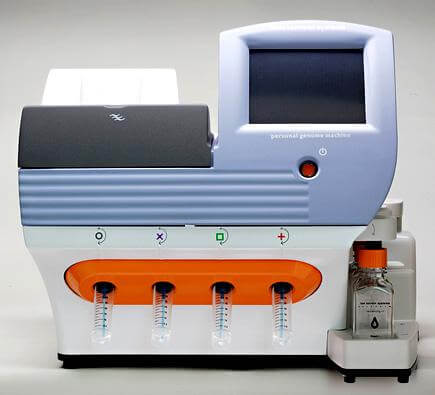
Ion Torrent Introduces the Personal Genome Machine, a $50,000 small-scale sequencer with a 2 hour turn-around time for 100,000 base pair reads. OK, this actually happened in December, 2010, but to be fair no one noticed until January. The PGM can’t duplicate the quantities of data produced by other next-gen sequencers, but its low cost, desk-top size and speed make it emblematic of the increasing availability of genome sequencing.

2. NON-INVASIVE PRENATAL SCREENING

Non-Invasive Prenatal Screening becomes a reality: Sequenom introduces MaterniT21, a Down syndrome test done on free-floating fetal DNA from a maternal blood sample drawn as early as 10 weeks gestation. Rebounding from an embarrassing episode in 2009 that began with some executives deciding to make the research data look a little more exciting for investors and ended with the former senior VP for research and development pleading guilty to conspiracy to commit securities fraud, Sequenom became the first of several competitors to offer a test based on this ground-breaking technology, which is projected to eventually offer a means of analyzing the entire fetal genome in the early stages of pregnancy, without the risks or costs (or the 2nd trimester terminations) associated with amniocentesis or CVS. In a related development: tests based on similar technology are already widely available to predict gender. The Consumer Genetics Pink or Blue Pregnancy Test is sold at your neighborhood drug store and on Amazon (but NOT in India or China!); a study published in JAMA this summer estimates that it is accurate over 95% of the time.

3. SYNTHETIC LIFE

On May 20th, 2011, Craig Venter of the J. Craig Venter Institute announced the creation of the world’s first synthetic life form. Manufactured by adding a man-made genome (sequenced by machine) to a pre-existing bacterial cell emptied of its own DNA, the resulting one-celled organism was a wholly novel life form capable of replication.  Critics accused Dr. Venter of playing God, charges Venter vehemently denied.  “Who says I’m playing?” Venter explained.Yes — I’m kidding But he did say, in describing this milestone, “we took two years off to sequence the human genome and then got back to the task at hand.”  Here are his remarks in full, introducing the first “synthetic cell”:

4. MYRIAD QUESTIONS ON PATENT LAW

In 2010, Judge Robert Sweet shocked the world of patent law when he ruled that isolating and purifying genes did not transform them from something naturally occurring into a product of man’s ingenuity – meaning that under law, the DNA sequence of a gene was not something that could be patented.  Genes, he said, are “the physical embodiment of information,” and cannot be treated like other chemicals, where any change in the molecular structure is transformation enough to justify a patent.  In July, the Federal Court of Appeals overturned Judge Sweet’s decision in ACLU v. Myriad, ruling that genes in isolation were “markedly different” from genes in their natural form.  This decision affirmed the pre-existing status quo permitting gene patents, and set the table for a possible Supreme Court showdown in 2012 to determine the fate of DNA patenting.  The High Court has already heard related arguments in Mayo v. Prometheus, a case that hinges on whether or not observations of natural phenomena – in this instance, how the body responds to thiopurine drugs – can be patented.  Both cases will affect the development of personalized medicine in ways that are hard to predict – some experts claim that nascent technology like whole genome sequencing will never make it into clinical use if the cost reflects license fees from thousands of individual patent holders.  Others suggest that the technology will not be developed in the first place, if industry does not believe its investment will be protected.  And just to add a bit more carbon to the uncertainty of the patent law climate, on Halloween the European Court of Justice ruled that NO procedure involving human embryonic stem cells can be patented (Boo!  Scared you, European biotech!).  Their decision rests on the idea that the use of human fetal tissue for commercial purposes is contrary to public morality, and it sets up a striking contrast with the U.S., where these patents remain enforceable.

5. RARE VARIANTS

Genome-wide association studies were billed as a sort of shortcut to making genomic information relevant to clinical practice, but after years of GWAS results that provoked the response ‘that’s interesting , but what does it mean?’, sequencing for rare variants has done what studies of common variants could not do: moved genomics into medical practiceIn January 2011, Nicholas Volker was declared by Forbes Magazine to be “the first child saved by DNA sequencing,”after doctors at the Medical College of Wisconsin did full sequencing on a chronically ill 6-year-old with unexplained intestinal disease.  In October, Scripps Health launched a program using whole genome sequencing to determine the cause of idiopathic diseases.  Rare variants have also helped us keep chipping away at the notorious “missing heredity”: this fall, DeCode Genetics announced the discovery of a sequence variation that increases the risk of ovarian cancer by more than 8-fold; this highly predictive risk factor was uncovered by GWAS studies adapted to include rare variants (And you thought they were out of business, didn’t you?).


6. EPIGENETICS

In October, the International Journal of Epidemiology published an article that didn’t get a lot of press, perhaps because of the particularly opaque and not particularly grammatical title:Associations with early-life socio-economic position in adult DNA methylation”.  The article demonstrates a correlation between early life experience and adult DNA methylation patterns, suggesting that childhood experience may create lifelong changes in gene expression and affect health outcomes into adulthood.  This finding supports earlier observations in rodents and other mammals, and it may indicate a mechanism by which epigenetic changes can be transmitted across multiple generations – evidence  in support of the widely held suspicion that epigenetics is yet anther suspect to be reckoned with in the mystery of the missing heredity.

7. GENE THERAPY

For decades, gene therapy has held itself out to be our knight in shining armor, while acting more like that bad boyfriend from high school, full of sweet talk and promises he couldn’t keep.  It’s been NOTHING but heartbreak and 12-step programs for years now (Step 1. Admit that you are powerless to control gene expression.  Step 2. Find a vector you can believe in…).  Finally, SOME ENCOURAGING NEWS!  In separate studies published this year, researchers reported encouraging early results for the use of gene therapy to treat both SCID and Hemophilia BHas the bad boy of the genetics world really matured into a responsible citizen, or is gene therapy going to go Charlie Sheen on us yet again?  Give him another chance, venture capitalists.  Give him a chance, okay?  Just don’t give him a key to your apartment.  Not yet, anyway.

8. CONSUMER-DRIVEN GENETIC TESTING

American Association of Blood Banks 2011 report indicated that paternity testing has increased 400% over the last two decades.  This evidence supports the notion that the public is increasingly comfortable with the use of genetic testing outside of conventional medical applications.  The Identigene Paternity Test Collection kit is available at Walgreens for $27.58 (with an additional $129 lab fee; more fees are required for results that are admissible in court).

9. REGULATION OF GENETIC TESTING

In June, letters from the FDA sent to personal genomics firms 23andMe, Navigenics, DeCode Genetics, Pathway Genomics and Knome as well as the chip maker Illumina, articulated an evolving consensus within the agency that genomic tests constitute a medical device and should be subject to regulation under the FDA mandate.  The letters, which followed the announcement of a Pathway Genomic’s plan to market direct-to-consumer testing through the drug store chain Walgreen’s, represented an opening salvo in the orchestration of a regulatory structure for genetic testing.

10. NOVEL TREATMENTS ON THE HORIZON

In September, 2011, researchers at Vanderbilt University announced a major step forward in the development of a potential new therapy for Fragile X that targets not the symptoms but one of the underlying causes – a paradigm shift in medical care for the type of genetic syndrome long considered untreatable.  Building on earlier studies that demonstrated a relationship between excessive protein synthesis and the Fragile X phenotype, the Vanderbilt approach uses novel drug-like molecules that down-regulate the mGlu5R receptor to reduce receptor-mediated protein synthesis.Researchers are hopeful that this therapy will improve neurological manifestations of Fragile X, which often include autistic-like behaviors – raising the tantalizing prospect that success might constitute proof in principle of our ability to treat autism and other cognitive and neuro-developmental disorders.  Seaside Therapeutics, the industry money behind the Vanderbilt studies, plans to begin its clinical trials in 2012.  Meanwhile, the continuing Seaside-Vandy partnership is at work on development of a second drug, designed to reduce social withdrawal.  In a report released to the press by Seaside in May, V.P. of research Aileen Healy stated, “We are now beginning to believe that intellectual disability is not, as previously understood, an immutable condition.Translating our understanding of the biological effects of key genetic mutations has revealed a variety of promising mechanistic approaches to treat Fragile X syndrome, which I believe represent an exciting opportunity to realize the mission of developing effective therapeutics.”How 2011 is this story?  Let me count the ways:

  1. Research illuminates the pathophysiologyof the disease, providing new targets for therapy – just like those guys from the HGP said it would!!!
  2. New information suggests that a familiar syndrome is more complicated than we thought – and that damage caused by the genetic defect, as with Down Syndrome, is only partly congenital and accumulates over time.
  3. Cutting edge therapy involves interfering with gene expression.
  4. Academia partners with industry, to find scarce recession-era funds – and to participate in the profits, should any materialize.
  5. Industry partners with academia, to help defray the burdensome investment of time, money and brainpower associated with drug development.
  6. Some things we expect to be easy turn out to be impossible.  Some things we expect to be impossible turn out to be – well, not easy, but possible.  In 2011, trying to predict the winners and the losers is a fool’s game (which is why I am recapping 2011 here, and making NO predictions for 2012).
  7. Treatments for genetic disease that decrease morbidity and improve outcomes but do not cure will require life-long treatment – raising serious new questions about how we will be able to afford what we are able to do.
  8. And the most 2011 point of all: this new therapy is great in theory but it hasn’t helped anyone – not yet.

4 Comments

Filed under Laura Hercher