Tag Archives: science

My Generation Is More Ethical Than Your Generation

Things they do look awful c-c-cold/Why don’t you all f-fade away?/And don’t try to d-dig what we all s-s-say/Just talkin’ ’bout my g-g-generation – “My Generation” by Pete Townshend and The Who

The boast in the title of this piece is not aimed at the generation or two of genetic counselors who entered the field after I graduated from the UC Irvine genetic counseling program in 1983. Instead, it verbalizes the ethical conceit on the part of genetic counselors and medical geneticists in any given era that previous generations of geneticists always seem to have glaring ethical lapses. Yes sirree Bob, we learned our historical lessons from studying what they did wrong. We are good people with high ethical standards and would never say or do anything as bad as they did. Our moral compass is pointed to True Ethical North.

And so we create self-serving historical narratives that tell a tale of past sins and generational redemption.* Like Dante’s Divine Comedy, the genetic counseling narrative is a journey from Inferno (classical eugenics) to Purgatorio (post WW-II and the professionalization of medical genetics) to Paradiso (nowadays). Each step of the journey we strive to become better people and better genetic counselors, though the comedy may not be so divine. Think of me as your Virgil, and follow me on a journey through the history of genetic counseling and medical genetics.

The Barque of Dante (French: La Barque de Dante), also Dante and Virgil in Hell (Dante et Virgile aux enfers), is the first major painting by the French artist Eugène Delacroix, and is a work signalling the shift in the character of narrative painting, from Neo-Classicism towards Romanticism.[1] The painting loosely depicts events narrated in canto eight of Dante's Inferno; a leaden, smoky mist and the blazing City of Dis form the backdrop against which the poet Dante fearfully endures his crossing of the River Styx. As his barque ploughs through waters heaving with tormented souls, Dante is steadied by Virgil, the learned poet of Classical antiquity.

Pictorially, the arrangement of a group of central, upright figures, and the rational arrangement of subsidiary figures in studied poses, all in horizontal planes, complies with the tenets of the cool and reflective Neo-Classicism that had dominated French painting for nearly four decades. The Barque of Dante was completed for the opening of the Salon of 1822, and currently hangs in the Musée du Louvre, Paris
Eugène Delacroix’s 1822 painting of Virgil guiding a fearful Dante across the River Styx, which is crowded with tortured souls at the entrance to Hell. As far as I am aware, there is no circle in Hell for geneticists. Yet. Source: https://en.wikipedia.org/wiki/The_Barque_of_Dante

Inferno

The scientific study of human genetics was conceived with the Original Sin of Eugenics on its soul (keeping up Dante’s religious imagery). For several decades into the 20th century, genetics and eugenics were more or less inseparable. Almost all major geneticists espoused eugenic ideology. And no, eugenics was not a pseudoscience; that is another conceit of the present passing judgment on the knowledge base of the past. In fact, eugenicists themselves dismissed its predictive forebear, phrenology, as a pseudoscience while heralding genetics as a true science of human traits and behavior. But to our 21st century perception, there is a slim difference between reading skulls and reading pedigrees.
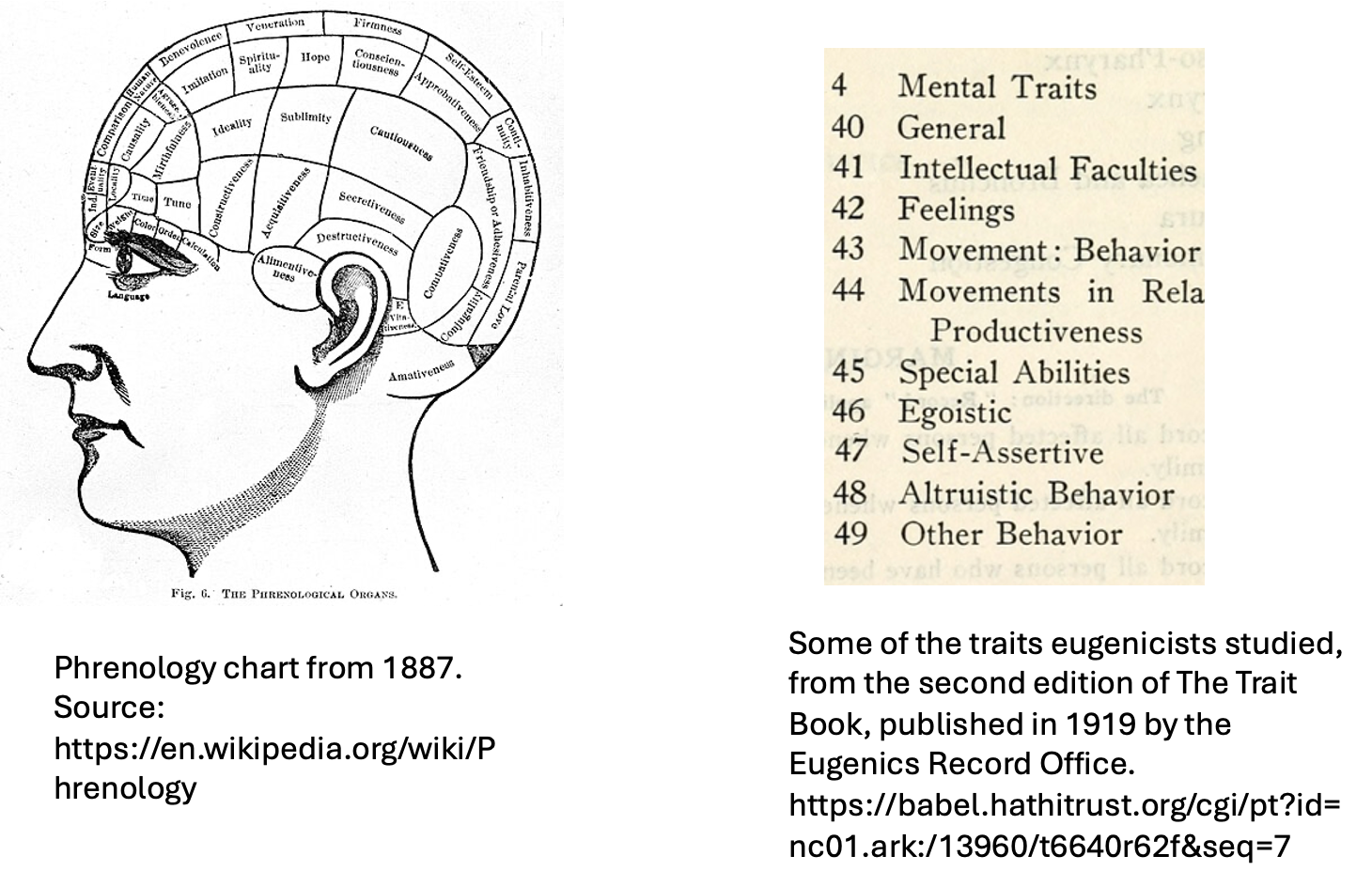
An image comparing the behavioral and personality traits studied by phrenologists with similar traits studied by eugenicists. On the left is a drawing of a human skull with various traits mapped across it, such as Cautiousness, Destructiveness, and Spirituality. On the right is a list of similar traits  ( Feelings, Self-Assertive, Altruistic Behavior) listed in the American Eugenics Office 1919 publication, The Trait Book
A comparison of behavioral and personality traits studied by phrenologists and eugenicists.

Eugenicallly-minded geneticists were not stupid; many were brilliant scientists who had a very sophisticated understanding of genetics, the environment, and statistics, at least within the context of the times. Highly respected geneticists such as Karl Pearson, Herman Muller, Lancelot Hogben, Ronald A. Fisher, and Raymond Pearl criticized some of the less sophisticated eugenic applications of genetic knowledge but nonetheless remained staunch eugenicists. Heck, even Franz Boas, the anthropologist who is often cited as the ultimate anti-eugenicist, supported sterilization for reasons of “hereditary unfitness.” Boas, one of the most forceful critics of theories of racial superiority, also internalized some of the standard beliefs of the time about so-called primitive cultures. In 1897, he had the polar explorer Robert Peary essentially kidnap six Greenland Inuqhuit men, women, and children and bring them to the American Museum of Natural History in New York City so they could be studied as biological and anthropological specimens.**

I am not trying to justify eugenic ideology or programs or serve as an apologist. There were many different versions of eugenics that arose around the globe and over time (and continue to do so). Each version was bad, but often bad in its own way. Eugenics was pervasive and cut across all economic and ethnic segments of society. It was taught in high schools and colleges, it appeared in advertisements for consumer products, and newspaper stories. Support of eugenics wasn’t universal but it sure was widespread.
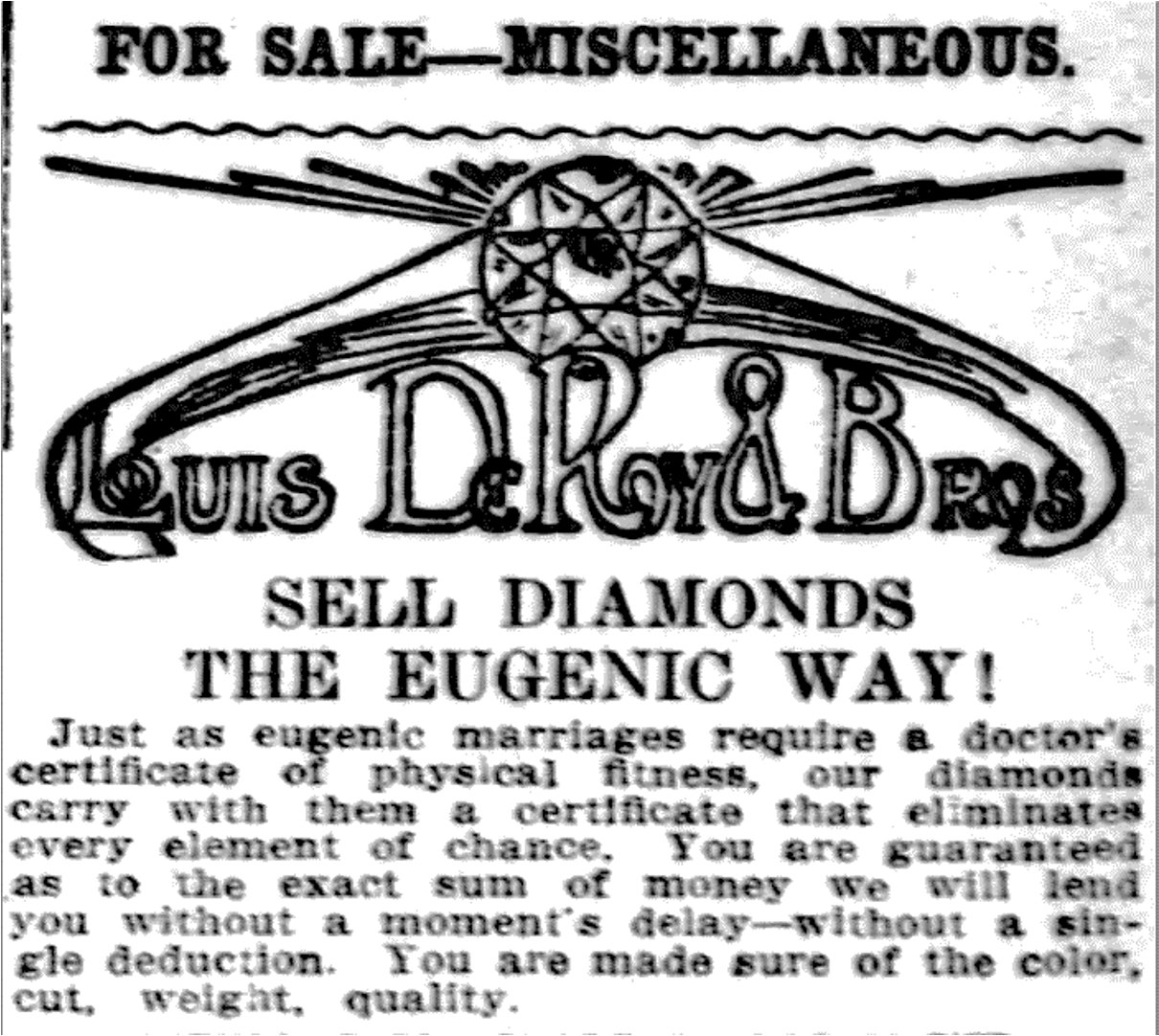
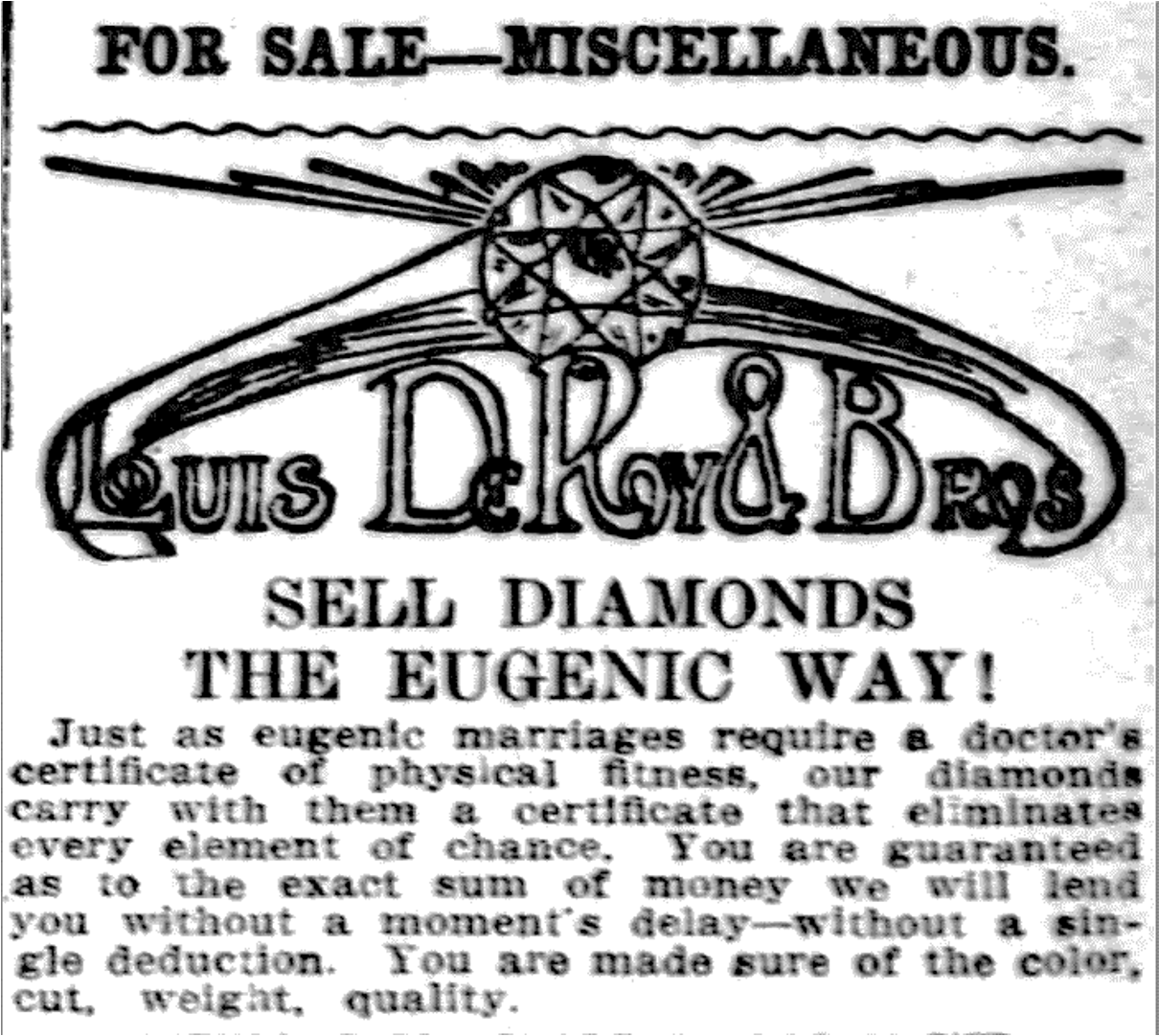
An advertisement from a periodical in the early 20th century, touting their jewelry as being certified, just as a eugenic marriage (allegedly) requires a doctor's certificate.
Advertisment for a Pittsburgh jewelry store from the early 20th century, courtesy of Paul Lombardo.

The biases and beliefs of earlhy 20th century geneticists reflected some of the major social issues of their day – large scale immigration from non-Western European countries of people thought to be morally, intellectually, and physically inferior; the growth and increasing visibility of urban poverty with increasing urbanization along side an extremely wealthy upper class; the supposedly low IQ and poor health of the millions of soldiers who enlisted or were drafted to fight in the First World War (and English soldiers who fought in the Boer War). Geneticists from this period were products of these times who also simultaneously helped shape their era. It is also unsurprising that the vast majority of the early eugenicists were men at a time when men still felt that they had the right to make reproductive, economic, and other life decisions for women. It is easy to call out their moral shortcomings – bigotry, racism, smug moral superiority, ableism, classism, sexism, etc. Some eugenicists were truly evil and many inflicted all kinds of awful harm but for the most part they were a bunch of flawed human beings, just like we are. They were reacting to what they perceived to be threats to their way of life and to (White Western European-centric) civilization, and many thought eugenics was a way of helping eugenically inferior people.
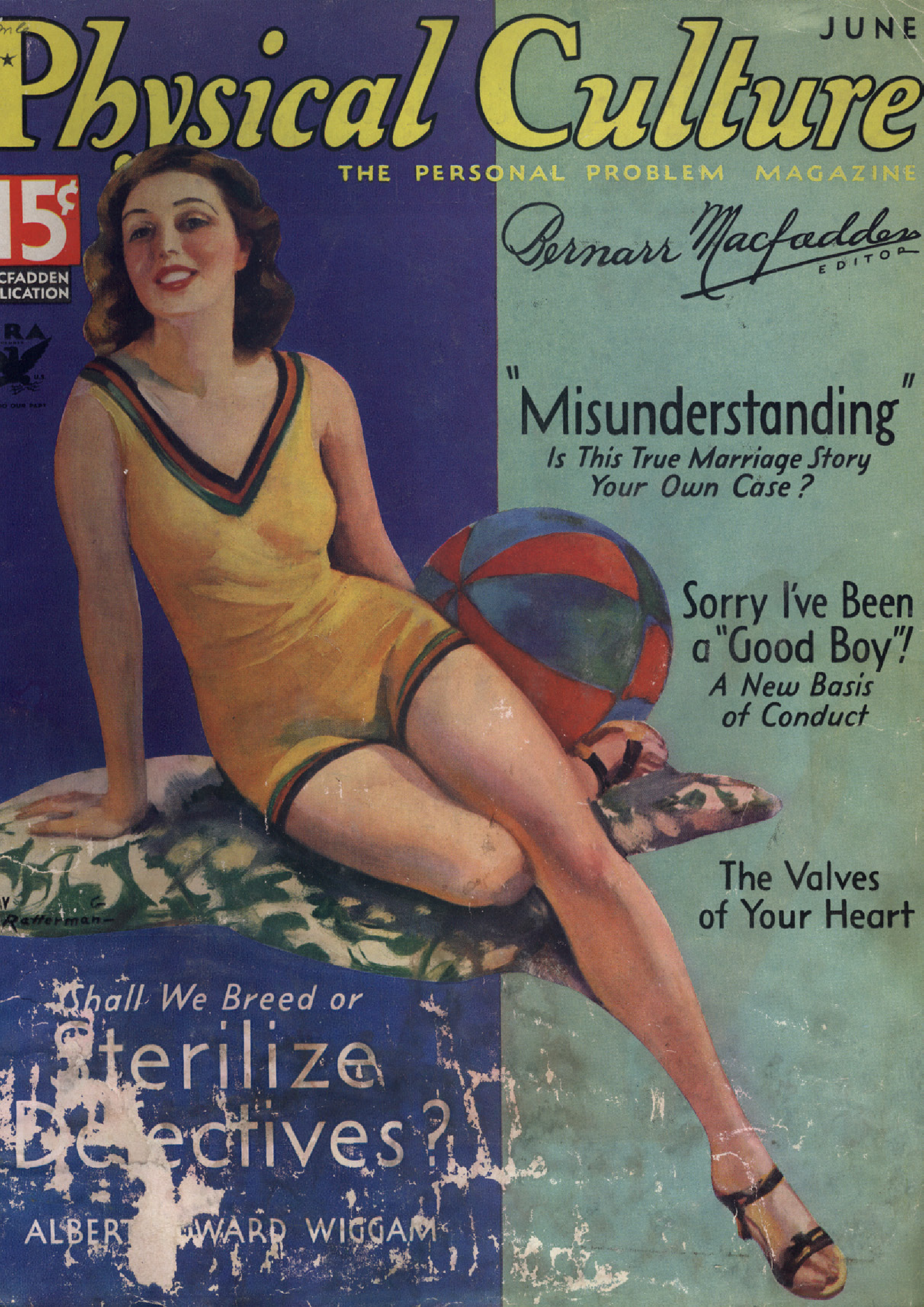
The cover of the June, 1934 edition of Physical Culture magazine, featuring a drawing of a somewhat suggestively posed young woman in a bathing suit, with an article by the eugenicist Albert Wiggam titled "Shall We Breed or Sterilize Defectives?"
Cover of the June, 1934 edition of the popular magazine Physical Culture, with an article by the eugenicist Albert Wiggam titled “Shall We Breed or Sterilize Defectives?” To my eyes, the magazine cover evokes the Sidney Sweeney ads that teased eugenics and eros to sell jeans. Source: Ball State University Digital Media Repository, https://dmr.bsu.edu/digital/collection/PhyCul/id/22511

Purgatorio

The next phase in the historical development of genetic counseling was the rise of medical genetics as a clinical and research discipline in the decades following the end of the Second World War, critically examined in Nathaniel Comfort’s classic book The Science of Human Perfection. The mytho-story often told – which, zombie-like, refuses die and that Comfort and other historians have long repudiated – is that the founding figures of medical genetics and genetic counseling specifically rejected eugenic ideology, in part driven by the horrific practices of Nazi Germany. Medical geneticists took great pains to distance themselves from the excesses of their eugenicist forebears and criticized eugenics for its ethical shortcomings and simplistic understanding of genetics. Indeed, in 1947 Sheldon Reed famously defined genetic counseling as “a kind of genetic social work without eugenic connotations.” But, at the same time, many geneticists maintained membership in the American Eugenics Society and espoused beliefs and genetic counseling principles that to 21st century sensibilities sounds an awful lot like eugenics disguised as “educated parental choice” (Reed joined the society in 1956 and remained a member through nearly 2 decades and a few name changes of the society).
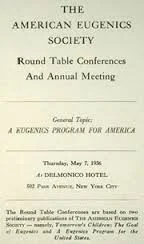
A plain text cover page announcing the 1956 annual conference of the American Eugenics Society at the Delmonico Hotel in New York City.
Announcement for the 1956 annual meeting of the American Eugenics Society at the Delmonico Hotel in New York City. Source: https://www.angelafranks.com/margaret-sanger-and-planned-parenthood/2016/11/14/american-eugenics-society-and-sanger

Some of the major social issues of this period were the worry about over-population of the earth (largely in poorer, non-White countries) in the context of supposedly limited resources, the health and genetic effects of ionizing radiation from nuclear bomb testing and detonation sparked by the detonation of atomic bombs over Nagasaki and Hiroshima and the ensuing nuclear arms race between the United States and Russia, the alleged relaxation of evolutionary selection due to advances in medical care and social changes that allowed survival of people who were genetically predisposed to medical conditions who might ordinarily have had no or few offspring, and the birth of babies with congenital conditions due to fetal exposure to rubella and thalidomide. Geneticists expressed their concerns for the quality of the human gene pool and the health of babies in the context of these issues and recommended various measures to ensure the genetic health of the population, such as greater access to contraception, reducing population growth, limiting exposure to ionizing radiation, and genetic testing and counseling. All while trying to distance themselves from eugenics.

Trouble in Paradiso

In the next phase of the journey, during the 1970s, the profession of genetic counseling was established in the United States, with the founding of the first masters level genetic counseling programs at Rutgers University, the University of California Irvine, the University of California Berkeley, and Sarah Lawrence College, among others. From its inception – and up to today – the profession was overwhelmingly female, in stark contrast to previous generations of medical geneticists who, nearly to a man, were, well, men. Most of the first professional genetic counselors – and many of their patients – were middle and upper middle class, highly educated, politically liberal women who were aligned with the key issues of Second Wave Feminism, particularly support of abortion, reproductive rights, and rejection of patriarchal authority in medicine. For several decades, publications by genetic counselors, and their professional Code of Ethics, focused on a feminist ethic particularly in reproductive matters and explicitly rejected eugenic ideology (although they were not exempt from eugenic criticism, especially from disability and feminist scholars). The demographic profile of genetic counselors remained largely unchanged for several decades.

The profession sometimes self-critically recognized its homogeneity but did not make concerted efforts to change the historical demographic profile. It was only over the last 5-10 years or so that more people have entered the profession who are non-White, of non-European ancestry, openly queer, live with a disability, are neurodiverse, and are male, even if the profession is still skewed toward its historical demographic. The newer less exclusive demographic has led to guiding ethical principals that focus on diversity, equity, inclusion, and justice within the profession and for the patients that genetic counselors serve. These issues are not unique to genetic counseling and are bitterly playing out in many social, political, and professional arenas.

Despite the increasing professonal diversity, several studies, personal recollections, and commentaries by genetic counselors from different backgrounds attest to the friction felt by both the “Old Guard” and the more diverse younger genetic counselors as these policies are implemented (or not) into training and clinical practice. Implicit biases abound in gatekeepers, supervisors, leading figures, research focus, and conferences. And, yeah, that includes me; far be it from me to cast the first stone. My generation of genetic counselors is very understandably criticized for the class, ethnic, and other biases of its practice, training, and ethos. The criticism hurts but probably because its core of truth makes us uncomfortable.
But at some point in the future, a fresh new generation of counselors will level a critique at the current practice, profession, and ethos of genetic counselors. and its focus on diversity, equity, inclusion, and justice. It is impossible to know what they will continue to embrace or decide to reject, or they might wonder how we could support certain viewpoints and practices, or shame us for some things, or criticize the language that we use. They will likely have a whole new set of issues that they feel will need to be freed from past baggage. Or maybe they will think the current generation is the apotheosis of moral practice (though I doubt it). As the history of medical genetics and genetic counseling illustrates, the ethos, morals, and clinical practice are always a microcosm of the larger socio-cultural environment. We are all situated within our eras and our ethnic and socio-economic context.

Though if we can only learn one constant about the history of genetics. it is that eugenics never goes away and it is always bad, whateve form it takes. We have to call it out when we see it, wherever it is. Maybe even in our own practice.

So let us practice ethical humility and recognize that even (especially?) highly ethical people have ethical shortcomings, difficult to admit to and often not obvious to us in the present but glaringly obvious with historical hindsight. We are all trying to do the right thing, even if we can’t all agree on what the right thing is. And the right thing changes over time, and we sometimes can’t appreciate when we are not doing the right thing. We are always on a journey, searching for ethical clarity.

E quindi uscimmo a riveder le stelle.***
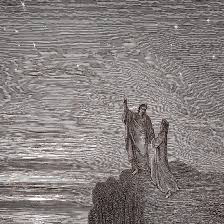
19th century engraving by Gustave Doré depicting Virgil and Dante as they emerge from Hell. They are standing at the edge of a cliff, with a night sky of stars and a misty light above and behind them. Virgil is pointing to the sky.
Gustave Doré’s 19th century engraving of Virgil and Dante emerging from The Inferno and seeing the stars. Source: https://www.newyorkencounter.org/2020-we-climbed-up-he-first-and-i-behind-him

_______________________________________________________

*- The historical narrative is broadly similar in the United States, Canada, England and Australia. The history of genetic counseling in the rest of the globe is less well-studied but may not necessarily align with the narrative described here. Nonetheless, I suspect that the central concept of the current generation of genetic counselors passing judgment on the past will be true globally, although the details will differ.

**- Four of the captive Inuqhuit died in New York from acquired illnesses within a few months. The youngest, Minik, a 7 year old boy, was eventually raised as an adopted child of the museum’s chief building superintendent and somehow wound up working as a lumberjack in a small town in New Hampshire, where he died in his late 20s during the influenza epidemic.
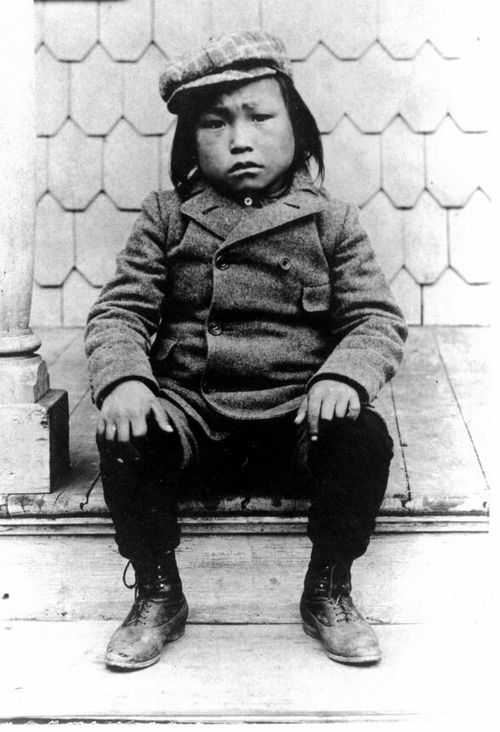
A black and white photo of a 7 year old Inuqhuaq named Mink from Greenland , sitting on a wooden porch in New York City. His hands are on his knees and he is dressed in American style clothes including a hat with flaps, a double-breasted overcoat and black pants. He was one of 6 Inuqhauq captured by the explorer Robert Peary and given to the American Museum of Natual History for anthropological and scientific study.
Minik, about age 7, shortly after he arrived in New York City. Source: https://en.wikipedia.org/wiki/Minik_Wallace

*** – The closing line of Dante’s Inferno, often translated as some variation of “And then we emerged to see the stars again.”
Leave a comment

Filed under Robert Resta

My DNA Contains Multitudes. So Does Yours.

There are many reasons people undergo DNA analysis. Medical decision making and risk assessment. Prenatal screening and diagnosis. Ancestry testing. Wellness and lifestyle advice so someone can reap profits off of largely useless data. Parentage testing. Police investigations. The analysis might involve different tests, such as sequencing your entire genome (give or take a few million base pairs), targeted portions of it, single gene sequencing, single nucleotide polymorphisms, or karyotyping, to name a few. The results are usually treated as a static bit of information that is an accurate representation of your genetic make-up throughout your lifetime. The implicit message often is that you are the external manifestation of this single DNA test, like a DNA sequence was a map with an arrow pointing at it with the message “You are here.”

But really, no test can come close to capturing all of the DNA in your body. Any one test or set of tests , while they may be highly accurate in the right hands, only capture a DNA sequence in a particular tissue(s) at a particular moment in the lifespan and is useful only for a specific reason such as cancer treatment, assessing disease risk, or reproductive decision making. It’s a snapshot taken with a single narrow lens for a single purpose, not an ongoing video using a multidimensional wide-angle lens. The snapshot could look quite different depending on which tissue is sampled or if the snapshot is taken at a different moment in time.

Let’s start at The Beginning, or actually, just before The Beginning. As the result of meiotic scrambling, maternal and paternal chromosomes will be distributed among the gametes in a bewildering mix of maternal and paternal contributions. Like about 8 million possible different combinations of maternal and paternal chromosomes. Estimates vary because who analyzes each oocyte in the fetal ovaries, but a 20-week female fetus probably has somewhere between two to eight million oocytes. In other words, it is possible that each of those oocytes has a unique combination of maternal and paternal chromosomes. The number of aneuploid oocytes in utero is unknown, but during reproductive years around 10% of oocytes are aneuploid or have an unbalanced structural aberration, with the percentage increasing with maternal age. Trinucleotide expansion repeats responsible for Fragile X syndrome and Huntington disease can arise in oocytes during meiotic prometaphase 1.

In a young male’s typical ejaculate, with tens to hundreds of millions of sperm, there is a higher but still low probability that maybe a few of those sperm will have identical maternal and paternal chromosomal contributions. But about 10-15% of sperm cells have chromosomal abnormalities, with perhaps 90% of those being structural rather than numerical. On top of this, de novo pathogenic gene variants can arise in any gamete, with the probability increasing with a paternal age. And no one has any idea of the frequency of de novo variants in non-coding regions in spermatozoa or oocytes.


Perhaps the only time in human development that we have a single genome is immediately at conception, although that may apply only to nuclear DNA since the mitochondria of the fertilized egg could be heteroplasmic. But as the fertilized embryo undergoes mitosis, different genomes arise almost immediately. Chromosomal mosaicism is detected in a significant number of embryos; anywhere between 2 and 40%, depending on a number of factors. About 2% of CVS specimens, which are derived from the fetal aspect of the placenta, are chromosomal mosaics. Mosaic single gene variants can also arise in neuronal progenitor cells, primordial germ cells, and other tissues. Fetal cells and cell free DNA work their way into in maternal circulation during pregnancy and the cells can persist in maternal circulation for years, a form of microchimerism.

Beyond conception and the embryonic period, somatic gene mutations regulary arise in fetuses, children, and adults in many different tissues. Some mutations are repaired, some persist and are clinically insignificant, and others make significant contributions to human disease. Cancer, for all intents and purposes, arises from somatic mutations. Cancer cells themselves then often go on to develop a bewildering array of mutations as the cancer grows and metastasizes. Mutation profiles can vary within the same affected tissue or between affected tissues. Further DNA damage can be induced by chemotherapeutic agents. Then there’s chromothripsis, where the genetic wheels come off altogether.

Beyond cancer, other medical conditions can arise from genomic variability. Trinucleotide repeats can expand and contract over time and can vary between and within tissues and may significantly contribute to adult and childhood onset neurological disease. Mosaic or segmental neurofibromatosis is caused by post-zygotic NF1 mutations.

Clonal hematopoiesis of indeterminate potential (CHIP) is the result of somatic mutations in hematopoietic tissue and occurs in about 10% of people age 70 or older. CHIP is associated with an increased risk of many diseases, such as hematologic cancers, coronary artery disease, heart failure, stroke, and pulmonary disease.

X chromosome inactivation and mosaicism are another source of intra-person genetic variability. One X chromosome will be largely inactivated in anyone who was born with more than one X chromosome. This could have significant clinical effects, such as manifesting symptoms of Duchenne muscular dystrophy or hemophilia, often depending upon which X chromosome is inactivated and in which tissue. Furthermore, people with more than one X chromosome tend to lose one of their X chromosomes in some of their cells, especially as they age, such that they are X chromosome mosaics, which might lead to cognitive impairment.

Transposable elements (transposons and retrotransposons) are DNA remnants of microbial organisms from our evolutionary past that have been integrated throughout the human genome, the evolutionary equivalent of internet cookies. Perhaps as much as 50% of the human genome is composed of transposable elements. These bits of microbial DNA regularly rearrange themselves within our genomes (thank you Barbara McClintock) during evolution and also within our bodies during our lives, rejiggering DNA sequences and contributing to the development of human diseases such as cancer, hemoglobinopathies, and neurological disorders.

The DNA of immune cells constantly alter themselves through processes such as somatic recombination and somatic hypermutation. This variability allows the immune system to respond in highly specific ways to so many different types of infection and cancers, and to help the healing process.

On top of all of this, we co-inhabit our bodies with all sorts of bacteria, viruses, protozoa, archaea and God knows what else, the composition of which changes regularly. In fact, most of the cells, and therefore most of the DNA in our body, are microbial (it varies at any given moment in time, like after a bowel movement). Since these microbes are symbiotic living parts of our bodies, their DNA is also our DNA.

Mitochondria are likely the remains of a microorganism that was integrated into host cells in our deep eukaryotic past. Mitochondrial DNA can be heteroplasmic, that is, any given mitochondrion can acquire a wide range of mutations that do not occur in other mitochondria. Heteroplasmy can be a significant source of medical conditions, depending on the degree of heteroplasmy and its distribution.

Intra-person genetic variability is one of the many reasons it is foolish and inaccurate to say that our DNA defines us. Each of us has many constantly shifting DNA sequences throughout our bodies and each sequence can play out in our lives in different ways at different times. The interaction of these sequences with each other and with our cellular, bodily, and external environments is so exquisitely and frustratingly complex that it is beyond comprehension by human or, I will wager, artificial intelligence (how could AI analyze the entirety of a person’s DNA sequences if it is impossible to capture all of those sequences at once, on top of which those sequences change over time?). Human beings are infinitely more complex than the near infinite sum of each of our body’s many genomes. We should all sing the body electric.

The love of the body of man or woman balks account, the body itself balks account
– Walt Whitman, “I Sing The Body Electric”

You Are Not Here —>

Matthew Brady’s portrait of Walt Whitman, from the National Portrait Gallery in Washington, DC. https://npg.si.edu/learn/classroom-resource/walt-whitman-civil-war-poet-and-caregiver

———————————————————————————————–

All images, except for the image of Walt Whitman, were AI generated. All of the text was human-generated by me.

6 Comments

Filed under Robert Resta

Using Genes to Sell Eujeanics?

The controversy-du-jour in the mediaverse this past week centers on an advertising campaign for a pair of jeans by an apparel company, starring uber-celebrity Sydney Sweeney, that has raised the eugenics specter. It also capitalizes on the faded pun of jeans/genes, which gave me literary leeway to use the weak pun in the title of this posting. The controversy will likely be so short-lived that by the time this posting is up, the world will have its knickers in a twist over something else. But in these polarized times where everyone thinks they are so damned right about everything that they have to let the world know their opinions, everybody’s getting into the act of expressing outrage or support about the ad campaign. Since I too am so damned right about everything (ahem), I figured I should enter the fray.

The Sydney Sweeney video is not trying to sell eugenics by way of the jeans she is wearing. The videos are trying to sell jeans she is wearing by way of Ms. Sweeney’s derrière and breasts. As the Chorus Line number Dance 10 Looks 3 (otherwise known as the the Tits and Ass song) goes, “Debutante or chorus girl or wife/Tits and ass/yes, tits and ass/Have changed my life.” It’s part of the awful advertising tradition of using sex and bizarre notions of a “perfect” body image to sell over-priced products of questionable value. The video ends with a statement to the effect that these jeans can make everybody look sexy, not just slim young white women who meet the Madison Avenue criteria for sexy. Otherwise, product sales would be pretty low.

Some other advertisements linking genes and jeans.

That being said, the ad campaign has its share of eugenic tropes, but they are not unique to this particular ad campaign. I suspect that using these tropes was not a conscious decision to make a statement about eugenics. Instead, these eugenic tropes have been so woven into the fabric of American culture that they are naturally expressed in our language, media, and advertising.

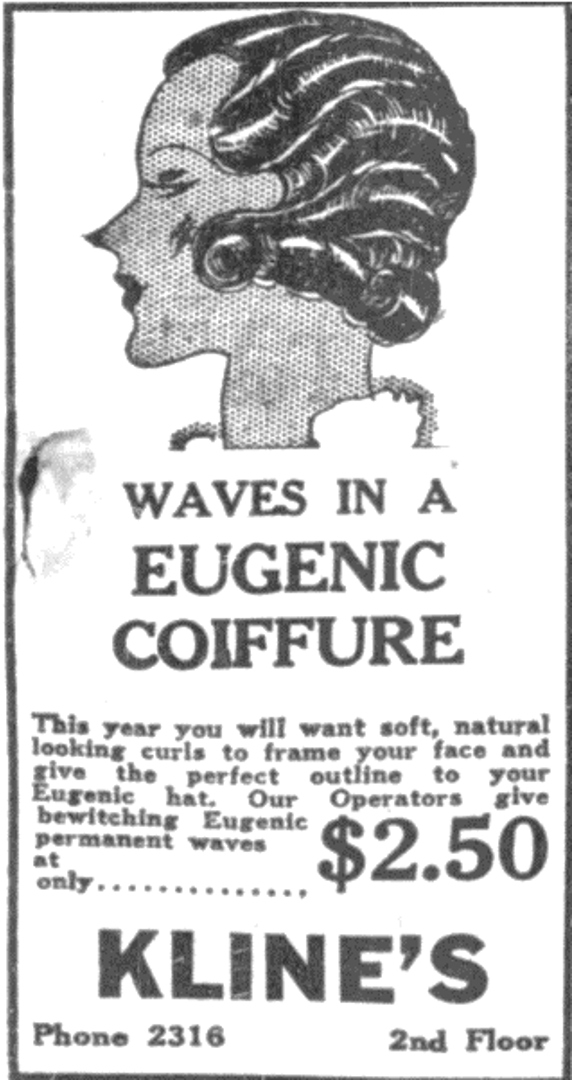
Eugenic tropes in advertising go back over a century. The historian of science/lawyer Paul Lombardo has unearthed older advertisements from between 1910 to 1940, which are a less coy about the eugenics connection than the Sweeney ads. Here’s a few of them (Oh those prices!):

Some eugenic-themed advertisements from the first half of the 20th century, from the work of historian of science Paul Lombardo

Obviously, hairstyles, shoes, and diamonds have nothing to do with genes. Rather, the ads play on the perception that eugenics is associated with superiority. Since the ads don’t explain what eugenics is, it suggests that American consumers were aware enough of eugenic ideology that eugenic notions could be used to sell a product.

The concept of an ideal (i.e., White) female body type was also part of eugenic ideology. The text of an advertisement for a lecture by Albert Wiggam, a notoriously bigoted popularizer of eugenics, about the threat of immigration of “inferior” people, makes this clear: “The American woman is rapidly becoming ugly… her place is being taken by the low-browed, broad-faced, flat- chested women of lower Europe.” The antithesis of Sydney Sweeney. No modern advertising copy would make such a bold-face racist statement (at least, I would hope not, but these days…..). Instead, advertisers use the image of a Sydney Sweeney type because that idealized image of a female body has already been embedded in our psyches. Think of the 1979 Bo Derek movie “10.” Indeed, nearly all advertisements that use sex to sell a product use some variation of this eugenic female image. Incidentally, half of my ancestors migrated from “lower Europe.” The other half of my ancestry migrated from Eastern European, another group of immigrants despised by eugenicists. I didn’t realize how ugly I am until I started reading original sources in eugenics.

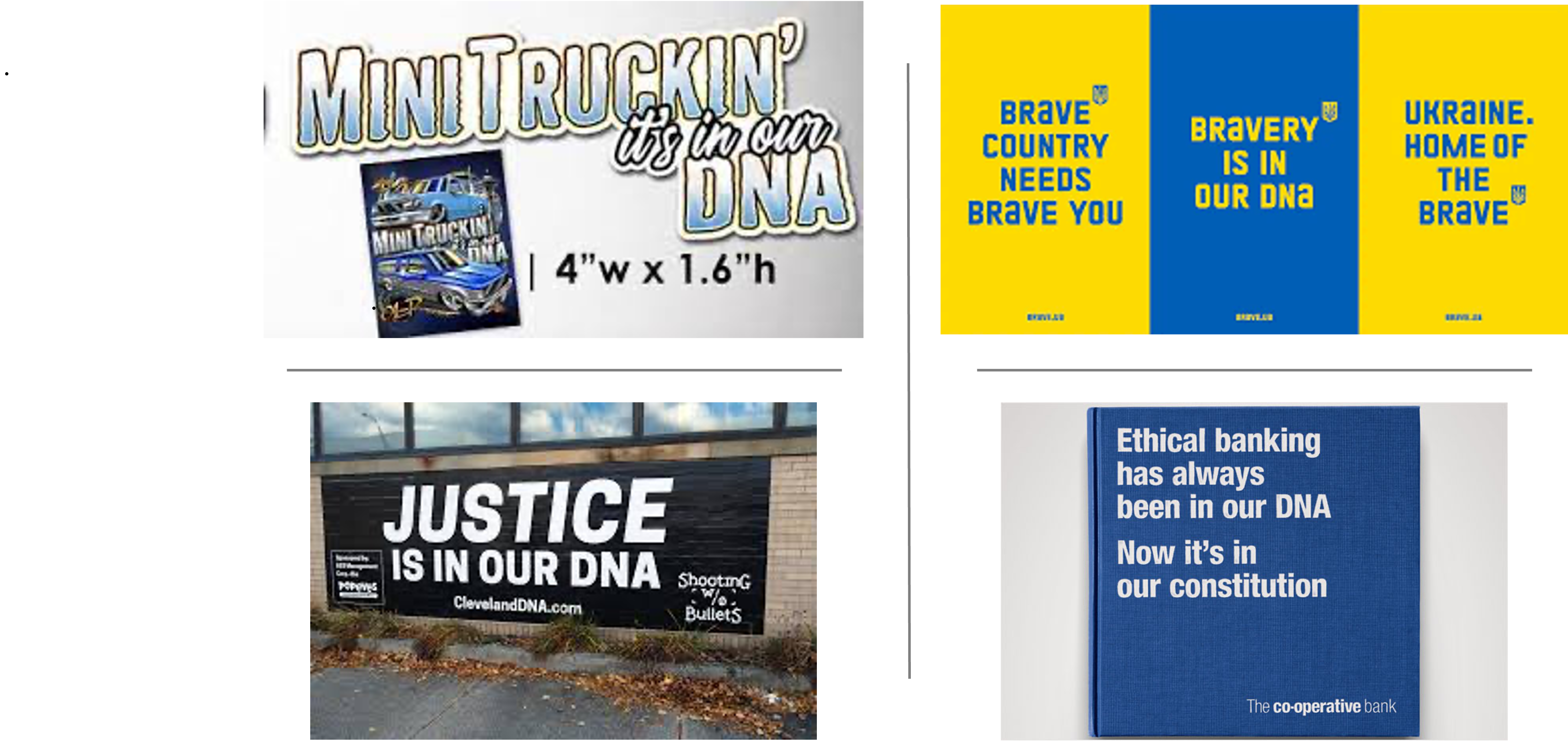
Below are some more recent advertising examples that capitalize on the idea that some DNA is superior to other DNA, and that it molds our ethics and character, though the Mini Truckin’ ad is a bit of a stretch to my mind.These examples do not use sexual suggestion to communicate their message.

What it comes down to is that eugenics was so pervasive in American society a hundred years ago that it became, well, part of our cultural DNA to this day. So of course it is going to appear in advertising. Advertisers are not trying to stir up a eugenics revival. Heck, that’s already happening thanks to mad men, not admen. Or, really, eugenics just never went away.

Even inanimate objects can have superb genetics. Toyota no longer produced the Tercel, so I guess its genes were not so great after all.

I could imagine a different version of the Sweeney ad. It would show images of many women of all skin tones and body shapes wearing these jeans and looking sexy. The sell-line would be “They were all born with great genes. But these jeans make their asses look great!” This shifts the focus from hereditarian ideology to mixed genetic/environmental ideology, with the jeans being the equivalent of the environment. Well, perhaps that’s a bit of a metaphorical stretch. But it also changes the discussion from eugenics to Diversity/Equity/Inclusion (DEI), which is bound to raise even more hackles because it’s actually ethical.

Okay, maybe I don’t have a future in advertising.

But please don’t tell ICE about my DEI advertising suggestion. Masked men dressed in black may forcibly drag me off to a prison in a country run by a cruel dictator thousands of miles away. Especially when they get wind of the fact that I am a grandson of immigrants from undesirable countries.


Thank you to Ambreen Khan for bringing this ad campaign to my attention.

Dena Goldberg, the ever-creative genetic counselor, has produced this video about the Sweeney/eugenics controversy. Coincidentally, Dena displayed her singing chops with a rendition of “Dance 10 Looks 3” at the 2020 GCs Got Talent talent show and fundraiser sponsored by the Genetic Support Foundation. Maybe we can get her to reprise her performance at the upcoming GCs Got Talent show and auction to be held in conjunction with the 2025 NSGC Annual Conference in Seattle. And any other GCs who are dancers, singers, comics, story tellers or otherwise creative talents should sign up to perform or donate their arts and crafts creations. The evening event is always a blast. To be hosted by Yours Truly.

2 Comments

Filed under Robert Resta

Eugenics and American Fertility: Now and Then

The trump administration seems to think America has a birth rate that is too low. Basically, the idea is that in this country you just can’t have enough babies born to White middle and upper middle income married couples. Proposed pronatalist measures for increasing the birth rate, many of which are likely to be championed by the trump administration, stand out for their foolishness, ineptitude, and ignorance of human behavior. As a genetic counselor, they are particularly egregious to me because of their origins of in early 20th century eugenics. Not in a vague and general way. No, you can pretty much draw a straight line between now and then, even if trump et al. might deny such a connection. Which, perhaps, they may not.

Many of polices being considered are straight out of the pages of classic eugenic texts; the only difference is the font. Limiting immigration from “undesirable” countries. Portraying immigrants as criminals, social and economic parasites, and taking away jobs from Americans. A National Medal of Motherhood for mothers with 6 or more children echoes the Nazi’s Ehrenkreuz der Deutschen Mutter (Cross of Honor of the German Mother) for mothers of 4, 6, or 8 children (corresponding to bronze, silver, and gold medals). Far-fetched to link trump policies to Nazis you say? Well, j.d. vance and marco rubio have expressed strong support for the German far right Alternative für Deutschland (AfD) political party. Motherhood medals have also been promoted by Jospeh Stalin and Vladimir Putin. You would be keeping good company there, mr. president.

Cross of Honour of the German Mother
(Ehrenkreuz der Deutschen Mutter) Source: https://en.wikipedia.org/wiki/Cross_of_Honour_of_the_German_Mother

Financial and social incentives to induce families to have more children are another set of supposedly fertility-increasing policies with eugenic origins. Baby bonuses, prioritizing transit funding for areas with higher birth rates, tax breaks for families with more children, increased parental leave, and greater financial support for child care may all seem on the surface to be compassionate and supportive of parents and could be endorsed regardless of political ideology. Some version of these policies were also floated by eugenic proponents in the first half of the 20th century.

But underlying these economic policies is a deep sense of White Fear of being replaced by Undesirables. trump defines a family as married heterosexual parents. In 2022, ~ 70% of births occurred outside of marriage among Blacks, 68% among Native Americans, ~53% among Hispanics, ~52% among Hawaiian/Pacific Islanders, and ~27% among Whites (most commonly among lower income White women). These policies would also de facto exclude single parents and LGBQT+ people. This ticks all the boxes on the list of people deemed genetically inferior by eugenicists. Effectively the policies would primarily benefit middle and upper middle income White parents in heterosexual marriages, with a preference for the wife staying at home to raise the children (Not too many husbands would be expected to stay at home to raise all those children; that’s the wife’s job.). Charles Davenport and Harry Laughlin, respectively the director and superintendent of the Eugenics Record Office, would give their blessings to these policies.

A historic precedent that illustrates the contradictions and biases inherent in these economic incentives are found in the history of minimum wage laws. What, you say? Minimum wage laws? What do they have to do with eugenics? And even if these laws have their faults, aren’t they better than no laws at all? Here I base my discussion primarily on a book and an article by the economist T.C. Leonard.

To be clear, non-eugenic factors were involved in establishing minimum wages. But eugenically-minded economists played a critical role in establishing these policies and putting them into practice. Many of America’s leading economists in early 20th century were also strong advocates of eugenics. Edward Ross, an economist at Stanford University* and the University of Wisconsin-Madison, was a proponent of the Race Suicide Theory and strongly opposed immigration, especially from Asia. Harvard economist Irving Fisher** served as president of the Eugenics Research Association, helped found the Race Betterment Foundation, and was on the advisory board of the Eugenics Record Office. Simon Patten, an economist at the Wharton School*** who served as President of the American Economic Association, supported eugenics and “eradication of the vicious and inefficient.”

For these economists, eugenics was seen as a way to economically support the (White Anglo-Saxon) American worker. They felt that American workers’ jobs and family sizes were threatened by low wages. If workers couldn’t make enough money, they would not be able to support large White families. In the economists’ view, the source of low wages was competition from people who were willing to work for the lowest wages possible (I guess no one thought it conceivable that employers would voluntarily pay workers a decent wage).

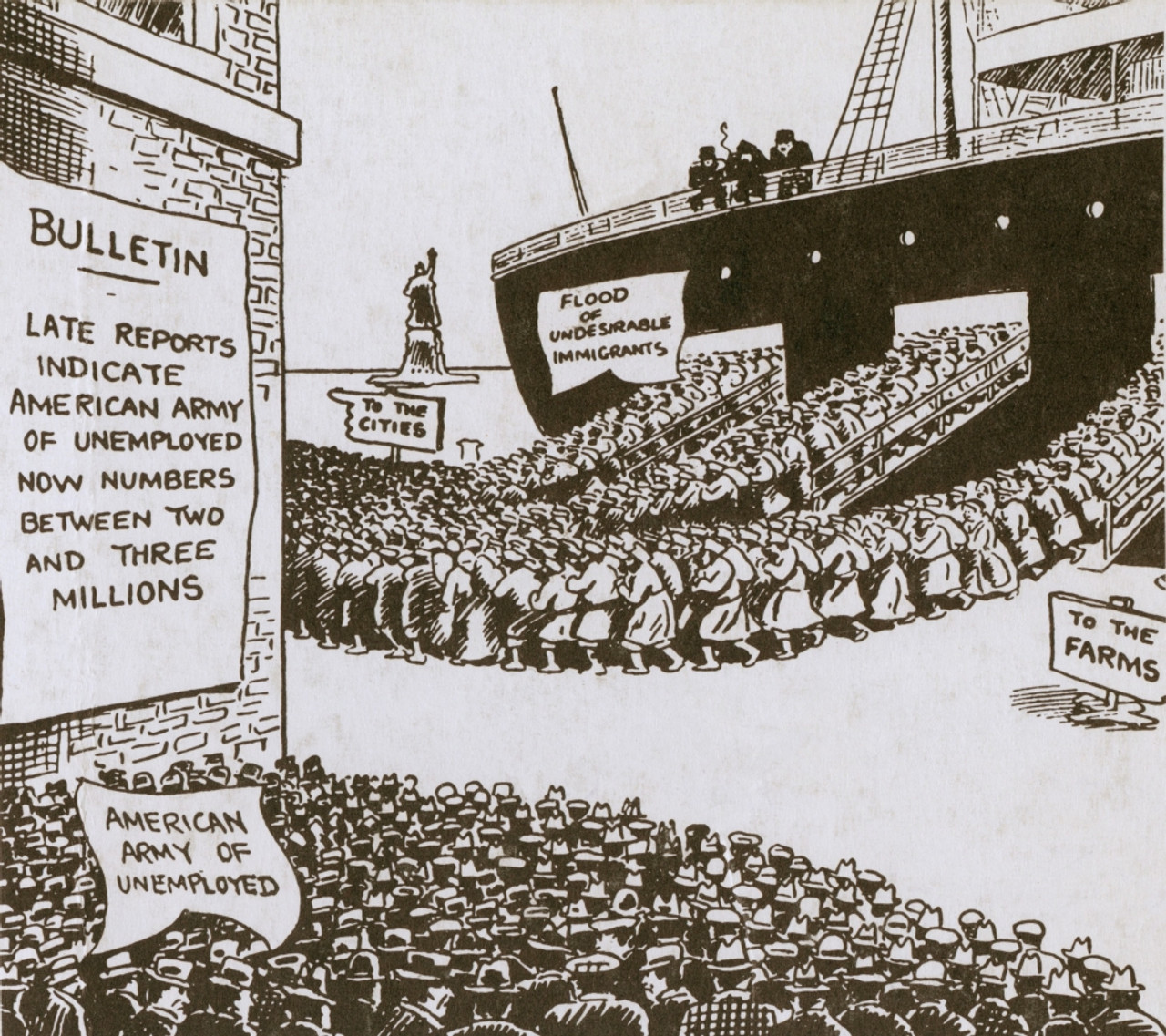
Who were these people threatening the American work force and family? Immigrants were one group, primarily people not of Anglo-Saxon ancestry, in much the same way that trump has argued that “illegal immigrants” steal jobs from Americans. These anti-immigrant advocates despised all non-Anglo-saxon races more or less equally, at a time when race was defined differently and included the Italian Race, the Slavic Race, the Chinese Race, the Irish Race, etc. William Z. Ripley, professor of economics at MIT and Columbia University, was the author of The Races of Europe: A Sociological Study, a book that argued that race explained human behavioral and psychological traits, partly the result of heredity and partly the result of cultural upbringing. It was felt that these undesirable immigrants were “racially predisposed” to accepting low wages and living in sub-standard conditions.

But it was not only immigrants that worried the economists. They also fretted about women (who were supposed to stay at home and raise families rather than compete for jobs), children (these economists tended to support mandatory childhood education and child labor laws because these laws kept kids off the job market and competing with adults), the “shiftless”, the poor, African-Americans, and the “feeble-minded.” If low paying jobs paid at least a living wage supposedly guaranteed by minimum wage laws, then White Anglo-Saxon workers would be willing to accept these jobs and go on to have large families. And if lower paying jobs were filled by White workers, then the “undesirables” would be unemployed and less likely to have larger families or to even migrate to America at all. Voila! America would be saved!! Or so the reasoning went. Spoiler alert: it didn’t really work, despite legislative success. By 1923, 15 states and the District of Columbia had passed minimum wage laws. The federal Fair Labor Standards Act of 1938 established a minimum wage of 25 cents an hour.

How one defines a liberal, a conservative, a progressive, a eugenicist, or a critic of eugenics changes over the course of history. Many of these economists were considered Progressives and liberals but none of them would remind you of Paul Krugman, Bernie Sanders, Alexandria Ocasio-Cortez, or Elizabeth Warren. Minimum wage laws, while still controversial but for different reasons, no longer carry eugenic connotations. A number of prominent geneticists who were strong critics of eugenics, such as Ronald Fisher, Herman Muller, and Lancelot Hogben, also strongly supported policies that today we would label eugenic because they called for policies to encourage reproduction among “the most fit.”

Eugenic ideology never really died, even if no society ever died off because of over-breeding by the genetically unfit. Like a zombie, it keeps coming back to haunt us in different forms, separating the world into the genetically superior and the undeserving genetically inferior. Sometimes eugenics comes under the guise of maleficence with intent to harm and sometimes under the guise of beneficence with intent to help society. But whatever its form, it never does any good.

____________________________________________________

*- Stanford had an intimate history with eugenics from its founding. Besides Ross, Leland Stanford, Jr., Stanford’s founder, and David Starr Jordan, Stanford’s first president, along with several faculty members up through the 1960s, were ardent eugenics advocates.

** – In a weird historical echo of eugenics and phony-baloney medical beliefs that evoke Secretary of Health and Human Services Robert F. Kennedy, Jr., Fisher’s daughter was treated for schizophrenia by the psychiatrist Henry Cotton, who believed that the cause of schizophrenia was bacterially infected tissue in bodily recesses. Cotton “treated” schizophrenia through various surgical procedures including dental extraction, colectomy, hysterectomy, oophorectomy, cholesytecomy, gastrectomy, and orchiectomy. Fisher’s daughter underwent a partial bowel resection and died of complications from the surgery, one of Cotton’s many unfortunate victims. RFK, Jr., may not exactly be a eugenicist, but his attitudes toward autistic people sure smacks of it. Please, no one let RFK, Jr., know about Cotton’s ideas.

***- In another historical irony, trump earned an economics degree from the Wharton School in 1968.

3 Comments

Filed under Robert Resta

The Genetic Basis For Guidance of The Better America Breeding Initiative to Enhance Society (BABIES): A (Very) White Paper

Authors: Contract employees of the newly-created NIH Division of Genomic Efficiency (NIH-DOGE), the cost-effective replacement NIH Institute for the now defunct National Human Genome Research Institute (NHGRI). The mission of NIH-DOGE is to improve America’s genetic health.

NOTE: This is a satire. I added this disclaimer after I wrote the first draft of this post because, well, it sounded like it could be true.

Introduction and Rationale

America is in a genetic crisis. There are far too many undesirables having far too many babies and voting for Democrats. This represents an extreme threat to the social, economic, religious, and political fabric of our democracy country. Therefore, we propose a program – not to be confused with eugenics – which encourages reproduction among those who can provide the best genetic stock for future generations of Americans. This program is called Better America Breeding Initiative to Enhance Society. This title was chosen because it is consistent with Make America Healthy Again and the like, but also because the acronym is BABIES, and how could anyone oppose a program with such a cute name?

Methods

We utilized the latest techniques of whole genome analysis, including long read sequencing, ancestry analysis, and the indispensable and non-controversial polygenic risk scores to analyze a cross-section of the US population to identify those who should be encouraged to produce the greatest number of offspring within their Christian-sanctioned (limited to certain sects) marriage only.

Exclusion Criteria

Consistent with recent anti-DEI presidential Executive Orders, the following groups were excluded from participation: 

  1. Anyone of The Fairer Sex, also known as females
  2. Anyone claiming to be a sex or gender other than male. It goes without saying that anyone with the prefix trans-  in front of their gender are to be excluded. 
  3. Anyone claiming to be victimized, minoritized, oppressed, or descendants of so-called slaves
  4. Immigrants, documented or otherwise
  5. Anyone who has engaged in sexual activity with members of the same sex. Or anyone who is thought to have engaged in such sexual activity (let’s face it, some people look really gay or lesbian but won’t admit it)
  6. Anyone whose ancestry is not from Northern/Western Europe or a country that places unfair tariffs on American goods. Exceptions can be made for anyone who has made really large donations to support acceptable Republican candidate
  7. Anyone who voted for a Democrat
  8. Anyone who does not attend a Christian church
  9. Canadians illegally residing in the US
  10. Low-income people who are too lazy to work and are leeching off government programs like Medicaid, Medicare, and SNAP
  11. Anyone who has received an mRNA vaccine
  12. Anyone else we decide we don’t want

Results

After applying exclusion criteria, we were left with one participant who met our criteria and who we liked, some guy who lives in, surprisingly, the liberal bastion of San Francisco. We can’t explain this except sometimes that’s how the genetic lottery works.

Even though there was only one participant in our study, we do not believe that this imposes significant limits on generalizability. Secretary of Health and Human Services Kennedy, who is well known for his rigorous scientific mind, agrees with us and states that our program goals are consistent with Make America Healthy Again and therefore should be published.

We will not release the name of the subject, though his Social Security Number and other personal information is available upon request if you ask anyone who works for the other DOGE. Or for a fee.

The subject’s genomic analysis revealed that he carries a few pathogenic variants with the potential to produce serious clinical conditions throughout the lifespan. However, we feel that he has other genetic traits that make him an Ideal Reproducer. For example, his polygenic risk scores showed the genetic potential for an IQ score nearly 7 points above the population mean and a kinda’ low risk for schizophrenia. He has a good sperm count. Most critically, his ancestry analysis indicated 99% inheritance from Scandinavia, Germany, and the good parts of the UK. We don’t think his 1% African-American inheritance should be counted against him. We are open-minded and don’t give credence to the racist One Drop Rule.

Discussion

Anyone whose genetic and social profile matches the Ideal Reproducer should be encouraged to have as many children as possible with their wives, including tax breaks, generous baby bonuses so the wife does not have to be employed, a nice house, and the latest model Tesla. For reproductive purposes, their prospective wives should undergo similar rigorous genetic testing to make sure they are genetically well-matched. Such genetic testing will be free for prospective spouses if they are also identified as Ideal Reproducers. The married couples should also be given full and free access to any Assisted Reproductive Technology, such as IVF, to ensure they fulfill their reproductive potential.

Identifying Ideal Reproducers will increase the number of Productive Americans who will make positive economic and social contribution to society. Combining the BABIES Program with the Avoiding Undesirable Reproduction in America (AURA) Initiative. The AURA Initiative geometrically increases the tax rate of Undesirable Reproducers proportional to the number of children they have. In addition, we recommend that Congress should pass the Access To Genetic Counselors Act, which makes genetic counselors approved Medicare providers, as long as all genetic counselors only participate in the BABIES program to identify Ideal Reproducers. BABIES and AURA together will save America taxpayers trillions of dollars in the next 5 years, eliminate government waste, balance the budget, and allow even more tax breaks for the ultra-wealthy.

1 Comment

Filed under Robert Resta

Will The Updated NSGC Pedigree Nomenclature Guidelines Sink The Effort To Obtain Medicare Coverage For Genetic Counselors?

Back on January 20th, American democracy and decency began to swalllow a poison pill of its own electoral making. The fallout has been all kinds of horrible, nationally and internationally, except in Moscow where Putin is having a belly laugh because America is doing his dirty work by destroying itself. The US Constitution is being shredded. People who are transgender, gay, non-White, and all the other non-majority varieties of American demographics feel that their very lives are threatened. The employment of every “DEI hire” (racist code word for Black) is on the chopping block. Many of our patients may lose access to health care through Medicaid funding cuts, fear of being deported, or prohibitions of basic medical care for transgender people. We are looking at the potential destruction of the NIH, one of the world’s great research institutions. Genetic counselors employed by the federal government or on government grants may either lose their jobs or be forced to work in an ethically intolerable environment. The terrifying list goes on and on. The over-arching hateful personal message of these policies is “If you ain’t cis-hetero-White, you ain’t right.”

I have nothing original to add to what has already been better said by others about these matters.* Here I want to focus on the implications of the Updated NSGC Guidelines on Pedigree Nomenclature for the passage of the Access To Genetic Counselor Services Act (I am one of the authors of those pedigree guidelines, and incidentally, a minor revision of some of the Tables will soon be published). A small matter in the great scheme of things, but of particular salience to the future of the genetic counseling profession. The financial survival of clinical genetic counselors in the US hinges on being recognized as Medicare providers. This effort has been ongoing for some 20 frustrating years or so but over the last few years we’ve started getting closer to success, fingers crossed.

So why should the new pedigree nomenclature crash those hopes? After all, they are just a bunch of geometric shapes. But we have given meaning to those shapes, meaning which directly clashes with the Executive Edict, er, I mean Order “DEFENDING WOMEN FROM GENDER IDEOLOGY EXTREMISM AND RESTORING BIOLOGICAL TRUTH TO THE FEDERAL GOVERNMENT,” that, based on ignorance and hate, defines sex as follows: “(d) “Female” means a person belonging, at conception, to the sex that produces the large reproductive cell. “Male” means a person belonging, at conception, to the sex that produces the small reproductive cell.” Well, I guess that those of us who were lucky enough to be born with “reproductive cells” are going to have to line up and start getting those reproductive cells measured and compared. I wonder which cells they are going to measure – Sertoli cells? Leydig cells? Spermatids? Uterine cells? Luminal epithelial cells of the uterus? Ovarian thecal cells? All are necessary for reproduction, and all of different sizes. Of course, at conception, no one has any of those cells so I have no idea what these criteria mean. And sex can be categorized by chromosomes, genes, anatomy, or hormonal profiles, all biologically plausible criteria but not uncommonly incongruent.

The head of the US government has made it clear that any definition of sex that, uhh, deviates from this definition is the product of “Woke” ideology and DEI policies (I really don’t know what constitutes Woke ideology – compassion? decency? the teachings of Christ? – but I reckon it’s better than Sleepy ideology). Anyone or any organization that supports Woke ideology is an enemy of the state and will not be tolerated. The pedigree nomenclature, by emphasizing the importance of gender and the subtle shadings of biological sex, is diametrically opposed to US government policy. All the more reason to support the nomenclature, I say.

But what happens if the Access to Genetic Counselor Services Act actually comes up for a vote before Congress? Well, perhaps the most publicly available product of the genetic counseling profession is the pedigree nomenclature. Sure, within the NSGC itself, there are all kinds of policies and initiatives that support DEI, programs that have been met with varying degrees of success and frustration. By and large those are internal, and not openly available to non-members. But as an Open Access article, the pedigree nomenclature is widely available to anyone with Internet access and the nomenclature is the standard for most genetics journals, not just the Journal of Genetic Counseling. More tellingly, the simplicity of those symbols that allows them to effectively communicate complex information also allows them to clearly communicate just how much they contravene the Trumpian concepts of sex and gender, even to someone who has minimal grasp of human biology. I can imagine an NSGC President testifying before Congress about the bill and being asked “So, Current NSGC President, in your organization’s sanctioned pedigree guidelines, I see squares and circles and common sense tells me that those are males and females, respectively. Can you tell me what this diamond symbol is? And what are those funny abbreviations like AFAB mean beneath some of the symbols? Are genetic counselors using geometric symbols to secretly support Woke DEI propaganda? The US government does not support an organization that does not preach biological truth!”

I am not saying that we should publicly reject or downplay the Pedigree Nomenclature Guidelines or NSGC’s DEIJ initiatives. To do so would be an act of moral cowardice, a betrayal of our colleagues and patients, and just plain wrong. We need to fight like hell for them, even if we have to pay a steep professional price. There are more important things in life than Medicare coverage.

____________________________________________________

*- For those looking for voices of political sanity, I recommend considering subscribing to The Contrarian Substack (comprised of former Washington Post reporters, among others), The American Prospect, and Paul Krugman’s Substack.

6 Comments

Filed under Robert Resta