Tag Archives: health

My DNA Contains Multitudes. So Does Yours.

There are many reasons people undergo DNA analysis. Medical decision making and risk assessment. Prenatal screening and diagnosis. Ancestry testing. Wellness and lifestyle advice so someone can reap profits off of largely useless data. Parentage testing. Police investigations. The analysis might involve different tests, such as sequencing your entire genome (give or take a few million base pairs), targeted portions of it, single gene sequencing, single nucleotide polymorphisms, or karyotyping, to name a few. The results are usually treated as a static bit of information that is an accurate representation of your genetic make-up throughout your lifetime. The implicit message often is that you are the external manifestation of this single DNA test, like a DNA sequence was a map with an arrow pointing at it with the message “You are here.”
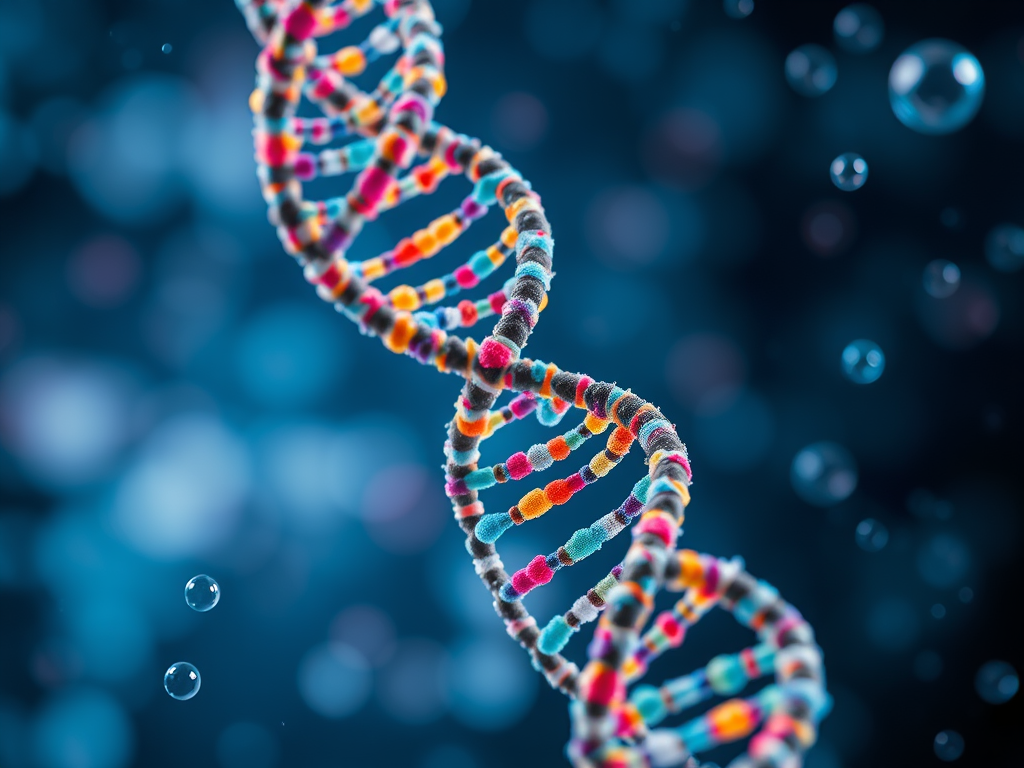
But really, no test can come close to capturing all of the DNA in your body. Any one test or set of tests , while they may be highly accurate in the right hands, only capture a DNA sequence in a particular tissue(s) at a particular moment in the lifespan and is useful only for a specific reason such as cancer treatment, assessing disease risk, or reproductive decision making. It’s a snapshot taken with a single narrow lens for a single purpose, not an ongoing video using a multidimensional wide-angle lens. The snapshot could look quite different depending on which tissue is sampled or if the snapshot is taken at a different moment in time.

Let’s start at The Beginning, or actually, just before The Beginning. As the result of meiotic scrambling, maternal and paternal chromosomes will be distributed among the gametes in a bewildering mix of maternal and paternal contributions. Like about 8 million possible different combinations of maternal and paternal chromosomes. Estimates vary because who analyzes each oocyte in the fetal ovaries, but a 20-week female fetus probably has somewhere between two to eight million oocytes. In other words, it is possible that each of those oocytes has a unique combination of maternal and paternal chromosomes. The number of aneuploid oocytes in utero is unknown, but during reproductive years around 10% of oocytes are aneuploid or have an unbalanced structural aberration, with the percentage increasing with maternal age. Trinucleotide expansion repeats responsible for Fragile X syndrome and Huntington disease can arise in oocytes during meiotic prometaphase 1.

In a young male’s typical ejaculate, with tens to hundreds of millions of sperm, there is a higher but still low probability that maybe a few of those sperm will have identical maternal and paternal chromosomal contributions. But about 10-15% of sperm cells have chromosomal abnormalities, with perhaps 90% of those being structural rather than numerical. On top of this, de novo pathogenic gene variants can arise in any gamete, with the probability increasing with a paternal age. And no one has any idea of the frequency of de novo variants in non-coding regions in spermatozoa or oocytes.


Perhaps the only time in human development that we have a single genome is immediately at conception, although that may apply only to nuclear DNA since the mitochondria of the fertilized egg could be heteroplasmic. But as the fertilized embryo undergoes mitosis, different genomes arise almost immediately. Chromosomal mosaicism is detected in a significant number of embryos; anywhere between 2 and 40%, depending on a number of factors. About 2% of CVS specimens, which are derived from the fetal aspect of the placenta, are chromosomal mosaics. Mosaic single gene variants can also arise in neuronal progenitor cells, primordial germ cells, and other tissues. Fetal cells and cell free DNA work their way into in maternal circulation during pregnancy and the cells can persist in maternal circulation for years, a form of microchimerism.

Beyond conception and the embryonic period, somatic gene mutations regulary arise in fetuses, children, and adults in many different tissues. Some mutations are repaired, some persist and are clinically insignificant, and others make significant contributions to human disease. Cancer, for all intents and purposes, arises from somatic mutations. Cancer cells themselves then often go on to develop a bewildering array of mutations as the cancer grows and metastasizes. Mutation profiles can vary within the same affected tissue or between affected tissues. Further DNA damage can be induced by chemotherapeutic agents. Then there’s chromothripsis, where the genetic wheels come off altogether.

Beyond cancer, other medical conditions can arise from genomic variability. Trinucleotide repeats can expand and contract over time and can vary between and within tissues and may significantly contribute to adult and childhood onset neurological disease. Mosaic or segmental neurofibromatosis is caused by post-zygotic NF1 mutations.

Clonal hematopoiesis of indeterminate potential (CHIP) is the result of somatic mutations in hematopoietic tissue and occurs in about 10% of people age 70 or older. CHIP is associated with an increased risk of many diseases, such as hematologic cancers, coronary artery disease, heart failure, stroke, and pulmonary disease.

X chromosome inactivation and mosaicism are another source of intra-person genetic variability. One X chromosome will be largely inactivated in anyone who was born with more than one X chromosome. This could have significant clinical effects, such as manifesting symptoms of Duchenne muscular dystrophy or hemophilia, often depending upon which X chromosome is inactivated and in which tissue. Furthermore, people with more than one X chromosome tend to lose one of their X chromosomes in some of their cells, especially as they age, such that they are X chromosome mosaics, which might lead to cognitive impairment.

Transposable elements (transposons and retrotransposons) are DNA remnants of microbial organisms from our evolutionary past that have been integrated throughout the human genome, the evolutionary equivalent of internet cookies. Perhaps as much as 50% of the human genome is composed of transposable elements. These bits of microbial DNA regularly rearrange themselves within our genomes (thank you Barbara McClintock) during evolution and also within our bodies during our lives, rejiggering DNA sequences and contributing to the development of human diseases such as cancer, hemoglobinopathies, and neurological disorders.
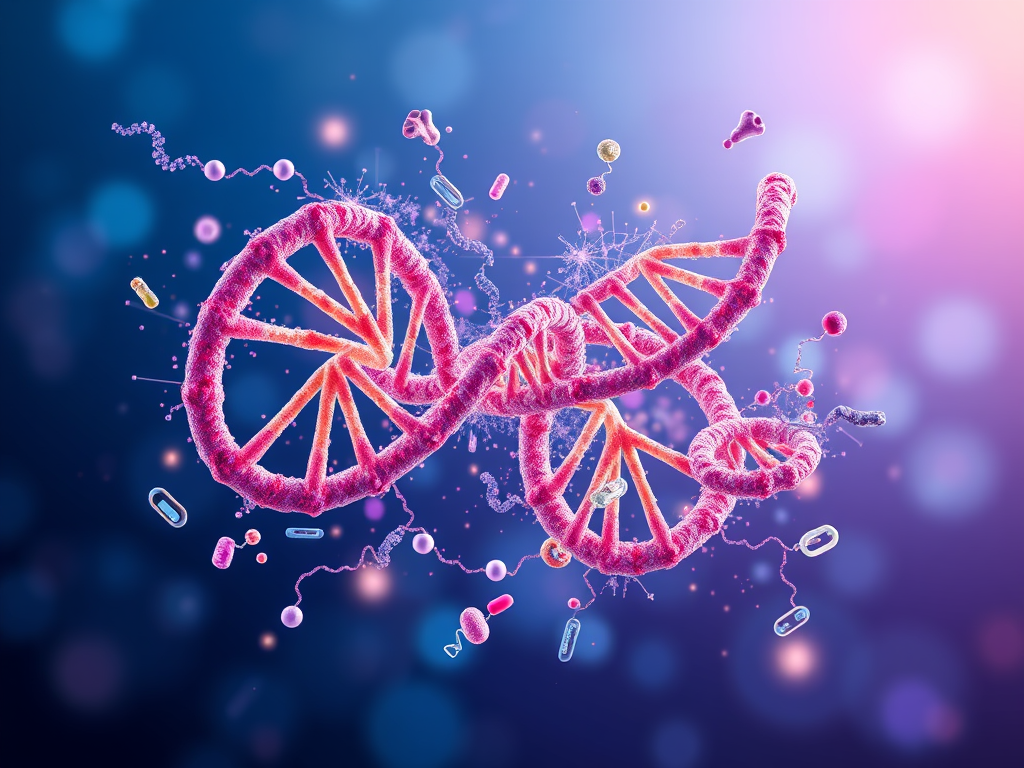
The DNA of immune cells constantly alter themselves through processes such as somatic recombination and somatic hypermutation. This variability allows the immune system to respond in highly specific ways to so many different types of infection and cancers, and to help the healing process.

On top of all of this, we co-inhabit our bodies with all sorts of bacteria, viruses, protozoa, archaea and God knows what else, the composition of which changes regularly. In fact, most of the cells, and therefore most of the DNA in our body, are microbial (it varies at any given moment in time, like after a bowel movement). Since these microbes are symbiotic living parts of our bodies, their DNA is also our DNA.

Mitochondria are likely the remains of a microorganism that was integrated into host cells in our deep eukaryotic past. Mitochondrial DNA can be heteroplasmic, that is, any given mitochondrion can acquire a wide range of mutations that do not occur in other mitochondria. Heteroplasmy can be a significant source of medical conditions, depending on the degree of heteroplasmy and its distribution.

Intra-person genetic variability is one of the many reasons it is foolish and inaccurate to say that our DNA defines us. Each of us has many constantly shifting DNA sequences throughout our bodies and each sequence can play out in our lives in different ways at different times. The interaction of these sequences with each other and with our cellular, bodily, and external environments is so exquisitely and frustratingly complex that it is beyond comprehension by human or, I will wager, artificial intelligence (how could AI analyze the entirety of a person’s DNA sequences if it is impossible to capture all of those sequences at once, on top of which those sequences change over time?). Human beings are infinitely more complex than the near infinite sum of each of our body’s many genomes. We should all sing the body electric.

The love of the body of man or woman balks account, the body itself balks account
– Walt Whitman, “I Sing The Body Electric”
You Are Not Here —>

Matthew Brady’s portrait of Walt Whitman, from the National Portrait Gallery in Washington, DC. https://npg.si.edu/learn/classroom-resource/walt-whitman-civil-war-poet-and-caregiver

———————————————————————————————–

All images, except for the image of Walt Whitman, were AI generated. All of the text was human-generated by me.

6 Comments

Filed under Robert Resta

Potential Implications of The Trump Administration Policies For Genetic Counseling – Part 2: The Impact On Patients

Last week in Part 1 I looked at the potential impact of Trump’s policies on genetic counselors. Here I speculate about their impact on patients. As in my last posting, my analysis is not complete and, so far, mostly speculative because the effects of the policies are only beginning to be felt and Trump flip-flops so frequently that it’s hard to know how permanent they will be.

When that storm comes
Don’t run for cover
Don’t run from the comin’ storm

– Lyrics from “Storm Comin’ ” by Ruth Moody and released in 2011 by The Wailin’ Jennys*

I have often said that every genetic counselor and medical geneticist I have ever met would march into Hell for their patients and take on The Devil himself. Well, welcome to Hades. As bad as Trump’s policies are for genetic counselors and the larger medical, scientific, and research communities, patients are likely to fare far worse. Genetic counselors for the most part “only” have to worry about their jobs. Patients have to worry about their jobs, losing access to healthcare, reproductive healthcare, supplemental income, disease management, and life-saving treatment. As is the unfortunate par for the course, vulnerable populations will suffer the most – women, the poor, people living in rural areas, the elderly, documented and undocumented migrants, children, people with disabilities, LGBQT+ people, non-White people, and disabled veterans. The inhumanity of this is beyond comprehension.

Impact On Access To Health Insurance, Health Care, Social Service and Education

The proposed cutbacks to Medicaid, and perhaps Medicare too, will have the biggest immediate impact on the greatest number of people, particularly those who we see in genetics clinics. Cuts to Medicaid – Congress is proposing a $880 billion cut – would affect ~79,000,000 people. Medicaid also covers about 40% of US births. Medicare provides health insurance coverage for people over 65 and people with certain disabilities, covering about 66 million people. These cuts can reduce patient access to medical care, long term care, community and home-based support services that allow people with disabilities to live and work independently or semi-independently, and resources that help people with disabilities find employment. Another ~7,250,000 children are enrolled in the Children’s Health Insurance Program (CHIP), a low-cost health insurance program for children from families that are poor but but not poor enough to qualify for Medicaid. Overall, nearly half of the enrollees in Medicaid and CHIP combined are children. So children with disabilities or genetic conditions on Medicaid or CHIP may not be coming to your clinics anymore. These cuts can also work at cross-purposes. In states that did not participate in the Medicaid Expansion program, hospitals’ uncompensated medical costs (i.e., charity care) were significantly higher compared to states that took advantage of the expansion.

The claim that there are billions of dollars of Medicaid/Medicare fraud and waste committed by enrollees is blatantly false. The vast majority of fraud is committed by providers, not patients. And work-requirements for Medicaid recipients are laughable and only feed into the myth of a large body of “undeserving poor.” 65% of people on Medicaid work but typically in jobs with low salaries and no health benefits. Those who don’t work do so because they are disabled or ill, are attending school, or are caregivers. The work requirement implemented in Georgia a few years ago resulted in the majority of Medicaid money funneled toward covering administrative costs for the work requirement program rather than needed services for enrollees. If you are serious about saving significant amounts of money in the Medicaid program, go after the providers and the state administrators, not the recipients.

The Department of Education has lost nearly half its work force since Trump took office, with the most recent firings on March 11. Further funding and personnel cuts are likely in the near future, with possible elimination of the department altogether. The Department of Education’s Office of Special Education Programs funds grants to states that then distribute the funds to local school districts. In 2023, this amounted to $18.4 billion in aid. Many children with developmental disabilities rely on state-funded educational intervention programs to help them achieve their full potential.

Immigrants, documented and undocumented, may lose access to Medicaid due to funding cuts and anti-immigration bias. About 50% of undocumented immigrants and about 1 in 5 lawfully resident immigrants lack employer-sponsored health insurance even if they are employed. Not only do they face restrictions and barriers to accessing government-sponsored health insurance, they may not even want to seek health care out of fear of being deported. Oh, for those who say they don’t want their tax dollars going to insure immigrants, in 2023 undocumented immigrants paid about 90 billion dollars in local, state, and Federal taxes. And, if they are legally employed, they pay into Medicare but are not usually eligible to receive Medicare benefits.

LGBQT+ people, who make up about 7-8% of the US population, are less likely to seek medical care. They are also more likely to report chronic health conditions or disabilities compared to non-LGBQT+ people. About 1 in 5 are on Medicaid, so cuts to Medicaid would affect a significant portion of this population. Transgender people in particular are being targeted by the Trump administration. These policies wind up discouraging them from seeking medical care, which is especially concerning given the ongoing medical needs related to being transgender and their higher rate of mental health diagnoses.

Intersex people, who are commonly seen in genetics clinics, have a unique set of health problems and have a high frequency of mental health problems. Trump’s policy of defining sex as either male or female will negatively affect people whose biological makeup does not conform to a binary sex distinction, a distinction based on a total lack of understanding of basic human or animal biology. Intersex people also typically have lower incomes and are more likely to be on government-supported health care.

Why the need to persecute people who are gay or transgender or whoever isn’t cis-heteronormative? Can’t you just let people try to lead their lives and loves in peace and good health, and leave them alone already? Life is hard enough as it is.

From a practical political standpoint, it’s difficult to understand how these moves will help Republicans win votes in future elections at the state and federal levels. Medicaid and Medicare covers over 100 million people of voting age, and another tens of millions of voting age adults are LGBQT+, for a total of well over 100 million voting age adults. In the 2024 election, 155 million people voted altogether. If these groups united behind a presidential candidate who promised not only to restore but expand those benefits, the candidate would win in a true landslide (unlike the landslide victory that Trump keeps claiming, which was actually one of the smaller victory margins since the 19th century). But people often do not vote in their own best interests or just don’t vote at all so it’s hard to know how this will play out in the ballot box.

Impact On Reproductive Healthcare

“I said, ‘Well, I’m going to do it, whether the women like it or not,’” Trump said. “I’m going to protect them.”

The situation is just as dire for access to reproductive health care. As noted above, Medicaid covers about 40% of births in the United States overall, increasing to about 50% of births in rural areas. Medicaid cuts will likely further the closure of hospitals in rural areas, where hospitals depend more on Medicaid funds than in large metropolitan areas. This means that there will be loss of obstetric services in poorer rural areas (and other medical and mental health services too), so women will have to travel further to deliver their babies. Loss of childbirth coverage will likely result in more health problems for mothers and babies, and further contribute to US neonatal and maternal death rates, which is among the highest in the world. The maternal mortality rate is particularly high among Blacks; about 65% of Black women are covered by Medicaid.

Trump takes credit for overturning Roe v. Wade, a ruling which has led to extensive abortion bans around the country. It seems likely that the extent and number of bans will increase over the next few years, backed by support from Mordor The White House. But the administration’s policies extend beyond abortion to birth control and research about maternal health outcomes. Executive Order 14182 signed on January 28 rescinded two of Biden’s Executive Orders, the consequences of which include:

•Dismantling the Interagency Task Force on Reproductive Healthcare Access, which had been established to ensure a whole-of-government response to the crisis

•Stopping federal agency efforts, specifically by the Department of Justice, the Department of Homeland Security, and Federal Trade Commission, to protect patient and provider privacy and security

•Halting agency efforts to enforce anti-discrimination law in response to reports of people being denied emergency abortion care and prescription medication

•Stopping federal agency efforts to ensure individuals receive emergency abortion care as guaranteed by law

•Ceasing efforts to advance abortion access for patients enrolled in Medicaid who must travel for abortion care

•Stopping public education and awareness efforts about access to reproductive health care, including informing people about how to obtain birth control;

•Blocking data collection, research, and analysis in measuring the effect of access to reproductive health care on maternal health outcomes and other health outcomes.

They may as well have put The Taliban in charge of women’s reproductive health care policy.

On its face, Trump’s Executive Order increasing access to IVF appears to be a win for reproductive healthcare since many private insurers provide minimal or no coverage for this service. However, the order only recommends that “Within 90 days of the date of this order, the Assistant to the President for Domestic Policy shall submit to the President a list of policy recommendations on protecting IVF access and aggressively reducing out-of-pocket and health plan costs for IVF treatment.” It lays out no concrete strategy for raising the funds to cover this expansion or forcing insurers to cover it, and makes no mention of coverage for other assisted reproductive technologies (ART). More critically, the Executive Order may wind up limiting access to IVF. Vince Haley, who is the Assistant to the President for Domestic Policy and responsible for creating the recommendations, is a former assistant to Newt Gingrich, a speechwriter for Trump under the supervision of Stephen Miller, who is virulently anti-LBGQT+ and anti-immigrant. Hence Haley’s policy recommendations will likely exclude LGBQT+ people and unmarried heterosexual people from having access to IVF. I wouldn’t be surprised if the policies also exclude immigrants, given Haley’s connection to Stephen Miller, the administration’s emphasis on pronatalist policies, and Trump’s allusions to “white replacement theory.”

Robert F. Kennedy, Jr., the head of the Department of Health and Human Services, has made a career of spreading lies, inaccurate claims, and misinformation about vaccines. His anti-vaccination stance could result in fewer women and chlldren getting the MMR vaccination or the varicella vaccination if they are infection-naive adults. This could in turn lead to an increase in the incidence of congenital rubella syndrome and congenital varicella syndrome. If a mother acquires measles during pregnancy, it could lead to serious consequences including death, pneumonia, miscarriages, stillbirth, prematurity, and low birth weight. And cod liver oil, Kennedy’s preferred treatment for measles, contains high levels of vitamin A, a potent human teratogen.

Impact On Income

Proposed cuts to Social Security could have dire consequences for people with disabilities and their families. Social Security Disability Insurance (SSDI) provides supplemental income to adults and children with disabilities. It is the only federal financial program for this group, and serves only the lowest income families whose children have conditions such as Down syndrome, cerebral palsy, autism, intellectual disability, and blindness. Families receive about $800 a month on average. The families are so poor that even shaving a few dollars off that amount could have profound effects. These cuts are being proposed by the world’s richest man who sells trucks that cost at least $100,000 each and gets free advertising at the White House. Yeah, he’s tuned in to the needs of low income families and people with disabilities.

This image has an empty alt attribute; its file name is image-7.png
Cartoon by RJ Matson, editorial cartoonist at Roll Call, a newspaper covering Congress and Capitol Hill. Source: The Contrarian https://contrarian.substack.com

Impact From Limitations And Cuts To Clinical and Genetic Counseling Research

Funding and personnel cuts at the NIH would be another blow to the care of genetic counselors’ patients. The NIH, and particularly the National Human Genome Research Institute (NHGRI), are key sources of clinical and other research programs focusing on hereditary disorders. In particular, it specializes in people with rare disorders and serve as a resource for the families and their healthcare providers who have nowhere else to turn to. NIH and NHGRI helped establish and maintain the Undiagnosed Diseases Program, which is instrumental in providing diagnoses and care recommendations for people who have been seeking a diagnosis in vain, sometimes for decades. Most of the stunning advances in the treatment and care recommendations for rare genetic diseases are based on research performed at this Institute.

Patients would also be negatively affected by the loss of NIH-funded genetic counseling research that examines the pychological, familial and medical impact of diagnosis, treatment, and management of genetic conditions on patients and their families. The value of cutting edge clinical research would be blunted in the absence of the best way to implement discoveries into the lives of patients so they can get maximal benefit. Any cuts to NHGRI would be keenly felt by patients with genetic conditions.

We cannot be lulled into a sense of powerlessness and inevitability about these policies. We can’t only rant and rave. We need some radical optimism. We need to fight back tooth and nail in small and big ways. We need to encourage our patients and colleagues, at least those who are not vulnerable and deeply threatened by the political climate, to let their government representatives know in no uncertain terms that these policies are unacceptable and that their political futures hinge on sane and compassionate policies. We need our professional organizations – NSGC, ACMG, ASHG – to start collecting data in an organized and coordinated fashion to document specific situations and cases where the policies have negatively affected patient care and the practice of medical genetics and genetic counseling and broadcast it far and wide. Let’s put Hell back where it belongs.

_________________________________________________________

  • – For some reason, these days I am favoring Canadian musicians. Lots of time listening to the Wailin’ Jennys, Joni Mitchell, Leonard Cohen, Kate and Anna McGarrigle, Rufus Wainright (son of Kate McGarrigle), Neil Young, Alanis Morisette, Drake…. I could go on but I don’t want to sound too Tragically Hip. You can take Joni’s line from Big Yellow Taxi and apply it to democracy “Don’t it always seem to go that you don’t know what you’ve got ’til it’s gone?”

5 Comments

Filed under Robert Resta

Will The Updated NSGC Pedigree Nomenclature Guidelines Sink The Effort To Obtain Medicare Coverage For Genetic Counselors?

Back on January 20th, American democracy and decency began to swalllow a poison pill of its own electoral making. The fallout has been all kinds of horrible, nationally and internationally, except in Moscow where Putin is having a belly laugh because America is doing his dirty work by destroying itself. The US Constitution is being shredded. People who are transgender, gay, non-White, and all the other non-majority varieties of American demographics feel that their very lives are threatened. The employment of every “DEI hire” (racist code word for Black) is on the chopping block. Many of our patients may lose access to health care through Medicaid funding cuts, fear of being deported, or prohibitions of basic medical care for transgender people. We are looking at the potential destruction of the NIH, one of the world’s great research institutions. Genetic counselors employed by the federal government or on government grants may either lose their jobs or be forced to work in an ethically intolerable environment. The terrifying list goes on and on. The over-arching hateful personal message of these policies is “If you ain’t cis-hetero-White, you ain’t right.”

I have nothing original to add to what has already been better said by others about these matters.* Here I want to focus on the implications of the Updated NSGC Guidelines on Pedigree Nomenclature for the passage of the Access To Genetic Counselor Services Act (I am one of the authors of those pedigree guidelines, and incidentally, a minor revision of some of the Tables will soon be published). A small matter in the great scheme of things, but of particular salience to the future of the genetic counseling profession. The financial survival of clinical genetic counselors in the US hinges on being recognized as Medicare providers. This effort has been ongoing for some 20 frustrating years or so but over the last few years we’ve started getting closer to success, fingers crossed.

So why should the new pedigree nomenclature crash those hopes? After all, they are just a bunch of geometric shapes. But we have given meaning to those shapes, meaning which directly clashes with the Executive Edict, er, I mean Order “DEFENDING WOMEN FROM GENDER IDEOLOGY EXTREMISM AND RESTORING BIOLOGICAL TRUTH TO THE FEDERAL GOVERNMENT,” that, based on ignorance and hate, defines sex as follows: “(d) “Female” means a person belonging, at conception, to the sex that produces the large reproductive cell. “Male” means a person belonging, at conception, to the sex that produces the small reproductive cell.” Well, I guess that those of us who were lucky enough to be born with “reproductive cells” are going to have to line up and start getting those reproductive cells measured and compared. I wonder which cells they are going to measure – Sertoli cells? Leydig cells? Spermatids? Uterine cells? Luminal epithelial cells of the uterus? Ovarian thecal cells? All are necessary for reproduction, and all of different sizes. Of course, at conception, no one has any of those cells so I have no idea what these criteria mean. And sex can be categorized by chromosomes, genes, anatomy, or hormonal profiles, all biologically plausible criteria but not uncommonly incongruent.

The head of the US government has made it clear that any definition of sex that, uhh, deviates from this definition is the product of “Woke” ideology and DEI policies (I really don’t know what constitutes Woke ideology – compassion? decency? the teachings of Christ? – but I reckon it’s better than Sleepy ideology). Anyone or any organization that supports Woke ideology is an enemy of the state and will not be tolerated. The pedigree nomenclature, by emphasizing the importance of gender and the subtle shadings of biological sex, is diametrically opposed to US government policy. All the more reason to support the nomenclature, I say.

But what happens if the Access to Genetic Counselor Services Act actually comes up for a vote before Congress? Well, perhaps the most publicly available product of the genetic counseling profession is the pedigree nomenclature. Sure, within the NSGC itself, there are all kinds of policies and initiatives that support DEI, programs that have been met with varying degrees of success and frustration. By and large those are internal, and not openly available to non-members. But as an Open Access article, the pedigree nomenclature is widely available to anyone with Internet access and the nomenclature is the standard for most genetics journals, not just the Journal of Genetic Counseling. More tellingly, the simplicity of those symbols that allows them to effectively communicate complex information also allows them to clearly communicate just how much they contravene the Trumpian concepts of sex and gender, even to someone who has minimal grasp of human biology. I can imagine an NSGC President testifying before Congress about the bill and being asked “So, Current NSGC President, in your organization’s sanctioned pedigree guidelines, I see squares and circles and common sense tells me that those are males and females, respectively. Can you tell me what this diamond symbol is? And what are those funny abbreviations like AFAB mean beneath some of the symbols? Are genetic counselors using geometric symbols to secretly support Woke DEI propaganda? The US government does not support an organization that does not preach biological truth!”

I am not saying that we should publicly reject or downplay the Pedigree Nomenclature Guidelines or NSGC’s DEIJ initiatives. To do so would be an act of moral cowardice, a betrayal of our colleagues and patients, and just plain wrong. We need to fight like hell for them, even if we have to pay a steep professional price. There are more important things in life than Medicare coverage.

____________________________________________________

*- For those looking for voices of political sanity, I recommend considering subscribing to The Contrarian Substack (comprised of former Washington Post reporters, among others), The American Prospect, and Paul Krugman’s Substack.

6 Comments

Filed under Robert Resta

Direct-to-Consumer is Direct-to-Chaos for Rare Disease Families

By Devin Shuman, LCGC (she/her)

Image description: cartoon of an individual with a large mustache, a top hat, and cape standing behind a brown and red booth holding test tubes in front of a crowd of stick fingers. The booth has a banner reading "DTC snake oil" at the top and signs that read "Tests 100% of the DNA!", "Test your infant for ALL health conditions!," and "Holiday sale today!" A white speech bubble reads "Step right up! We are the ONLY ones who can give you ALL the answers!"

As a rare disease genetic counselor – who both has a rare genetic condition and serves rare disease patient populations as a provider – I have a Rare Disease Day Public Service Announcement for you: Do not order Direct-to-Consumer testing and please actively discourage other providers and patients from ordering it themselves. We need to step up as a field and take a stance.

As a genetic counselor and patient in the rare disease world, every single week I’m being asked a question about these new “direct-to-consumer” genetic testing options. It can feel like whack-a-mole, with a new company or test being asked about every month. The second you feel like you understand most of the companies offering direct-to-consumer testing – you learn about another new company you’d never heard of. 

Direct-to-consumer (DTC) genetic testing is any genetic test that can be ordered directly by an individual/patient from their home without the involvement of a medical provider with a trained medical director reviewing and signing off on every report. While some of these companies claim a medical provider has “reviewed all orders,” if the patient hasn’t had an appointment with said provider – then they are really just a rubber stamp on all orders. Why is that a key detail? The providers that work for, or are contracted by these labs, are reviewing these orders because of a regulatory loophole. They have every incentive to get the lab’s brand of testing paid for whether or not it is a test that is in the patient’s best interest. These providers do not have the time, or enough interaction with the patient, to truly assess if the test (or any) is the best fit for the patient and will answer the questions they have. A provider that is not affiliated with a testing lab needs to meet with patients for pre-test counseling so they can provide a nuanced conversation for informed consent, discussing the benefits and drawbacks of proceeding with genetic testing. 

They may call it Direct-to-Consumer testing but it is more like Direct-to-Chaos testing, with “answers” that lead directly to false negatives, false positives, false promises, and patients with more questions than they started with. Except now patients have a scary list of potential conditions they’re being told they may have, but that healthcare providers can not (or should not) be using the “results” of, for diagnosing or treating symptoms. And I say this from experience – I have sorted through dozens of individuals’ “reports” from these websites and have looked up over 1,000 variants one by one. And what have I found? Not a single answer an individual was looking for.  Not a single actionable result that was confirmed. In patients who have had multiple tests done by various DTC companies, almost never are the same “pathogenic” variants even reported by all of them, let alone also identified in the genetic testing they’ve also had done through legitimate labs.

Many say they’re offering whole genome sequencing but often what they provide is a whole lot of meaningless data with zero context, and interpretations that are inaccurate and misleading. As a genetic counselor who has a genetic rare disease these companies don’t just make me frustrated due to misinformation, they make me furious. They advertise something that’s too good to be true: a single test to look at all of your DNA, testing for every condition, at a fraction of the cost of a real medical genetic test. Why is this test so much cheaper? Because they’re essentially providing a giant data dump onto people. No quality control. No interpretation. Just big data grabs from the internet that result in false positives and negatives, and typically cannot even answer the question that the patient is asking. 

“As a genetic counselor who has a genetic rare disease these companies don’t just make me frustrated due to misinformation, they make me furious.”

They purposefully target vulnerable families with unethical claims (advertising testing on infants), in order to draw individuals in by using all the right terms to mimic real testing, while carefully leaving out all of the caveats. There is a reason genetic professionals have ethical guidelines about not testing infants for adult-onset conditions. Somehow these companies are allowed to slide by as “just for fun,” while simultaneously providing individuals with lists of literally hundreds of “positive findings” for conditions such as amyotrophic lateral sclerosis (ALS) and BRCA1/2. “Positive findings” that in many cases are easily proven to be normal variation by checking free, public databases. How they get away with telling a patient they have a BRCA mutation and an 80% chance of breast cancer, when the variant is seen in over 99% of healthy controls (i.e. is normal variation) is astounding. 

As a rare disease patient, I understand that it is beyond agonizing to be stuck on the “diagnostic odyssey” (which I prefer to call the undiagnosed purgatory). Going through 4-10 years of specialists with endless invasive and expensive tests. Being told by provider after provider that your symptoms are either A. all in your head, B. caused by stress, or C. would go away if you could just lose weight – of course families are desperate for answers. So when a website offers a single test to cover everything – it sounds like it’s worth spending a couple hundred dollars to finally get help. What they don’t say is that they’ll provide  dozens of pages of useless, misleading information that even a trained genetics professional would take an entire week to sort through. My greatest achievement from hundreds of hours of work trying to pull something useful from these results? Talking individuals out of the extreme anxiety the false positive results have provided. 

Sure, some of the DTC companies are easy to weed out as garbage (such as the ones offering a promiscuity genetic test). But I’ve talked to parents who did “whole genome sequencing” DTC testing on their dying child, hoping that somehow this data would be useful one day – not realizing that they heartbreakingly wasted their last chance at testing, such as banking DNA to do an actual medical grade test. I’ve talked with individuals who work in cytogenetic labs who have spent months combing through their data – who describe the “risk scores” provided by these companies as “a horoscope at best.” 

The companies that sell these tests often have a disclaimer about these results only being “for fun” or “recreational,” however have in bold all over their website and advertisements the medical conditions that they claim they can test for with their “medical grade clinical test.” They know what they are doing – purposefully targeting families desperate for answers with social media campaigns, emails, and free giveaways of their product. The hard part is, when they provide literally pages and pages of “results” there will inevitably be something in that list that feels like the answer to the patient’s questions – because the test will spit out “answers” that cover every single condition and symptom out there. It’s easy to fall for the logical fallacy of thinking they’ve found their answer since it “fits”, and that’s what makes it so heartbreaking to watch. 

These families spend money they don’t have, get false positive “results,” then go to their doctors who either don’t know enough about genetics and provide unjustified medical treatment based on a false diagnosis or they get turned away by genetics clinics and dismissed by doctors for having “junk” results – leading to a real breakdown in trust and rapport between patients and providers. I’ve seen this erosion of trust causing individuals to stop seeking medical care because no provider takes the time to explain why they’re being dismissive. The last thing rare disease families need are false promises by scam companies leading to medical distrust, which just prolongs being stuck in undiagnosed purgatory without answers or treatments. DTC companies are doing actual harm to rare disease patients and families who deserve to have their very valid medical concerns addressed by real providers who take the time to provide fact based information and actual guidance regarding the benefits and limitations of doing genetic testing.

“The last thing rare disease families need are false promises by scam companies leading to medical distrust, which just prolongs being stuck in undiagnosed purgatory without answers or treatments.”

Right now America is in a genetics crisis. Many genetic clinics, if you even have one in your state, have wait lists of 1-2 years, or longer. Many turn away common indications, such as hypermobile EDS, to try and shorten their wait times. Meanwhile, nearly 40% of individuals in the US report that they are not having needed medical care done due to financial barriers. So of course a test billed at “just a couple hundred” sounds tempting when each individual panel in a genetics lab is often at least $250 and whole exome/genome sequencing is (cash pay) upwards of $3,000 – 5,000. Some websites even offer free or $20-40 “reports” based on analyzing genetic “raw data” provided by other companies’ DTC tests, with the same poorly reviewed, inaccurate data dump, useless results. The bottom line is, these direct-to chaos tests are cheap because they are snake oil. 

These pages of “results” also then leave individuals feeling like their real medical genetic testing is the “scam” as they only provide a single table of results, often between 1 and 5 variants. But the real value of the medical grade testing ordered by a trained specialist is their quality controls and their interpretation of the results. It takes skill to narrow genetic data down to only the top couple candidates for a possible answer. Anyone with a sequencer can spit out hundreds of garbage variants and call them the patient’s “answer” without any human oversight or skill. Anyone who creates a webpage can sell an “interpretation” of genetic data without any training or quality controls in place. 

They are just another example of why industry regulation is so necessary in the genetics field. We had to regulate medication quality controls, labeling, and advertising to prevent snake oil from being sold in the US in 1905; well it’s 2024 and we need to regulate genetic testing.  

We need to not just talk about the harm these DTC companies are doing but also take action. By reaching out to alums from Harvard and Stanford I got two of these companies to stop advertising as “endorsed by them” without the institute’s signoff. I’ve gotten the CEO of one company removed from the national list of genetic counselors, as he is not a genetic counselor and was falsely advertising his company as a medical genetics service. I have personally reported these companies to the FDA and have had numerous patients who sadly wasted money on these companies also report them. 

When you see harm happening to patients, you can and should speak up. Every little thing you do adds up to create real change.

We need to move past a whack-a-mole approach for every new falsely advertised snake oil option that appears but make real change to prevent them from preying on families who deserve so much better than these uselessly chaotic “results.”

“Rare disease families deserve answers. They deserve legitimate genetic testing options and access to genetic providers.” 

I am outraged at these companies because as a rare disease patient myself, it truly breaks my heart to see people profiting over the stress, chaos, and misinformation sold to those who need our support and help the most. I have supported patients as they cried realizing they lost time, money, and hope to this nonsense. And I have cried myself after I’ve talked with these patients and families, as I wish I could step through that computer and hug my patient – or at least do something to stop the tidal wave of destruction these companies leave in their wake. Rare disease families deserve answers. They deserve legitimate genetic testing options and access to genetic providers. They deserve to be protected from DTC salespeople and to learn about genetic testing options from unbiased sources (not from employees of these DTC companies). It is not your fault if you believed the false advertising – they designed it to be misleading, but you and your patients deserve better.

3 Comments

Filed under Uncategorized