Author Archives: Robert Resta

Resta’s Rules of Genetic Counseling

You will not find these pearls of wisdom in Psyche and Helix, Psychosocial Genetic Counseling, A Guide To Genetic Counseling, or the Journal of Genetic Counseling. I am certain that they will never be the source of correct responses on genetic counseling board certification exams. These insights are based on personal observations made during my 3+ decades of genetic counseling practice. There is almost no research to back them up but they are gospel truth nonetheless. Well, at least they seem true.


 

Unknown41RNFQVXQAL._SY344_BO1,204,203,200_Unknown-110897_015_006

1) All interactions with patients are primarily psychosocial encounters, no matter how much we or patients consciously or unconsciously try to focus on facts and figures.

2) All research studies are flawed in some way. Therefore, all facts, figures, and risk predictions that we so confidently quote are wrong, with the possible exception of Mendelian segregation ratios (but even there…). Quite often, several seemingly well designed studies about the same topic will produce conflicting results.

3) Which risk figures we choose to quote reflect more about our own unconscious biases, training, and professional influences than it does about the robustness of the statistics themselves.

4) It often turns out that patients with the lowest a priori risk have the highest chance of actually testing positive for a gene mutation and, conversely, the highest risk patients actually have the lowest chance of testing positive for a gene mutation (and I am not altogether making this up).

5) In a family that looks like it could have two different genetic syndromes, one syndrome highly likely and the second syndrome fairly unlikely, if you don’t test the family for the less likely syndrome they will inevitably be tested by another care provider some day and test positive, and then you will foolish and insecure (especially if the other care provider is not a geneticist). But if when you initially see the family you do the testing for the less likely syndrome, the testing will be normal and you will kick yourself for wasting healthcare dollars. Perhaps this is a corollary to Rule Number 4.

6) As I have previously pointed out in The Resta Paradox* there is a sub-set of patients who believe that the most improbable things will happen to them. If you say to such a patient “The odds of this happening are one in a thousand” the patient will inevitably respond “Well, I will be that one in a thousand. Rare things always happen to me.” To some extent, this is an example of Abby Lippman’s key insight from 35 years ago that patients inevitably dichotomize odds – either it will happen to me or it won’t. It may also be a defense mechanism, a way for patients to prepare themselves for the possibility of an unlikely undesired outcome. Trying to reassure such patients with even more statistics is an exercise in futility; these situations require good basic counseling skills. Really, when it comes down to it, who cares what numbers they choose to believe? A better counseling approach is to acknowledge the patient’s viewpoint and then explore why they believe these numbers and how that perception affects their decision-making.

Graphics by Emily Singh


7) If you make a clerical error, no matter how tiny and seemingly insignificant, it will come back to haunt you in unforeseeable and kafkaesque ways, and it will be nearly impossible to undo the error. My father, a career clerk, used to tell me ad nauseam “The world would be a better place if there were more good clerks.” Dad, bless his clerical heart, was right.

8)  The patients for whom you put in the most effort – or pre-appointment preparation – are the ones most likely to complain about you or to no-show for their appointments.

9) Nobody – not our billing departments or even health insurers themselves – understands insurance coverage for genetic counseling and genetic testing. Genetics itself is far simpler to understand than billing for genetics.

10) There will be at least one genetic counselor at your institution who is on maternity leave or planning a wedding.

The Resta Paradox  (graphic by Emily Singh)

* – The astute DNA Exchange reader may have noted a tendency on the author’s part to name things after himself – Resta’s Rules, The Resta Paradox, RestaEZ Gene Panels. Admittedly this is shameless ego stroking. But it is better than an eponymous syndrome. With all due respect and apologies to our genetic counseling colleague Ann Smith, my preference is for a medical cure or a clever theory to be associated with my surname.

And, once again, a special thanks to Emily Singh, daughter extraordinaire, for help with graphics.


9 Comments

Filed under Robert Resta

VUS iz dos? Suggestions For A Reasonable Policy On Reporting Genetic Variants of Unknown Significance.

In a previous post, I raised questions about the appropriateness of certain billing policies for multigene cancer panels. As expected, it evoked some thoughtful and strongly felt comments and disagreements. But one thing we can all agree on about multigene panels is that the rate of detecting variants of uncertain significance (VUS) is way too high, usually in the range of 30-40%.

It will be many years before we will be able to determine the clinical significance of most of these variants, even if collaborative VUS reporting among labs becomes a reality and – more concerning to me – the public databases are properly curated. Indeed, the high frequency of VUS may prove to be the Achilles heel of multigene panels particularly as genetic testing increasingly takes place outside of the realm of genetics specialists.

What benefits do patients get from knowing about VUS? Absolutely none that I can think of. Knowledge of a VUS does nothing to enhance their medical decision-making or psychosocial well-being. For some patients, knowledge of VUS may contribute to short-term anxiety and uncertainty. Despite our best efforts, many patients have a look on their face that suggests something along the lines of “I am not exactly sure what was just said to me but I think I have a mutation in a cancer causing gene and how can that not be related to my family history of cancer?” Even more concerning, we all have one too many stories about patients who made surgical decisions based on a VUS, particularly when patients have not been counseled by a genetically sophisticated clinician, in direct contradiction to our dictum that “These results should not be used to guide patient care or cancer risk assessment for the patient or the patient’s family.”

So let me offer a solution that many genetic counselors will think is heresy and antithetical to basic genetic counseling philosophy. Stone, spitball, egg, and tomato me if you will, but my recommendation is that VUS should not be reported out by laboratories.

Instead of reporting specific VUS, I suggest that all genetic test reports – and pre-test counseling notes and result letters that are sent to patients and care providers – include a clearly written and highly visible general disclaimer along the lines of: Variants of unknown clinical significance are very commonly detected on genetic tests. These variants cannot and should not be used to guide medical care or help better understand cancer risks, and therefore are not detailed here. We continually monitor and study these variants. In the uncommon event that a variant is eventually re-classified as pathogenic or otherwise important for guiding your medical care and assessing your health risks, you and your doctor will be promptly notified.

A variant  should be reported when the lab feels that there is a reasonable possibility that the variant might be clinically important. In those cases, labs should offer family studies if they think that the functional and clinical significance of the mutation can be clarified by studying families that segregate the specific mutation. Of course, labs should be able to provide the VUS result – along with their rationale for classifying it as unknown rather than benign or pathogenic – if a patient or provider requests it.

By the way, I prefer Variants of Unknown Significance over Variants of Uncertain Significance. Maybe I am nit-picking, but uncertain seems to leave more psychological wiggle room for patients and care providers to think “Hey, maybe this is important” while unknown suggests that we really do not know what it means.

I can think of two reasons that help explain why we continue to report VUS to patients. One reason stems from our tendency to over-explain, the original sin of genetic counseling. In our desire to adequately inform patients we often overload them with a compressed course in advanced biology and genetics. In a form of counter-transference, we think of our patients as some version of ourselves and we sometimes unconsciously speak to them as if we were speaking to ourselves. Many genetic counselors are science nerds at heart and we tacitly assume that any rational person (i.e., someone who thinks like me) would want to know all those gloriously fine technical and scientific details.

The second reason that we report out VUS is that our concept of a gene is stuck in about 1995 or so. Back then we envisioned genes as highly stable structures which would occasionally have a few mutant alleles, and therefore Mutation = Bad. In fact, mutations are strikingly common and only a few are of clinical or evolutionary significance. Mutations are the norm for genes, not the exception.

This policy would require broad acceptance by the genetics community – genetic counselors, medical geneticists, genetics labs, and others. Perhaps a first step could be to conduct studies that randomly assign patients to two groups, one that receives VUS results and one that does not. Those patients could be followed for a period of time and then compare the two groups for differences in utilization of surgery and screening, as well as psychosocial adaptation and quality of life.

Let’s modify our counseling philosophy to fit into the 21st century. Many of us may kick and scream at first because, well, it is so different from what we normally do. But once you get past the initial shock,  relax and kick off your shoes, sip a beer, and think about it more clearly and calmly, you may begin to feel differently.

11 Comments

Filed under Robert Resta

Benefits, Beneficence, and Bending Ethics: Questionable Billing Practices for Multigene Panels?

Germline multigene panel testing is the new hot thing in genetic counseling circles. For the last 15 or so years, the equation has read “Breast Cancer Genetics = BRCA Testing,” with the occasional TP53, PTEN, STK11, or CDH1 test thrown in when we thought we were being clinically astute and smarter than the non-geneticsts at Tumor Board. But now, thanks to the discovery of other genes linked to hereditary breast cancer along with the miracle of massively parallel sequencing, we can test patients for a bucketful of genes in one fell swoop without significantly increasing the cost. We debate the wisdom of including some of the genes on these panels, differences in laboratory quality, the clinical value of the information, and – everybody’s favorite – high rates of variants of uncertain significance. These are  important issues but here I want to discuss an ethically gray practice that has not received much public airing – billing health insurers for multigene panels.

Here in the beautiful Pacific Northwest, roughly half of the health insurance companies cover multigene panels. Not uncommonly, patients will request “that new gene test” that their friend told them about. Counseling issues aside, many patients are disappointed when they learn that if they want a multigene panel, their insurer will not pay for it and they will have to fork over $1500-$4100 of their own hard-earned money. But word on the street – and I am not naming names since I don’t have personal experience with this phenomenon yet – is that some patients are managing to get gene panels covered by their insurers even when their carriers have explicit policies against such testing.

I have been told – and again I acknowledge that I do not have hard proof of this – that some labs are running the panels but not letting insurers know that a multigene panel test was performed. This is partially due to the insurance coding game. The billing codes for BRCA testing are the same as the billing codes for multigene panels, so on one level, insurers are blind to the distinction between the two tests and might never know that their policyholders are not exactly getting the test that the insurer paid for. If  labs eat these costs in full, well, that’s their own business decision and not an ethical lapse (although I wonder how many write-offs a lab can absorb while still maintaining profitability).

If this deceptive billing practice is indeed taking place, it is hard to believe that labs are doing this strictly out of the goodness of their hearts or entirely out of concern for the health and well-being of patients. Genetic testing for hereditary breast cancer has become highly competitive and labs are intensely vying for market share since the US Supreme Court decision in Association for Molecular Pathology v. Myriad Genetics opened up BRCA testing to all labsIf labs are engaging in this practice, it is likely because they want to win the favor of major cancer centers that can provide millions of dollars of business.

Billing an insurer for a test when the lab is aware that the insurer does not cover it, and not letting the insurer know which test was actually run, strikes me as dishonest rather than just bending the rules. And if we genetic counselors stand silently by and allow this to transpire, we are accessories to this moral – and legal? – infraction. It may also cause insurers like Cigna to rethink their policy of requiring a consultation with a genetic counselor before approving coverage for genetic testing. We are, after all, supposed to be conscientious about their guidelines when we order genetic testing for their policyholders.


RULES2

Now let me be clear. I am (mostly) a supporter of gene panel testing and think it should be a covered benefit, though I must admit that I am a bit disappointed in the low yield of actionable positive results beyond BRCA. I have spent an inordinate amount of time appealing these policies, with little success. It is frustrating for me and it makes patients unhappy when their insurer does not cover a test that care providers think could be useful.

Sure, we want what we think is best for patients, and yes insurance company policies can be maddening. But that does not provide moral justification for deceiving insurance companies. The ends do not justify the means. Instead, it should put the burden on us to continue to appeal the policies through established channels and to perform research studies that assess the clinical value of testing for genes such as NBN, RAD51C, or PALB2. Insurers have a valid point when they say that there are inadequate data to determine the clinical utility of multigene panel tests for their policyholders.

I hope that what I have been told is incorrect. If so, then we can write this posting off as based on unverified rumors. But if there is some truth to it, then we need to have a hard and thoughtful discussion. I am interested in hearing the experience of others with insurance coverage for multigene panels.


– Thank you to Emily Singh for help with the graphics.

12 Comments

Filed under Robert Resta

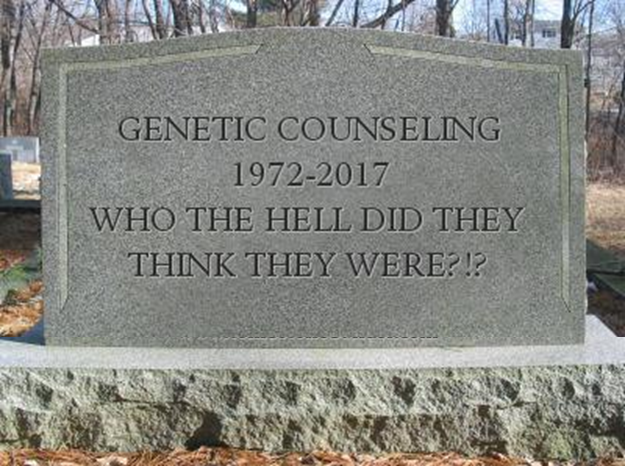
Who The Hell Do We Think We Are? 12 Questions About The Future Of Genetic Counseling

In the prophet business, they laugh at you when your predictions are wrong and chase you out-of-town – or worse – when your predictions prove to be correct. So, at the risk of being tarred and feathered or be made to wear a Scold’s Bridle, I venture twelve questions about possible future scenarios for the genetic counseling profession. Feel free to add a Comment with your own questions (and see how hard it is to be a prophet).

  1. Will our primary role be to serve as interpreters of test results for laboratories and ordering physicians? With the increasing growth of genetic laboratory services and a widespread lack of genetic sophistication among most ordering clinicians, laboratory demand for genetic counselors may far exceed employment in clinics. Besides, why should hospitals spend money on salary and benefits for genetic counselors when lab genetic counselors can provide the expertise?
  2. Might we become consultants for online genetic testing companies, helping plan, develop, and sell their products?  This could be a future where genetic testing is arranged over the Internet through a handful of megalabs, an oligopoly that controls the market. Such lab equivalents of Alibaba and Amazon, would sell gene products – clinical and otherwise – to an international market, where there is no clear-cut distinction between consumer and patient. This is not such an outlandish possibility; consider the connection between 23andMe and Google.This scenario sounds like the basis for a Philip K. Dick nightmare novel.
  3. Could we evolve into educators/communicators for the public rather than individual patients? With genetics predicted to be incorporated into everyday medical care, there is no way we can provide genetic counseling to everyone. But we could become a universal resource, developing and providing educational materials and expertise for clinicians, patients, courts of law, film makers, and just about anybody who has a genetic question.
  4. With institutions wanting to provide cost-effective care with as few employees as possible, along with the ongoing trend of hospital mergers and consolidations, could we become self-employed specialists who serve in consulting roles across multiple health care settings? We might strap on our NSGC issued jetpacks to hop from campus to campus of regional mega-hospitals to deliver genetic consultations on a moment’s notice.
    Genetic Counseling Jet Pack
  5. Will we change our profession’s focus from genotype counseling to phenotype counseling? In the past, a visit to the genetics clinic was necessary to sort through the appropriate genetic testing for patients, since it would be far too expensive to run every genetic test possible. With affordable multi-gene panels and whole exome/genome sequencing, it will no longer be economically necessary to see a geneticist to order “the right tests.” Just throw the whole plate of DNA strand spaghetti against the wall and see what sticks. The job of genetic counselors will then be to figure out what phenotype(s) could be expected from the array of test results.
  6. Will we become health/life style coaches? This is a natural progression from what we are doing now in cancer and cardiovascular clinics. Based on genetic test results we make  recommendations for health care and life style. Followed to the logical outcome, this model could be applied to almost any disease with a substantive, actionable, and identifiable genetic component.
  7. Will we be charged to be guardians of the public’s genetic health? With the introduction of Down syndrome screening of all pregnancies, universal carrier screening, and expanded newborn screening, there will be growing social pressure to “control and cure genetic disease.” This future could easily slide into creepy eugenic territory and provide Nathaniel Comfort material for several more books about the often vague distinction between relieving individual suffering and “population improvement.” This is not such an outlandish idea; James Neel, the great geneticist and a major figure in the early days of medical genetics, titled his magnum opus Physician To The Gene Pool.
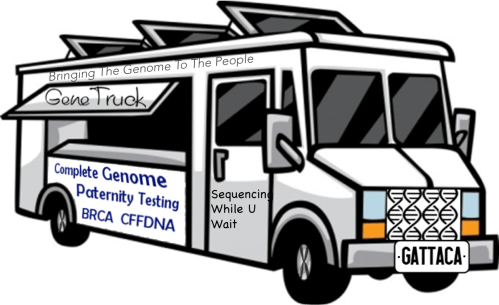
  8. Will we be private entrepreneurs who offer our services directly to the public in GeneTruckshopping malls, pop-up counseling clinics, and mobile GeneTrucks,  bringing our services  to the public in non-traditional settings?
  9. Can we be all of the above and still maintain our unique professional identity?
  10. How will training programs properly prepare students for so many futures?
  11. Will there be a perception of less of a need for psychosocial skills? Will we lose sight of the basic truth that any interaction between two human beings is always a psychological interplay?
  12. Will the exploration of the human genome fail to  live up to its promise and hype, it’s low hanging fruit already plucked, and the current fad of genetic medicine replaced by some other medical breakthrough? Who knows, maybe gut microbiomes or epigenetic changes will be the next darling.  Would the genetic counseling profession wither on the vine?
    RIP


Special thanks to Emily Singh for her expertise in realizing the graphics in this posting.

23 Comments

Filed under Robert Resta

Don’t Look Now

At the bus stop the other day I saw a young man who had no nose. No proboscis, no nasal hypoplasia, no midline facial cleft, no Voldemort nasal slits. Just a deep hole, the circumference of a quarter, in the center of his face. The shock was heightened by encountering him in the clear daylight of a beautiful afternoon, outside of the normalizing context of a genetics clinic.

My mind sorted through possible etiologies. A freebasing accident gone horrifically wrong? A congenital anomaly syndrome whose name was lost in the cobwebs of my brain? A developmental process gone awry? The product of a new teratogen? An extreme case of self-mutilating psychopathology?

My fellow commuters in waiting were either staring directly at him, or, like me, struggling to disguise our rudeness by trying to simultaneously gaze at and just past him. I rationalized my behavior by telling myself that I was doing what any reasonable geneticist would do – trying to fit him into a Dave Smith pigeonhole. But, truth be told, I was gawking at him.

Name That Syndrome. It is a game that geneticists often play when we have the opportunity to observe the parade of humanity in all of its terribly wonderful variety. That exotically gorgeous woman with the ice blue eyes and gray forelock sitting at the bar? I bet she has Waardenburg syndrome. That overly friendly young boy with the starburst iris trying to make friends with every angry airline passenger aggravated by the flight delay? Only a kid with Williams syndrome could have that much faith in the goodness of humanity. That overweight blind child with post axial polydactyly clinging to her bedraggled mother, the weary pair standing on a rush hour bus because nobody had the decency to offer them a seat? I hope her pediatrician had the savvy to diagnose Bardet-Biedl syndrome. And that guy waiting to board the plane who has wide-set eyes, a depressed nasal bridge, a smooth philtrum, and mild syndactyly – he must have something. I wonder if the airport’s facial recognition security software has Gorlin’s Syndromes of the Head and Neck programmed into it?

Context matters. Within the confines of the clinic, it is entirely appropriate for a genetic professional to intensely examine every square centimeter of a patient’s body. But once we step out of the front doors of our medical towers and into the streets, we lose the mantle of medical authority that grants us the social privilege of staring closely at other human beings to look for differences subtle and profound that stray from the norm (of course, variation is the norm).

Separation of personal and professional life is a complex, challenging, and ongoing process. We often have a hard time finding the Off button for our clinical instincts. Like clerics and cops, geneticists can feel like they are never off duty. I struggle with this nearly every day, dancing a tango where I am vying with myself for the lead.

I do my best to justify the social crassness of Name That Syndrome by re-framing it as clinical curiosity.  But it’s not polite to stare; Mom is right once again. On the streets they are not clinical puzzles. They are people with beating hearts who are trying to scratch out a decent life in a hard world. They deserve respect and dignity, not freak stares. If we lose sight of this, we become poorer clinicians and lesser people.

4 Comments

Filed under Robert Resta

Guest Post: Genetic Counseling Is Like A Soap Opera, by Laila Rhee Morris

Laila Rhee Morris is a genetic counselor in California. She graduated from the Sarah Lawrence College training program in 1992. She loves children, animals, trivia and recycling. Her interests include movies, TV and books that feature genetics.

You could say that I became interested in genetics, healthcare, and soap operas simultaneously. When I was in the 7th grade, I contracted mononucleosis, “the kissing disease,” although, at that point, I was not kissing anyone except the family pets. The fact that a virus was making my white blood cells multiply wildly seems to have sparked my first curiosity about genetics. Mononucleosis completely exhausted me, and my mother mercifully relaxed her 10 hours per week TV rule, which is how I became addicted to soap operas.

After 22 years I find that my genetic counseling sessions can resemble a soap opera. The messy human drama  – and sometimes comedy) – plays out in the sessions, hospital rooms, and can even spill over into waiting rooms. But all this is not for my amusement; my job is to help people pick up the pieces of their lives.

I love to tell people that I once wrote a genetic counseling story-line for a soap opera. About 20 years ago, the producers of the soap opera Loving (ABC TV: 1983-1995) called the clinic in New York where I was working to request the help of a genetic counselor to devise a plot-line whereby their star actress, Susan Keith, could have a pregnancy with an unclear ultrasound finding. I excitedly volunteered right away, correctly guessing that my supervisor, Nancy Zellers, would be too busy to take on this task.

I felt vindicated that all those hours that I spent watching were not a waste and I felt as if, finally, these TV people had come to me to develop a decent dramatic story with a foothold in the real world of genetics. The guidelines were that the character had to have prenatal ultrasound finding where the baby could be normal or could have problems after birth. Susan Keith* played Shana Sloane Vocheck Burnell; she was a pretty actress with mountains of red hair. Somewhere in my devious mind or maybe from an actual case, I decided that Shana should have a prenatal ultrasound that detected agenesis of the corpus callosum (ACC) in the fetus.

Shana went for her ultrasound probably expecting everything to be normal, as most real patients do, and thinking that the only point to this ultrasound exam would be to determine whether she was having a girl or a boy. After the ACC diagnosis, the writers had Shana meet with a genetic counselor. Gasp. Can you think of a single TV show or movie where there has been a genetic counselor character?

The genetic counselor character was featured for one day. The producers made it a point to tell me that they even went to the expense to fly out a veteran (show business speak for “older”) actress from Los Angeles to play the role of the genetic counselor (GC). Oh my, the scene with the genetic counselor was just awful. I did not think to record it and thus nothing is left of my masterpiece.

On the positive side, the actress did look like a GC or at least those that I had encountered up to that point during my training. She was an older, kindly appearing Caucasian woman. My cringe worthy moments started the minute that she opened her mouth and introduced herself as “a genetics counselor,” with the “S.”** Then, she ushered Shana and her partner to her office and sat behind a mahogany desk to deliver the bad news. As Shana sobbed and dropped the entire contents of her purse on the ground, the GC excused herself to go take care of something more important in another room. The GC didn’t even offer poor Shana a tissue as Shana was crouching on the carpet in a puddle of tears. On Loving, Shana’s ACC story line went on and on, drawn out for more weeks than a real pregnancy lasts, until Shana eventually delivered an apparently healthy baby girl.

I also want to point out that the soap operas can be educational. They were some great genetic storylines. The 1980 General Hospital paternity storyline involving the Bombay blood phenotype is featured on an NIH website and on YouTube.

After moving away from New York city 20 years ago, I have no time to watch TV and most of the soap operas have been cancelled. Sadly, my soap opera days seem to be behind me but isn’t being let into our patients’ complicated lives (and helping them) the ultimate human drama?


*A different Loving clip featuring Susan Keith can be found on youtube.com at http://www.youtube.com/watch?v=_Iy45gvOXlY Interestingly, this clip features Susan Keith smooching with her real life husband, James Kiberd

** There are some people (Bob Resta is one) who like the “S” in genetics counselor because it sounds as if we are counseling about the field of genetics. I know that it is not an apostrophe “S” but my opinion is that genetics with the S is a tongue twister and makes me sound like a Castilian Spanish aristocrat. I am certain that the original Loving script reflected my preference: the without the “S” variation.

3 Comments

Filed under Guest Blogger

It’s All About Me

Now that FDA and FTC are cracking down on online genetic testing there are fewer major players in the revolutionary new field of Perfectly Useless Genetic Screening (PUGS). So I thought that I could fill this void by re-branding GeeKnowType, my previous foray into artisanal personalized genetic testing. And voila! The RestaEZ  Gene Panels™ were conceived.

The basic principle behind the RestaEZ Gene Panels™ is that if somebody, somewhere says something is genetic – especially if the source is the Internet –  then enough consumers, er, patients, will believe it and I will offer a genetic test for it.

Here is a  sample of some of the valuable medical information you will obtain from my RestaEZ Gene Panels™:

Restassured – The prenatal test that uses circulating free placental DNA that will assure you that your unborn baby is not gay, obese, gluten-sensitive, or unable to get into the finest college or preschool. Of course, I have nothing against overweight gay men who can’t even go out for pizza with his friends and who barely graduated high school, but, well, you know, parents should have a choice about these things.

UnderAResta – Worried that your adorable baby may be the next Baby Face Nelson? Then insist that your child’s pediatrician screen your baby for XYY, CTNNA2, and MAOA. A portion of the fee is donated to the Restatution Fund, which will pay any legal fees and bail on the outside chance that a random socioeconomic factor might influence your genetically normal child to break the law and affect the subsequent verdict and sentencing.

Restaurateur – Interested in a career as a chef but not sure if you have the palate for it? This panel  – which includes  TAS2R38, TAS1R2TAS1R3, PKD2L1, and PKD1L3  genes – will let you know if you are a supertaster or if you may as well be eating cardboard or truffles for all you can tell. Order this panel and I will throw in polycystic kidney disease testing at no extra cost.

RestaLess Legs Do you think you may have wanderlust but can’t stay in one place long enough to find out? Are you losing sleep because you think that your partner may up and leave you out of the blue and leave you singing the blues? Then DRD4 analysis is what you need. Important – please leave a forwarding address so the results can be sent to you.

RestaLess Eggs – Are you paranoid that your hot new girlfriend will all of a sudden “find herself pregnant,” trap you into  marriage, and ruin your otherwise excellent relationship and sex life? Then have her take the test for The Mom Gene when she asks if you think you two should move in together. No more fretting about lifetime sentences, umm, I mean, commitments.

PRestaDigitation – Whatever happened to The Vapors, Neursasthenia, Hysteria, and all those other diseases that were rampant in the 19th and early 20th century? Well, let me assure you that they are still with us but because doctors could never cure them they instead sold us the line that these were imaginary disorders and magically made them disappear by snapping their fingers and declaring them obsolete. I can  just as easily wave my hands and make these maladies suddenly re-appear in near epidemic numbers; all I have to do is utilize social media to recruit people who think they are afflicted with these serious disorders. Although no genetic markers are yet available for these conditions, I am sure that if I run enough genome wide association studies I will find some linked anonymous markers. This will allow sufferers to receive personalized medical care, such as the water cure, magnotherapy, electrotherapy, uterine massage, and yogurt based enemas provided by spas, asylums, sanatoria, and other major medical centers.

I strongly recommend that anyone seriously interested in their genetic make-up include in their order the RestaTheResults Option. At little extra cost – only 50 cents per nucleotide – you will have access to every single genetic variant in your personal genome, including benign polymorphisms, synonymous variants, and every variant in your non-coding DNA. Because it’s your DNA, damn it, and you have the constitutional and God-given right to know your entire genetic blueprint and the government has no business withholding it from you.

I declare no conflict of interest when it comes to RestaEZ Gene Panels™. Sure, I make money off of the tests but that is beside the point. I am a good person, well-intentioned, guided by sound ethical principles, and I am only trying to make people’s lives better.


5 Comments

Filed under Robert Resta

NIPS SPIN

Advertising is the art of making whole lies out of half truths. ~Edgar A. Shoaff

Every few years a new screening technology comes zooming down the prenatal pike, sometimes arriving more quickly than we might like. First there was maternal age, with the magical age of 35 as the cut-off. Low maternal serum AFP arrived in the 1980s and the OB community embraced it virtually overnight when ACOG’s Committee on Professional Liability issued a statement that practitioners could be held legally liable if they had not offered this screen to a patient who had given birth to a child with Down syndrome. This was followed in short order by the Triple Screen, The Quad Screen, nuchal thickening, Integrated Screening, etc., each one a statistical notch above its predecessor. The latest iteration – cell-free fetal DNA or Non-Invasive Prenatal Screening (NIPS)  – stands head and shoulders above the rest. Two of our colleagues have already discussed the limitations and strengths of NIPS here on The DNA Exchange.*

NIPS is big, as in global big. One lab makes its brochure available in more 20 languages, from Afrikaans to Xhosa (the pregnancy gods must be crazy, dropping pamphlets out of The Cloud). Tens of millions of women around the world are likely to undergo NIPS in the near future. And pregnant women are a “renewable resource” –  a whole new batch pops up every day and many women will have two, three, or more children. Competition for market share among labs is stiff and there is little incentive to dissuade women from undergoing prenatal screening. It’s not that labs coerce women to undergo screening, advocate eugenic agendas, or run roughshod over personal autonomy. All labs would support a woman’s right to decline prenatal screening and Lord knows they stay away from the abortion discussion. But if enough women decline, then there is no incentive to offer the screen. The companies have something to sell and will spin their product to attract customers.

Which brings me to the subtly misleading implications of the name Non-Invasive Prenatal Screening. Sure, NIPS is non-invasive. But so is ultrasound, AFP, HCG, etc. All of these screening tests are non-invasive and therefore do not carry a direct risk of fetal loss. NIPS  is no different from the rest in that sense. It is superior to other screens in terms of having a very low first positive rates, high positive predictive value, and high sensitivity. But NIPS is still an alternative to other screening tests, not to amniocentesis or CVS.

Yet the websites of companies that offer NIPS communicate a different message that subtly suggests that NIPS is in fact an alternative to amniocentesis/CVS instead of an alternative to, say, the Integrated Screen:

First we thought the PC was a calculator. Then we found out how to turn numbers into letters with ASCII – and we thought it was a typewriter. Then we discovered graphics, and we thought it was a television. With the World Wide Web, we’ve realized it’s a brochure. ~Douglas Adams

The suggestion that NIPS is a diagnostic test is further reinforced by reassuring text in large, appealing fonts – Comprehensive, Accurate, Trustworthy, and, my personal favorite, No Confusion. Such wording conflates screening tests with diagnostic tests. Who could resist a test that boasts to be >99% accurate, especially when combined with images of smiling, beautiful parents and babies so cute that you wish your touch screen would allow you to hug them? It is easy to see why parents might be confused and some genetic counselors feel that 75% of their patients may think that NIPS is diagnostic. Yes, the labs also offer comparison to other screens, information about the conditions being screened for, links to disability focused websites, and acknowledge the role of diagnostic testing. But information does not sell products; images and impressions do.

http://en.wikipedia.org/wiki/The_Treachery_of_Images

The Treachery of Images by René Magritte

NIPS is a pretty good screening tool that can help patients decide if they want to proceed to diagnostic testing such as amniocentesis or CVS. However, the first step in the process of considering any testing should be a soul-searching and difficult discussion between parents and with their care providers about views on disability, parenthood, expectations for their children, and beliefs about pregnancy termination (I can’t prove it, but I am pretty sure that discussion is not taking place anywhere near as frequently as it should). For parents who feel it is important to know the chromosomal status of their baby, the next step is to outline the pros and cons of screening tests, emphasizing that a screen only provides a probability that a child may have a particular chromosomal disorder. The risk estimate provided by the screening test may help parents decide if they wish to undergo diagnostic testing.

One might counter that labs are commercial entities engaging in good old American advertising, which everybody knows is not exactly a strictly honest business. But prenatal screening is not like trying to sell Coke vs. Pepsi or Ford vs. Toyota or Chia Pet vs., well, whatever it is that Chia Pets are in competition with. We are talking about babies, our deepest hopes and dreams, and the core values that define our humanity. This demands a higher standard and this is where genetic counselors need to work with their laboratory employers to elevate the discussion.


* Missing from much of the professional  discussion about NIPS has been the viewpoint of people with disabilities, their families, and their advocates. As Rachel Adams points out, the Down syndrome community in particular might feel particularly targeted by a test named Maternit21 – but that thorny topic is for another day.

11 Comments

Filed under Robert Resta

A Mixed Verdict

A recent $50 million dollar jury verdict in a “wrongful birth” lawsuit in the Seattle area* has caught the attention of genetic counselors, hospitals, patient advocates, and legal experts. The ruling in this case may have both positive and negative implications for the genetic counseling profession. Let me be clear up front – I am not passing judgement on the verdict, the medical providers, the parents, the quality of care, or the laboratory. This case is very complicated and no doubt many details were not publicly reported. Although I know some of the parties involved, I was not directly connected to the case and I have no insider knowledge. Indeed, I did not know about the case until it hit the news.

In 2007 a woman underwent chorionic villus sampling (CVS) because her husband was a known carrier of a very subtle 2;9 translocation. The institution where the procedure had been performed had no genetic counselor working on the day the CVS was performed, contrary to departmental guidelines for complex cases. Somehow the details of the translocation were not clearly communicated to the cytogenetics laboratory. The fetus had an unbalanced translocation that was erroneously reported out as a normal karyotype. The couple continued the pregnancy to term and the misdiagnosis was detected after the child was born. In 2010 the couple sued the hospital, the laboratory, and the physician who performed the CVS. The physician and the plaintiffs entered into a “High/Low” agreement  in which the defendant agrees to pay a minimum recovery in return for the plaintiff’s agreement to accept a maximum amount regardless of the outcome of the trial. The medical center and the laboratory  were held equally responsible for the $50 million payout, with half the money going to a Guardian ad Litem for the child to pay for his medical care and other expenses and half going to the parents.

The core argument of the plaintiff’s lawyer was that the error would likely have been prevented if a genetic counselor had overseen the patient’s prenatal testing to assure that the critical information about the translocation was clearly communicated to the laboratory. The medical center had reduced the genetic counseling staff despite pleas from the maternal fetal medicine specialists and in the face of growing patient volumes and increasing net revenue. Lawyers for the plaintiff further claimed that the medical center and laboratory did not follow Error Prevention and Quality Management Policies and that the misdiagnosis was the result of a systemic failure. These arguments were important to the extraordinarily large size of the award; the missed diagnosis was attributed to “true negligence” rather than a one-time human error.

The outcome of this case can be beneficial in several ways for the genetic counseling profession. The jury acknowledged the critical role that genetic counselors serve in the delivery of medical care. For genetic counselors trying to justify their positions and salaries can now also argue that their institution’s legal vulnerability can be dramatically reduced by having an adequately staffed genetic counseling service. After all, genetic counselors’ salaries are a pittance in the overall hospital budget and pale in the face of multi-million dollar legal damages. Genetic counselors served as expert witnesses for both the plaintiffs and the defendants, further enhancing the profession’s status.

On the other hand, the verdict did little to improve the rocky and complicated relationship between genetic counselors and people with disabilities, their families, and their advocates. From the perspective of many in this group, prenatal diagnosis and selective termination are bright shining examples of society’s intolerance of people with disabilities. Because genetic counselors are integral to the delivery of prenatal diagnosis services, we are criticized for being part of a larger social and systemic bias.

Genetic counselors counter that they do not direct patient’s decisions, only support them. Genetic counselors are all too familiar with the gut-wrenching, emotionally draining process that patients go through when they decide to terminate or continue a pregnancy in which the fetus has a chromosomal imbalance. And in many situations, genetic counselors serve as advocates for people with disabilities and their families. But this defense does not hold water with those who argue that the very existence of prenatal screening is an insult to people with disabilities who, after all, do not see much in direct benefit from NIPS, amniocentesis, CVS, etc. What positive message can someone with disabilities find when half of the fifty million dollar award was for pain and suffering of the parents, and the very justification of the life of someone with disabilities is called into question when he or she is labeled “a wrongful birth?”

For now, we live in a society where women have the hard-earned right to terminate a pregnancy for whatever reason they choose (although the ability to act on that right can be severely hampered by socio-economic status and governmental policies). Genetic counselors line up behind the defense that they nondirectively help women to act on this reproductive freedom. Disability advocates are often avid supporters of reproductive rights too but do not feel that prenatal testing is necessary to the expression of reproductive freedom and point out that society’s negative view of disabilities and unwillingness to allocate appropriate resources further worsens the effects of disabilities. The two sides seem to be at an impasse and the fact that genetic counselors might applaud this court’s decision may only further contribute to this impasse.

We cannot ignore the voice of our critics.  I am not sure what the solution is. Prenatal diagnosis is unlikely to go away unless abortion becomes illegal again. If genetic counselors suddenly decided to pull out of prenatal diagnosis services, I suspect that informed patient decision-making would deteriorate and people with disabilities would lose one of their few potential advocates in the prenatal system.

As a profession and as individuals we need to reach out to our critics and find some common ground, such as the recently developed Open Lines forum where disability scholars, genetic counselors, parents, and people with disabilities can openly and safely discuss their perspectives. Surely the two sides are not as dysfunctional as the US Congress. It will be painful and difficult, but great achievements often require great suffering.

* – King County (Washington) Superior Court Case # 10-2-43289-2, Judgment Record # 13-9-35173-6 & 13-9-33521-8

Note: Some of the information in this posting is based on an article written by the plaintiffs’ lawyer (Gardner T, “Significant verdict in wrongful birth suit” Trial News, January 2014, pp. 9-11).

2 Comments

Filed under Robert Resta

TMI?

Genetic testing for single disorders is rapidly going the way of yogh (Ȝ), eth (ð), and thorn *(Þ), those Old English fossil letters of the alphabet. With the advent of massively parallel sequencing and other new testing technologies, multi-gene panels are the wave of the immediate future. Some labs offer testing for 1700 genetic diseases on a single saliva sample. Single gene tests will soon seem as quaintly ancient as The Canterbury Tales.

The eye-blink rapidity of the evolution of genetic testing has made this an exciting time to be a genetic counselor. There is much to be said about multi-gene panels and the technological, scientific, clinical, ethical, and social issues that they raise. Here I want to share a recent experience with a hereditary cancer risk gene panel that made me think about some less discussed issues stemming from gene panels – Will patients  be able to understand this Midas-like wealth of genetic information, integrate it into their health care, and share it with their families? How adequate are current counseling strategies to deal with this complexity? 

My bright and educated patient had been diagnosed with young onset breast cancer, as had several of her first degree relatives.** One of these relatives previously had normal BRCA analysis. No other relatives had been diagnosed with cancer. A multi-gene panel indicated that my patient carried two pathogenic mutations, one in BRCA1 and the other in MUTYH. On the surface, this is not too complicated – a dominant mutation (BRCA) and a recessive condition (MUTYH polyposis) within one sibship, something that a first year genetic counseling student would be able to think through without much difficulty.

Simple. Or so it seemed until the discussion quickly became complex when I started switching back and forth between dominant and recessive inheritance and the different risks to siblings, nieces, and nephews; the need to test the patient’s spouse and potentially her siblings’ spouses for MUTYH mutations; and what further hereditary breast cancer genetic testing might be worth considering for the affected sibling who previously had normal BRCA analysis. It was like trying to focus on two different radio stations that were playing different songs simultaneously.

When a test result indicates a pathogenic mutation, I provide a detailed letter to the patient that serves as a guide to clinical management and to review the implications for the patient’s family. My first go-round with writing the letter for this double mutation patient was a 7 page affair that left my head aching. I eventually settled for two 3+ pages letters, one for each condition, but it still felt unsatisfactory to me. The follow-up took several sessions, a large chunk of administrative time, and multiple phone calls. Because some relatives do not live in the immediate area, it will be difficult to know how well this information will be communicated to the rest of the family.

Think of those female family members who may wind up testing positive for the BRCA1 mutation and carrying two MUTYH mutations. Will they have the drive to undergo annual colonoscopy, annual mammography, annual MRI, monthly self-breast exams, semi-annual physical breast exams, and whatever other screening we might suggest? Or elect to have risk-reducing salpingo-oophorectomy, prophylactic mastectomy, and, if they have a high polyp burden, prophylactic colectomy? That is asking a lot of someone, to say the least. Many patients will follow screening recommendations initially but after five or so years may begin to fall off in their compliance if the demands are too great.

And that is just for a small gene panel. No doubt we will encounter multiplex mutation patients who carry more than just two high risk genetic markers as routine whole genome/exome sequencing comes closer to reality. We cannot expect patients to regularly consult their genomes on a daily or weekly basis, like a genetic I Ching, to guide their life choices.  I suspect what may happen is that patients will focus on a few aspects of one or two diseases depending on their particular circumstances and experiences, and let the rest fall by the wayside. I not uncommonly encounter BRCA positive patients who say “Well I don’t have to worry about ovarian cancer because there is only breast cancer in my family, so there is no need for me to have my ovaries removed.” Even for the most medically sophisticated, highly motivated, and well-educated patients, there is a limit to how much information they can process and act on.

Then there are the possible psychosocial implications and narcissistic threats engendered by carrying not just one but multiple gene mutations, and the familial issues as increasingly complicated information is transmitted across the kinship network. With no family history of colon cancer, the MUTYH results came out of the blue and added another level of psychological complexity by raising concerns about a cancer that had not been part of the family’s prior medical landscape.

Some labs provide excellent educational materials, far better than what most counselors can put together with their limited time and resources. However, these pamphlets and online materials are geared toward explaining a single disorder within a family, not with providing a comprehensive narrative that interweaves the implications of multiple hereditary conditions. We need to develop  better counseling and education techniques to allow patients to effectively utilize complex genetic information and to help patients adhere to a screening strategy with as few financial, practical, scheduling, and emotional barriers as possible. Genetic testing may become relatively inexpensive and widely available, but the social and ancillary medical costs may be where the real expense lies . And that is not even considering the massive problem of maintaining properly curated databases to track, study, and communicate information about variants of uncertain significance.

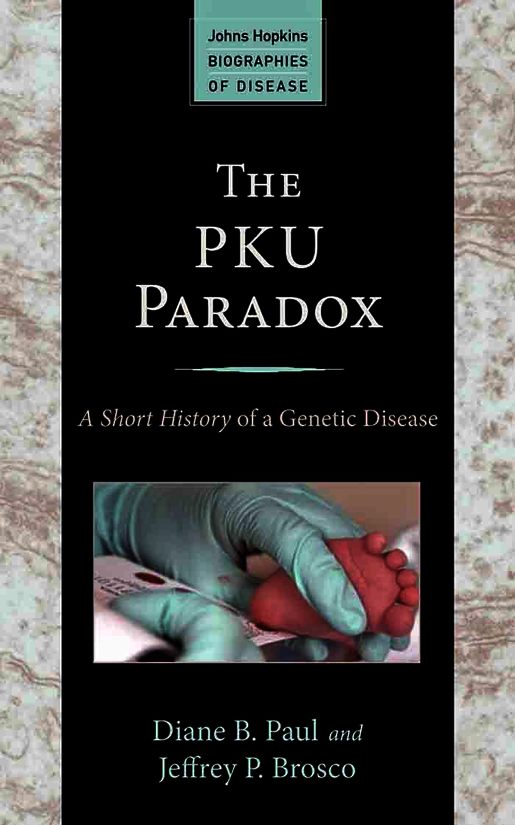
To some extent, the situation may be analogous to PKU. As thoughtfully discussed in The PKU Paradox by Diane Paul and Jeffrey Brosco, PKU is typically described as a straight-forward mendelian recessive disease that has a remarkably effective simple intervention. PKU has had its share of astonishing success that has provided moral capital for justifying all kinds of genetic testing. Hundreds of millions of babies have been screened for PKU.  However the clinical, ethical, resource utilization, and social issues engendered by PKU screening are anything but simple, far from being resolved, and we are still uncomfortable acknowledging them. And that is for just one relatively uncommon genetic disease. Those problems will be magnified as we test for many conditions, some of which are not so rare.

PKU Cover

Am I sounding an alarm over a non-issue? What are the thoughts  and ideas of our DNA Ex readers?

* – A little bit of language trivia for the curious reader: The letter thorn (Þ), which represents the phoneme “th” (/θ/) as in “there,” survives in modern English in a peculiar role in the names of certain businesses like Ye Olde Clothing Shoppe or Ye Dragon’s Den. The Y in “Ye” is derived from the Early Modern English version of thorn, which was indistinguishable from the letter Y. “Ye” in these names is a modern cutesy way of spelling “The” and “Ye” should be properly pronounced “the” rather than “yee.”

**- Clinical details have been changed to maintain confidentiality.

2 Comments

Filed under Robert Resta