Yearly Archives: 2009

Practicing What We Preach: Genetic Counselors, Disability, and Advocacy

Disclaimer:  I do not consider my deafness a disability, however, society defines it as a disability.   Therefore, I utilize quote marks and refer to it as “disability.”

As genetic counselors we are trained to respect and advocate for patients.  We are also trained to not to make pre-assumptions about their strengths, skills, and weaknesses.  Our training doesn’t always seem to apply outside of the counselor-patient setting.

As a deaf person, I knew it would be a difficult journey when I first applied to genetic counseling programs.  Little did I know how difficult it would be as a deaf person to find my place in this profession.  Genetic counselors learn about many different genetic conditions and work with many people who have various genetic conditions.  Oftentimes these genetic conditions fall under the category that society labels “disabilities.”  Even though I do not consider myself to have a “disability,” other genetic counselors sometimes took a different view.

Here are just a few of the barriers I have faced in this field because of my deafness:

  • I have been rejected from genetic counseling programs solely because I was deaf.
  • When I was invited for interviews for genetic counseling programs, I didn’t always have an interpreter available for the whole interview.
  • I was told by rotation supervisors that deaf people should not be genetic counselors.

The list goes on and on but my personal struggles are not the main focus of this post.  I just used some of my personal experiences to serve as examples.

Fortunately, these attitudes are not universal among all genetic counselors.  I have had some positive experiences during my brief career.  For example, I have never had people advocate for me as much as some groups within this field have.   It wasn’t until I started graduate school that, for the first time in my life, I truly felt like there were people out there who did want to see me succeed and were willing to go out of their way to advocate for me.

The barriers I have faced within this profession has made me question how genetic counselors truly view people with “disabilities.”  It has made me question if genetic counselors feel equal or above their patients who have “disabilities.”  Do genetic counselors serve as advocates because of some sort of deep need to help “poor unfortunates” or do they like being in the helper role and not because they truly want to see their patients be successful?  This is a very difficult question to ask of the profession and of ourselves.

I am playing the role of the devil’s advocate here.  This is not intended to be an attack against the genetic counseling profession.  Rather this post is intended to hopefully encourage genetic counselors to question why they may advocate for a person if they’re a patient but not if they’re not a patient.  What does it tell us about ourselves? Why does it appear that the role of serving as advocates have boundaries?  Where are those boundaries?  Should there even be boundaries?

Does it mean society’s attitude towards people with “disabilities” is so powerful and ingrained in us that we have to be specifically trained how to advocate and be on neutral grounds when counseling patients?   Does it mean our training is not good enough for it to cross over in all other aspects of our profession?

Is it that “disability” seems to go hand in hand with being a patient and it’s hard to separate those two?  Is it time to change our perspectives of people with “disabilities” to more than just patients?

I know it is possible for genetic counselors to pull together and advocate for other people.  My question is why doesn’t this happen on a more consistent basis?

Do genetic counselors need to analyze their perspectives on “disabilities” more thoroughly?  How can this be done?  I would love to see this profession become more welcoming to those with “disabilities” instead of constantly questioning their ability.  Oftentimes what one may see as a “disability” is that person’s strength.

I have seen this profession make attempts to make this field more diverse.  Usually diversity is thought to include people from different socioeconomic, ethnic, and religion background.  Why can’t diversity include people with “disabilities?”

I have learned so much from people within this field who have pulled together to advocate for me when the profession tried to work against me.  I want to make this field more accessible to people with “disabilities.” I want to pay forward what I have been given.

I genuinely want to hear your opinion regarding this topic.  It’s the only way I can start to understand why there are so many barriers within this profession and why we only seem to apply our training in certain settings (e.g. patients vs. professionals).

Changes won’t happen until we understand.  To understand something, we need to explore and question things.

15 Comments

Filed under Kelly Rogel

A Ghost From Christmas Past (Gate B4)


Not uncommonly we run into our patients outside of the workplace – in supermarkets, restaurants, and the like. When this happens, patients are usually friendly and chatter pleasantly while we frantically try to recall their names and what had brought them to our clinics. It can even be amusing, like the time my (then) 4 year old daughter and I were in the dressing room of the community swimming pool, buck naked, when the guy next to me stared at me for a bit, then exclaimed “Hey – I recognize you. You’re Bob Resta. You called us with some great news the other day. I can’t wait to tell my wife I saw you.”

Sometimes, though, these chance encounters are awkward and complicated.

It was just before Christmas in the late 1990s. We were at the airport to pick up my daughter who was returning home after having finished her first semester at college . Watching your child become a young adult and start life’s journey evokes many conflicting emotions, but after four months apart mostly you are excited to see your kid again.

In the eyes of our offspring, parents are capable of the most acutely appalling acts that are a constant threat to a teen’s cool quotient. Once we recognize this, it becomes parents’  – well, mostly fathers’ –  life mission to engage in embarrassing public behaviors, in loving payback for their children’s you-are-so-geeky-old and you-are-not-related-to-me attitudes toward their hopelessly unhip elders. Lest my daughter forget what she had escaped from four months earlier,  we decided to greet her at the airport wearing low-budget reindeer antlers resplendent with miniature holiday decorations.

This was a more naive time when you could still greet passengers at the gate and you weren’t confined to waiting behind the luggage carousels far from where loved ones have exited their planes. Our excitement grew when the PA announced her flight’s arrival at Gate B4, antlers perched on our heads in full kitschy splendor, grins locked on our faces in anticipation of her eye-rolling horror.

The first passengers emerged at the gate, wearing a slightly confused look as their eyes and brains adjusted from the cruelly close horizon of the seatbacks in front of them to the hustle and bustle of a busy airport. I was scanning for my daughter among the exiting passengers when the foremost one approached me. “You’re Bob Resta” she said in a flat, low tone tinged with grief at its edges. “Last Christmas you called me with the most devastating news of my life. I will never forget your voice or what you said to me.” At a loss for words, I looked at her, unable to remember anything about her. She paused for a moment, looked a little longer into my eyes,  and then continued on her way.

Amid the background airport din, I could barely make out Joni Mitchell’s melancholy voice, “I wish I had a river /I could skate away on.” Shell-shock replaced my smile. One of my reindeer antlers drooped and its miniature candy cane decoration dangled helplessly. My gaze returned to the departing passengers but I lost track of why I was waiting there.


Continue reading

2 Comments

Filed under Robert Resta

Communication in the Genomic Era

Last month the Genomics Law Report, a blog about the “intersection of genomics, personalized medicine and the law,” launched a series called “What ELSI is New?” They invited guest commentaries from various disciplines to provide a short post on what they felt was the most important ELSI issue facing the fields of genomics and personalized medicine. If you haven’t had a chance to peruse the series of commentaries, I’d definitely recommend it. I love the idea of looking at an issue from 360 degrees.

In full disclosure, I was very excited to be invited to contribute to this series. And you can find contributions from familiar players such as the NSGC Board of directors and Sharon Terry of the Genetic Alliance here and here. In considering the series in it’s entirety, I was struck by how many submissions centered on communication: between scientists, physicians, patients, the public. Below are a couple of excerpts I found particularly relevant to the field of genetic counseling.

From Chris Gunter of the HudsonAlpha Institute for Biotechnology:

I am struck by the absolute hunger of the public to understand genomics and personalized medicine… I propose our field engage in our own form of personalization: using education and media in all forms to convert the energy of the public into an army for science…

From Mathew Harper of Forbes:

…if genomics is really going to impact medicine, we’re going to have to start bridging the gap between the companies and scientists doing this early work and the traditional medical establishment…23andMe’s big contribution has been to start this conversation, but we’re still a long way from figuring out how genomics will fit into medical culture, no less into the regulatory framework.

From Zoe Mitchell and Dr. Gavin Harper of Oxford Nanopore Technologies:

As we enter an era of personalized, genomic medicine, the understanding and communication of probabilities is likely to be a stumbling block, not only for the public but for clinicians too…How to provide context, interpretation and counselling around these complex sets of probabilities is a new challenge in statistics, ethics and psychology.

I realize that the importance of communication isn’t news to anyone in the genetic counseling world. However, I like that it seems to be a focal point for the early thought leaders in the genomic era. This, in turn, will hopefully make our job of ensuring that our voice is heard in this discussion, just a little bit easier.

Leave a comment

Filed under Allie Janson Hazell

Professional Certification Debate

I wrote on this blog earlier regarding anxiety surrounding the new ABGC certification exam. To my personal relief, I found out this week that I am amongst those who passed. However, I cannot help but wonder how the passing score was determined and what this new exam means for our profession. What does a passing score on this paricular exam really tell employers, doctors, and patients? Question-Marks

I have spoken to a number of counselors who felt the exam was not focused enough on the genetics that we have worked so hard to become beyond competent in. While I have many thoughts and concerns about the meaning of this exam and its impact on future of the profession, I am going to await further explanation from the ABGC before I write on this more.

If you want an excellent summary of the ongoing discussion amongst genetic counselors about the validity of the exam and results, please check out the blog authored by SLC graduates Sarah Savage and Catherine Clinton:

http://gcqc.wordpress.com/

I am particulary interested in how the previously certified counselors feel about the use of this new exam. Please leave your comments here or at the above named blog.

ANOTHER THOUGHT:  Maybe we should consider moving foward with a general genetic counseling exam and then have subspecialty GC exams i.e prenatal, cancer, metabolic, pediatrics, etc..so we can show where we have special genetics knowledge? Similar to the way in which the ABMG grants their certifcation to biochemical geneticists or cytogeneticists. THOUGHTS?

6 Comments

Filed under Jessica Giordano

It Was Bound To Happen Amway or Another

amwayglobalearthquakes

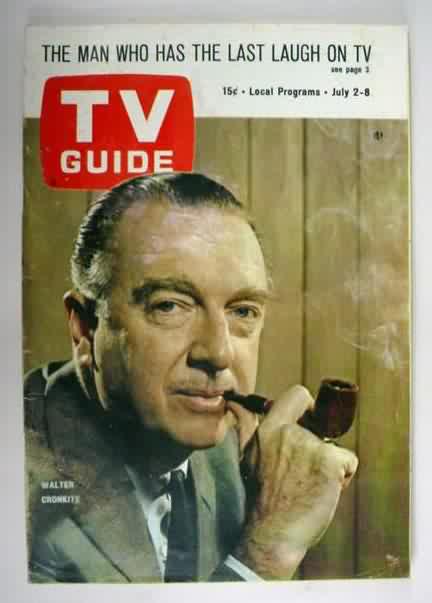
Remember Edward R. Murrow?  No?  Me neither.  How about Walter Cronkite?  I met him once in an elevator in 1980 (if by “met” you mean that I mistook him for the elevator man and ordered the most famous news anchor of the day to take me to the fifth floor.  I recognized him by the familiar resonance of his voice as he replied, “Well, alright, young lady,” and we continued on together for the rest of the ride in an amiable silence, him smiling benignly, me wishing there was somewhere to hide in an elevator).

But I digress.  Here’s the point: for those of us ancient enough to remember, there was a time when everyone turned to a Walter Cronkite for the news.  The news guys didn’t always get it right, but truth was what they were aiming for.  Then somebody got the idea to give the news a slant — let’s not descend into name-calling here but SOMEBODY (rhymes with pox) got the idea to make news a little more exciting for their audience.  The old news was boring – while the new news was provocative and inflammatory, a veritable cocktail of rhetoric and innuendo with the occasional fact thrown in like a garnish.  Fact: the olive in the martini glass of new news.

And it worked.  The public liked the new news, or at least they liked it better than the old news, which was bad news for the purveyors of real news (although ironically it worked out very well for the champions of fake news).  Soon, everybody was busy finding an angle, so that now instead of that one boring half an hour in the classroom, we have twenty-four hours a day of happy hour, with everyone shouting to be heard over the noise in the bar.  Five o’clock somewhere; time for a drink!

But I digress.  What I meant to say was this: today I read in a press release that Amway Global has entered into a partnership with Interleukin Genetics to sell their trademarked Inherent Health line of genetic tests, including the new Weight Management Genetic Test and the soon-to-be released Bone Health Genetic Test, which measures liability for osteoporosis.  How excellent is that?

Of course, they’re not entirely sure that it actually measures liability for osteoporosis.  Sure, they stand by their claim that it will improve peoples’ health – but the test is not even due out for another month, so it is far too soon to have any idea if it works and besides, according to the press release, claims like this are not promises but “forward-looking statements.”  When an organization is trying so hard to be forward-looking, it is hardly fair to expect them to be right at the same time, since predicting the future is a dicey business (as people are likely to discover, using the Inherent Health line of genetic tests).  And the company tells you right up front (if by “up front” you mean buried in the small print at the end): “Because such statements include risks and uncertainties, actual results may differ materially from those expressed or implied by such forward-looking statements.”

Naturally, Amway “disclaims any obligation or intention to update these forward-looking statements.”  Of course not.  Because they might not launch the test at all, or the technology might become obsolete, or the whole thing might turn out to be complete and utter bulls**t.  But how boring is all that fact-checking stuff?  And don’t they already know what their customers want to hear?

Here’s a backwards-looking statement I would like to make: I think I’ve seen this movie before.  It’s called The Invention of Lying and it stars Bill O’Reilly and Lou Dobbs and Keith Olbermann.  The critics hated it, but it has a happy ending – eventually, everybody hears only what they want to hear, and if by mistake they stumble onto information that contradicts their preconceptions, they are free to disregard it entirely – because all statements include risks and uncertainties, and actual results may differ materially.

Scream and yell and howl at the moon, but Glen Beck is not going off the air until his ratings drop and Amway is going to sell genetic tests if people will buy 66waltercronkitethem.  Where does that leave genetic counselors?  Shall we agree to be the PBS news of genetic testing: a sober, sensible broadcast admired by many and watched by few?  There are worse things in life one could be than Jim Lehrer.  I think Walter Cronkite, were he still alive and assuming he had gotten over the incident in the elevator, would be proud.

Or, we could all go work for Amway… five o’clock somewhere; time for a drink!

2 Comments

Filed under Laura Hercher

The Small Satori of Genetic Counseling

Let’s face it – lots of genetic counseling is repetitious. Most of us have subconsciously scripted our own version of a counseling session that we follow more rigidly than we like to admit, the inevitable outcome of seeing hundreds of fairly similar patients a year, year in and year out. On particularly busy days, you may even  lose track of where you were  in the session when a patient asks a tangential question or there is a knock on your door. It can be a slog, a Groundhog Day-like re-playing of the same film with only minor variations.

This repetition stems to some extent from the educational component of genetic counseling, the need to impart complicated biomedical information with the ultimate goal of helping patients making good decisions about their medical care and lives. We want to combine knowledge with emotional guidance so patients can gain wisdom and personal insight. Sometimes, though, as you watch dazed patients stumble out of your office, you start to wonder just how effective or helpful you have been.

On the other hand, there is a zen-like quality to constant repetition of the same act. By focusing strictly on the task at hand you master it through endless repetition. You eventually perform without thinking of the mechanics of performing, and achieve a state of mastery without thought .  Chop that wood, carry that water. Brush left, brush right, Karate Kid. This frees the mind, making it receptive to sudden, unanticipated moments of enlightenment – satori, in the language of Zen. With a free mind, you can subconsciously pick up cues from patients’ words, expressions, and postures, and suddenly, you see into the heart and soul of your patient – Wumen’s thunderclap out of a clear blue sky. Ah –  this cancer patient is angry because his mother walked out on the family when his father was diagnosed with terminal colon cancer, not because I kept them waiting 15 minutes for the appointment. Look – all the worry left her face when I said she really did not need to have an amniocentesis; she just needed someone in authority to tell her that it was a good decision.

What we really want, though, is for our patients to also have these small satori,  those magical moments when their faces light up, their eyes open wide, and everything falls into place for them.  These are some of the most rewarding and exciting moments of genetic counseling. Yes, yes, of course – I must tell my sister about my BRCA results to make sure she does not get ovarian cancer. She’s my sister ; I love her even if we are always bickering. You know – I just realized I do not need to have an amniocentesis; for some crazy reason, I was going to do it for my friends.

Repetition is critical to our professional development. In quiet, not-quite-perceptible ways, it builds our confidence, enhances our ability to understand our patients on a deep level, and plows the soil for the seeds of personal growth. For the compassionate bodhisattvas among us – like Jon Weil, June Peters, Luba Djurdjinovic and a few others – thunderclaps are second nature. For the rest of us – well, it’s back to chopping wood and carrying water.

7 Comments

Filed under Robert Resta

How To Work With Interpreters

Jessica’s most recent post, Interpretation Declined, struck a chord with me.  She brings up a very good topic and it was refreshing for me to see it from a different perspective. I wanted to expand on this topic some more since I have utilized interpreters as both a genetic counselor and as a patient.

Jessica writes about her experience as a genetic counselor who works with interpreters.  I’m writing from the other side of the fence; the patient’s experience using interpreters.  I hope some of you find this helpful or this serves as a refresher if nothing else.

The top 5 things I wish health care providers knew when working with interpreters.

Note:  I’m deaf myself and have worked with numerous interpreters in various settings.

1)    Make the situation less stressful as possible for everyone. It’s always stressful going to the doctor’s office but it is even more stressful not knowing if a qualified interpreter will be available for an appointment or if a medical provider knows how to use an interpreter.

I, personally, worry more about if an interpreter will be present at my doctor appointments than the actual appointment or not.  I greatly appreciate it when the doctor’s office calls me prior to my appointment to let me know if an interpreter has been scheduled.  This reduces my stress level and shows that the doctor’s office cares about accessibility and I’m a lot more likely to focus on my health itself than communication barriers that may arise.

When possible, genetic counselors should try to contact their patient in advance notifying them that an interpreter will be available even if it’s only an hour prior to the appointment.

This makes a big difference because it shows you respect your patients and shows them you want your patients to have equal access to information.

2)    Remember the interpreter is not there just for the patient, he/she is there for you also. For the longest time I felt like I was a burden whenever I needed an interpreter which in turn made me want to avoid going to the doctor.  Health care providers tended to make me feel like it was my fault I needed an interpreter because I couldn’t understand spoken English.

I read something a couple of years ago that made me realize that an interpreter is there not just for me but for the health care provider also.  I do not speak the same language my health care provider speaks and my health care provider does not speak the same language I do.  Hence we both need an interpreter to understand each other.

A suggestion for genetic counselors would be to remember it is not only the patient who needs an interpreter, YOU need an interpreter too.  Do not make the patient feel like he/she is a burden by making them feel like you had to go out of your way to work with an interpreter.

3)    Preparation. As genetic counselors we know the importance of case preparation prior to an appointment.  Don’t forget to prepare interpreters also.

When possible take 5 minutes prior to an appointment to review the case with the interpreter.  Mention the patient’s name because it is possible the interpreter may already know the patient from outside a medicine setting which could lead to awkward situations for the patient and possibly a bias in the translation.

Give a brief review of the case-particularly genetic terminology.   This gives you the chance to bring up any sensitive issues that an interpreter may say he/she cannot interpret without a bias.  A review of uncommonly used terminology helps ensure information gets translated correctly.

4)    Medical interpreters. My best health care experiences have involved medical interpreters.  I know many of you use telephone interpreters, but try and check as if your scheduled interpreter has any medical training.

If you work with a specific interpreting agency on a daily basis contact the company and ask if you can send some information to them that can be reviewed with interpreters.  I have found as a genetic counselor that it makes a huge difference when I provide an interpreter with a list of commonly used genetic terms with brief definitions.

5)    Know your rights and how to work with an interpreter. If you do not feel comfortable using a specific interpreter, request a different one.   You are entitled to working with a qualified interpreter.  Become familiar with the type of interpreter services your hospital works with.  How are those interpreters hired?  Do they have any medicine background?  What kind of certifications do they have?  Have they been trained to be neutral?  What are their qualifications?

Have high standards for interpreters you work with and develop work relationships with them.  Keep the communication line between you and interpreters open.

Don’t forget, you are speaking to your patient and not the interpreter.  Maintain eye contact with your patient and avoid using phrases such as “tell her,” “what does he think,” etc.

Relax and be comfortable.  🙂

Leave a comment

Filed under Kelly Rogel

Interpretation, Declined.

The important and challenging task for the language interpreter is to find a balance between active and passive involvement, understanding what is happening while attempting to interpret, word for word, what is said.globe

Many interpreters accomplish this fairly well and I do not often believe they are actually influencing my patients in any particular direction for or against prenatal testing, terminations, cancer testing, etc. But, recently, an interpreter declined continuing because my French speaking patient from Africa and I were discussing abortion. The interpreter hung up, “exercising her right to decline continuing”.

After 30 minutes of rapport had been built, everything went into limbo for 10 minutes as I worked to find a new interpreter. I do not know exactly what the patient was thinking in those 10 minutes, but my thoughts went something like this…

“What kind of question did the patient ask that finally made the interpreter uncomfortable? Does my patient feel judged by this 3rd party who is probably sitting in her cozy ‘interpreter chair’?! I am angry! Don’t they screen for personal beliefs when they sign up people up for this service?! I am going to black list this interpreter from ob/gyn services…Wait, I have to focus on the patient’s reaction..”

I composed myself and apologized profusely to the patient. She was gracious and reiterated her question to our new interpreter. I heard, “Would the hospital be supportive of a decision to terminate a pregnancy with Down Syndrome?”

Clearly, the interpreter would not be.

But the interpreter is not actually a part of the hospital. That is known to me, but not necessarily to the patient. We spent some time clarifying the mixed signals the patient was receiving. The patient eventually decided to decline further prenatal screening. Did the interpreter influence her decision?

I could not survive my prodigiously diverse hospital setting without the aide of the language line. I have been suspicious that some interpreters are not translating word for word. I even hang up if I am uncomfortable with the interpreter’s style. However, this scenario forced me to further question whether or not the service actually influences the patient’s decision making.

A conference this weekend regarding medical decision-making published an abstract about this issue and the authors say:

Common challenges were additions, omissions and modifications in terminology resulting in miscommunication of clinical and cultural concepts, and ethical concerns during conflicting values between providers, interpreters and patients.”

How do we overcome this? Can we? If we start using computers to translate for patients and providers, we would lose some of the essential humanness that great interpreters provide i.e. using a more compassionate voice when the room is full of tears, recognizing when a patient is lost and asking to rephrase.

As a genetic counselor, my primary goal is to facilitate informed decisions rooted in self-understanding.
This often requires a non-directive and supportive environment. Anyone who assists us must have this goal as well. I implore interpretation providers to assess your beliefs before becoming involved in cases that might be morally offensive to you.

There is little worse than negative judgment when you are most vulnerable. Ask the patients. Ask yourself.

Please share your thoughts about the influence of language providers on your patients. I am reminded of “The Spirit Catches You and You Fall Down”. Maybe I should revisit this book, other suggestions?

4 Comments

Filed under Jessica Giordano

“Designer Genes”

I posted this on herNaturehisNurture a couple of days ago, but thought you would all get a kick out of it as well. An image found via popurls.com:

“How Genetics Works”

How Genetics Works

Photo by Rene Maltete, 1930

1 Comment

Filed under Allie Janson Hazell

Misrepresentation of Genetics on TV: Harmless or Harmful?

Most medical TV dramas have, at some point, featured a genetics-related plot line. In a “Grey’s Anatomy” episode,  three siblings struggle with the decision to have prophylactic gastrectomy  after testing positive for a known familial gastric cancer mutation. In that same episode, a high school student in a marching band is “cured” of her seizure disorder after be correctly diagnosed with ARVC. And during an episode of “House,” one of the residents draws her own blood, runs it through a machine and quickly receives a print out confirming that she carries a familial Huntington’s disease mutation. Notably, she tested herself only after extensive bullying from her physician boss.

Until recently,  I wrote these scenarios off as interesting, humorous and somewhat frustrating misrepresentations of genetics in medicine. However, a recent lecture I heard by the Ontario Deputy Chief Coroner got me thinking otherwise. As she explained, misrepresentations of the work of a Coroner by TV programs are a huge detriment to the work of their office and in turn the relationship between the Coroner and families. Families are often distraught when the Coroner is unable to provide a specific time of death (e.g. 2:23pm), a quick explanation of cause of death and timely autopsy report. This got me thinking about the role of TV in my everyday interaction with patients. Do these misrepresentations signifantly impact my counselor-patient relationship?

The most obvious misperception that I encounter on a daily basis is the amount of time it takes to receive genetic test results. People are shocked when they learn their results may take anywhere between one and three months to receive. And I often spend a significant amount of time downplaying the “absoluteness” of genetic information: a negative genetic test result doesn’t rule out a diagnosis and a positive predictive test result doesn’t guarantee the onset of a future medical issue. Not surprisingly,  survey’s have shown that diseases featured on “Grey’s Anatomy” have increased the public’s knowledge of a condition.

So, in an ideal world, representing medical genetics accurately in TV programming could possibly enhance the genetic counseling appointment. We all know that there are enough interesting and ethically charged stories in genetics to work with. Any TV producers out there care to take this one on?

Then again, I supposed waiting three months for test results wouldn’t make for the most exhilarating television.

3 Comments

Filed under Allie Janson Hazell