
by Smita K. Rao, MBBS, MS, LCGC and Michelle Moore, MS, LCGC
Smita K. Rao, MBBS, MS, LCGC is the past co-chair of the International SIG. Michelle Moore, MS, LCGC is the current co-chair of the J.E.D.I Subcommittee for Lab/Industry SIG
As crowds of newly graduated genetic counselors (GCs) herded through the vast Convention Center in New Orleans for the 43rd National Society of Genetic Counselors (NSGC) Annual Conference in September, a much smaller group of more seasoned GCs instinctively veered toward the Special Interest Group (SIG) pavilion. But the energy of previous years had disappeared – entering the pavilion felt like walking into a middle/high school science fair. SIG leaders or their representatives were assigned specific locations where a sign and some sparse brochures or flyers displayed information. Each SIG presented their best elevator pitch as people walked by to highlight the benefits their SIG could provide. Is this the new face of the SIGs in the world of the Open Access Pass?
In order to understand what the Open Access Pass is and how it came about, some historical background is necessary. SIGs historically have created communities that support the more focused interests of its members. SIG leaders invest volunteer hours to help promote these interests by providing opportunities for further education and research through webinars, social hours, and workshops
In 2021, The Exeter Group’s NSGC Report exposed what many SIG leaders had already been hearing from their membership for years – genetic counselors of color, the LBGTQ+ community, and those with disabilities felt ostracized and unsupported. Being the grassroot factor that connects the Society with its members, the ripple effects of the events of 2020 (the pandemic and social justice movement) brought the discussion of justice, equity, diversity and inclusion (J.E.D.I.) to the doorstep of the SIGs. Many SIGs created their own J.E.D.I. subcommittees and safe spaces to support their members. Social hours and webinars were dedicated to J.E.D.I. initiatives and how personal changes could propel a larger positive shift.
In response to The Exeter Group’s report, NSGC leadership posted a statement of solidarity proposing the formation of a J.E.D.I. task force. But forming a task force takes time and the SIGs continued to plead for support and immediate direction from the NSGC leadership. SIG leaders published a Perspectives article that beautifully communicated the challenges they faced, the resources successfully created thus far, and provided constructive ideas on how NSGC leadership could provide concrete, immediate support to the SIGs. Subsequently NSGC leadership introduced a two-phase response to SIG requests. The first phase dissolved the SIG-led webinar series (where each SIG typically held 6-8 webinars a year as a cost-effective CEU option, at times without a charge) and transitioned to a NSGC-led umbrella webinar series where each SIG could hold only one webinar each year. The CEU fees are now higher for each individual webinar and for the entire series. In the second phase, NSGC created a SIG Task Force to define the role of the SIGs.
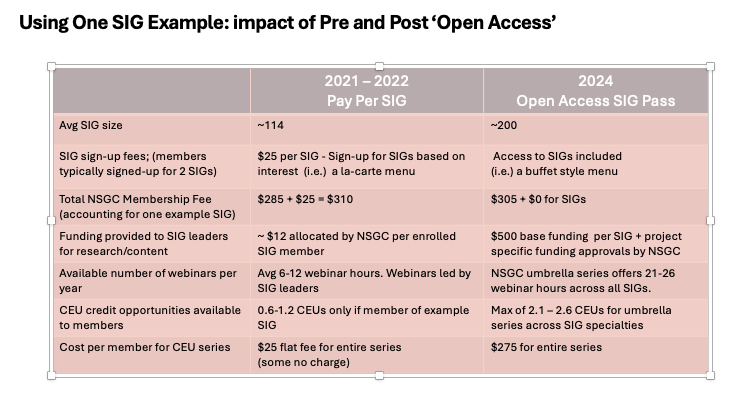
Although many felt this two-phase response appeared counter to the suggestions in the Perspectives article, SIG leaders welcomed the opportunity to be a part of the solution. Additionally, some SIGs took independent initiative to create new educational opportunities, such as the Student/New Grad SIG’s Genetic Counselors for Racial Justice (GCRJ) platform. Not all SIGs survived these changes, with some SIGs disbanding, forming another group outside NSGC, or merged with other SIGs. NSGC’s actions led to the creation of the Open Access Pass, which now allows members to pay one fee for access to all SIGs, instead of paying separately for each SIG membership.
The concept of the Open Access Pass is a commendable attempt (and supported unanimously by SIG leaders) to increase inclusion and access. However, when combined with fewer webinars and reduced funding, it has further restricted SIG autonomy. While lowering SIG membership costs decreases the financial burden for some members, it does not help address the larger issue of NSGC membership fees being among the highest in various genetic societies in the nation. Additionally, the Open Access Pass necessitates that all SIG expenditures come out of the NSGC budget with approval from the NSGC Board and other specific subcommittees. This limits each SIG’s ability to fund multiple projects or initiatives. Now SIGs must choose and put forward 1-2 projects in each category of research and special projects for approval to be funded. This new structure reduces the community reach of each SIG as they are unable to support the smaller activities that might have been their focus.

The SIGs have continued to navigate this very tumultuous time of the last four years. Despite mentioning increased participation in SIGs during the State of Society Address at the Annual meeting, volunteerism has been on the decline in the world at large. Although each NSGC member is “involved” in more SIGs, the actual amount of time they can give to each SIG activity is still limited. Many SIGs have noted decreased attendance at SIG meetings and fewer volunteers for SIG projects. The Open Access Pass did not cause this decline, but it compounds an existing trend of reduced volunteerism due to widespread job cuts across the genetic industry in recent years, increasing anxiety and unrest among our members.
NSGC’s J.E.D.I. plan is commendable and proposes critical changes in many segments of its organization. At the State of the Society, we also heard that the Exeter Group released another NSGC report this year. Our organization’s DEI index has gone from a C- to a C grade designation. However, membership still wants projects to be implemented that will impact our members. The SIG experience demonstrates the challenge of balancing the desire to bring about radical change and the multiple barriers to achieving this goal. The new SIG structure is still in its infancy. Only time will tell if these changes bring to fruition an increase in access and equity or continue to lower the individual impact and autonomy of each SIG.
As previous SIG leaders, we are thankful for the significant impact of work we brought about while enjoying the camaraderie in the process of supporting the individual priorities of our SIGs. NSGC leadership must continue their efforts to listen more deeply, to be more transparent, and to execute with more meaningful intent. Learn from other organizations such as the Minority Genetic Professional Network (MGPN), whose warm, personalized efforts at the Annual Conference were hugely refreshing! Diversity and equity exuded from every action, every smile, every hug, every exchange received when entering their room for a bit of respite and recovery. The positive energy of the MGPN reminds us of the original purpose of the SIGs – to be a welcoming, safe space, where J.E.D.I. initiatives are a given and NOT a choice. Equity begins with understanding the needs of our community and providing opportunities for inclusion and connection. These are values and principles that an organization MUST inculcate into every project, committee, and subgroup it fosters. Replace the science fair carousel at the SIG pavilion and assign spaces for SIGs to gather at the conference to celebrate their member communities. Work toward what our members truly need. Dig deeper for meaningful change. Take Action over Talk. Thank you.




 The DNA Exchange