Category Archives: Robert Resta

Everyone’s Worst Nightmare

The story that I tell here is, I know, a one-sided tale. It is also the source of pending litigation. A friend of a parent of the child reached out to me to ask me to share the story with the genetics community with the hope that some good could come out of a terrible experience, and did so with the approval of the parent’s lawyers. I obtained the details from publicly available records. I am not passing judgment on who was right, who was wrong, who did what, and who didn’t do what; the lawsuit will rule on that. I have had no involvement with the care of the patient or the subsequent legal wrangling, nor do I have any particular expertise about the disorder in question. For months I have struggled with whether the DNA Exchange is the appropriate venue for this, but ultimately decided that the family’s voice needs to be heard. I have largely anonymized the story because, really, specific names and diseases do not matter. What matters is that steps need to be taken to help ensure that other patients, families, providers, and laboratories do not repeat this sad tale.

The child was born about a decade ago, the product of an uncomplicated, happy, and desired pregnancy. At a few months of age, the child developed seizures after receiving a routine vaccination and went on to experience ongoing seizures of differing types. Various diagnoses were entertained particularly mitochondrial diseases and treatment included standard anti-seizure medications. A number of specialists were involved with the child’s care, including geneticists. Early on in the work-up genetic testing identified a mutation in a gene linked to a disorder that would explain the child’s seizures, a finding which the lab interpreted as a variant of unknown significance (VUS). Based on available literature at the time, there was some reason to believe that the variant might be a pathogenic mutation – it had been reported in affected patients –  but determining the clinical significance of a gene mutation is a problem that continues to plague genetic testing today.

Now here is where the story gets complicated and fuzzy, and to me where the tragedy starts to unfold. Apparently, the physician who ordered the test decided that the genetic test result was inadequate to help establish a definitive diagnosis, and pursued other diagnostic possibilities. As far as can be gleaned from the records, the genetic test results were not shared with the family although some of the treating physicians had considered the diagnosis on clinical grounds. The child continued to be treated with medications that, unfortunately, worsen the seizures for the condition that the child was ultimately diagnosed with – a condition caused by mutations in the gene in which the VUS was found. Sadly, the child died a few months shy of 3 years old from intractable seizures likely related to the contraindicated seizure medications.

The family did not find out about the genetic test results until about 7 years after the child died and only then after a parent requested the results. A few months later, the lab produced a revised report that reclassified the variant as a disease-associated mutation. Curiously, the report does not contain a revision date nor does it include the reasoning or data that led to the revised interpretation.

On one level, this story tells the genetics community nothing it did not already know – interpreting the clinical significance of a VUS is a terribly complicated and at times subjective affair. There is no single gold standard that can be used to determine clinical significance, which involves complex statistical, genetic, and biological analysis. Two equally capable labs can look at the same set of data and come up with diametrically opposite conclusions. Articles address the frequency of variants in genetic testing and differences in interpretation, along with providing an idea of the scope of the problem. But statistics are not stories. Stories convey the human impact of statistics and the urgency of the problem. As the saying goes, one death is a tragedy; a million deaths is a statistic (attributed to, of all people, Joseph Stalin).

Public databases such as ClinVar are starting to address this problem but they are still in their infancy. Indeed, a recent check of ClinVar revealed only one entry for the variant in question and the entry doesn’t even classify the variant. As human genome testing is ordered at exponentially increasing rates, the need for a uniform approach to genetic test interpretation and data-sharing is beyond pressingly critical. Restrictive gene patents and data hoarding may be good for business but they are not good for patient care. Lots of money will be made through genetic testing; some portion of those profits need to be channeled to funding well-curated freely available databases ( a database that is not well-curated is useless, and potentially harmful). Perhaps there could be tax breaks for labs that share data and government funding could favor research projects utilizing labs that share variant data.

But this story highlights other potential weaknesses in the genetic testing process. Parents and patients need to have pre-test genetic counseling so they are clearly informed when genetic testing is ordered. Results need to be explained to patients, even if they are uncertain. This is no mean feat, especially when a patient is going through an extensive work-up and many tests of all varieties are being ordered. Results have to be clearly available in medical records so all providers can have ready access to them, and patients should always have a copy of their test report made available to them along with an explanatory letter. A letter to the family summarizing the results could have prevented a lot of anguish for this family. There must be good mechanisms in place to regularly update test interpretations and for those updated interpretations to be communicated clearly and without delay to providers and patients. Patients should be encouraged to actively participate in seeking more information about their genetic test results and to enroll in centralized databases such as PROMPT. Maybe labs should allow a random sample of their report interpretations to be audited by an unbiased third party such as the College of American Pathologists to assure adherence to test interpretation guidelines. This could be a voluntary program but labs may be eager to participate as a selling point of their commitment to accuracy. Governments and insurers must allot the funds and resources for all this to take place.

The outcome here was the worst possible for everybody – most especially the patient and the patient’s family, but also no lab and no care provider ever wants something like this to happen to a patient. It haunts us all. If any good can come out of this, then this story will inspire us to work with greater urgency and cooperation to create workable solutions. Our patients deserve no less than the very best.

This posting is dedicated to the memory of the child whose all-too-short life is discussed here.

12 Comments

Filed under Robert Resta

The Good Enough Sinner

In The Late Show, my previous posting to The DNA Exchange, I bared my soul about how one of my personality quirks – a perhaps overenthusiastic commitment to punctuality – insinuated itself into my genetic counseling practice. Shortly after writing that piece, I headed off for a trip to Berlin and Prague. In Prague, we visited The Museum of Communism, a quirky little place that felt like an attic where someone stored a bunch of leftover random items from the Soviet Era. While strolling through the collection, the note on the time card rack pictured below (with the note in the original language and a translation for museum visitors below it) caught my eye:

Time card holder from the Soviet Era, displayed at The Museum of Communism, Prague, The Czech Republic.

Time card holder from the Soviet Era, displayed at The Museum of Communism, Prague, The Czech Republic.

Okay, so even I admit that you can sometimes take a personal obsession with timeliness a little too far for its own good. Mr. Gorbachev, tear down that time card wall!

In response to The Late Show and Through A Counselor Darkly, my two previous postings to The DNA Exchange, several readers have rightly pointed out that the language used in those pieces was inherently judgmental, phrasing such as “unconscionably late” or “going on and on.” No argument from me there. In fact, that was the point of expressing my thoughts that way. What I have been exploring in these recent postings is my struggle between the personal Robert Resta and the professional Robert Resta. Personal Robert Resta can be a judgmental guy; Professional Robert Resta hopes that those judgments do not manifest themselves so blatantly when he interacts with patients.

In subtle and not so subtle ways, we feel pressure to be saintly counselors who always have pure thoughts about our beloved patients. In fact, though, most of us – and most especially me – are all-too-human sinners, not saints. Prick us and we will bleed. As a genetic counselor, I have plenty of impure thoughts and experience near occasions of sin, many of which can sometimes slip into my counseling sessions like a stealth bomber from my id. My counseling style will ineluctably reflect my personality, warts and all. In much the same way, my Catholic upbringing informs the imagery I use in these confessional pieces.

On the other hand, there are some good parts of my personality that I want very much to come out in my genetic counseling – wit, warmth, some measure of wisdom, compassion. I aim to be saintly when I am actively engaged in genetic counseling, but I try to maintain an active awareness of my human frailties and limitations. I am coal hoping my diamond shines through.

One can hear echoes of  Donald Winnicott‘s theory of The Good Enough Mother here (nowadays, we might say The Good Enough Parent). In Winnicott’s paradigm, The Perfect Mother is, paradoxically, an inferior parent because the child develops a fantasy bond based on an omnipotent and infallible parent, which no parent can ever be and which does not prepare the child for developing healthy, reality-based relationships with family members and the community. Instead, the Good Enough Mother’s inherent flaws are actually critical to normal child development and encourage healthy separation from dependence on the mother. I think this is what Annette Kennedy was trying to make us aware of more than 15 years ago when she wrote about supervision in genetic counseling and suggested that we should strive to be Good Enough Counselors (forgive me, Annette, if I have misrepresented you). In my version, we strive to be Good Enough Sinners.

By articulating my inner thoughts, insecurities, and feelings and sharing them with the genetic counseling community, it provides an opportunity for me to grow and to better mediate between Professional Me and Personal Me. Humbly, I like to believe that others may profit from this experience as well. If even a few of us become slightly better counselors as a result, well, Amen to that.


2 Comments

Filed under Robert Resta

The Late Show

Okay, so I admit to being a little obsessed with being on time for, well, everything in life. As I used to say to my kids when we traveled as a family, “If you don’t hurry up we are not going to arrive atrociously early for our flight!!” This personality quirk/defect extends to my genetic counseling life, where I fire imaginary heat seeking missiles at conference speakers who go way over their alloted time (and let me say, bioethicists are just about always guilty of this mortal sin), do my best to make sure my patients almost never wait very long beyond their appointment time to see me, and I arrive at work every day too early for my own good.

Because of my preoccupation with punctuality, one of my counseling flaws is maintaining professional equanimity and objectivity when patients arrive unconscionably late for their appointments. Yeah, yeah, I know that some patients are late for reasons beyond their control, but, hey, God blessed us with cell phones so you could call to let us know that you are stuck in traffic or the babysitter came late or there are delays in Radiology or the bus broke down. By the way, my olfactory sense is telling me that you think that you had enough time to catch a smoke before you got here.

So you can imagine my state of mind when just yesterday, in the final hours of my final day before a much deserved 2 week vacation, my last patient of the day showed up 45 minutes late. Up to that point, for a day before starting vacation, I was a whirlwind of efficiency in clearing off my desk, tying up loose ends, and closing out lingering cases. And I had just been thinking that, with my last patient an apparent no-show, I could actually leave slightly early and without the frisson of guilt of leaving unfinished business for my co-workers to clean up for me. At which point, of course, the receptionist notified me that my patient had just arrived and wanted to know if she should tell the patient, “Sorry, you are too late and you will have to reschedule.”

What is a good counselor to do in this situation? Most of you would probably say I was well within my rights to tell her to reschedule. At some point, you must maintain some respect for yourself, your own time, and your own needs. Reviewing her e-chart quickly, I noticed that she had already cancelled several appointments with me and others over the last year, which could mean that she was pretty ambiguous about seeing me in the first place. I vented some nasty thoughts to myself but finally experienced the counseling satori that this was another instance of my personal issues affecting the acuity of my counseling vision. Ultimately, I decided to see the patient, in part because I did not want to lose her since it seemed likely that she might never reschedule and in part because my professional ego wants to reinforce the appearance of being a good counselor.

I decided to say nothing to her about her tardiness. What good would that do? It would not make the situation any better and, besides, I was pretty sure my receptionist had already pointedly addressed that with her. I chose to use one of my favorite counseling strategies – I was silent for a few moments (let me tell you, shutting up is often the most effective counseling approaches you can pull out of your bag of counseling tricks, and it does not require any special skill, though for a loquacious chap like me, it can be difficult). I wanted to see if and how she would fill the conversational void on her own. Which she did, by acknowledging that she was very late for the appointment. So I offered her an out by asking her if she had gotten lost in the maze of the hospital campus. Her refreshingly honest and guileless answer made me smile: “No, I am just late,” she said with a sigh. I was actually starting to like her.

Immediately it became clear that this patient’s life was currently, and pretty much always had been, a mess. She had cognitive  and memory impairment, the type that seems to stem from past physical and/or emotional trauma. She retained enough neurological skills to get by in life, but just barely.  She was deeply grateful when I gave her a clipboard and pen and encouraged her to write down the most important points, and I slowly spelled even basic words for her. “Thank you,”she said, “a lot of doctors get impatient with me when I forget something that they just said and writing it down helps me understand it better but I am not a very good speller.” Man, I thought, there must be too many care providers lacking basic human interaction skills. That simple smile and unabashed gratitude on her part along made it worth delaying my vacation time.

Many of my suspicions were substantiated when I took her family history. Relatives who died of drug overdoses, plenty of alcohol abuse, some family members she was very uncomfortable talking about. She had no children (“Thank God,” the irrepressible non-professional me” whispered into my internal ear). Genetically speaking, her family history was uninteresting. But psychologically and emotionally, it spoke volumes. Which, by the way, is why I dislike substituting family history forms for constructing a good old-fashioned pedigree. I know I am old-fashioned but so much richness potentially lost!

Truth be told, the counseling session was on the short side (I am not a total sap, after all, and I do have a life outside of the clinic). But I am pretty sure she left with at least a basic understanding of the role of genetic testing and why it might be important for her “Oh, I get it. I might get cancer again if I have the gene. I don’t want that to happen.” She has probably had few positive interactions with medical professionals, which undoubtedly contributes to her history of no-shows. So I could feel good about myself that maybe in some small way her experience with me will encourage her to at least reduce her pattern of canceling appointments. I suspect, though, that she will always be chronically late, and there is not much I can do about the poor counseling skills of some medical professionals.

After  more than three decades as a genetic counselor, I still do not have a coherent, uniform approach to deciding whether or not to see patients who arrive unacceptably late. I will also go to my grave being chronically early, though hopefully not for my appointment with The Shroud Tailor. This one episode doesn’t change any of that. But it does remind me of the importance of taking each case on its own merits. I must also continue to try to be aware of ways in which my own personality issues subtly worm their way into my counseling voice, and to recognize the rhythms of the Transference/Counter-Transference Tango we subconsciously engage in with our patients. As the saying goes, it takes two to tango.

And, now, off to Berlin and Prague.

6 Comments

Filed under Robert Resta

Through A Counselor Darkly

The beast in me is caged by frail and fragile bars
Restless by day
And by night, rants and rages at the stars
God help the beast in me
– Nick Lowe, The Beast In Me

“Alright already, lady, enough about how you are sure that stress caused your cancer. I’ve been listening to you go on and on about it for like the last 15 minutes.” Such was the dark thought that, unbidden, streamed upwards as steadily and elegantly as a champagne bubble from deep within my id and up into my conscious brain during a recent genetic counseling session. The thought bubble was persistent enough that it interfered with my ability to pay attention to the issues at hand. Fortunately, my eventual awareness of it allowed me to deflate it and let it sink back down to some cryptic neurological crevice. I refocused myself, validated her concerns and explored the sources of her stress and why she thought it may have led to her cancer.

A few days later, out for a run, I lapsed into a meditative state and was able to process what happened. My patience for patients had been wearing thin that day – she was late for her appointment, I had yet another too full schedule, the office assistant was out sick, my bus ran late that morning. Bad days and bad thoughts happen; it comes with the genetic counseling territory. We all think that way sometimes (well, I hope I am not the only one).

The experience intrigued me enough that I decided to track some more of my dark thoughts during my genetic counseling sessions over the next week. I was amused by my eventual realization that my internal thought voice had an accent and tone that was much closer to that of my Brooklyn youth, whose edge has now been tempered a bit after nearly 4 decades as a NYC ex-pat.

Here’s a sampler of thoughts from my work week; some I am embarrassed to acknowledge. Honestly, I did not tell you the worst of them but sometimes it seemed as if mini-versions of Ted Cruz or Donald Trump had taken up rude residence in my head:
– “Hey, you have some nerve comin’ in here stinking of cigarettes. I mean you have cancer for Crissakes. Where are your brains?”
– “You don’t want your ovaries removed? Are you kidding me? You have a BRCA1 mutation, you’re 57 years old, and your mother, sister and an aunt all died of ovarian cancer in their 50s? I wanna’ dope slap you upside your head.”
– “What do you mean you don’t want to undergo genetic testing? You are the key person for your entire family. Without your results, we can’t establish risk and appropriate screening and risk reducing strategies for your children, siblings, nieces, and nephews. You are going to let some stupid family feud that started over some Christmas dinner a decade ago get in the way of possibly saving lives and suffering? Grow up, please.”
– “Boy, is that a really bad haircut! And those clothes! Are you aware that it is not 1983 anymore?”
– “Stop acting like Mr. Know-It-All. You may have done a lot of reading on the Internet, but you clearly didn’t understand half of it, and the half you do understand is largely misinformation.”

Confessing my dark side to the Good Readers of The DNA Exchange is difficult, to say the least. Baring one’s counseling soul is not without its awkwardness. Probably many of you are having more than your usual share of dark thoughts about me. In fact, I am having my own dark thoughts about myself at this point.

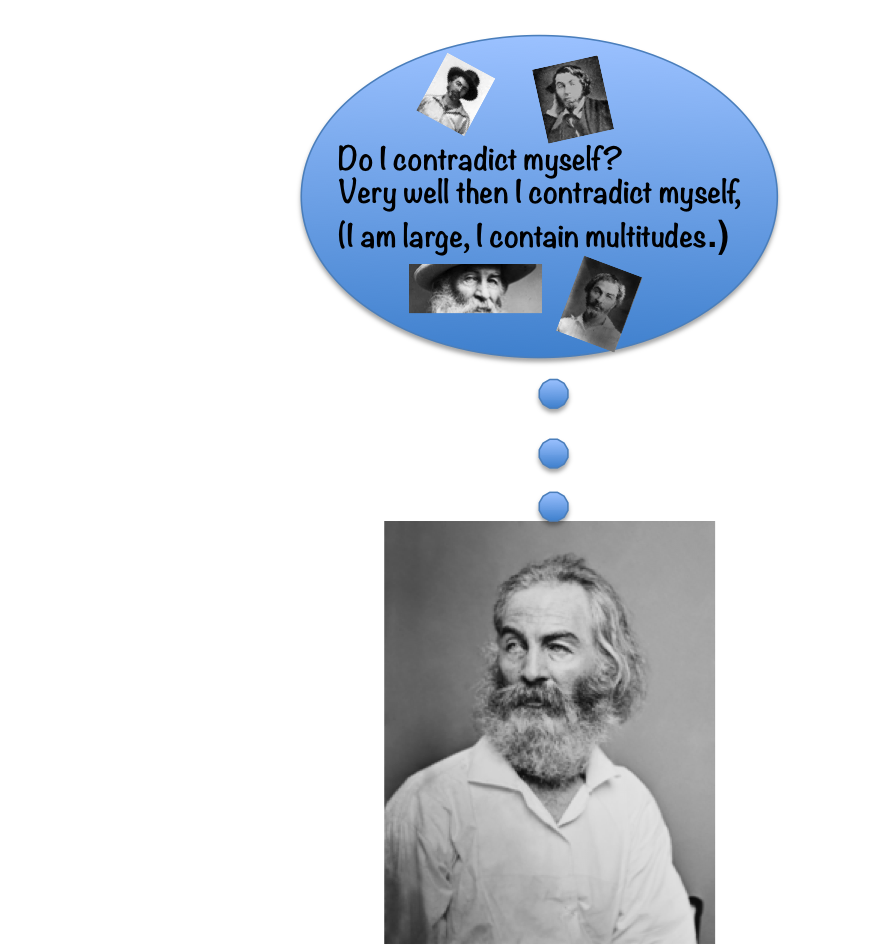
But I don’t think this means I am a bad counselor or a bad person or a potential Republican presidential candidate. These thoughts are really about the struggle between my professional self and my private self, both of which are multifaceted, changing, and difficult to pin down. Like my fellow ex-Brooklynite Walt Whitman, my self-song is contradictory, large, and contains multitudes.

Walt Whitman

My dark internal discourse is part of the ongoing, complex, and never-ending evolution of professional development. I don’t necessarily agree with the sentiments of these thought bubbles or think they reflect the “me” that I present to the world. By processing these discomfiting dark thoughts I hopefully emerge a better counselor and a better person, someone who I prefer to believe is ruled more by Good Angels than Lucifers.

This requires continual vigilance, learning, awareness of the pressure they put us under, and growth to admit to them so as to understand where they are coming from. No doubt the struggle between the yin and yang of transference and counter-transference is at play here too. The goal is to not let them unconsciously insinuate themselves into the external counseling dialog that we engage in with our patients. Probably I fail at it frequently; yet one more reason why we should pursue professional supervision and openly discuss these issues at our educational conferences.

This is our last dance

This is ourselves

Under pressure

from Under Pressure, written by David Bowie and Queen

The obvious truth that I can’t lose sight of is that genetic counseling is about patients, not about me, my viewpoints, or my belief that I am so damn right about everything that they should put me in charge of the world. The other truth is that darkness can be turned into a shining light that makes us better people. It is at the core of the human condition, and if we allow it, beauty, self-awareness, respect for humanity, and a deep sense of wonder can transform us. God help the beast in us all.


11 Comments

Filed under Robert Resta

Party Pooper?

The Annual Education Conference (AEC) of the National Society of Genetic Counselors offers a balanced mix of the academic, the clinical, the professional, and, perhaps most importantly, the social. Some of my most cherished professional relationships were formed at the AEC after I struck up a conversation with a genetic counselor who I had not previously known but who wound up sitting next to me in the audience, joined me on a panel presentation, came up and asked me a question after a talk I gave, or perhaps most commonly, unwinding at a bar after a marathon of lectures and workshops. Professional demeanors discarded, guard down, shoes off at day’s end, sipping an interesting beer or a fine single malt Scotch, you can easily become BGCCF (Best Genetic Counseling Comrades Forever). Sometimes I can’t remember a blessed thing I heard all day at the AEC but that post-plenary bar conversation often opened my mind to new and exciting ideas and warm companionship.

Capitalizing on the social networking aspect of the AEC, some corporate sponsors have taken to hosting evening parties and dinners. Maybe it is just my imagination, but the number of these soirees seem to have increased over the last few years. Free food, a generous open bar, genetic counselors eager to socialize and compare notes – what a great way to live it up on our meager travel budgets, freed from the worry of trying to justify several glasses of wine when you submit your receipts for reimbursement. So who can complain?

Well, me, for one.

Okay, so I admit to being an ethical stick in the mud who can suck all the fun out of the dance hall. But now that we have acknowledged yet another of my social failings, let me pose this question for discussion – Is it appropriate for genetic counselors to accept free fare provided by corporate sponsors at the AEC, particularly at non-educational activities?

Stick In The Mud Bobby

Stick In The Mud Bobby

To be clear – I am not taking the corporate sponsors to task. They are businesses, and doing business is what businesses do. With so many labs competing for our samples, they should and will do whatever ethical actions it takes to keep their genetic counselor customers happy. If we told them they would be more likely to get and keep our accounts if they donated that money to Action Against Hunger instead of catering to slightly hungry genetic counselors who want to party a little, I am sure they would do that (not to split hairs too finely, but, all else being equal, selecting a lab in part because it participates in what you consider to be ethical practices such as donating to charitable organizations based on the company’s ethos is different than using a lab because it donates money to feeding clinicians at a conference). The ethical burden is on us, not the sponsors, who are responding to a demand that we have – silently? – created and fostered.

I can already hear the complaints of “Oh Jeez, Bob, can’t you just let us have a good time? I mean it’s just a few drinks and some good food. I give that lab a lot of business. Why can’t I get an occasional treat out of it? So I am nibbling on shrimp atop a round of fried polenta topped with basil pesto while sipping a glass of Nebbiolo. Enough with your puritanical ethics already. Really, what harm is gonna’ result?”

Puritan Bobby

Puritan Bobby (not my real wife)

Perhaps none. But is a practice ethical until harm results? What would patients think if they knew that the very labs that were analyzing their specimens were also providing us with food and spirits? Maybe many of our patients would not care, and might even be slightly envious. But other patients might be surprised if they learned that the lab where you sent their specimens to be analyzed was also wining and dining you. Or what if one day a lab became embroiled in some financial funny business or God forbid a scandal from sub-standard laboratory practices and word leaked out that the lab was in the practice of courting counselors with culinary baksheesh? We would feel awfully awkward and might appear to be guilty by association.

One could legitimately ask whether an occasional gift of food and wine really affects our decisions about which labs we use. Probably many practitioners would deny it or suggest that it does not affect their decisions but may sometimes affect their colleagues’ choices (“I’m very ethical and would never let a glass of wine stand between me and my patients’ best interests. But maybe that is not so true for a few other genetic counselors.”). On the other hand, it is hard to believe that labs would spend valuable cash on activities that resulted in a loss of business. This stuff must be successful on some level or else they wouldn’t do it. TANSTAAFL. We may not be consciously aware of how these influences work. Vide Blind Spots. Which leads me to pose more uncomfortable questions – Should we include attending a corporate-sponsored after-hours bash in our conflict of interest statements when we publish articles or make professional presentations? Many hospitals and other employers of genetic counselors ban vendor sponsored lunches in our offices, so how is this any different? If the free food and drink is not directly connected to an educational activity, would this be a violation of the Stark Law on the part of the vendor, since  just about all labs receive Medicare and Medicaid reimbursement?

By the way, yes, you can call me Mr. Guilty. I have attended my share of these events, but, after a long discussion with my conscience (who I also met at the bar), over the last few years I have decided to avoid them.

But enough of my thoughts. This is about all of us, not just me. What do the Good Readers of The DNA Exchange think about this? Are there better ways to foster collegial and professional relationships with labs that are transparent and ethical, and that allow labs to maintain and grow their volumes? Complete the admittedly unscientific poll below and also share your thoughts in the Comments.

Voodoo Bobby Doll

Voodoo Bobby Doll

And please, be gentle with your Bob Resta voodoo dolls.


Thanks to Emily Singh for realizing the graphics and to Maureen Flynn for a thoughtful discussion that sparked and helped shape this posting.

10 Comments

Filed under Robert Resta

Masking The Truth?

A recent hereditary cancer multigene panel result got me to thinking again about the thorny problem of incidental findings in genetic testing. My goal here is not to criticize the lab, whose staff was very helpful and open in our discussions, but rather to encourage open debate about the scope of results that clinicians want from genetic testing and how this jibes with patients’ expectations. Our expectations might be quite different from what patients want, and this plays an important part at the end of this story.

My patient was recently diagnosed with breast cancer, and had a family history of breast cancer. One relative with breast cancer had already undergone BRCA testing, with normal results. The family history was non-specific but contained a hodge-podge of cancers that gets you to scratching your head – breast cancer, a primary brain cancer, a non-smoking relative who died before 50 of lung cancer, an aunt who died of some type of gynecologic cancer, and a few other malignant odds and ends. Given her relative’s normal BRCA results, we agreed that she would be best served by multigene panel testing, after a discussion of its potential downsides.

Like 87% of my patients, no cancer-linked pathogenic mutations were identified. However a pathogenic EPCAM point mutation caught me by surprise.

For those not familiar with the genetic architecture of Lynch syndrome, five genes are linked to Lynch syndrome – MLHL1, MSH2, PMS2, MSH6, and EPCAM. The underlying mutational basis is different for EPCAM than for the other 4 Lynch genes. EPCAM is MSH2’s upstream neighbor. Mutations in EPCAM itself do not directly cause Lynch syndrome. Instead, large gene deletions in the distal part of EPCAM result in loss of its poly A tail that should signal the end of the coding region. RNA transcription does not stop, leading to an EPCAM/MSH2 chimera of a transcript. By a mechanism not fully understood, this results in hypermethylation of the MSH2 promoter and absent/reduced expression of the  MSH2 gene product. EPCAM deletions constitute a small but significant minority of Lynch syndrome gene mutations and so labs routinely analyze EPCAM for large deletions.

EPCAM

So why was the lab reporting a point mutation in EPCAM? My first (insecure) reaction was “Well, I guess point mutations in EPCAM cause Lynch syndrome. Just another in the steady stream of new genetic findings that flew under my radar but that everybody else seems to know.” I breathed a small sigh of relief and a temporary break from my professional insecurity when further reading of the report confirmed my understanding that point mutations indeed do not produce Lynch syndrome.

Autosomal recessive EPCAM point mutations are linked to congenital tufting enteropathy (CTE), an uncommon disorder characterized by diarrhea so profound that patients often require ongoing total parenteral nutrition. Clearly my patient did not have CTE nor did any of her children, who were all well past the age when CTE would have manifested. The issue here, as any genetic counselor will tell you, is for the health of her grandchildren. Each of her children has a 50% chance of having inherited the EPCAM mutation. If a child has inherited the EPCAM point mutation and if the child’s spouse is also an EPCAM point mutation carrier, then my patient’s grandchildren from this mating would have a 25% chance of having CTE. Essentially my patient’s multigene panel test was transformed into a carrier screening test for a metabolic disorder for the next generation (The punster demon in me who I cannot control just remarked “Her grandchildren’s risk? Now that’s real NextGen sequencing! Or maybe NextNextGen.”).

Godfrey Hardy

Wilhelm Wienberg

Wilhelm Wienberg

But, statistically speaking at least, the patient should not worry too much about her grandchildren. The frequency of CTE is between 1/50,000 and 1/100,000, which hardyweinbergs out to a carrier rate of about 1/135. Thus, the likelihood that my patient would have a grandchild affected with CTE is 1/2 (the chance that her child would be a carrier) x 1/135 (the chance that her child’s spouse would be a carrier) x 1/4 (the chance that the grandchild would inherit two mutated EPCAM alleles) = 1/1080. Using the time-honored genetic counselor’s trick of reframing, there is a 99.9% chance that my patient’s grandchild will NOT be affected with CTE. Did my patient really need to know this in the midst of her cancer treatment?

I recognize that some patients undergoing multigene panels are still in their reproductive years and this information could be important to them. And one could argue that this situation is no different from other genes included on multigene panels that are also associated with different disorders when they occur recessively – NBN, BRCA2, ATM, fumarate hydratase. But I would counter that those other recessive disorders are qualitatively different situations. The same type of mutations that predispose towards cancer when they occur in the heterozygous state also predispose towards ataxia telangiectasia and the other recessive conditions and so one cannot avoid knowing that the patients carries the mutation. However, EPCAM point mutations are not linked to cancer and thus are not relevant to the reason why the test was performed to begin with. The lab included the EPCAM point mutation because of the nature of their testing platform, which can’t help but detect EPCAM point mutations.

But should the lab have masked the results? Labs mask all kinds of genetic test results, hence the list of incidental findings that the American College of Medical Genetics recommends be reported to patients undergoing whole exome/genome sequencing even if they were not seeking that specific information (CTE is not on that list, though of course this patient did not have whole exome/genome sequencing). From a counseling standpoint, it might be an undue burden on patients to layer on a whole other level of psychosocial concern when they come to us primarily concerned about their cancer risks or treatment options and are not even thinking about their descendants’ risks of having rare genetic diseases. Another downside to reporting EPCAM point mutations is that it increases the frequency of finding variants of uncertain significance (VUS), the problem child of multigene testing. As fate would have it, a few days later another patient’s test revealed an EPCAM VUS.

So after stewing on this and discussing it with colleagues, I was considering asking the lab to mask EPCAM point mutations in the future. But then I met with the patient to review the results. Not only was she not upset, she was excited and grateful about learning the information. She said that she underwent the testing to learn what risks her family faced, and as far as she was concerned, the CTE risk fit into her expectations even though I had never discussed it with her beforehand. Nor is she apparently an outlier. At this year’s ASHG conference, researchers from the Kaiser Permanente Northwest Center for Health Research discussed the results of an ongoing study in which 320 non-pregnant women have been randomized into two groups that underwent carrier testing. 200 women received usual care and 120 women underwent genome sequencing for 750 carrier conditions and ~100 secondary findings. Women in the genome sequencing arm were required to receive results about life-span limiting conditions but could elect to receive results of all or some of five broad categories of findings (serious outcomes, mild outcomes, unpredictable outcomes, adult onset diseases, and medically actionable secondary findings). To date, 90% of those in the intervention arm have elected to receive results in all categories. Patients can’t seem to get enough genetic testing.

Maybe this enthusiasm stems from the excitement and sexiness of undergoing genetic testing, which for most people is a new thing and so there is still lots of gene spirit. Or maybe patients just don’t know enough to not want extensive genetic testing and eventually reality will set in when enough people undergo genetic testing and patients may become more reluctant to learn tons of questionably useful information (although the experience of 23andMe suggests otherwise). Maybe that day will come. But for now, whether genetic counselors like it or not, many – though by no means all – patients want to know a lot about their genetic make-up and want a choice in what they can know, even if it is not of immediate clinical value. The clinical utility of a test does not necessarily equal its emotional utility.

Cost is no longer a factor; until recently, genetic testing would include the minimal number of genes because of the expenses involved. Nowadays, however, it essentially is no more expensive to run 5 genetic tests on a sample than 500 genetic tests. Patients and their families are the primary stakeholders so patient demand and expectations should be an important factor in determining the shape of genetic testing, though genetic counselors should offer guidance through our wisdom and experience.

We also need to include all concerned parties in this discussion, such as the disability community and other patient groups affected by genetic diseases. And we need to serve as a counter-balance to some of the “Rah-Rah Ain’t genetic testing grand” advertising of some genetic testing labs. This will require open minds, finely honed counseling skills, and the development of new educational resources that will help patients better understand the bewildering array of genetic diseases and the strengths and limitations of genetic testing. At the end of the day, genetic counseling is still primarily a psychological encounter between two human beings. Here is where the future of genetic counseling lies.

13 Comments

Filed under Robert Resta

1193 to 4

Prenatal diagnosis of Down syndrome has long presented an ethical dilemma for the genetic counseling profession. As genetic counselors are fond of saying , we strongly support women’s reproductive decisions, including both continuing and terminating pregnancies wherein a fetus has been diagnosed with Down syndrome or other condition. But also in the oath that genetic counselors swear to,* we claim to be strong supporters of the rights and dignity of people with disabilities. The disconnect between these ethical imperatives leaves genetic counselors open to justifiable criticism from people with disabilities, their families, and their advocates. How can we simultaneously support people with disabilities while at the same time participate in a screening program whose primary purpose is to sort out fetuses who have certain disabilities?

The typical response to this criticism is that patients have choices about whether or not to undergo prenatal screening for Down syndrome, and genetic counselors try to be value neutral in supporting patient choices (for the moment leaving aside the economic and social realities that limit women’s choices and that genetic counselors have no control over). One of the purported benefits of prenatal screening for Down syndrome is that it allows couples to prepare for the birth of a child who may have special needs. And as many of my patients’ obstetricians used to say to them, we can be better prepared medically for the baby’s birth. Seem like reasonable points, no?

Well, they do seem like reasonable counterpoints. But this got me thinking – just how much research has been done on the extent to which prenatal diagnosis enhances familial adaptation to a diagnosis of Down syndrome, and how much does it improve the medical and developmental picture for the newborn with Down syndrome? In short, I wanted to know how much benefit people with Down syndrome and their families gain from prenatal diagnosis.

To help answer this question, I performed a PubMed search using these broad terms: Down syndrome, prenatal diagnosis, prenatal screening. I set the parameters to English language articles with abstracts for the ten years prior to September 18, 2015. This produced 1373 articles, 176 of which I eliminated because they were not primarily about prenatal screening for Down syndrome, leaving 1197 articles. I then read the abstract of each article for evidence that the research addressed the benefit of prenatal screening to postnatal adaptation of families or improved medical outcomes for liveborn children with Down syndrome.

1193 articles addressed sensitivity, specificity, assessing test performance, comparison of screening techniques, patient anxiety, ethical critiques both pro and con, program implementation, patient education, economic/cost benefit analysis, circulating placental DNA, maternal serum biochemical analytes, ultrasound markers, psychological responses, termination rates, decision making, etc..

The number of articles that addressed my primary question? Four.

And even this number is a bit of a stretch. Two of the four articles were speculative pieces about how prenatal diagnosis may one day allow options for treatment. These two articles shared a primary author and one article was basically a slight update of the earlier article.

The other two articles reported on the experiences of women who received a prenatal versus a postnatal diagnosis of Down syndrome. One article reported that women had a difficult time with how the diagnosis was delivered whether it was prenatal or postnatal. The other article reported that a majority of women who received a prenatal diagnosis of Down syndrome and continued the pregnancy felt that they would undergo prenatal screening in future pregnancies for emotional preparation.

I recognize the shortcomings of my quick analysis. No doubt I missed a few articles. PubMed search results vary significantly with the search terms and parameters, and I swear sometimes with the phase of the moon (speaking of which, the upcoming eclipse of the Blood Moon/Harvest Moon September 27-28 should be spectacular, though it may affect PubMed searches that are conducted during the event). Abstracts may not accurately convey the research findings. And of course the search does not include articles published in languages other than English or that were published before September, 2005. So if you know of articles that I missed, please point them out in the Comments section below. Heck, do a PubMed search yourself and see what you come up with. Prove me wrong, please.

If we are going to honestly present prenatal screening as a choice, the choices have to be more than Abort or Carry To Term, unless of course we want to make the uncomfortable acknowledgement that the primary purpose of prenatal screening is to avoid the birth of children with Down syndrome. Pregnancy termination is important for many couples and we should support patients in their reproductive decisions whatever their motivations, but we also need to show a wider range of benefits from prenatal screening.

Ten years and not even a handful of published research about the benefits of prenatal screening for people who have the very condition that is being screened for. Come on, we can do better than this. Our patients deserve better. Shame on us.


* – Okay, I admit that I made up the oath part, but it is so ingrained into our core ethos when we are trained that it may as well be the genetic counseling equivalent of the Hippocratic oath.

7 Comments

Filed under Robert Resta

I Am Curious (About Yellow)

Race is  a particularly salient issue in the current US national discourse. The horror of the shootings at the African Methodist Episcopal Church in Charleston, South Carolina and the controversy around the validity of the claims of an apparently white-skinned woman who identifies as black are but two contemporary examples of the controversial and often ugly history of racial classifications, the racial lexicon, and race relations. Perhaps this is why I was particularly struck by a sentence that I recently chanced upon in an article about the heritability of esophageal cancer: This meta-analysis showed there was a significantly [sic] association between PLCE1 rs2274223 polymorphism and esophageal cancer in yellow race populations [bold not in original]. 

Graphic by Emily Singh

Yellow Race. It has been a long time since I have seen that term in any medical or professional literature other than when I am rooting around in the history of eugenics. In our supposedly enlightened times such terminology is the same kind of bad as Brown Race and Red Race. I am not implying that this marks a resurgence in racism against Asians or a renaissance of racial hierarchies. Indeed, encountering yellow race in these articles was remarkable precisely because of its rarity nowadays.

The authors of the article have East Asian names, and the journal is published in Asia, so I assume that yellow race was not intended to be a racist slur or an ironic appropriation of a pejorative term by the very people it was meant to belittle. The racial vocabulary in this instance most likely stems from the nuanced and sometimes awkward complexities of language translation, cultural differences, and the regretful disappearance of copy editors from journal publishing houses (note the grammatical error in the quoted sentence from the abstract, using an adverb where an adjective is called for). A quick PubMed search yielded several other articles that used the term yellow race; the authors were invariably from countries where English is not the primary language. Not all articles were authored by East Asians; one had Brazilian authors. Several articles were from journals published in non-Asian countries, such as The Saudi Medical Journal,  Human Reproduction (Oxford) and Obesity Surgery, published by Springer, the mothership of the Journal of Genetic Counseling.

Putting aside the contentious debate about the biological reality of race and the appropriateness of using racial classifications in medical, biological and governmental analyses, I am intrigued by the question of why some race-based terms are socially acceptable and why others are condemned. You can use black or white when referring to race without too much eyebrow raising, but not yellow, red, or brown. Some skin color-based vocabulary has been replaced by apparently less offensive ethnic or geography-based but no less vague names like Hispanic or Asian. True, African-American and Western European are also common, but black and white appear at least as frequently in medical, biological, and popular publications. Even the federal government’s  Census Bureau and the annual National Vital Statistics Reports on annual births in the US use black and white to racially categorize mothers. Imagine the uproar if these official reports classified Asians as yellow, Native Americans as red, and Hispanics as brown.

US Census Bureau 2010 Racial Classifications


I have been stewing on this for a few weeks, trying to come up with an explanation. Does it stem from some complicated sociohistorical narrative about the forced immigration of slaves from Africa to the US, compared to the relatively more voluntary immigration to the US from other continents? Is it somehow related to the continuing social effects of slavery, which was not experienced by other immigrants (not to imply that other groups did not experience other forms of abuse and prejudice)? Greater social inequities among blacks in a society where whites are the power group and other groups are “in between” whites and blacks on the social hierarchy? An unstated and perhaps unconscious belief that the two groups are biologically different? The result of conflating race and ethnicity and lack of a clear distinction between race and ethnicity? The shortcomings and biases inherent in any scheme that tries to parse the continuous spectrum of humanity into discrete biological categories? The inconsistent ways that people self-identify their ancestry (see my posting about ancestry in the context of genetic counseling)?

Mostly, though, these sound like half-baked explanations. Perhaps it is just a stochastic linguistic persistence with no underlying rational explanation. Aluminum foil is still often called tin foil even though it hasn’t been made from tin since World War II (of course, aluminum – or aluminium, outside of the US and Canada – foil is less emotionally charged and socially complex than racial terminology).

Really, though, I don’t have a good answer. But I am interested to hear what the Good Readers of this blog have to say about it.

5 Comments

Filed under Robert Resta

Can You Put A Rush On That? The Ethics of Triaging Test Results

“Please hurry my test results. This is very important information for me.” It makes me wince every time I hear it. And genetic counselors hear it often. There are times when I don’t want to answer my phone because I know it is going to be that patient calling yet again, or the spouse, or the physician, demanding Results! NOW! The request is perfectly understandable. The patient is drowning in anxiety, desperate for a lifesaver. Sanity overboard! Please rescue me from this turbulent sea and please, please do it before I go under. Some desperate patients have even offered cash under the table to grease the wheels. Your heart goes out to them and you want to do whatever is superhumanly possible to help. It wreaks havoc on a genetic counselor’s compassion center.

How should we respond to such pleas? There is the standard reply “Your results are critical and we will do everything possible to ensure that you receive them as soon as possible.” But that response begs more questions – How quickly will the results come back? What concrete steps will you take to ensure that happens? Who decides?

To a large extent, turnaround times are dictated by factors beyond anyone’s control. Cultured cells grow at their own rates, no matter how much voodoo powder we sprinkle into the culture medium or whatever sacrifices we make to propitiate Anaphasia, the goddess of mitosis (I swear that culture times are directly proportional to patient anxiety – the greater the anxiety, the longer the culture time). Amniotic fluid cultures are forever generating random Insane Clone Posses, which prolongs analysis time. New technologies like NextGen sequencing often identify unusual variants that need to be sorted through before deciding if they are the real deal or not. Thus, suggesting to patients that we will hurry their results  is being dishonest when we know full well that we have limited control over the process.

And don’t get me started on giving preliminary results to a patient. This should just about never be done. There are good reasons why labs don’t call out results until they have been thoroughly checked and rechecked. Anything less than an absolutely certain result does not do patients any favors whatsoever. A rushed result is a useless result, and only gets you a reservation at Heartbreak Hotel. “Uh, did I say that preliminary result was normal? Well, um, now that we have completed the analysis….”

Graphic by Emily Singh

But in some situations it is possible to nudge along a test result. Usually this means analyzing the sample out of sequence. Instead of First Come, First Served, it’s Most Anxious, First Served. So who is Rush Worthy?

There are a few situations wherein most of us would agree that speed if of the essence, where a matter of days is critical. A patient who has a highly suspicious ultrasound and undergoes amnio at 20 weeks or later, awfully close to the 24 week termination cutoff for a patient considering this option. Patients with a history of suicide attempts or suicidal ideation. In the NICU, on a case by case basis. In oncology, perhaps patients with cancer who are trying to make treatment decisions like mastectomy or colectomy deserve some precedence over unaffected patients for whom surgical time pressures are less critical. But even there, which woman with breast cancer is more important than the others? Just about every patient wants that cancer out yesterday, even though for most patients waiting several weeks or more doesn’t change prognosis. Should the criterion be clinical stage? Nottingham score? High grade vs. low grade DCIS? Triple negatives? Trying to figure this out, as Rev Tevye sings, “would cross a rabbi’s eyes.”

There are some cases where it is never ethical to leapfrog the results line. Putting a co-worker, friend, or relative at the head of the queue. Giving special consideration to celebrities, physicians or their spouses, politicians, or people of great wealth or power. The patient going on vacation and who would like results back soon so that the vacation “can be enjoyed.” Labs offering to charge more in return for a quicker turn around time (unless it was ethically justifiable in a particular situation and it resulted in extra lab costs). Wrong, wrong, wrong, wrong. Always.

Really, though,  ethical justification for analyzing a patient’s sample out of sequence is a rara avis. Yes, a patient may be trying to make an important decision, but just about every genetics patient is trying to make a life-altering choice. Yes, a patient may be terribly anxious, but why and how should anxiety be given ethical weight? Lots of patients are anxious. It is impossible to say which patients are more “deserving” based on anxiety. And why should calm people be penalized for not expressing anxiety? (God bless them, though, for their serenity).

Communicating this to patients is difficult, to put it mildly. You don’t want to sound cold-hearted and insensitive and just say “No, sorry, can’t do that.” The wise counselor will try to validate patient anxiety, encourage them to express it, and emphasize that the lab will do everything ethically and humanly possible to provide an accurate (emphasis on accurate; rush = greater inaccuracy) and timely result. Providing assurance that they will be contacted as soon as the result is complete, working out the details of who and when to call, and verifying contact information shows that you are concerned and supportive. Set realistic expectations on the range and uncertainty of the turn around time and explain that rushing results is largely beyond human control. It can sometimes be helpful to put the situation in context – there are many men or women in their exact same position and the lab is doing its best to make sure that every patient is treated in the same way.

Of course, many patients will stay anxious whatever you say to them. Anxiety is largely resistant to treatment with logic, reason, and compassion. It is the price our profession pays for labeling patients as High Risk and putting them in the psychologically vulnerable position of having to confront their mortality and their darkest fears about themselves or their children. But they would be even more upset if they were told that their results are taking longer because the lab decided to analyze some other patients ahead of them. Fairness, honesty, and equity must be our guides.


3 Comments

Filed under Robert Resta

I Love Them, I Love Them Not….. Proposed Revised Medicare Guidelines For Coverage of BRCA Testing

Graphic by Emily Singh

Graphic by Emily Singh

The Centers For Medicare & Medicaid Services (CMS) has proposed a revised Local Coverage Determination (LCD) for BRCA* testing that is bound to make genetic counselors equal parts happy and  upset. Whether you are mad, glad, or confused, CMS is seeking input so you have the opportunity to applaud, chastise, or critique the proposed LCD as you see fit. The guidelines are too numerous to detail here, so I will highlight a few that are particularly relevant to the genetic counseling community. Please, please, please carefully read the guidelines yourselves.

The most radical change is that, as I read the LCD, it appears that genetic counselors are poised to become covered Medicare providers. In the section on coverage for multigene panels (itself a disappointment, vide infra), one of the criteria that must be met is “Pretest genetic counseling by a cancer genetics professional” defined as, among others, a Genetic Counselor certified by the American Board of Medical Genetics or the American Board of Genetic Counseling. Amen to that. This is a huge step forward for the genetic counseling profession and for patients covered by Medicare.  Note, though, that this “genetic counseling by a genetics professional” requirement is limited to patients who want multigene panel testing; it is not mentioned in the section on patients who undergo BRCA testing alone. Of course, patients who ask their providers about a multigene panel would need to be referred to genetics professionals. The LCD further points out that the Affordable Care Act mandates private insurers to provide no-out-of pocket cost coverage for genetic counseling and BRCA testing for eligible women.

The second major issue – and one that we should welcome but will undoubtedly  raises hackles among many genetic counselors – is that the coverage for genetic counseling excludes genetics professionals who are employed by a commercial laboratory. However, genetic counselors would be covered if  they “are employed by or contracted with a laboratory that is part of an Integrated Health System which routinely delivers health care services beyond just the laboratory itself.” In other words, a genetic counselor employed by, say, Ambry or GeneDx or Counsyl would not be covered but a genetic counselor who worked for, say, Baylor or the University of Washington would be covered. While we all want to deny that we would actually let conflict of interest color the care we provide, in fact conflict of interest could develop into a very serious threat to the integrity of the profession in the absence of clear-cut guidelines for lab-employed genetic counselors.

The third big change is that the new criteria include women who do not have a personal history of breast cancer but have a sufficiently concerning family history of cancer. Until now, only women diagnosed with breast or ovarian cancer were eligible for testing. The new criteria, based on NCCN guidelines, are quite broad, and besides breast and ovarian cancers some of the criteria also include pancreatic and prostate cancers. For example, as I interpret the LCD, testing would be covered for an unaffected woman if she has a first or second degree relative with breast cancer at any age and another relative with breast cancer diagnosed at 50 or younger; or if a first or second degree relative has breast cancer and there are two relatives diagnosed with pancreatic cancer or prostate cancer with Gleason score =7 (surely CMS means ≥ 7 ); or if a woman has a first or second degree relative with ovarian/fallopian tube/primary peritoneal cancer; or if a there is a first or second degree relative with pancreatic cancer or prostate cancer (Gleason score = 7) and there are two or more relatives with breast/ovarian/pancreatic/prostate cancer (Gleason = 7). In a further broadening of criteria, patients with pancreatic and prostate cancers would also be covered, provided they meet family history or ancestry criteria.

Critically, the guidelines for testing unaffected individuals specifically apply to unaffected adult women with a family history of cancer; there is no mention of  unaffected men. Thus, I assume that an unaffected male who otherwise meets family history criteria would not be covered. However, coverage is provided for men who have been diagnosed with breast cancer, and men who have been diagnosed with prostate/pancreatic cancer who meet family history criteria.

While I wholeheartedly support the expanded criteria, they are very, very complicated. It will require careful comparison of pedigrees with the new criteria; I suspect that many errors will unintentionally arise. Some patients who may have been told by their ordering provider that they might be covered will find out that in fact they don’t meet guidelines (hopefully through the careful checking by laboratories before testing is initiated). Other patients will be incorrectly told by the ordering provider that they are not eligible for coverage, resulting in an unfortunate lost opportunity for initiating cancer risk reduction strategies.

Another complication lies in the definition of “close blood relatives” which Medicare currently defines this as first, second, and third degree relatives. However, in the proposed LCD, various criteria apply sometimes to first and second degree relatives, and sometimes to third degree relatives. In other places, “close blood relative” is not defined. For example, under the first section titled “Personal History of Female Breast Cancer” the second criterion reads “Diagnosed at age 50 or younger with at least one close blood relative* with breast cancer at any age.” I may have missed it, but I could not find where the asterisked “close blood relative” was defined. Further complicating the matter are criteria that depend on Gleason scores for prostate cancer. Realistically, what patient is going to know Grandpa’s or Uncle Jack’s Gleason score, and if they died 20 years ago, how can the score be found? If a relative died of prostate cancer, there is a pretty good chance he had a high Gleason score but still definitive proof will be hard to unearth.

The fourth Big News Item is a limitation on coverage for multigene panels. Currently, I can get coverage for just about any multigene panel that included BRCA, as long as the patient met criteria for BRCA testing. The proposed guidelines, however, limit panel testing to situations where all of the genes on the panel are relevant to the patient’s personal and family history AND the individual meets NCCN guidelines for at least one other hereditary cancer syndrome such as Li-Fraumeni, Cowden, or Lynch. Thus, panels like Myriad’s myRisk, the University of Washington’s BROCA, or Gene Dx’s Comprehensive Cancer Panel would not be covered. Labs will need to do lots of rejiggering of their panels. For Myriad, the proposed guidelines would be an especially big hit since Myriad appears to be phasing out single gene testing and replacing all genetic testing with myRisk. Rubbing a little more salt into Myriad’s wound, the CMS guidelines state that BRCA CDx, the BRCA test intended for patients who are being considered for treatment with the PARP inhibitor Lynparza, will not be covered for patients who have already had BRCA testing.

No doubt this LCD will cause strong reactions, both pro and con. Genetic counselor input is critical. It is not a finalized document and we can play a key role in shaping the delivery of medical genetic services. The comment period is 6/17/2015 through 8/3/2015. Per the LCD, the Proposed Contact is Earl Berman, Attn Medical Review, Two Vantage Way, Nashville, TN 37228 or Earl.Berman@cgsadmin.com.

I may  have misinterpreted parts of the LCD so please call me out if I got something wrong. And share your thoughts about the proposed guidelines in the Comments section below.

* To get to the proposed LCD, click on the Accept button at the bottom of the link page, which will take you to the proposed guidelines.

5 Comments

Filed under Robert Resta